
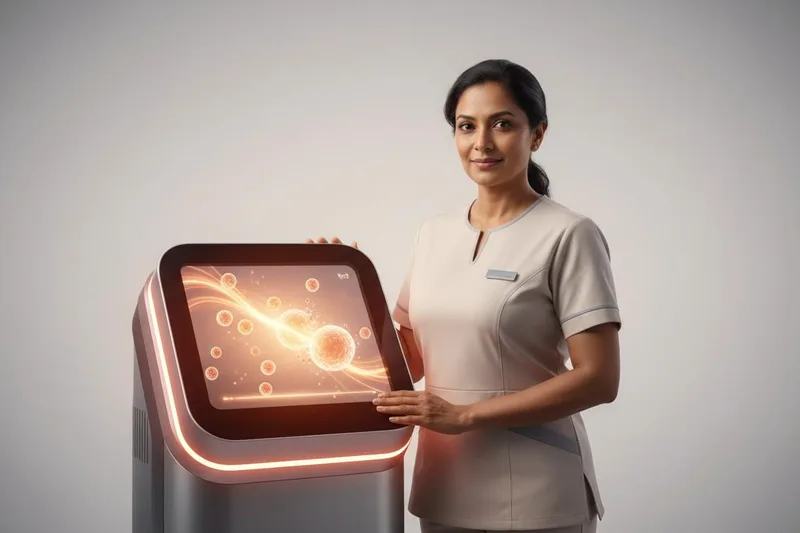
The word cancer scares us all a little, right? But with the advancement of medical science, there are many new treatments that can cure cancer today. Today, we are going to talk about a new, high-tech treatment that helps fight cancer cells. This is called Hyperthermia Therapy, or heat therapy. What happens in this is that heat is used to destroy cancer cells and shrink tumors.
What is this Hyperthermia treatment?
Simply put, this is like "heating" cancer cells to destroy them. But it's not like burning them. It's a very controlled, targeted method of delivering heat to just the cancer cells.
Another big advantage of this is that this heat therapy can make the cancer treatments we already use, such as chemotherapy and radiation therapy, more effective, that is, work better.
But we must remember that this is still a research-based treatment and not widely available everywhere in the world. But it can be said that this has brought new hope to those fighting cancer.
What are the main types of this treatment?
This heat therapy can be divided into three main types, depending on the area of the body where the treatment is given. Let's see what they are.
| Type of treatment | Simply put... |
|---|---|
| Local Hyperthermia | Providing heat only to a very small, specific area, such as a cancer tumor. |
| Regional Hyperthermia | Providing heat to a large area of the body, such as an arm, leg, or abdomen. |
| Whole-Body Hyperthermia | If the cancer has spread throughout the body, a controlled increase in the temperature of the entire body. |
Local Hyperthermia
This involves focusing heat on a small area, such as a cancerous tumor. This heat is generated using energy sources such as radio waves, electromagnetic waves, or ultrasound waves. This method is particularly effective for:
- For small cancerous tumors under the skin or on the surface of the skin.
- For cancers that are too deep to be removed by surgery.
For example, Radiofrequency Ablation (RFA) for liver, kidney, or lung cancers and Laser Interstitial Thermal Therapy (LITT) for deep brain tumors belong to this category.
Regional Hyperthermia
This is a treatment for a large area of the body. Imagine, for example, a cancer in the bladder or cervix. Then, heat can be directed to the surrounding area. This is usually done in conjunction with chemotherapy.
- Regional Perfusion: This is a very interesting method. Imagine someone has cancer in their arm. Then the doctors can take some blood from that arm, heat it up, and put it back in the arm. Or they can inject heated chemotherapy drugs into that area.
- HIPEC (Hyperthermic Intraperitoneal Chemotherapy): This is a special procedure used for cancers in the abdominal cavity (colon, stomach, liver). After surgery to remove the cancer, a heated chemotherapy liquid is pumped into the abdominal cavity to destroy any remaining cancer cells.
Whole-Body Hyperthermia
If the cancer has spread throughout the body (metastasized), this method may be used. In this, the patient is wrapped in a heated blanket or placed in a hot tub, and the whole body temperature is slowly raised to about 104°F (40°C). This is like creating a controlled fever . This fever stimulates our body's immune system, which helps fight cancer cells.
What happens before and after treatment?
This is not a simple treatment. A team of doctors comes together to plan everything from whether this treatment is right for you, how it is done, what temperature to use, and how to combine it with other treatments.
Before treatment:
- Checking if you are pregnant.
- Advise on food and drink intake before treatment.
- Blood tests to see if you are suitable for treatment.
- Imaging tests such as ultrasound, MRI, or CT scan can pinpoint the exact location of the cancer. This is very important because it can minimize damage to healthy tissue.
- Advise to temporarily stop certain medications, such as blood thinners.
During treatment:
Depending on the type of treatment, it can take anywhere from 10 minutes to several hours. Your body temperature is monitored with special thermometers throughout this time. In some treatments, you are completely anesthetized, while in others, you are sedated and placed in a light sleep.
After treatment:
You may be able to go home the same day. However, if you have this treatment with surgery, you will need to stay in the hospital for a few days. You will be prescribed pain medication and will need to have regular checkups to see if the tumor has shrunk or if any cancer cells are still present.
What are the benefits and risks of this treatment?
As with any medical treatment, there are both benefits and risks. Let's understand both clearly.
| 👍 Benefits | 👎 Risks |
|---|---|
| Making other treatments, such as radiation and chemotherapy, more effective. | Pain, swelling at the treatment site. |
| Targeting only the cancer and minimizing damage to surrounding healthy tissue. | Skin burns or blisters. |
| Being an alternative for those whose health condition is too poor to undergo surgery. | Bleeding, blood clots, or infection. |
| The ability to treat some cancers that cannot be removed by surgery. | Nausea, vomiting, or diarrhea. |
| Rarely, the heart, blood vessels, or other organs may be affected. |
The important thing is that doctors take every precaution to prevent these risks from occurring. And doctors only recommend such treatment if the benefits of the treatment far outweigh the risks.
Take-Home Message
- Hyperthermia Therapy is a new treatment method that uses heat to destroy cancer cells.
- Rather than doing this alone, it is most often used to enhance the effectiveness of other cancer treatments, such as chemotherapy and radiation therapy.
- This is still a research-based treatment and not available in all hospitals. Therefore, its long-term effects are still being studied.
- If you or someone you know is suffering from cancer, it is essential to talk to your doctor to learn more about this treatment option and decide if it is right for you.




💬 Comments (0)
No comments yet. Be the first to share your thoughts here.
Add Your Comment