
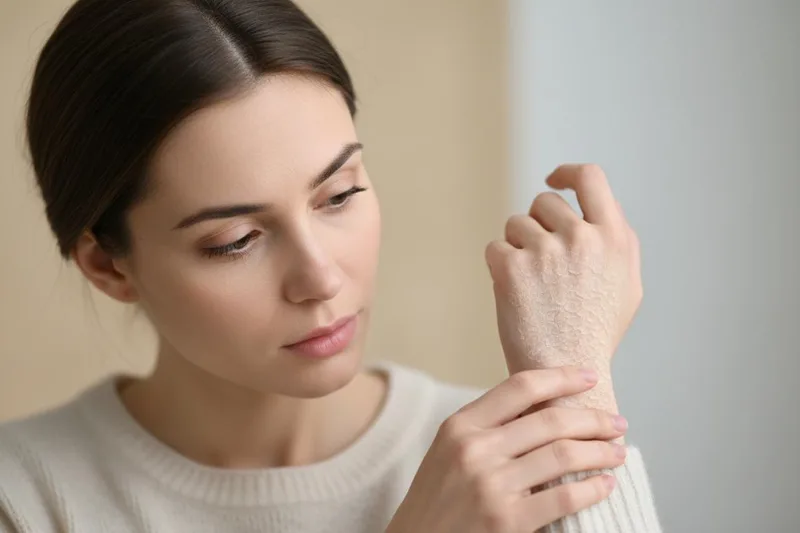
Is your skin always dry, rough, and sometimes flaky? Doesn't applying a regular moisturizer help relieve the dryness? Then you may have a common, but often under-talked-about skin condition. Today we're going to talk about one such skin condition, "Ichthyosis Vulgaris." Don't worry, let's explain everything in simple terms.
Simply put, what is Ichthyosis Vulgaris?
This name may sound a bit complicated. Let's break it down. The word "ichthyosis" comes from a Greek word meaning "fish." "Vulgaris" means "common." That is, it is a "common skin condition that resembles fish scales."
Simply put, it's a skin condition that causes the skin to become excessively dry, thick, and scaly. This scaly appearance is caused by our dead skin cells accumulating on the surface of the skin instead of shedding normally.
Who can develop this condition?
Ichthyosis vulgaris can affect anyone. It usually starts in infancy, between the ages of 2 months and 5 years. It can also start in young adulthood. However, it can also occur in adulthood. It is more common than you might think, affecting about 1 in 250 people .
What are the symptoms of this condition?
The symptoms of this can be very mild for some people, and very bothersome for others. Check your skin for any of these symptoms.
| Symptom | A simple explanation |
|---|---|
| Scaly | White, gray, or brown flaky scales appear on the skin surface. They may look like fish scales. |
| Excessive dryness (Dry) | No matter how much moisturizer you apply, your skin feels dry and lacks moisture. |
| Rough/Thick | Skin feels rough, like sandpaper, when touched. Skin feels thickened. |
| Itchy | Frequent itching due to dry skin. |
| Cracked skin | The skin lines, especially on the palms and soles, become deeper, sometimes causing painful cracks. |
| Bumpy | Some people develop small, chicken-skin-like bumps, especially on the backs of their arms and thighs. This is medically known as keratosis pilaris . |
These scales are most often seen on the front of the legs, the back of the hands, the scalp, the back, and the stomach . If they appear on the face, they are most often seen on the forehead and cheeks.
One thing to keep in mind is that these symptoms tend to increase during the winter or dry weather , and decrease during the summer months when the humidity is high .
Why does this happen? What are the reasons?
There are two main causes of ichthyosis vulgaris.
1. Genetic Causes
Most of the time, this is a genetic condition . That means it's something that runs in families. Our skin cells have a protein (filaggrin) that helps to bind together and form a protective skin barrier. Think of it like the mortar that you put between the bricks when you're building a brick wall.
When a genetic defect occurs in the production of this `filaggrin` protein, skin cells do not stick together properly. And dead cells do not shed properly. That's when these accumulate on the skin's surface and form scales.
2. Acquired Causes
Rarely, a person may not be born with this condition, but it can develop later in life as a result of another medical condition or medication they take.
| Possible causes | Examples |
|---|---|
| Other medical conditions |
|
| Some medications |
|
Is this contagious from person to person?
No. Absolutely not. Ichthyosis vulgaris is not a contagious disease. It is not spread from one person to another through skin-to-skin contact. So don't worry about it.
How is this diagnosed? What is the treatment?
Many people think that this is just normal dry skin. Therefore, it can be difficult to diagnose. If you have these symptoms, the best thing to do is to see a dermatologist .
Your doctor will diagnose the condition by examining your skin, asking about your symptoms, whether anyone in your family has had the condition, and about any medications you take. Most of the time, no tests are needed. However, sometimes they may take a small sample of skin (a skin biopsy) or order a blood test to check for genetic defects.
Treatment and management
There is no complete cure for ichthyosis vulgaris. But don't worry, there are very good management methods that can help you control your symptoms and live a normal life.
The main goal of treatment is to reduce symptoms and prevent skin infections. There are many things you can do at home to help with this.
| Home care | How to do it |
|---|---|
| Step 1: Soak the skin thoroughly | |
| Bathe at least once a day. Use a mild cleanser. Adding a little salt to the water will help soften the scales and help them come off. After bathing, pat your skin dry without rubbing it hard with a towel. | |
| Step 2: Exfoliate | |
| Once your skin is thoroughly cleansed, use a pumice stone or a rough sponge to gently remove dead skin. This will help your moisturizer absorb better. You can also use a topical cream containing salicylic acid, glycolic acid, lactic acid, or urea, as directed by your doctor. | |
| Step 3: Moisturize | |
| As soon as you shower, apply a moisturizer to damp skin . A thick, oily emollient like petroleum jelly is best. If the air in your home is dry, using a humidifier can also help. | |
| Step 4: Avoid Irritants | |
| Avoid using soaps and lotions that contain fragrances and dyes that can irritate the skin. Wear clothes made from soft, sweat-absorbing fabrics like cotton. | |
If your symptoms are severe and difficult to control with these home remedies, your doctor may prescribe oral retinoids, such as acitretin or isotretinoin . Antibiotics may also be prescribed if the skin breaks and becomes infected.
When should you see a doctor?
If this skin condition bothers you a lot or if you see any of the following signs of an infection , see a doctor immediately .
- Fever
- Fluid or pus draining from the skin
- Pain or swelling that doesn't go away
- Red streaks on the skin
- Yellow crusting on the affected skin
How can you stay mentally healthy in this situation?
Some people may feel embarrassed or afraid to be in public because of their skin appearance. This can also cause mental stress. This is normal. If you feel this way, talk to your doctor about it openly. You can also seek counseling if necessary.
Ichthyosis vulgaris can be a bothersome condition, but it doesn't have a major impact on your overall health or shorten your lifespan. With proper management, you can live a completely normal, happy life.
Take-Home Message
- Ichthyosis vulgaris is a common, but non-contagious, genetic condition that causes the skin to become excessively dry and resemble fish scales.
- Although there is no complete cure for this, it can be managed very well.
- The main thing is to follow the three steps of regularly soaking, exfoliating, and moisturizing the skin .
- Symptoms may worsen during the winter months. Take extra care of your skin during that time.
- If you see signs of a skin infection (fever, pus, redness), see a doctor immediately.
- If you are feeling psychologically uncomfortable because of this situation, don't be afraid to talk to your doctor about it.


💬 Comments (0)
No comments yet. Be the first to share your thoughts here.
Add Your Comment