
Have you ever wondered why your annual flu vaccine goes straight into your upper shoulder muscle, while an insulin pen or weekly weight-management shot goes gently into your tummy? Understanding IM vs subcutaneous injection—including its clinical meaning, the medical causes for choosing one route over the other, normal needle and dosing ranges, and your safest next steps—takes the stress and guesswork right out of medication day.
Be honest, staring at two completely different needles on a pharmacy or chemist counter can feel intimidating at first, haven't you felt that way too? Whether you are picking up a new prescription in the United States, Canada, the United Kingdom, or Australia, we doctors want you to know that needle size and angle are never chosen at random.
Every injectable medicine is engineered for a specific layer of tissue beneath your skin so your body absorbs it safely and predictably. Let us walk through exactly how these two everyday injection routes work, how their normal clinical ranges compare, and how you can handle injections safely at home.
📌 Key Takeaways at a Glance
- Depth is the core difference: A muscle shot (intramuscular or IM injection) reaches deep skeletal muscle at a 90-degree angle, while an under-the-skin fat shot (subcutaneous or SubQ injection) enters the Cushion-like fatty layer right beneath your skin at a 45- to 90-degree angle.
- Absorption speed varies widely: Muscle tissue has a rich blood supply for rapid absorption, whereas subcutaneous fat has fewer blood vessels for slow, steady release over hours or days.
- Needle ranges never swap: SubQ needles are ultra-short and hair-thin (4 to 16 mm, 25G to 31G), while IM needles are longer and slightly wider (25 to 38 mm, 22G to 25G).
- Always match your prescription label: Injecting an IM drug into fat can cause painful lumps or poor effectiveness, while injecting a SubQ drug into muscle can trigger dangerously fast absorption.
What Is an IM vs Subcutaneous Injection, and What Is the Clinical Meaning?
An IM vs subcutaneous injection comes down to tissue depth and absorption speed: an intramuscular (IM) injection delivers medicine deep into blood-rich muscle at a 90-degree angle for rapid uptake, whereas a subcutaneous (SubQ) injection places smaller fluid volumes into the fatty layer right under your skin for gentle, steady release.
Think about your skin like a three-layer winter jacket. On the outside sits your protective skin surface (the epidermis and dermis). Directly underneath that sits a soft, insulating quilt of fatty tissue (subcutaneous adipose tissue). Beneath that fatty layer lies dense, hardworking skeletal muscle.
When we doctors prescribe an injection, the clinical meaning behind "IM" or "SubQ" on your pharmacy box tells you which layer of that jacket the medicine must reach. Pretty simple when you picture it like layers of clothing, right? Delivering the dose to its exact target tissue ensures your medicine works on schedule without irritating surrounding nerves or skin.
How Do Intramuscular vs Subcutaneous Injections Work Inside Your Body?
Look at what happens beneath the surface the moment a medication leaves the syringe. Why do pharmaceutical scientists and doctors choose an intramuscular vs subcutaneous injection in the first place? The primary medical cause comes down to capillary blood flow and chemical formulation.
Skeletal muscles—like your shoulder or outer thigh—are packed with microscopic blood vessels (capillaries) that pump blood briskly every time you move. When a vaccine, antibiotic, vitamin B12 dose, or emergency epinephrine (adrenaline) auto-injector enters muscle, your bloodstream picks it up rapidly or forms a deep, well-tolerated slow-release pocket (depot injection). Muscle fibers can also comfortably hold larger volumes and slightly thicker or oil-based liquids that would sting terribly near the skin surface.
Now compare that to the fatty layer just under your skin. Fatty tissue has far fewer blood vessels than muscle. We rarely stop to think about that difference, do we? Because circulation moves slowly through fat, water-soluble hormone medications—such as insulin, weekly GLP-1 metabolic pens, fertility medications, blood thinners like low-molecular-weight heparin, and autoimmune biologics—trickle steadily into your bloodstream rather than rushing in all at once. That gentle trickle prevents dangerous spikes and drops in your hormone or blood levels.
What Are the Normal Ranges for Needle Length, Gauge, Dosing Volume, and Angle?
When patients ask us about normal ranges for an intramuscular injection vs subcutaneous injection, we look at four exact clinical numbers: needle gauge (thickness), needle length, fluid volume, and insertion angle. Here is a quirky medical rule worth knowing: with needle gauge ("G"), the higher the number, the thinner the needle! Pretty surprising, right?
- Subcutaneous (SubQ) Normal Clinical Ranges: Uses ultra-thin 25-gauge to 31-gauge (25G–31G) needles measuring just 5/32 to 5/8 inch (4 mm to 16 mm) long. Standard fluid volume is 0.5 mL to 1.5 mL (rarely exceeding 2.0 mL, as larger drops stretch the skin and ache). Short pen needles (4 to 8 mm) go in at a 90-degree angle, while slightly longer syringes (12 to 16 mm) or very lean adults often use a 45-degree angle into a gentle pinch of skin.
- Intramuscular (IM) Normal Clinical Ranges: Uses sturdier 22-gauge to 25-gauge (22G–25G) needles measuring 1 inch to 1.5 inches (25 mm to 38 mm) for most adults—up to 1.5 inches (38 mm) if you have a higher body weight so the tip truly clears the fat pad. Normal dosing volume ranges from 0.5 mL to 2.0 mL in the upper arm (deltoid) and up to 3.0 mL to 5.0 mL in large thigh or hip muscles, always inserted straight in at a firm 90-degree angle.
Where Are the Safest Body Sites and Step-by-Step Rules for Each Injection?
Choosing the right body map protects blood vessels and nerves while making self-injection virtually painless. What do you think happens if you inject into the exact same tiny spot week after week? Your body builds firm, rubbery fatty lumps (lipohypertrophy) that block medicine absorption—which is why rotating sites by at least 1 inch (2.5 cm) every dose is essential.
Safest Subcutaneous vs Intramuscular Body Sites
For a subcutaneous injection vs intramuscular injection, keep the two body maps completely separate. Safe SubQ sites have a soft pinchable fat pad: your abdomen (staying at least 2 inches or 5 cm away from your belly button), the front-outer middle third of your thighs, and the fleshy back of your upper arms. Safe IM sites target thick muscle away from major nerves: the middle outer thigh (vastus lateralis, easiest for self-injecting), the upper shoulder triangle (deltoid, ideal for low-volume vaccines), and the side of the hip (ventrogluteal site, given by a clinician or trained caregiver). Notice we doctors avoid the old upper-back buttock spot nowadays because it sits too close to the sciatic nerve!
Stepwise Safe Preparation at Home
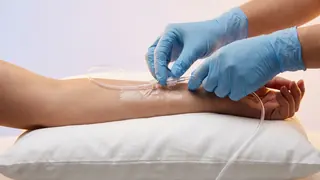
Wash your hands with warm soap and water, inspect the liquid to confirm it is clear and unexpired, and let refrigerated SubQ pens sit out for 15 to 30 minutes if approved on your leaflet—cold liquid stings! Wipe the skin with a fresh alcohol swab and let it air-dry for a full 30 seconds. For SubQ, gently pinch a fold of fat; for IM, pull the skin taut (or use the Z-track slide method if taught by your nurse). Insert smoothly, press the plunger steadily, count to 5 or 10 seconds with pen devices before withdrawing, and drop the needle straight into an approved rigid sharps bin.
How Does Intramuscular Injection vs Subcutaneous Injection Compare in Real-World Care?
Remember how we talked about blood supply and needle thickness earlier? Putting these two routes side by side makes it effortless to double-check your supplies at home and know how to care for your skin afterward.
| Clinical Factor or Finding | IM vs Subcutaneous Meaning & Action Step |
|---|---|
| Target Tissue & Insertion Angle | IM enters deep skeletal muscle at a strict 90-degree angle; SubQ enters the fatty layer right beneath the skin at a 45-degree or 90-degree angle depending on needle length. What you should do: Pinch up a soft fold of fat for longer SubQ syringes so you do not hit muscle, and hold skin flat and taut for 90-degree IM shots. |
| Needle Gauge & Length Range | IM uses longer, thicker needles (22G–25G; 1 to 1.5 inches / 25–38 mm); SubQ uses tiny, hair-thin needles (25G–31G; 4 mm to 5/8 inch / 4–16 mm). What you should do: Check your box size at your local pharmacy or chemist if a refill needle suddenly looks much longer or thicker than usual. |
| Normal Medication Volume Range | IM safely holds larger volumes (up to 2 mL in the shoulder; 3–5 mL in the thigh or hip); SubQ holds small volumes (0.5–1.5 mL). What you should do: If your prescribed SubQ dose exceeds 1.5 to 2 mL, ask your prescriber whether it should be split into two separate injection spots. |
| Absorption Speed & Drug Types | IM absorbs quickly (vaccines, B12, antibiotics, emergency epinephrine/adrenaline) or acts as an oil depot; SubQ absorbs slowly and evenly (insulin, GLP-1 pens, blood thinners, biologics). What you should do: Never swap routes—injecting insulin into muscle can drop your blood sugar dangerously fast. |
| Mild Soreness or Small Bruise | IM commonly causes a dull workout-like muscle ache for 24–48 hours; SubQ occasionally leaves a tiny surface bruise (ecchymosis) or mild itch. What you should do: Hold a clean cool pack or towel-wrapped bag of frozen peas on the spot for 10 minutes, avoid rubbing SubQ sites vigorously, and ask your doctor or pharmacist if plain acetaminophen (paracetamol) is suitable. |
| Hard Lump or Spreading Redness | A small firm nodule can happen if an IM vaccine lands too shallowly in fat, whereas hot, expanding redness after 48 hours may signal a skin infection (cellulitis or abscess). What you should do: Draw a gentle pen line around redness to track growth and book a prompt check at your family GP clinic, PCP office, or local Urgent Care center if warmth, pus, or fever develops. |
✔️ What You Should Do & ❌ What to Avoid
- ✔️ DO let your alcohol wipe dry completely: Waiting 30 seconds before inserting the needle prevents stinging alcohol from tracking under your skin—do you recall us mentioning that quick trick earlier?
- ✔️ DO rotate your injection sites systematically: Move in a clockwise pattern across your tummy or switch thighs each week so your tissue stays healthy and absorbs every drop evenly.
- ✔️ DO use a certified sharps container: Pick up a puncture-proof sharps bin from your local pharmacy, chemist, council program, or clinic rather than tossing loose needles into household trash.
- ❌ AVOID reusing disposable needles or pen tips: Even one use dulls and bends the microscopic tip, causing bruising, pain, and bacterial contamination.
- ❌ AVOID injecting through clothing, scars, moles, or bruised skin: Always expose clean, intact skin in good lighting before giving any non-emergency medication (emergency adrenaline auto-injectors are the rare exception designed to go through trousers if needed).
- ❌ AVOID massaging the skin after a SubQ shot: Rubbing insulin or blood-thinner sites speeds up absorption unpredictably and causes dark bruising.
🚨 When to Seek Immediate Emergency Care (Red-Flag Symptoms)
If you or someone near you develops any of these red-flag symptoms, do not wait — call 911 (or 999 in the UK / 000 in Australia) immediately or go straight to the nearest hospital Emergency Room (ER / A&E):
- Signs of a severe allergic reaction (anaphylaxis) within minutes to hours of a shot: Swelling of your lips, tongue, face, or throat, wheezing, shortness of breath, widespread hives, or sudden dizziness and feeling faint.
- Severe nerve pain or weakness after an IM shot: Electric-shock pain shooting down your arm or leg, persistent numbness, tingling, or inability to lift your limb normally.
- Signs of spreading deep infection or sepsis: High fever, chills, red streaks spreading away from the puncture site, throbbing severe pain, or a hot, swollen lump draining pus (for milder non-emergency skin concerns in the UK, you can also ring NHS 111 for urgent guidance).
- Accidental high-risk route mix-up with symptoms: Shaking, cold sweats, confusion, or racing heart after accidentally injecting rapid-acting insulin deep into muscle, or uncontrolled bleeding/expanding dark hematoma while on blood thinners.
💡 Key Take-Home Message
- Subcutaneous vs intramuscular comes down to shallow fat for slow, steady hormone or biologic release versus deep muscle for rapid absorption or thicker vaccine and depot fluids.
- Matching the exact needle length, gauge, skin pinch, and angle (45° or 90°) written on your prescription keeps self-injections safe, effective, and remarkably comfortable.
- Simple habits—letting alcohol air-dry, rotating sites, never reusing needles, and using a proper sharps bin—prevent almost all common home injection hiccups.
No comments yet. Be the first to share your question or experience below.