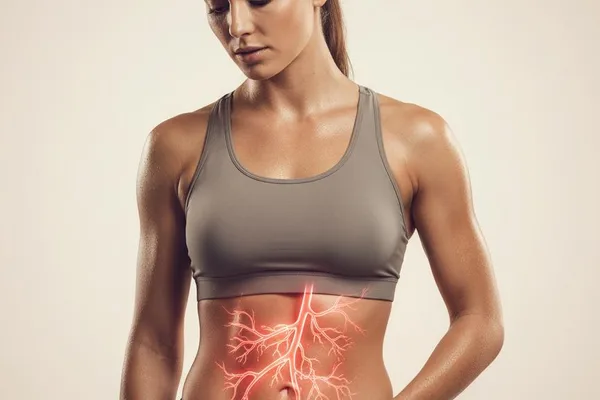
Do you know about this important blood vessel in our stomach? (Inferior Epigastric Artery)

Do you know about this important blood vessel in our stomach? (Inferior Epigastric Artery)

Have you heard of the "six-pack"? These abdominal muscles are not only beautiful to look at, but they are also very important for the body's balance and movement. So, for these muscles to work well, they need a good blood supply that provides them with the oxygen and nutrients they need. Today we are going to talk about a very important, but not very talked about, blood vessel (blood vessel) that helps with that job.

What is the Inferior Epigastric Artery?

Simply put, this is a blood vessel that carries oxygen-rich blood from your abdomen, or stomach area. It's not alone, but part of a set of three blood vessels that share the same name. The three are:

  • Inferior epigastric artery: The main blood vessel we're talking about today.
  • Superior epigastric artery: This is located in the upper part of the abdomen.
  • Superficial epigastric artery: This is located superficial to the skin.

Imagine, these two blood vessels called `Inferior` and `Superior` join together near your belly button. This blood vessel then divides into many smaller branches. These branches supply blood to the muscles and tissues in your abdomen and pelvis. Therefore, this `Inferior Epigastric Artery` and its branches are a very important part that helps maintain blood flow throughout our body.

What is the location and function of this blood vessel?

Like all arteries, its main function is to carry oxygen-rich blood to the appropriate areas. It is also a link in the large network of blood vessels in our abdomen and pelvic region. The oxygen and nutrients from this blood are what give life to the muscles and tissues in those areas.

If you look at where this blood vessel is located, it starts in your groin area. From there, it curves upward and toward your vagina.

Where does it start?

This `Inferior Epigastric Artery` branches off from your `External Iliac Artery`. This branching point is located just above and behind your `Inguinal Ligament`. The `Inguinal Ligament` is a band-like band that connects your oblique abdominal muscles to your pelvis.

An important thing is that there are two of these blood vessels in our body. One starts on the left side (Left External Iliac Artery) and the other starts on the right side (Right External Iliac Artery).

The length of this blood vessel can vary greatly from person to person. The one on the left side of your body may be longer than the one on the right. It can usually be between 3.5 centimeters and 7 centimeters long.

What branches receive blood from this blood vessel?

The `Inferior Epigastric Artery` gives off several smaller branches. Each of these has an important function. To make it easier to understand, let's look at it this way.

Branch Name Blood supply sites and function
Anastomotic branches It connects to several lower intercostal arteries that run between the ribs in your chest.
Cremasteric artery It supplies blood to the testicles of men .
Cutaneous branches It supplies blood to the skin on the front of your abdomen.
Muscular branches It supplies blood to various parts of the abdominal muscles and also to the peritoneum, the membrane that lines the inside of the abdominal cavity and pelvis.
Pubic branch It runs behind your pubic bone and connects to a branch of another artery.

Problems and risks affecting this blood vessel

Usually, diseases do not have a major impact on this blood vessel. However, during some medical procedures, there is a possibility that this blood vessel may be damaged. This can be considered a complication. Doctors are very concerned about this.

Here are some situations where this type of risk may arise:

  • Closure of abdominal incisions after abdominal surgery.
  • Laparoscopic surgeries are surgeries performed using a camera.
  • Paracentesis is used to remove excess fluid from the abdomen.
  • When inserting a catheter for peritoneal dialysis.
  • When inserting a tube (surgical drain) to remove fluid after surgery.

The main complication that can occur in such cases is bleeding . Very rarely, a condition called a ``pseudoaneurysm`` can also occur, in which the wall of the blood vessel weakens and bulges like a balloon.

But don't worry. Your doctor will take steps to prevent these complications. For example, an ultrasound scan can be done before surgery to see exactly how your blood vessels are arranged inside your body. This is especially important for people who have had previous surgery, are obese, or have an abnormal internal structure.

How do you keep the whole body healthy, including this blood vessel?

There's really no need to do anything special to keep your Inferior Epigastric Artery healthy. The best thing to do is to keep your entire heart and circulatory system healthy. By following a heart-healthy lifestyle, you can keep every blood vessel in your body functioning properly.

Here are some simple, yet very important practices you can follow:

  • Avoid smoking completely. Not just cigarettes, but all tobacco products are harmful.
  • Eat a heart-healthy diet. Reduce foods high in saturated fat, trans fat, salt, and sugar as much as possible.
  • Exercise regularly. Aim to get at least 150 minutes of moderate-intensity exercise per week.
  • Manage stress. Find a way that works for you. It could be meditation, listening to music, or a hobby you enjoy.
  • Get a good night's sleep. Try to get between 7 and 9 hours of sleep a day.
  • Control risk factors like high blood pressure, cholesterol, and diabetes. Talk to your doctor and take your medications as prescribed.
  • Get an annual medical checkup. Also, be sure to go to the doctor's appointments.

Our body is a very complex system. This `Inferior Epigastric Artery` is just one small, but important part of that system. Every second, your blood vessels are working hard to provide your body with the oxygen and nutrients it needs. So, living a healthy lifestyle is the best thing you can do to help that system. Talk to your doctor about any changes you need to make in your lifestyle.

Take-Home Message

  • The Inferior Epigastric Artery is an important artery that supplies oxygen-rich blood to the muscles and tissues of your abdomen.
  • The risk of damage to this blood vessel is highest during certain surgeries and medical procedures, but doctors are aware of this and take the necessary precautions.
  • Rather than protecting this artery specifically, following a heart-healthy lifestyle can keep your entire circulatory system healthy.
  • If you have conditions like high blood pressure or diabetes, it is very important to follow your doctor's instructions to control them.

Inferior Epigastric Artery Sinhala, Blood Vessels of the Stomach, Epigastric Artery, Blood Vessels, Stomach Muscles, Blood Supply, Heart Health

Frequently Asked Questions (FAQ)

Where does it start?

This `Inferior Epigastric Artery` branches off from your `External Iliac Artery`. This branching point is located just above and behind your `Inguinal Ligament`. The `Inguinal Ligament` is a band-like band that connects your oblique abdominal muscles to your pelvis.

⚠️ Important: The medical articles and information on Nirogi Lanka are for general awareness only, and are by no means a substitute for professional medical advice, diagnosis, or treatment. For any medical problem you have, consult a qualified physician immediately.

💬 Comments (0)

No comments yet. Be the first to share your thoughts here.

Add Your Comment

Please calculate: 1 + 1 =
Do you know about this important blood vessel in our stomach? (Inferior Epigastric Artery)
How the Body WorksJuly 7, 2026

Do you know about this important blood vessel in our stomach? (Inferior Epigastric Artery)

Have you heard of the "six-pack"? These abdominal muscles are not only beautiful to look at, but they are also very important for the body's balance and movement. So, for these muscles to work well, they need a good blood supply that provides them with the oxygen and nutrients they need. Today we are going to talk about a very important, but not very talked about, blood vessel (blood vessel) that helps with that job.

What is the Inferior Epigastric Artery?

Simply put, this is a blood vessel that carries oxygen-rich blood from your abdomen, or stomach area. It's not alone, but part of a set of three blood vessels that share the same name. The three are:

  • Inferior epigastric artery: The main blood vessel we're talking about today.
  • Superior epigastric artery: This is located in the upper part of the abdomen.
  • Superficial epigastric artery: This is located superficial to the skin.

Imagine, these two blood vessels called `Inferior` and `Superior` join together near your belly button. This blood vessel then divides into many smaller branches. These branches supply blood to the muscles and tissues in your abdomen and pelvis. Therefore, this `Inferior Epigastric Artery` and its branches are a very important part that helps maintain blood flow throughout our body.

What is the location and function of this blood vessel?

Like all arteries, its main function is to carry oxygen-rich blood to the appropriate areas. It is also a link in the large network of blood vessels in our abdomen and pelvic region. The oxygen and nutrients from this blood are what give life to the muscles and tissues in those areas.

If you look at where this blood vessel is located, it starts in your groin area. From there, it curves upward and toward your vagina.

Where does it start?

This `Inferior Epigastric Artery` branches off from your `External Iliac Artery`. This branching point is located just above and behind your `Inguinal Ligament`. The `Inguinal Ligament` is a band-like band that connects your oblique abdominal muscles to your pelvis.

An important thing is that there are two of these blood vessels in our body. One starts on the left side (Left External Iliac Artery) and the other starts on the right side (Right External Iliac Artery).

The length of this blood vessel can vary greatly from person to person. The one on the left side of your body may be longer than the one on the right. It can usually be between 3.5 centimeters and 7 centimeters long.

What branches receive blood from this blood vessel?

The `Inferior Epigastric Artery` gives off several smaller branches. Each of these has an important function. To make it easier to understand, let's look at it this way.

Branch Name Blood supply sites and function
Anastomotic branches It connects to several lower intercostal arteries that run between the ribs in your chest.
Cremasteric artery It supplies blood to the testicles of men .
Cutaneous branches It supplies blood to the skin on the front of your abdomen.
Muscular branches It supplies blood to various parts of the abdominal muscles and also to the peritoneum, the membrane that lines the inside of the abdominal cavity and pelvis.
Pubic branch It runs behind your pubic bone and connects to a branch of another artery.

Problems and risks affecting this blood vessel

Usually, diseases do not have a major impact on this blood vessel. However, during some medical procedures, there is a possibility that this blood vessel may be damaged. This can be considered a complication. Doctors are very concerned about this.

Here are some situations where this type of risk may arise:

  • Closure of abdominal incisions after abdominal surgery.
  • Laparoscopic surgeries are surgeries performed using a camera.
  • Paracentesis is used to remove excess fluid from the abdomen.
  • When inserting a catheter for peritoneal dialysis.
  • When inserting a tube (surgical drain) to remove fluid after surgery.

The main complication that can occur in such cases is bleeding . Very rarely, a condition called a ``pseudoaneurysm`` can also occur, in which the wall of the blood vessel weakens and bulges like a balloon.

But don't worry. Your doctor will take steps to prevent these complications. For example, an ultrasound scan can be done before surgery to see exactly how your blood vessels are arranged inside your body. This is especially important for people who have had previous surgery, are obese, or have an abnormal internal structure.

How do you keep the whole body healthy, including this blood vessel?

There's really no need to do anything special to keep your Inferior Epigastric Artery healthy. The best thing to do is to keep your entire heart and circulatory system healthy. By following a heart-healthy lifestyle, you can keep every blood vessel in your body functioning properly.

Here are some simple, yet very important practices you can follow:

  • Avoid smoking completely. Not just cigarettes, but all tobacco products are harmful.
  • Eat a heart-healthy diet. Reduce foods high in saturated fat, trans fat, salt, and sugar as much as possible.
  • Exercise regularly. Aim to get at least 150 minutes of moderate-intensity exercise per week.
  • Manage stress. Find a way that works for you. It could be meditation, listening to music, or a hobby you enjoy.
  • Get a good night's sleep. Try to get between 7 and 9 hours of sleep a day.
  • Control risk factors like high blood pressure, cholesterol, and diabetes. Talk to your doctor and take your medications as prescribed.
  • Get an annual medical checkup. Also, be sure to go to the doctor's appointments.

Our body is a very complex system. This `Inferior Epigastric Artery` is just one small, but important part of that system. Every second, your blood vessels are working hard to provide your body with the oxygen and nutrients it needs. So, living a healthy lifestyle is the best thing you can do to help that system. Talk to your doctor about any changes you need to make in your lifestyle.

Take-Home Message

  • The Inferior Epigastric Artery is an important artery that supplies oxygen-rich blood to the muscles and tissues of your abdomen.
  • The risk of damage to this blood vessel is highest during certain surgeries and medical procedures, but doctors are aware of this and take the necessary precautions.
  • Rather than protecting this artery specifically, following a heart-healthy lifestyle can keep your entire circulatory system healthy.
  • If you have conditions like high blood pressure or diabetes, it is very important to follow your doctor's instructions to control them.

Inferior Epigastric Artery Sinhala, Blood Vessels of the Stomach, Epigastric Artery, Blood Vessels, Stomach Muscles, Blood Supply, Heart Health

Frequently Asked Questions (FAQ)

Where does it start?

This `Inferior Epigastric Artery` branches off from your `External Iliac Artery`. This branching point is located just above and behind your `Inguinal Ligament`. The `Inguinal Ligament` is a band-like band that connects your oblique abdominal muscles to your pelvis.

⚠️ Important: The medical articles and information on Nirogi Lanka are for general awareness only, and are by no means a substitute for professional medical advice, diagnosis, or treatment. For any medical problem you have, consult a qualified physician immediately.

💬 Comments (0)

No comments yet. Be the first to share your thoughts here.

Add Your Comment

Please calculate: 1 + 1 =