Let's learn about a vein deep in your leg? (Posterior Tibial Vein)

Let's learn about a vein deep in your leg? (Posterior Tibial Vein)

Have you ever wondered what's deep inside our legs, specifically in the groin area? Sometimes when we experience pain or swelling in our legs, we wonder, "Why is this?" Today we're going to talk about a small part of our body that is important at times like these, but we don't talk about it much. That's the vein called the `Posterior Tibial Vein`. Although the name may sound a bit complicated, its function is very simple and very important.

Simply put, what is the Posterior Tibial Vein?

The `Posterior Tibial Vein` is a blood vessel, or vein, located in the lower part of your leg, below the knee. These are not just any veins, but belong to a type of vein called the deep veins . There are two of these veins in your right leg and two in your left leg.

The main function of these veins is to collect blood from your scalp, ankles, and soles of your feet and pump it back up, toward your heart. Think of them as a little motor that pulls water up from the bottom.

Shall we remind you a little about how blood circulates in our body?

To understand the function of this vein, it's helpful to have a little idea of ​​how blood flows through our bodies. It's a pretty amazing system.

1. Let's start with the heart: Our heart is the main pump. It pumps oxygen-rich blood throughout the body through blood vessels called arteries . This blood carries oxygen and nutrients to every cell and organ in our body.

2. Exchanges in cells: After oxygen is delivered to the cells, carbon dioxide, a waste product from those cells, is added to the blood. Now this blood is "dirty".

3. The turn of the veins: That's where veins, like our protagonist, come into play. These veins collect the oxygen-poor, carbon dioxide-rich, impure blood from all over the body and bring it back to the heart.

4. Purification by the lungs: The impure blood that has entered the heart is pumped from the heart to the lungs. The oxygen we take in when we breathe in is added to the blood, and the carbon dioxide that was in the blood is released when we exhale. Now the blood is clean again, full of oxygen.

5. Back to the beginning: This clean, oxygenated blood returns to the heart, where it is pumped throughout the body. This cycle continues for as long as we live.

So you can see, the `Posterior Tibial Vein` is a very important link in this great cycle. It's not an easy task to bring the blood back up from the bottom of the legs.

Where exactly is this vein located?

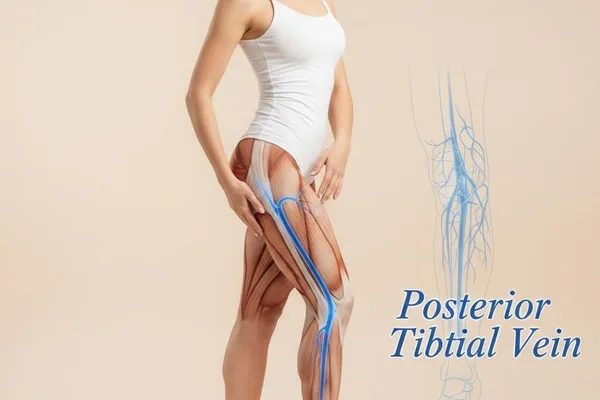
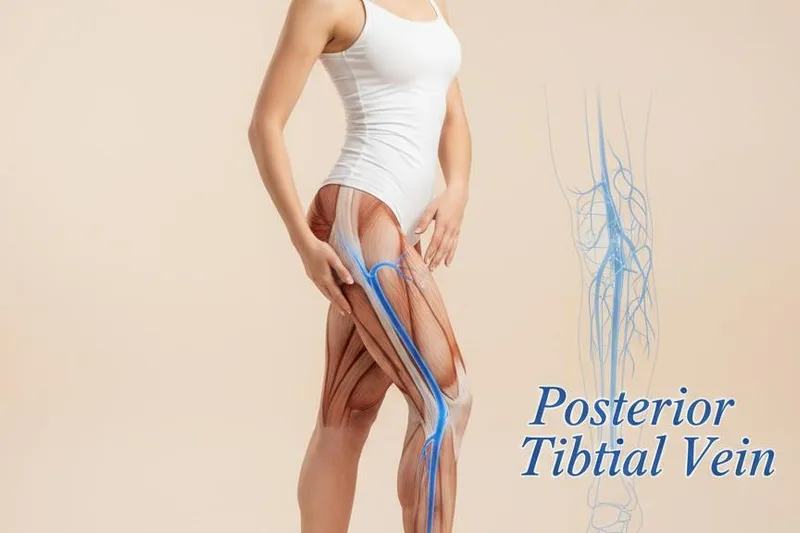
The `Posterior Tibial Vein` starts at your ankle joint. From there, it travels up the inside of your thigh. It ends just below your knee.

When it reaches the popliteus muscle deep behind the knee, this vein joins another vein, the Anterior Tibial Vein. The two join to form the large vein called the Popliteal Vein. From there, the blood travels further up.

What other types of deep veins are there in the leg?

There are three main types of deep veins in our legs below the knee. All three are located close to each other and collect blood from different areas.

Vein Name Blood collection area Location
Posterior Tibial Vein Collects blood from the soles of the feet. It runs along the inside of the hair.
Anterior Tibial Vein Blood is collected from the upper part of the leg (dorsum). It runs along the outside of the hair.
Peroneal Tibial Vein Collects blood from the lateral aspect of the leg. It runs down the middle of the hair.

Conditions that can affect the Posterior Tibial Vein

While we may not notice these things until everything is working properly, problems can arise that affect the functioning of these nerves. That's when we start to experience symptoms.

Medical condition Simply explained
Deep Vein Thrombosis (DVT) This is the formation of a blood clot inside a deep vein. This can be very dangerous. Because if this blood clot breaks loose and blocks a vein in the lungs (Pulmonary Embolism), it can be life-threatening.
Varicose Veins When the walls of the veins become weak or the valves inside them don't work properly, blood starts to flow backward. The veins then become twisted, swollen, and appear blue and knotted on the surface of the skin.
Chronic Venous Insufficiency A condition in which the veins in the legs have difficulty returning blood to the heart. This is caused by the valves inside the veins becoming weak and causing blood to leak downward. This can cause swelling in the legs, pain, and changes in skin color.

How do you check the health of these veins?

If you have symptoms such as swelling in your leg, sudden pain, or redness of the skin, you should see your doctor immediately . He or she will examine you and, if necessary, refer you for the following tests:

  • Duplex Ultrasound: This is the most common test. It's like a baby scan. It can easily and painlessly check the blood flow in the veins and whether there are any blood clots.
  • Venogram: This involves injecting a special liquid (contrast material) into a vein and taking a series of X-ray images. This allows you to clearly see if there is any blockage in the blood flow.

What are the treatments for these conditions?

The treatment method depends on your condition and its severity. Your doctor will give you the best advice on this.

  • Compression Stockings: These are specially designed socks that provide gentle compression to the leg. This helps reduce blood pooling and helps it move back up.
  • Medications: Your doctor may prescribe medications that prevent blood clotting (anticoagulants) and medications that reduce excess water in the body (diuretics).
  • Specialized treatments: Sometimes, there are modern treatments such as ``Catheter-directed thrombolytic therapy``, ``Laser therapy``, and ``Sclerotherapy``, which injects a chemical into the vein to deactivate it.
  • Surgery: In some severe cases, surgery may be needed to remove, repair, or create an alternative route for blood flow (a `bypass`) to the damaged artery.

Simple things we can do to maintain the health of our veins

"Prevention is better than cure," they say. So, to prevent or reduce the occurrence of such problems, there are a few simple habits that we can incorporate into our daily lives.

  • Don't cross your legs while sitting. Crossing one leg over the other can interfere with blood circulation.
  • Keep your legs slightly elevated. When sitting in a chair, prop your legs up on a small bench. When sleeping, place a pillow under your legs. This helps the blood flow back to the heart with the help of gravity.
  • Exercise regularly. Exercises like walking, running, and swimming activate the muscles in your legs, and when those muscles contract, they help dilate the veins and pump blood upward.
  • Don't stay in the same position for too long. If your job requires you to sit or stand in one place, take a short walk, shake your legs, and change positions at least once an hour.
  • Control your weight. As your body weight increases, more pressure is placed on the veins in your legs.
  • Avoid smoking. Smoking can damage blood vessels.

So, the `Posterior Tibial Vein` is a small but very important part of our body. Taking care of its health is very important for our overall health.

Take-Home Message

  • The `Posterior Tibial Vein` is a vein located deep in the calf of your leg. It collects blood from the soles of your feet and calves and carries it back to the heart.
  • Blood clots in these veins (`Deep Vein Thrombosis` - DVT) can be a dangerous condition. If you have sudden pain, swelling, or redness in your leg, seek medical advice immediately.
  • Varicose veins and chronic venous insufficiency are other common conditions that affect these veins.
  • Regular exercise, weight control, avoiding prolonged sitting, and keeping your legs elevated can help protect the health of your veins.
  • If you notice any abnormality in your legs, never ignore it. It is very important to talk to your doctor and get the right advice.

posterior tibial vein, leg veins, deep veins, deep vein thrombosis, DVT, blood clot, varicose veins, vein thrombosis, leg swelling

Frequently Asked Questions (FAQ)

Shall we remind you a little about how blood circulates in our body?

To understand the function of this vein, it's helpful to have a little idea of ​​how blood flows through our bodies. It's a pretty amazing system.

What other types of deep veins are there in the leg?

There are three main types of deep veins in our legs below the knee. All three are located close to each other and collect blood from different areas.

⚠️ Important: The medical articles and information on Nirogi Lanka are for general awareness only, and are by no means a substitute for professional medical advice, diagnosis, or treatment. For any medical problem you have, consult a qualified physician immediately.

💬 Comments (0)

No comments yet. Be the first to share your thoughts here.

Add Your Comment

Please calculate: 1 + 2 =
Let's learn about a vein deep in your leg? (Posterior Tibial Vein)
How the Body WorksJuly 7, 2026

Let's learn about a vein deep in your leg? (Posterior Tibial Vein)

Have you ever wondered what's deep inside our legs, specifically in the groin area? Sometimes when we experience pain or swelling in our legs, we wonder, "Why is this?" Today we're going to talk about a small part of our body that is important at times like these, but we don't talk about it much. That's the vein called the `Posterior Tibial Vein`. Although the name may sound a bit complicated, its function is very simple and very important.

Simply put, what is the Posterior Tibial Vein?

The `Posterior Tibial Vein` is a blood vessel, or vein, located in the lower part of your leg, below the knee. These are not just any veins, but belong to a type of vein called the deep veins . There are two of these veins in your right leg and two in your left leg.

The main function of these veins is to collect blood from your scalp, ankles, and soles of your feet and pump it back up, toward your heart. Think of them as a little motor that pulls water up from the bottom.

Shall we remind you a little about how blood circulates in our body?

To understand the function of this vein, it's helpful to have a little idea of ​​how blood flows through our bodies. It's a pretty amazing system.

1. Let's start with the heart: Our heart is the main pump. It pumps oxygen-rich blood throughout the body through blood vessels called arteries . This blood carries oxygen and nutrients to every cell and organ in our body.

2. Exchanges in cells: After oxygen is delivered to the cells, carbon dioxide, a waste product from those cells, is added to the blood. Now this blood is "dirty".

3. The turn of the veins: That's where veins, like our protagonist, come into play. These veins collect the oxygen-poor, carbon dioxide-rich, impure blood from all over the body and bring it back to the heart.

4. Purification by the lungs: The impure blood that has entered the heart is pumped from the heart to the lungs. The oxygen we take in when we breathe in is added to the blood, and the carbon dioxide that was in the blood is released when we exhale. Now the blood is clean again, full of oxygen.

5. Back to the beginning: This clean, oxygenated blood returns to the heart, where it is pumped throughout the body. This cycle continues for as long as we live.

So you can see, the `Posterior Tibial Vein` is a very important link in this great cycle. It's not an easy task to bring the blood back up from the bottom of the legs.

Where exactly is this vein located?

The `Posterior Tibial Vein` starts at your ankle joint. From there, it travels up the inside of your thigh. It ends just below your knee.

When it reaches the popliteus muscle deep behind the knee, this vein joins another vein, the Anterior Tibial Vein. The two join to form the large vein called the Popliteal Vein. From there, the blood travels further up.

What other types of deep veins are there in the leg?

There are three main types of deep veins in our legs below the knee. All three are located close to each other and collect blood from different areas.

Vein Name Blood collection area Location
Posterior Tibial Vein Collects blood from the soles of the feet. It runs along the inside of the hair.
Anterior Tibial Vein Blood is collected from the upper part of the leg (dorsum). It runs along the outside of the hair.
Peroneal Tibial Vein Collects blood from the lateral aspect of the leg. It runs down the middle of the hair.

Conditions that can affect the Posterior Tibial Vein

While we may not notice these things until everything is working properly, problems can arise that affect the functioning of these nerves. That's when we start to experience symptoms.

Medical condition Simply explained
Deep Vein Thrombosis (DVT) This is the formation of a blood clot inside a deep vein. This can be very dangerous. Because if this blood clot breaks loose and blocks a vein in the lungs (Pulmonary Embolism), it can be life-threatening.
Varicose Veins When the walls of the veins become weak or the valves inside them don't work properly, blood starts to flow backward. The veins then become twisted, swollen, and appear blue and knotted on the surface of the skin.
Chronic Venous Insufficiency A condition in which the veins in the legs have difficulty returning blood to the heart. This is caused by the valves inside the veins becoming weak and causing blood to leak downward. This can cause swelling in the legs, pain, and changes in skin color.

How do you check the health of these veins?

If you have symptoms such as swelling in your leg, sudden pain, or redness of the skin, you should see your doctor immediately . He or she will examine you and, if necessary, refer you for the following tests:

  • Duplex Ultrasound: This is the most common test. It's like a baby scan. It can easily and painlessly check the blood flow in the veins and whether there are any blood clots.
  • Venogram: This involves injecting a special liquid (contrast material) into a vein and taking a series of X-ray images. This allows you to clearly see if there is any blockage in the blood flow.

What are the treatments for these conditions?

The treatment method depends on your condition and its severity. Your doctor will give you the best advice on this.

  • Compression Stockings: These are specially designed socks that provide gentle compression to the leg. This helps reduce blood pooling and helps it move back up.
  • Medications: Your doctor may prescribe medications that prevent blood clotting (anticoagulants) and medications that reduce excess water in the body (diuretics).
  • Specialized treatments: Sometimes, there are modern treatments such as ``Catheter-directed thrombolytic therapy``, ``Laser therapy``, and ``Sclerotherapy``, which injects a chemical into the vein to deactivate it.
  • Surgery: In some severe cases, surgery may be needed to remove, repair, or create an alternative route for blood flow (a `bypass`) to the damaged artery.

Simple things we can do to maintain the health of our veins

"Prevention is better than cure," they say. So, to prevent or reduce the occurrence of such problems, there are a few simple habits that we can incorporate into our daily lives.

  • Don't cross your legs while sitting. Crossing one leg over the other can interfere with blood circulation.
  • Keep your legs slightly elevated. When sitting in a chair, prop your legs up on a small bench. When sleeping, place a pillow under your legs. This helps the blood flow back to the heart with the help of gravity.
  • Exercise regularly. Exercises like walking, running, and swimming activate the muscles in your legs, and when those muscles contract, they help dilate the veins and pump blood upward.
  • Don't stay in the same position for too long. If your job requires you to sit or stand in one place, take a short walk, shake your legs, and change positions at least once an hour.
  • Control your weight. As your body weight increases, more pressure is placed on the veins in your legs.
  • Avoid smoking. Smoking can damage blood vessels.

So, the `Posterior Tibial Vein` is a small but very important part of our body. Taking care of its health is very important for our overall health.

Take-Home Message

  • The `Posterior Tibial Vein` is a vein located deep in the calf of your leg. It collects blood from the soles of your feet and calves and carries it back to the heart.
  • Blood clots in these veins (`Deep Vein Thrombosis` - DVT) can be a dangerous condition. If you have sudden pain, swelling, or redness in your leg, seek medical advice immediately.
  • Varicose veins and chronic venous insufficiency are other common conditions that affect these veins.
  • Regular exercise, weight control, avoiding prolonged sitting, and keeping your legs elevated can help protect the health of your veins.
  • If you notice any abnormality in your legs, never ignore it. It is very important to talk to your doctor and get the right advice.

posterior tibial vein, leg veins, deep veins, deep vein thrombosis, DVT, blood clot, varicose veins, vein thrombosis, leg swelling

Frequently Asked Questions (FAQ)

Shall we remind you a little about how blood circulates in our body?

To understand the function of this vein, it's helpful to have a little idea of ​​how blood flows through our bodies. It's a pretty amazing system.

What other types of deep veins are there in the leg?

There are three main types of deep veins in our legs below the knee. All three are located close to each other and collect blood from different areas.

⚠️ Important: The medical articles and information on Nirogi Lanka are for general awareness only, and are by no means a substitute for professional medical advice, diagnosis, or treatment. For any medical problem you have, consult a qualified physician immediately.

💬 Comments (0)

No comments yet. Be the first to share your thoughts here.

Add Your Comment

Please calculate: 1 + 2 =