
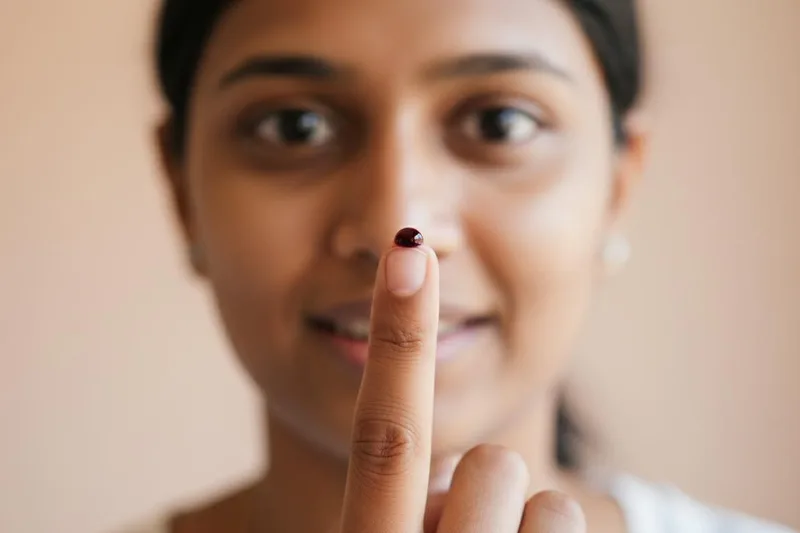
Have you ever had a small wound and seen a drop or two of red blood ooze out of it? Maybe it's when you cut your hand with a piece of paper. We all know that blood is a red substance. But, what exactly is this blood? What role does this blood play in our bodies? That's what we're going to talk about today, as simple as talking to a friend.
What is blood and why is it so important to us?
Simply put, blood is essential to our survival. It is like gasoline for a car, blood for our body. It is this blood that carries the things that every little part of our body, that is, every cell and tissue, needs to function. Think of it like a truck service that delivers goods throughout a city.
- Transports oxygen: When we breathe, the oxygen that enters our lungs is carried by the blood to the cells throughout our body. Without this oxygen, our cells cannot survive.
- Provides nutrition: Nutrients , such as glucose, that are digested and absorbed from the food we eat are distributed throughout the body through the blood. These are what give our cells energy.
- Removing waste: The blood carries waste products ( such as carbon dioxide) produced by our cells back to the lungs, where we exhale them. Blood also helps remove other waste products from the body through organs like the kidneys and liver.
- Protects against diseases: There are special cells in the blood that fight germs, such as bacteria and viruses, that enter our bodies and protect us from infections . It's like a defense army inside our bodies.
- Hormones carry messages: Hormones are chemical messengers that control every function in our body. These hormones are carried from one place to another in the blood.
- Regulates body temperature: Blood also helps maintain our body temperature .
- Stops bleeding when injured: Blood can also control bleeding by preventing excessive bleeding from even a small wound, by causing blood to clot (blood clotting) .
You see, blood is not just a little red water. It is a very complex, amazing substance that sustains the life of our bodies!
What is the blood made of?
Let's now see what kind of things make up this amazing substance, blood. There are two main parts to blood.
1. Plasma - This is the liquid part.
2. Blood cells - These are the types of cells that float in the plasma.
What is Plasma?
Imagine, if blood is like a fruit salad, then plasma is like the syrup that floats the fruit pieces in that salad. But it is a yellowish liquid. Only 55% of our blood is plasma .
Plasma is mainly made up of water. But it also contains many other important substances:
- Proteins: There are several types of proteins, such as albumin, globulin, and fibrinogen. These help control blood pressure, produce antibodies against diseases, and help blood clot.
- Nutrients: Things like glucose, amino acids, vitamins, and fatty acids that we talked about earlier are transported to cells through plasma.
- Hormones: The hormones that control various functions in our body also travel dissolved in this plasma.
- Electrolytes: Salts like sodium, potassium, and calcium. These are essential for the functioning of the nervous system and muscle function.
- Waste: Waste products such as urea that are excreted from cells are also carried to the kidneys by plasma.
So, plasma is not just a liquid, but an important part of our body's transportation system, nutritional supply, waste disposal, and defense system.
What are the types of blood cells?
Now let's talk about the blood cells that float in a liquid called plasma. There are three main types of these blood cells. Each type has a specific function.
1. Red Blood Cells / Erythrocytes - The cells that bring life to our bodies!
These are the most abundant type of cell in our blood. To be precise, these red blood cells are what give blood its red color. These cells are very small, biconcave discs. Think of them as a little doughnut, but instead of a hole in the middle, there's a hollow in the middle.
- Main function: A special protein called ``Hemoglobin`` in red blood cells allows these cells to carry oxygen . The oxygen we take in from the lungs binds to hemoglobin and is carried by red blood cells to all the other cells in the body. They also help to bring some of the carbon dioxide produced in the cells back to the lungs.
- Lifespan: A single red blood cell lives for about 120 days. After that, they are destroyed in the liver and spleen, and new cells are produced.
- Where are they made?: Red blood cells are made in a place called the bone marrow inside our large bones.
- Problems: If the number of red blood cells decreases, or if the amount of hemoglobin decreases, our body does not receive enough oxygen. We call this condition ``Anemia`` . Then symptoms such as fatigue, paleness, and difficulty breathing may occur.
2. White Blood Cells / Leukocytes - The body's defense soldiers!
White blood cells are the main soldiers of our body's immune system . They are larger than red blood cells, but their number in the blood is lower than that of red blood cells.
- Main function: The main function of these cells is to fight and destroy germs (bacteria, viruses, fungi, parasites) that enter our body, and protect us from disease . They also help identify and destroy abnormal cells, such as cancer cells.
- Different types: There is not just one type of white blood cell. Just like there are different regiments in an army, there are several types of white blood cells. Each type has a specific function:
- Neutrophils: These are the most abundant type of white blood cell. They mainly fight bacterial infections.
- Lymphocytes: There are two types of lymphocytes, B-cells and T-cells. B-cells produce antibodies . These antibodies are special proteins that help recognize and attack germs. T-cells directly destroy infected cells and control other immune cells.
- Monocytes: These are the largest of the white blood cells. When they move from the blood into the tissues, they become cells called macrophages, which "swallow" and clean up germs, dead cells, and other debris.
- Eosinophils: These mainly fight parasitic infections. They can also be seen in allergic reactions.
- Basophils: These are the smallest type of white blood cell. They release chemicals like histamine during allergic reactions.
- Where are they produced?: These white blood cells are produced mainly in the bone marrow. Some types, such as lymphocytes, also develop in places like the lymph nodes.
- Problems: An abnormally high or low white blood cell count can indicate a variety of medical conditions. For example, an infection can cause an increase in white blood cell count. Leukemia is a cancer of the white blood cells.
3. Platelets / Thrombocytes - The little heroes that stop bleeding!
Platelets are not actually whole cells. They are very small cell fragments that break down from large cells called megakaryocytes in the bone marrow. They do not have a nucleus.
- Main function: If a blood vessel breaks and there is an injury somewhere in our body, the main function of these blood platelets is to help stop the bleeding . They come to the site of the injury and stick together to form a sticky "plug". Then, they combine with a protein called fibrinogen in the plasma to form a blood clot, completely stopping the bleeding.
- Where are they produced?: These are also produced in the bone marrow.
- Problems: If the number of blood platelets decreases (this condition is called `Thrombocytopenia`), blood clotting can be delayed. Then, even a small wound can be difficult to stop bleeding, and the skin can bruise easily. You may have heard that this number of blood platelets decreases in diseases like dengue. Also, an abnormal increase in the number of platelets or their abnormal functioning can lead to the formation of unnecessary blood clots (`Thrombosis`).
Now you probably understand that blood is not just a red liquid, but how many complex and amazing things happen inside it.
Why is blood red?
This is a problem that many people have. As we have already discussed, blood is red because of a protein called hemoglobin in red blood cells . This hemoglobin contains iron. When hemoglobin binds to oxygen (oxyhemoglobin), it takes on a dark red color. This is what we usually see in the blood in the arteries. The blood in the veins, which has less oxygen (deoxyhemoglobin), takes on a slightly darker, purplish red color. However, some animals have blue or green blood, because their blood has different chemicals that carry oxygen. Our blood is red because of hemoglobin!
Do we all have the same blood type? Let's learn a little about blood types.
You've probably heard stories like "My blood type is B positive" and "The sun needs O negative blood." That means that not everyone's blood is the same. There is something called `blood groups` .
These blood types are determined by special proteins called `Antigens` on the surface of red blood cells. The two main important blood type systems are:
1. ABO system: Accordingly, there are four blood types: A, B, AB, and O.
2. Rh system: Accordingly, there are two types: Rh positive (has the Rh factor) and Rh negative (does not have the Rh factor).
We usually call a blood type by combining both the ABO and Rh systems (e.g. A positive, O negative).
Why are these blood types important?
The most important thing is that in a blood transfusion , that is, when giving blood to someone, you need to give a compatible blood type. If you give an incompatible blood type, a dangerous reaction (`Transfusion reaction`) can occur in the body of the person receiving the blood and can even be life-threatening. That is why, whether donating blood or receiving blood, the blood type is known exactly and matched.
What can we do to keep our blood healthy?
Keeping blood healthy, which plays such an important role in our bodies, is very important. There are a few simple things we can do to help:
- A well-balanced diet: You should eat foods rich in iron (leafy greens, red meat, legumes), folic acid, and vitamin B12 (these are essential for the formation of red blood cells). Be sure to include fresh vegetables and fruits in your diet.
- Drink enough water: Blood is mostly water (plasma). Therefore, it is important to prevent dehydration in the body for the health of the blood.
- Exercise regularly: Exercise improves heart rate and blood circulation.
- Avoid smoking and excessive alcohol consumption: These habits are harmful to the blood as well as overall health.
- Regular medical check-ups: Regular tests such as a complete blood count (FBC) can help detect any blood problems early.
Remember, a healthy lifestyle is the best key to a healthy blood system!
Summary: Things to remember
Okay, so we talked a lot about blood today, didn't we?
Simply put, blood is a life-sustaining substance that carries oxygen and nutrients to every cell in our body, removes waste products , protects us from disease , and performs many other important functions.
Blood is made up of cells called `Red Blood Cells` , `White Blood Cells` , and `Platelets`, which float in a liquid called `Plasma` . Each of these cells has a specific function.
It is very important to maintain good eating habits, exercise, and stay away from bad habits to maintain the health of our blood.
If you have any questions or concerns about your blood, don't hesitate to consult a doctor. Being aware of your body is the best way to live a healthy life.
Got it? I hope you now have a better understanding of this strange red liquid running through your body!
` Blood, Plasma, Red Blood Cells, White Blood Cells, Platelets, Hemoglobin, Blood Groups


💬 Comments (0)
No comments yet. Be the first to share your thoughts here.
Add Your Comment