
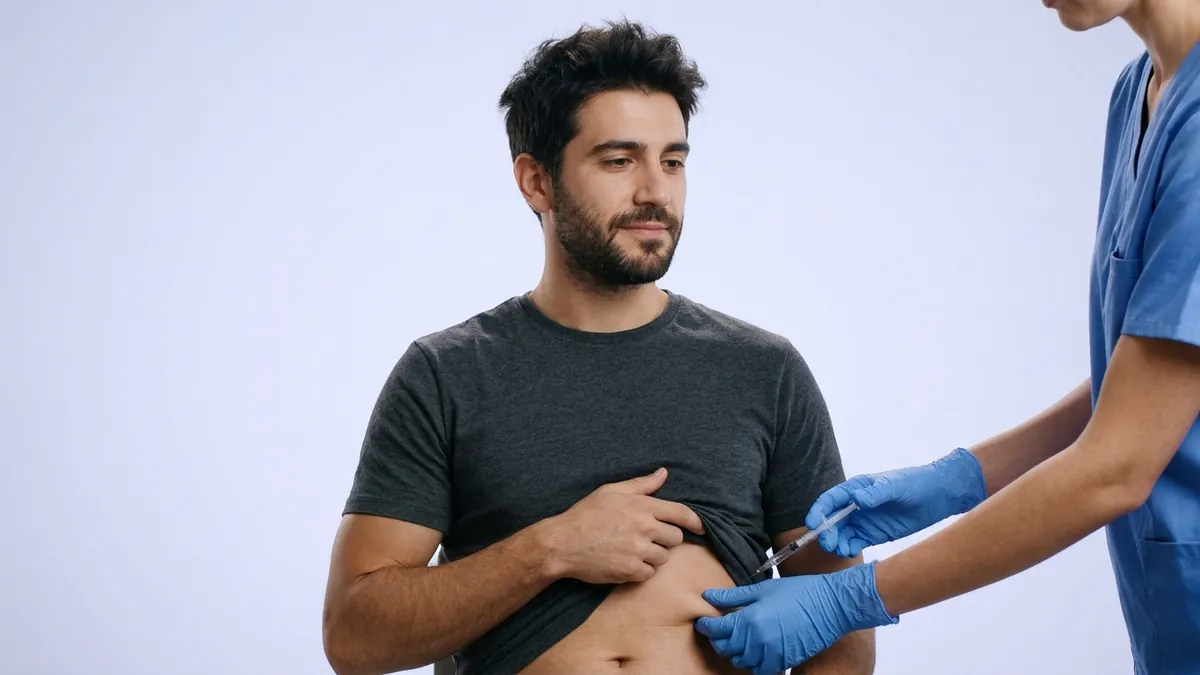
When patients ask us about the Yeztugo (Lenacapavir) Twice-Yearly Subcutaneous HIV PrEP Injection: 6-Month Protection, Lead-In Tablets & Nodules, we doctors always smile—because for decades, staying protected against HIV meant remembering a tablet almost every single morning. Be honest—remembering a daily pill while juggling work shifts, family life, gym bags, or weekend trips gets tiring after a while, doesn't it? Now, an under-the-skin clinic shot given just twice a year can shield your body against sexually acquired human immunodeficiency virus type 1 (HIV-1) for six full months at a time.
Whether you live in the United States—where the U.S. Food and Drug Administration approved this medicine under the brand name Yeztugo—or in the United Kingdom, Canada, or Australia, where regulators approved the exact same medicine under the brand name Yeytuo, the way it protects you is identical. Think about it for a second: two quick clinic visits a year with your Primary Care Physician (PCP), family GP clinic, or local sexual health clinic can replace 365 daily tablets.
At the same time, this injection has a few unique rules that catch people off guard if nobody explains them clearly up front. Why do you have to swallow starter tablets on Day 1 and Day 2? Why do most people feel a small, pea-like bump under their tummy skin afterward, and why is an HIV blood test mandatory before every single dose? Let's sit down and walk through every detail together in plain, everyday language.
📌 Key Takeaways at a Glance
- Six months of continuous protection: Lenacapavir (Yeztugo in the US; Yeytuo in the UK, Canada, and Australia) is a twice-yearly under-the-skin HIV prevention injection (subcutaneous pre-exposure prophylaxis, or PrEP) for HIV-negative adults and teens weighing at least 35 kg (77 lbs).
- Mandatory two-day tablet start: On Day 1, you receive two small tummy or thigh injections (927 mg total) plus two oral tablets (600 mg), followed by two more oral tablets (600 mg) at home on Day 2 so protection climbs rapidly.
- Small skin bumps are normal: About two in three users feel a firm, painless or mildly tender under-the-skin lump (subcutaneous nodule) where the medicine sits and slowly releases over 26 weeks.
- Strict HIV-negative testing rule: We doctors must confirm you are HIV-negative before your first dose and before every 6-month repeat shot to prevent drug-resistant HIV.
- HIV-1 focus only: It does not prevent bacterial sexually transmitted infections (STIs) like chlamydia, gonorrhea, or syphilis, nor does it prevent pregnancy.
What Is Yeztugo (Lenacapavir) Twice-Yearly Subcutaneous HIV PrEP Injection, and How Does 6-Month Protection Work?
Yeztugo (lenacapavir), known as Yeytuo in the UK, Canada, and Australia, is a twice-yearly under-the-skin HIV prevention injection (subcutaneous pre-exposure prophylaxis, or PrEP) for HIV-negative adults and teens weighing at least 35 kg (77 lbs). Paired with two days of lead-in tablets, shots every six months deliver sustained HIV-1 protection.
Have you ever wondered why older PrEP tablets have to be taken every day, while lenacapavir works for half a year? It comes down to two clever breakthroughs. First, lenacapavir is a first-in-class outer protein shell blocker (HIV-1 capsid inhibitor). Most older PrEP medicines wait until HIV tries to copy its genetic code inside one stage of an immune cell's life cycle. Lenacapavir grabs directly onto the cone-shaped protein armour—the capsid—that protects the virus's genetic core, jamming multiple steps at once so the virus cannot enter the cell nucleus, unpack itself, or assemble new copies. We don't usually stop to think about how a virus unpacks its suitcase inside a cell, do we?
Second, when your nurse or doctor injects lenacapavir into the fatty layer just beneath your skin (subcutaneous tissue), the liquid collects into a tiny, slow-release medicine reservoir (subcutaneous drug depot). Over the next 26 weeks, that pocket steadily trickles active medication into your bloodstream and genital and rectal tissues. In the landmark PURPOSE 1 and PURPOSE 2 clinical trials, twice-yearly lenacapavir reduced HIV acquisition by 96% to 100%, outperforming daily oral PrEP pills primarily because nobody had to worry about missed daily tablets.
One crucial clinical boundary to keep straight: Yeztugo is strictly for ongoing prevention before exposure (PrEP) in people who test HIV-negative. If you had a high-risk sexual exposure within the past 72 hours and are not already on PrEP, you need emergency post-exposure pills (post-exposure prophylaxis, or PEP) right away from your family GP clinic, Urgent Care center, or Emergency Room (ER / A&E)—not a Yeztugo starter shot. Also, although the same active drug is sold as Sunlenca to treat multidrug-resistant HIV alongside other antivirals, Yeztugo by itself is never enough to treat an active HIV infection.
How Do the Day 1 and Day 2 Oral Lead-In Tablets Work With Your 6-Month Injection Schedule?
Look closely at what happens inside your bloodstream during that very first week. Remember how we talked a moment ago about that slow-release medicine pocket under your skin? Because that under-the-skin depot releases medication gradually, it takes a little time on its own to reach peak protective levels in your tissues. What do you think bridges that early gap so you aren't left vulnerable in week one? That is the exact job of the two-day oral lead-in tablets.
We doctors follow a precise, three-part schedule backed by the U.S. FDA, CDC, MHRA, Health Canada, and Australia's TGA:
- Day 1 (Clinic Initiation Visit): Once your negative HIV test is confirmed, your clinician gives two 1.5 mL injections under the skin (927 mg of lenacapavir total), spaced at least 4 inches (10 cm) apart—typically in the abdomen at least 2 inches away from your belly button—and you swallow two 300 mg tablets (600 mg total) by mouth.
- Day 2 (At Home): The very next day, you swallow two more 300 mg tablets (600 mg total) at home, with or without food—alongside your morning coffee, oatmeal, or toast is completely fine.
- Every 6 Months / 26 Weeks (Continuation Visits): You return to your clinic every 26 weeks (within a plus-or-minus 2-week window, meaning weeks 24 to 28) for your repeat 927 mg subcutaneous dose (two 1.5 mL injections). You do not need oral tablets at routine 6-month maintenance visits!
What if life gets hectic and you forget your Day 2 tablets? Take those two Day 2 pills as soon as you remember—just never double up by taking Day 1 and Day 2 tablets on the exact same calendar day. And what if an overseas work assignment or summer holiday delays your 6-month clinic shot past 28 weeks? Call your clinic ahead of time! We doctors can prescribe temporary 300 mg once-weekly oral lenacapavir bridge tablets (taken once every 7 days for up to 6 months) until you can get back into the clinic for your next injection. Makes total sense now, right?
Who Can Safely Start Yeztugo, and Which HIV Tests or Drug Interactions Must We Check First?
Before we give your very first dose at your Primary Care Physician (PCP) or family GP clinic, we run through a quick, non-negotiable safety checklist. You must weigh at least 35 kg (77 lbs), want protection from sexually acquired HIV-1, and have a documented negative blood-based combined HIV protein and antibody test (fourth-generation HIV-1 antigen/antibody test), ideally within 7 days before starting—plus a viral load blood test (HIV-1 RNA nucleic acid test) if there is any chance of a very recent exposure.
Why are we doctors so strict about testing before starting and before every 6-month shot, and checking whether you've had flu-like fever, sore throat, rash, or swollen glands in the past few weeks? Those flu-like symptoms can signal brand-new early HIV infection (acute HIV seroconversion) before standard antibody tests turn positive. If someone unknowingly already has HIV and receives lenacapavir alone, the virus can rapidly mutate and develop resistance to capsid inhibitors, making future HIV treatment harder.
Medication checks matter hugely here too. Certain liver enzyme boosters (strong or moderate CYP3A inducers)—including tuberculosis antibiotics like rifampin or rifabutin, seizure medicines like carbamazepine or phenytoin, and the over-the-counter herbal supplement St. John's wort—speed up how fast your liver clears lenacapavir, dropping your protection unless special supplemental doses are given. Even more interesting, lenacapavir stays in your system in low "tail" amounts for up to 9 to 12 months after your last shot. Because it mildly slows down that same CYP3A liver pathway, starting certain cholesterol statins, blood thinners, migraine pills, or erectile dysfunction tablets months after your shot still requires a quick pharmacist check. Pretty surprising, right? Also, if you decide to stop Yeztugo while your HIV risk continues, we start daily oral PrEP around your 6-month mark to cover that fading tail period safely.
Why Do Subcutaneous Injection-Site Nodules Happen, and How Does Yeztugo Compare With Daily Pills or 2-Month Shots?
Let's talk openly about the #1 side effect people search online: those little under-the-skin bumps (subcutaneous injection-site nodules). In clinical studies, roughly 64% of people noticed a small, firm bump—often feeling like a tiny pea or marble deep beneath the skin—where each shot was given. Mild temporary redness, swelling, or soreness for a few days, along with occasional mild headache or Day 1–2 tablet queasiness, are the most common reactions.
Do you recall what we mentioned earlier about how the drug forms a slow-release depot under your skin? That nodule is your medicine depot plus your body's gentle local tissue wrap around it! Usually you cannot even see it from the outside, though you can feel it if you press your fingers over your tummy, and it gradually shrinks over several weeks to a few months. In clinical trials, fewer than 1.2% of people stopped lenacapavir because of injection reactions, and trained nurses inject slowly at a 90-degree angle into pinched subcutaneous fat—never shallowly into the top skin layers (intradermal injection), which could ulcerate the skin.
To help you compare your choices side by side and handle real-world situations confidently, take a look at this practical guide:
| PrEP Option or Clinical Situation | What It Means for Your Body & Action Step |
|---|---|
| Yeztugo / Yeytuo (Lenacapavir) Twice-Yearly Shot | Two subcutaneous injections every 6 months (26 weeks) after Day 1 & Day 2 starter tablets; safe even with mild-to-moderate kidney issues, with no daily pill burden. What you should do: Book your HIV test and clinic shots every 26 weeks (+/- 2 weeks) and avoid rubbing the injection site afterward. |
| Apretude (Cabotegravir) Every-2-Month Shot | Deep buttock muscle injection (intramuscular) given 1 month apart for two starter doses, then every 2 months (6 clinic visits a year) without subcutaneous tummy nodules. What you should do: Consider this option with your doctor if you prefer long-acting shots in the gluteal muscle rather than abdominal subcutaneous depots. |
| Daily Oral PrEP Pills (Truvada / Descovy / Generics) | One tablet swallowed daily (or 2-1-1 event-based dosing with tenofovir DF/emtricitabine for anal-sex risk only); easy to start and stop quickly, though protection drops if pills are missed. What you should do: Choose daily pills if you dislike needles, want rapid discontinuation, or need a short-term bridge. |
| Firm Pea-Sized Lump (Subcutaneous Nodule) After Shot | Expected slow-release drug depot under the skin seen in ~64% of users; shrinks gradually over weeks to months as medication absorbs. What you should do: Wear loose waistbands for 48 hours, apply a cool pack wrapped in a cloth for initial soreness, and leave the bump undisturbed. |
| Delayed 6-Month Clinic Visit (Past Week 28) | Drug levels begin dipping below optimal preventive thresholds if your repeat injection is more than 2 weeks overdue. What you should do: Contact your clinic before week 26–28 to arrange 300 mg once-weekly oral lenacapavir bridge pills or daily oral PrEP. |
For everyday comfort on shot day, wear soft joggers or loose-waisted jeans so your belt doesn't press right onto your abdomen, sip water or ginger tea with light crackers if the Day 1 or Day 2 tablets make your stomach slightly unsettled, and keep up your regular 3-to-6-month sexual health checkups for chlamydia, gonorrhea, syphilis, and hepatitis B and C. Using external or internal condoms alongside Yeztugo gives you complete, rounded protection.
✔️ What You Should Do & ❌ What to Avoid
- ✔️ DO take both Day 1 and Day 2 starter tablets on schedule: Completing all four 300 mg tablets across the first two days ensures protective drug levels build promptly right from week one.
- ✔️ DO put a 6-month calendar reminder in your phone: Lock in your next clinic visit inside your 24-to-28-week window, and ask early about weekly bridge pills if travel gets in the way.
- ✔️ DO tell every doctor and pharmacist you received lenacapavir: Mention your shot for up to 9–12 months after your final dose before starting any new prescription or herbal product.
- ❌ DON'T rub, knead, or aggressively massage your injection bump: Pressing or heating a fresh subcutaneous depot can irritate surrounding skin tissue—let it absorb peacefully.
- ❌ DON'T take St. John's wort or start rifampin/seizure meds unannounced: These medicines can strip lenacapavir out of your bloodstream and silently lower your HIV protection.
- ❌ DON'T share your starter or bridge tablets with a partner: Taking lenacapavir without confirmed HIV-negative blood work risks serious drug-resistant HIV.
🚨 When to Seek Immediate Emergency Care (Red-Flag Symptoms)
If you or someone near you develops any of these red-flag symptoms, do not wait — call 911 (or 999 in the UK / 000 in Australia) immediately or go straight to the nearest hospital Emergency Room (ER / A&E):
- Severe allergic reaction (anaphylaxis): Sudden swelling of your lips, tongue, face, or throat, hives spreading rapidly, wheezing, chest tightness, or trouble breathing after an injection or tablet.
- Severe skin breakdown at the injection site: Deepening blackened or dusky skin, an open ulcerating sore, pus drainage, or rapidly spreading hot red streaks with chills (signs of cutaneous necrosis or severe infection).
- Possible recent unprotected HIV exposure when NOT yet protected by PrEP: Seek care well within 72 hours at your nearest ER / A&E, Urgent Care center, or sexual health clinic to start emergency 28-day post-exposure prophylaxis (PEP).
- Sudden high fever, widespread rash, severe headache, and swollen lymph nodes: Seek urgent medical evaluation and an HIV RNA blood test right away to rule out acute HIV infection.
💡 Key Take-Home Message
- Yeztugo (Yeytuo) turns HIV-1 prevention into a simple twice-yearly clinic routine with 96% to 100% trial efficacy when paired with Day 1–2 oral starter tablets and timely 26-week visits.
- A small, firm under-the-skin depot nodule is normal and temporary—never rub it, keep every pre-injection HIV blood test, and always flag new medications with your doctor or pharmacist.






No comments yet. Be the first to share your question or experience below.