
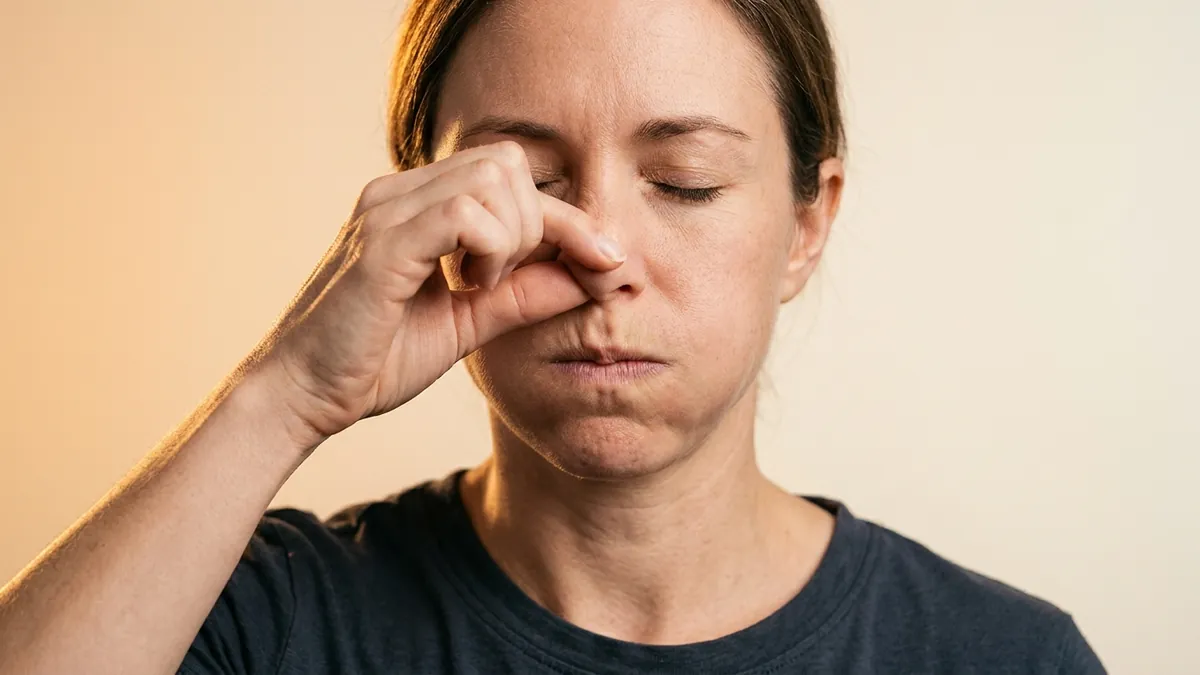
Just last week, a patient sat across from me in my exam room, resting a hand over their chest and looking visibly shaken. "I was just sitting on the couch watching television," they told me, "when out of nowhere my heart started pounding like a trapped bird fluttering against my ribs, and then ten minutes later it stopped just as suddenly." Have you ever felt that exact rush of panic when your pulse takes off for no obvious reason? If you have, you certainly aren't alone, and understanding simple physical techniques called vagal maneuvers can make a world of difference when your doctor confirms your heart is otherwise healthy.
When your heart suddenly jumps to 150 or even 200 beats per minute while you are resting, we doctors often suspect a common rhythm condition called a sudden upper-chamber racing heartbeat (supraventricular tachycardia, or SVT). Before reaching for strong intravenous medications or hospital procedures, there is a gentle, drug-free way to help your body reset its own rhythm. Let's sit down together and walk through how these techniques work, how we use them in the clinic, and how you can stay completely safe.
📌 Key Takeaways at a Glance
- Natural Heart Brake: Vagal maneuvers are targeted physical actions—like bearing down gently or cooling your face—that stimulate your vagus nerve to slow down a sudden racing heartbeat (supraventricular tachycardia, or SVT).
- Doctors' First-Line Choice: We doctors frequently try these techniques first because they are non-invasive, cost nothing, work within minutes roughly 20% to 40% of the time, and carry far fewer risks than emergency drugs or electrical shocks.
- Get a Proper Diagnosis First: Never try vagal maneuvers at home unless your Primary Care Physician (PCP), family GP, or cardiologist has confirmed your diagnosis and taught you the right technique.
- Never Rub Your Own Neck: Carotid sinus massage carries serious stroke risks in people with narrowed neck arteries and must only ever be performed by a trained doctor.
- Know the Emergency Red Flags: If a rapid heartbeat comes with chest pain, severe shortness of breath, dizziness, or fainting, call 911 (US & Canada), 999 or 111 (UK), or 000 (Australia) immediately.
What Are Vagal Maneuvers and How Do They Stop a Racing Heart?
Vagal maneuvers are simple, doctor-recommended physical techniques—such as bearing down gently or applying cold water to your face—that stimulate your vagus nerve to slow down a sudden racing heartbeat (supraventricular tachycardia, or SVT). Acting like your body's natural brake pedal, they calm rapid electrical signals in your heart within minutes without medication.
To picture how this works, think of your heart like a car cruising along the highway. Your nervous system has two pedals controlling how fast that engine runs. One is the gas pedal—your fight-or-flight system—which speeds your pulse up when you sprint for a bus, feel stressed, or drink too much coffee. The other is the brake pedal, controlled largely by a remarkable, wandering nerve called the vagus nerve (cranial nerve X).
This long nerve travels all the way from the base of your brain down through your neck, chest, and stomach. Along the way, it sends calming signals to your heart's natural electrical pacemaker and a tiny relay station called the atrioventricular (AV) node. Pretty surprising, right? We rarely stop to think about how a single nerve connects our face, lungs, and digestive tract directly to our heartbeat, do we?
When you perform a vagal maneuver, you intentionally trigger a brief physical reflex—such as a sudden change in chest pressure or a burst of cold temperature on your cheeks. That sensation tells your brain to press down firmly on your vagus nerve brake pedal. Within seconds, a natural chemical messenger called acetylcholine slows down the electrical traffic passing through your heart, breaking the runaway short-circuit and letting your normal, steady rhythm take back control.
Why Does My Heart Rate Spike Easily, and Why Do Doctors Recommend Vagal Maneuvers First?
Be honest, you've probably wondered why some people can drink a double espresso and feel completely fine, while someone else feels their heart suddenly hammer after bending over to tie their shoes. In people whose heart rate jumps abruptly, there is often a tiny extra electrical pathway inside the upper chambers of the heart. Everyday triggers—like dehydration, poor sleep, alcohol, decongestant cold tablets, or sudden emotional stress—can accidentally spark that loop and launch an episode of supraventricular tachycardia (SVT).
When you walk into your Primary Care Physician (PCP) clinic, family GP surgery, local Urgent Care center, or the hospital Emergency Room (ER / A&E) with a stable racing pulse, we doctors almost always reach for vagal maneuvers before anything else. Look at what makes them so valuable in everyday medical practice:
- Much Lower Risk: Calming your heart with your own nervous system avoids the sudden chest tightness, flushing, or side effects that often come with fast-acting intravenous heart medications or electrical rhythm resetting (cardioversion).
- Zero Equipment or Cost: You do not need expensive monitors, injections, or prescriptions to start—just simple positioning, your own breath, or cold water from a kitchen tap.
- Fast Results Within Minutes: When a vagal maneuver works, your heart rhythm usually clicks back into a normal pace within one to three minutes. Standard maneuvers succeed roughly 20% to 40% of the time, and newer leg-raising modifications push success rates even higher.
- Helpful Clues for Diagnosis: Even if a maneuver only slows your pulse briefly instead of stopping it completely, watching how your heart reacts on a heart tracing (electrocardiogram, or ECG) helps us doctors pinpoint the exact type of irregular heartbeat (arrhythmia) you have.
Makes sense, right? Before putting medication into your bloodstream, giving your body's built-in braking system a safe chance to solve the problem is simply good, sensible medicine.
What Are the Main Types of Vagal Maneuvers Used by Doctors?
Not every vagal maneuver works the exact same way, and some are safe for you to practice at home once diagnosed, while others belong strictly inside a clinic or hospital. Just think about it for a second: pressing on your neck is very different from holding an ice pack to your forehead, isn't it? The table below breaks down the primary techniques we doctors use and what each one involves.
| Vagal Maneuver Type | Clinical Explanation & Action Step |
|---|---|
| Standard Valsalva Maneuver | You take a normal breath in, pinch your nose shut, close your mouth, and bear down gently for 10 to 15 seconds as if trying to inflate a stiff balloon or have a bowel movement. This raises pressure inside your chest and triggers a strong vagus nerve rebound when you release. What you should do: Only practice this sitting or lying down after your doctor confirms you have SVT and demonstrates proper gentle pressure. |
| Modified Valsalva Maneuver | Used widely in emergency departments across the US, UK, Canada, and Australia, this upgrades the standard method. Right after you finish bearing down while seated, a clinician lays you flat and lifts your legs to a 45-degree angle for 15 seconds to boost blood flow back to your heart. What you should do: Ask your cardiologist or family doctor whether a safe home version with a family member assisting is appropriate for your specific heart condition. |
| Cold Water Diving Reflex | Plunging your face into cold water—or pressing a bag of frozen peas or an ice pack wrapped in a damp cloth over your eyes and upper cheeks—triggers an ancient mammalian reflex that immediately slows heart rate and conserves oxygen. What you should do: Keep a clean gel ice pack in your freezer if your doctor recommends this method, and always sit safely in a chair before applying cold to your face. |
| Carotid Sinus Massage | A doctor gently presses on a sensitive bundle of pressure sensors (the carotid sinus) along one side of your neck for 5 to 10 seconds while monitoring your heart tracing. This tricks your brain into thinking blood pressure is high, forcing your heart to slow down. What you should do: Never attempt this on yourself or let a non-medical person press on your neck, as it can dislodge artery plaque and cause a stroke. |
| Coughing or Gagging Reflexes | A firm, deliberate cough or gently stimulating the back of the throat can briefly spike chest pressure and activate the vagus nerve, though both methods are generally less reliable and less comfortable than the Valsalva or cold-water techniques. What you should do: Stick to the cleaner, more predictable methods your doctor specifically recommends rather than forcing harsh coughing spells. |
How Do You Perform Vagal Maneuvers Safely Step by Step?
Remember how we talked earlier about treating vagal maneuvers like real medical treatments rather than casual party tricks? Even though they require no pills, doing them properly—and knowing when to stop—keeps you from getting dizzy or falling. Here is how the three primary methods are carried out under medical guidance.
1. The Valsalva and Modified Valsalva Maneuver
In a clinic or Urgent Care setting, we start by having you sit comfortably on an exam table. You take a medium breath in, pinch your nostrils closed with your fingers, seal your lips, and push air gently against your closed airway for 10 to 15 seconds—similar to blowing through a blocked drinking straw. In the Modified Valsalva version, the moment those 15 seconds end, we gently recline your upper body flat and elevate your legs for 15 seconds before helping you sit back up. Sometimes doctors ask you to blow into an empty 10 mL syringe plunger to hit the exact right airway pressure safely.
2. The Cold Water Diving Reflex
Have you ever wondered why splashing ice-cold water on your face makes you gasp and instantly feel calmer? That is your diving reflex in action. Sitting upright at a table, you hold your breath and submerge your entire face—especially your forehead, eyes, and cheekbones—into a large kitchen bowl filled with cold tap water and ice cubes for 10 to 20 seconds. If a bowl of ice water feels uncomfortable or inconvenient, holding an ice pack or a towel soaked in ice water firmly across your upper face while leaning forward works along the exact same nerve pathway.
3. Carotid Sinus Massage (Doctor-Performed Only)
This technique is strictly reserved for trained physicians in a monitored setting. You lie flat on your back with your neck slightly extended and turned to one side. First, we listen carefully over your neck arteries with a stethoscope to rule out narrowing or turbulent blood flow (carotid bruits). Once cleared, we apply steady, gentle circular pressure with two fingers just below the angle of your jaw for 5 to 10 seconds on one side only, while watching your heart rhythm continuously on a monitor.
Who Should Avoid Vagal Maneuvers, and When Is a Racing Heart an Emergency?
Here is a crucial distinction that every patient deserves to understand clearly: vagal maneuvers are designed for people whose bodies are coping reasonably well despite a fast pulse. In medicine, we call that being hemodynamically stable. What do you think happens if your heart is beating so fast that your blood pressure drops and your brain or heart muscle cannot get enough oxygen-rich blood?
When a patient becomes unstable, we doctors skip vagal maneuvers completely and move straight to urgent hospital stabilization using targeted intravenous medications or controlled electrical rhythm resetting (cardioversion). You should never attempt vagal maneuvers if a fast heartbeat comes alongside any of these warning signs:
- Low blood pressure (hypotension): Feeling lightheaded, woozy, clammy, or like the room is spinning when you stand or sit.
- Chest discomfort: Any pressure, squeezing, tightness, or sharp pain across your chest, jaw, neck, or left arm.
- Shortness of breath: Struggling to catch your breath or feeling winded while sitting completely still.
- Signs of reduced blood flow to vital organs: Sudden confusion, pale or bluish skin, extreme weakness, or fainting (syncope).
See? That's exactly why we always say not every rapid heartbeat is harmless SVT. While SVT starts in the upper chambers of the heart, a much more dangerous rhythm called ventricular tachycardia (VT) starts in the lower pumping chambers. VT does not respond safely to home vagal maneuvers and requires immediate emergency hospital evaluation on a 12-lead electrocardiogram (ECG) to protect your life.
Are There Any Side Effects or Risks With Vagal Maneuvers?
When performed on the right person under proper medical guidance, complications from vagal maneuvers are uncommon and usually last only a few seconds. Still, because you are intentionally pressing your body's nervous system brake pedal, it helps to know what temporary reactions can occur:
- A sudden dip in blood pressure (hypotension): Standing up too quickly right after bearing down can make you feel faint or lightheaded.
- An overly slow heartbeat (bradycardia): Occasionally, the vagus nerve brakes a little too hard for a few seconds, causing a brief pause or sluggish pulse before your normal rhythm settles in.
- Temporary rhythm shifts: Rarely, irritating the heart's electrical system can trigger another irregular rhythm such as atrial fibrillation, or—in patients with underlying structural heart disease—serious lower-chamber arrhythmias.
Furthermore, carotid sinus massage carries specific, serious risks if used on the wrong person. Pressing on the carotid artery in the neck can knock loose tiny cholesterol plaques or temporarily reduce blood flow to the brain. For that reason, doctors strictly avoid carotid sinus massage in anyone who has:
- A past stroke or mini-stroke (transient ischemic attack, or TIA).
- Known narrowing or plaque buildup in the neck arteries (carotid artery stenosis).
- A recent heart attack (myocardial infarction) within the past three months.
- An age under 10 years old, as young children respond unpredictably and safer alternatives work better.
✔️ What You Should Do & ❌ What to Avoid
- ✔️ Do get an accurate ECG diagnosis first: Visit your Primary Care Physician (PCP), family GP clinic, or Urgent Care center so we can capture your rhythm on an electrocardiogram and confirm it is safe for vagal maneuvers.
- ✔️ Do sit or lie down safely before trying a doctor-approved maneuver: Always perform the Valsalva or cold-water technique on a sturdy chair, sofa, or bed so a brief dizzy spell cannot cause a fall.
- ✔️ Do keep a symptom and trigger diary: Jot down when episodes start, how long they last, and whether triggers like iced coffee, energy drinks, alcohol, or dehydration came beforehand.
- ✔️ Do stay well hydrated with plain water: Mild dehydration makes your heart work harder and lowers blood volume, making sudden SVT episodes far more likely.
- ❌ Don't press or massage your own neck: Never try carotid sinus massage at home or ask a friend to rub your neck when your heart races.
- ❌ Don't bear down aggressively for more than 15 seconds: Straining violently until your face turns purple raises pressure dangerously and increases fainting risk without improving results.
🚨 When to Seek Immediate Emergency Care (Red-Flag Symptoms)
If you or someone near you develops any of these red-flag symptoms, do not wait — call 911 (or 999 in the UK / 000 in Australia) immediately or go straight to the nearest hospital Emergency Room (ER / A&E):
- A sudden racing heartbeat accompanied by chest pain, tightness, pressure, or pain spreading to your arm, back, or jaw.
- Severe shortness of breath, wheezing, or feeling unable to take a full breath at rest.
- Dizziness, lightheadedness, sudden confusion, blurred vision, or fainting (passing out).
- A rapid heart rate that lasts longer than 15 to 20 minutes without slowing down despite resting calmly.
- Any sudden racing pulse if you have a known history of heart failure, coronary artery disease, or prior heart attack.
💡 Key Take-Home Message
- Vagal maneuvers use your body's natural vagus nerve "brake" to interrupt sudden episodes of supraventricular tachycardia (SVT) safely without medication.
- The Valsalva maneuver, Modified Valsalva maneuver, and cold-water diving reflex are the safest, most effective options when approved by your doctor.
- Carotid sinus massage must only be performed by a physician after checking your neck arteries and never at home.
- If vagal maneuvers do not stop an episode—or if episodes happen frequently—your doctor can offer reliable long-term solutions ranging from daily medications to a curative procedure called catheter ablation.






No comments yet. Be the first to share your question or experience below.