

Do you also have asthma or similar breathing difficulties? You probably know the pain you feel when you suddenly find yourself short of breath and hear a wheezing sound coming from your chest. Today we are going to talk about a type of inhaler that is used to give you quick relief in such an emergency. This is often called a “rescue inhaler ”. That means an inhaler that comes to your rescue in an emergency. Let’s see everything about this inhaler that contains the drug Levalbuterol.
What is this Levalbuterol inhaler?
Simply put, Levalbuterol is a medicine that widens the airways in your lungs . In conditions like asthma , these airways suddenly become blocked. In medical terms, this is called `(Bronchospasm)`. So when you use this inhaler, those blocked airways widen, making it easier for you to breathe. This is also called a “ Rescue Inhaler ” because it provides quick-relief in an emergency.
Things you need to tell your doctor before taking this medicine
It is very important that your doctor is fully aware of your health condition before giving you this inhaler. Therefore, if you have any of the conditions below, be sure to tell your doctor.
| Illness or condition | Why should you care? |
|---|---|
| Heart disease or high blood pressure | This medicine can affect heart rate and blood pressure. |
| Diabetes (High blood sugar) | There is a possibility of a temporary increase in blood sugar levels. |
| Irregular heartbeat | The current situation is likely to worsen. |
| Kidney disease | The dosage may need to be changed because it affects the excretion of the drug from the body. |
| Thyroid disease | People with high thyroid hormone levels may be affected. |
| Seizures | This medication can sometimes affect seizures. |
| Being pregnant or trying to get pregnant | You should discuss the possible effects on the fetus with your doctor. |
| Breastfeeding the baby | Medical advice should be sought regarding whether the medication passes to the baby through breast milk. |
| Allergies to other medications or foods | This should not be used if you are allergic to Levalbuterol or Albuterol. |
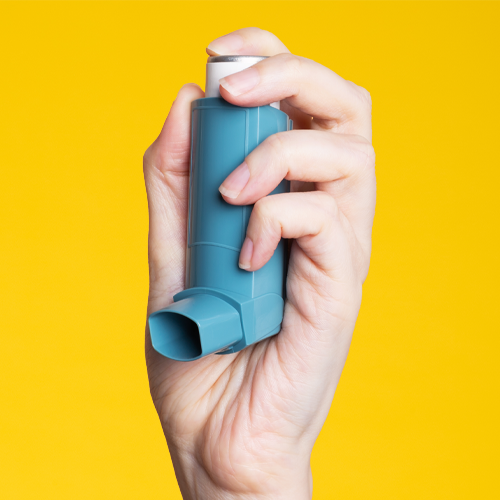
How to use the inhaler correctly?
This is a medicine that you inhale through your mouth. Use it only as directed by your doctor, and only for the prescribed amount of time. Using too much can cause dangerous side effects . Read the instructions that come with your inhaler carefully. If you are not sure how to use it, ask your doctor again.
If you give it to children...
This is sometimes prescribed for children over 4 years of age. However, there are some special considerations when giving it to children. Therefore, talk to your doctor carefully about how to give it to your child and get advice.
What if you use too much? (Overdose)
If you have any suspicion that you have taken too much of this medicine, immediately contact the National Poisons Information Centre at the Colombo National Hospital. Or go to the Emergency Department (ETU) of the nearest hospital. Do not take this lightly.
Most importantly: This inhaler is for you only. Do not share it with anyone else who has the same symptoms as you.
What other things can interact with this medicine?
Some other medications you are taking can affect the way Levalbuterol works. Therefore, tell your doctor about all medications, vitamins, herbal remedies, and supplements you are taking. This medication may interact with, especially the following:
- Some medications for heart disease
- Diuretics
- Medications for mental illness and depression
- Some medicines for colds
- Caffeine-containing beverages and medications
- Some medications and herbal products used for weight loss
- Types of steroid hormones
- Thyroid hormones
- Some types of antibiotics
This is not a complete list, so it's safest to tell your doctor about everything you take.
Things to keep in mind when using an inhaler
- Monitor symptoms: If your symptoms do not improve or worsen, tell your doctor immediately.
- If you are using your inhaler too much: If you find yourself needing to use your inhaler more often than usual, it could be a sign that your asthma is not under control. It could be a sign of a serious condition. So seek medical advice immediately.
- Create an Asthma Action Plan: It's important for you and your doctor to create an asthma action plan that's specific to you. This means you know in advance what to do when your symptoms get worse (yellow zone) and what to do if they get to a point where you need emergency medical attention (red zone).
- Dry mouth: This medication may cause dry mouth. This can be controlled by chewing sugar-free gum and drinking more water. However, if the discomfort persists, tell your doctor .
What are the possible side effects of the medication?
Like any medicine, this one can cause side effects in some people. Some of them are serious, some of them are common.
| Type of side effect | Symptoms |
|---|---|
| Allergic reactions | Skin rash, itching, swelling of the face, lips, tongue or throat. |
| Changes in heart rate | Feeling like your heart is beating fast, chest pain, dizziness, difficulty breathing. |
| Increased blood pressure | Symptoms such as severe headaches and vision changes. |
| Low potassium levels | Muscle pain, weakness, irregular heartbeat. |
| Increased difficulty breathing | If you experience increased difficulty breathing or wheezing after using the inhaler. |
| Dizziness | |
| Headache | |
| Tremors | |
| Trouble sleeping |
How do you hold the inhaler properly?
To maintain the quality of the medicine, it must be stored properly.
- Keep out of reach of children and pets.
- Hold the mouthpiece in your hand with the mouthpiece facing down.
- Store at normal room temperature (between 20-25 degrees Celsius). Do not store in areas of extreme heat, cold, or humidity.
- When the dose counter on the inhaler reaches '0', or when the expiration date has passed, discard the inhaler and get a new one.
Take-Home Message
- Levalbuterol is a "rescue" inhaler used to treat sudden shortness of breath in conditions such as asthma.
- Always use this as directed by your doctor, and only in the prescribed amount.
- Inform your doctor about any other illnesses you have and all other medications you are taking.
- If your symptoms worsen or you need to use your inhaler more often, it is a warning sign. Seek medical advice immediately.
- In case of overdose or severe side effects, go to the nearest hospital emergency room (ETU).


💬 Comments (0)
No comments yet. Be the first to share your thoughts here.
Add Your Comment