

When families first look up Loeys Dietz syndrome symptoms, the search almost always begins with a handful of small, seemingly unrelated clues—much like when I examined an eleven-year-old boy named Liam who came in with his mom after his third ankle sprain of the school term, soft skin that showed blue veins across his chest, and a tiny split right at the tip of the dangling tissue in the back of his throat.
Have you ever wondered how a routine look inside someone's mouth could protect their heart years down the road? On their own, bendy joints, easy bruising, or food allergies seem like everyday childhood quirks. Yet when we doctors piece those outward features together, they point toward a specific inherited connective tissue condition first described in 2005 that needs proactive heart and blood vessel monitoring. Pretty surprising, right?
Whether a pediatrician noticed wide-set eyes in your child, an echocardiogram flagged a slightly widened artery in your own chest, or a relative just received genetic test results, understanding Loeys Dietz syndrome symptoms: clinical meaning, causes, normal ranges & next steps puts you firmly in control. Let us walk through what happens inside the body, which measurements actually matter on your scan reports, and how your Primary Care Physician (PCP) or family GP clinic coordinates specialist care.
📌 Key Takeaways at a Glance
- Four core body systems: Classic clues span twisted blood vessels, facial traits like a split uvula and wide-set eyes, skeletal flexibility or chest curvature, and velvety translucent skin alongside allergies.
- Five main genetic subtypes: Changes in the TGF-beta cell-signaling pathway cause Types 1 through 5; roughly three out of four diagnoses happen as brand-new gene changes with no prior family history.
- Earlier vessel protection than Marfan syndrome: Arteries beyond just the heart root can twist or widen, so doctors check head-to-pelvis scans and recommend preventive repair at smaller diameters (often 4.0 to 4.5 cm in adults).
- Clear daily game plan: Gentle blood pressure medicines, regular heart ultrasounds, neck X-rays before surgery, and low-impact exercise keep arteries safe long-term.
What Are Loeys Dietz Syndrome Symptoms and What Do They Mean Clinically?
Loeys Dietz syndrome symptoms are head-to-toe signs of an inherited connective tissue condition that weakens and twists blood vessels throughout the body. Classic clues include widely spaced eyes, a split uvula in the throat, soft translucent skin that bruises easily, flexible joints, allergies, and early enlargement of the main heart artery.
Think about connective tissue for a second like the reinforced mortar and elastic cables holding a suspension bridge steady in high winds. Connective tissue gives strength and bounce to your skin, ligaments, gut lining, bones, and—most importantly—the muscular walls of your arteries. When that elastic framework behaves differently from birth, gentle outward clues appear on the skin, face, and skeleton while quieter changes develop inside blood vessels.
Clinically, no two people — even parent and child within the same household — show the exact same checklist of features. Doctors call this variable expressivity. One teenager may have striking outward traits that lead to diagnosis in infancy, whereas an adult in their thirties might have almost no facial clues and only discover the condition after a heart ultrasound scan (transthoracic echocardiogram) shows widening at the base of the aorta. Now that makes sense why thorough screening matters so much, doesn't it?
How Do Gene Changes Cause Loeys-Dietz Syndrome, and How Is It Different From Marfan Syndrome?
Inside your cells, a chemical messaging system called the transforming growth factor-beta pathway (TGF-beta signaling pathway) tells tissues how to grow, repair, and maintain healthy elasticity. Specific spelling changes in genes along this pathway disrupt normal vessel wall maintenance, leading medical geneticists to group Loeys-Dietz syndrome into five primary subtypes:
- Type 1 (TGFBR1 gene) & Type 2 (TGFBR2 gene): The most frequently diagnosed forms, often linked with more pronounced craniofacial features, translucent skin, and earlier blood vessel enlargement.
- Type 3 (SMAD3 gene): Strongly associated with early-onset wear-and-tear joint arthritis (osteoarthritis), disc issues, and aneurysms alongside milder facial traits.
- Type 4 (TGFB2 gene) & Type 5 (TGFB3 gene): Typically milder outward features that often overlap with tall stature or flat feet, though lifetime arterial monitoring remains essential.
About 25 percent of patients inherit the gene change from a parent in an autosomal dominant pattern, meaning each child has a 50 percent chance of inheriting it. The remaining 75 percent occur as spontaneous new changes (de novo variants) right at conception. Many families initially hear "maybe it is Marfan syndrome" before genetic testing clarifies the picture. Look closely at what sets them apart: unlike Marfan syndrome, Loeys-Dietz syndrome almost never causes dislocated eye lenses (ectopia lentis). Instead, it brings unique clues like a split uvula, wide-set eyes, allergies, and twisting arteries from head to pelvis rather than just at the heart root. It also overlaps skin traits with vascular Ehlers-Danlos syndrome (*COL3A1*), which is why a targeted genetic blood or saliva panel ordered via your specialist clinic gives the definitive answer.
What Are the Classic Head-to-Toe Signs Across Arteries, Face, Skin, Joints, and Digestion?
Remember how we talked about Liam's throat check and sprained ankles at the very beginning? When you visit your Primary Care Physician (PCP) or family GP clinic, we doctors examine four main symptom clusters from head to toe before arranging genetics and cardiology referrals:
- Blood vessel and heart signs: The hallmark internal finding is twisting and spiraling of medium and large arteries (arterial tortuosity), especially in the neck and head, which usually causes zero pain by itself. More seriously, the base of the main heart artery can stretch outward (aortic root aneurysm), and smaller aneurysms can form in chest, abdominal, or brain arteries.
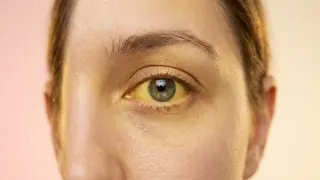
- Facial, eye, and throat features: Widely spaced eyes (hypertelorism), a bluish-gray tint to the whites of the eyes (blue sclerae), a small or receding chin (micrognathia), a high-arched or cleft palate, or a split/broad dangly tissue at the back of the throat (bifid uvula). Rarely, infants have early fusion of skull sutures (craniosynostosis).
- Skeletal and neck signs: Long slender fingers (arachnodactyly), curved spine (scoliosis), sunken breastbone (pectus excavatum) or outward-protruding chest (pectus carinatum), clubfoot at birth, flat feet, loose hypermobile joints, and unstable upper neck bones (cervical spine instability).
- Skin, immune, and digestive clues: Soft, velvety, almost see-through skin with prominent surface veins, easy bruising from minor bumps, wide thin scars (atrophic scarring), recurrent abdominal or groin hernias, and surprisingly high rates of eczema, asthma, food allergies, and allergic inflammation of the food pipe (eosinophilic esophagitis) causing trouble swallowing or stomach aches.
We rarely stop to think that seasonal wheezing, dairy or peanut allergies, and a split uvula could belong to the same underlying puzzle as heart health, do we? Yet recognizing these allergy and gut patterns spares patients years of unexplained digestive discomfort.
What Are Normal Aortic Ranges, Z-Scores, Scan Schedules, and Treatment Steps?
When patients search for "normal ranges" in Loeys-Dietz syndrome, they are almost always staring at numbers on an echocardiogram report and wondering whether an artery measurement is safe. In growing children and teens, cardiologists adjust aortic size for height and weight using a statistical yardstick called a Z-score. A normal aortic root Z-score sits strictly between -2.0 and +2.0; anything above +2.0 signals mild-to-significant widening. In average-sized adults, a normal aortic root diameter typically measures under 3.4 to 4.0 cm (34 to 40 mm) depending on sex and body surface area.
Here is the most life-saving numerical difference in cardiovascular medicine: in Marfan syndrome, surgeons often wait until the aortic root reaches 5.0 cm before recommending preventive repair. Because Loeys-Dietz arterial walls can tear (aortic dissection) at smaller sizes, cardiology guidelines evaluate planned, valve-sparing aortic root replacement much earlier—often around 4.0 to 4.2 cm (40 to 42 mm) in adults with Types 1 or 2, around 4.2 to 4.5 cm in Types 3 through 5, or sooner if the aorta expands by 0.5 cm (5 mm) or more in a single year.
To keep wall tension gentle every day, specialists typically prescribe an angiotensin receptor blocker (ARB) such as losartan or irbesartan, a beta-blocker such as atenolol or metoprolol, or both together, aiming to keep resting home blood pressure comfortably controlled (often around or below 110–120/70–80 mmHg in adults without causing dizziness). Standard surveillance includes a heart ultrasound every 6 to 12 months, a head-to-pelvis specialized blood vessel scan (magnetic resonance angiography, or MRA, or computed tomography angiography, or CTA) at diagnosis and every 1 to 2 years, plus flexion-extension neck X-rays before any general anesthesia or sports clearance.
How Do Specific Loeys-Dietz Findings Translate Into Practical Next Steps and Daily Care?
Seeing medical terms on clinic letters can feel intimidating, so let us put the major symptoms, scan cutoffs, and everyday clinical situations side by side in a clear two-column guide so you know exactly what each finding means and how to act on it:
| Symptom, Scan Finding, or Situation | Clinical Meaning & Practical Next Step |
|---|---|
| Split or broad uvula with wide-set eyes or translucent skin | Outward developmental clues pointing toward altered TGF-beta connective tissue signaling, even if your heart feels completely fine today. What you should do: Book an appointment with your Primary Care Physician (PCP) or family GP clinic to request a baseline echocardiogram and a referral to a medical genetics clinic. |
| Aortic root Z-score above +2.0 (kids) or adult root approaching 4.0 cm | Shows measurable stretching of the main artery leaving the heart; surgical planning thresholds arrive earlier in Loeys-Dietz than in Marfan syndrome. What you should do: Follow up promptly with an inherited aortopathy cardiologist, take prescribed losartan or beta-blockers daily without skipping doses, and repeat ultrasounds every 6 to 12 months. |
| Twisted neck or belly arteries (arterial tortuosity) on MRA/CTA | Common benign-feeling spiraling of vessels in Loeys-Dietz syndrome, though localized bulges (aneurysms) along branch arteries must be tracked. What you should do: Keep your scheduled 1-to-2-year head-to-pelvis MRA or low-dose CTA appointments so vascular specialists can compare vessel diameters millimeter by millimeter. |
| Neck stiffness, tingling fingers, or upcoming dental/surgical anesthesia | Possible looseness in the upper neck bones (cervical spine instability), which could press on nerves if the neck is tilted backward during intubation. What you should do: Ask your doctor for flexion-extension cervical spine X-rays and notify every anesthesiologist and surgical team well before any procedure. |
| Food getting stuck in the chest, reflux, or frequent food reactions | Strong overlap with allergic inflammation of the esophagus (eosinophilic esophagitis) and gut sensitivity seen in up to a third of patients. What you should do: Keep a food-symptom diary and ask your GP for an allergy or gastroenterology referral rather than relying solely on over-the-counter antacids. |
| Planning pregnancy or testing first-degree relatives | Each child of an affected parent has a 50 percent inheritance chance, and pregnancy hormones plus extra blood volume place heavy stress on the aorta. What you should do: Arrange preconception genetic counseling, high-risk maternal-fetal cardiology imaging, and medication review (switching off ARBs like losartan before conceiving, as they are unsafe in pregnancy). |
In day-to-day life across the US, UK, Canada, and Australia, small lifestyle habits protect your blood vessels wonderfully. Think about your weekly grocery basket: choosing lower-sodium staples like morning oatmeal with berries, grilled salmon, avocado on whole-grain toast, unsalted almonds, and plenty of plain water or herbal tea helps keep blood pressure naturally steady—especially compared with salty deli meats, canned soups, or fast-food burgers. For staying active, swap heavy isometric straining like maximal gym deadlifts, planks to exhaustion, rugby scrums, or tackle football for rhythmic, conversational-pace activities like brisk neighborhood walks, easy flat-path cycling, or recreational lap swimming.
✔️ What You Should Do & ❌ What to Avoid
- ✔️ DO wear or carry medical alert identification: Keep a medical alert bracelet or smartphone emergency card noting "Loeys-Dietz Syndrome — Risk of Aortic Dissection & Cervical Spine Instability" so paramedics have instant context.
- ✔️ DO take blood pressure medication consistently: Daily beta-blockers or ARBs cushion every heartbeat against fragile vessel walls; check home blood pressure gently once or twice a week if advised.
- ✔️ DO protect joints and bone density: Supportive sneakers or custom orthotics ease flat-foot and ankle strain, while adequate dietary calcium and vitamin D support growing or aging bones.
- ❌ DON'T lift heavy weights where you hold your breath and strain: Straining against a closed throat (the Valsalva maneuver) causes sudden, sharp spikes in aortic pressure—even lifting heavy furniture during a house move counts!
- ❌ DON'T use decongestant nasal sprays or high-dose stimulants carelessly: Over-the-counter cold tablets containing pseudoephedrine, phenylephrine, or excessive energy drinks constrict arteries and spike blood pressure; ask your pharmacist for safe saline or steroid nasal sprays instead.
- ❌ DON'T take fluoroquinolone antibiotics unless no alternative exists: Antibiotics like ciprofloxacin or levofloxacin carry known regulatory warnings for weakening collagen in patients with aortic aneurysms—always remind urgent care doctors of your diagnosis.
🚨 When to Seek Immediate Emergency Care (Red-Flag Symptoms)
If you or someone near you develops any of these red-flag symptoms, do not wait — call 911 (US & Canada), 999 or 111 (UK), or 000 (Australia) immediately or go straight to the nearest hospital Emergency Room (ER / A&E):
- Sudden, severe chest, upper back, neck, or jaw pain: Especially pain described as sharp, tearing, or ripping between the shoulder blades, which can signal an acute aortic tear (dissection).
- Unexplained intense abdominal or flank pain: Sudden severe belly or lower back pain accompanied by pale, clammy skin, faintness, or nausea, pointing to potential vessel trouble in the abdomen.
- Sudden worst-ever headache or stroke-like signs: Facial drooping, slurred speech, sudden blurred or double vision, or weakness/numbness in one arm or leg.
- Sudden shortness of breath and sharp one-sided chest pain: Can indicate air leaking around the lung (spontaneous pneumothorax), which happens occasionally in connective tissue disorders.
- Fainting (syncope) or sudden loss of pulse/warmth in an arm or leg: Immediately tell triage staff on arrival at the ER or A&E that the patient has Loeys-Dietz syndrome so urgent CT vascular imaging is prioritized without delay.
💡 Key Take-Home Message
- Knowledge prevents emergencies: Most serious complications happen when Loeys-Dietz syndrome goes unrecognized; once diagnosed, scheduled head-to-pelvis scans and preventive surgery are remarkably safe and effective.
- Look beyond the heart root: Combine yearly cardiology care with genetic counseling, neck spine checks, and attention to skin, joint, and food-allergy comfort.
- Involve the whole care team: Make sure your family GP, school nurse, dentist, pharmacist, and emergency contacts all share your updated vascular care plan.




No comments yet. Be the first to share your question or experience below.