
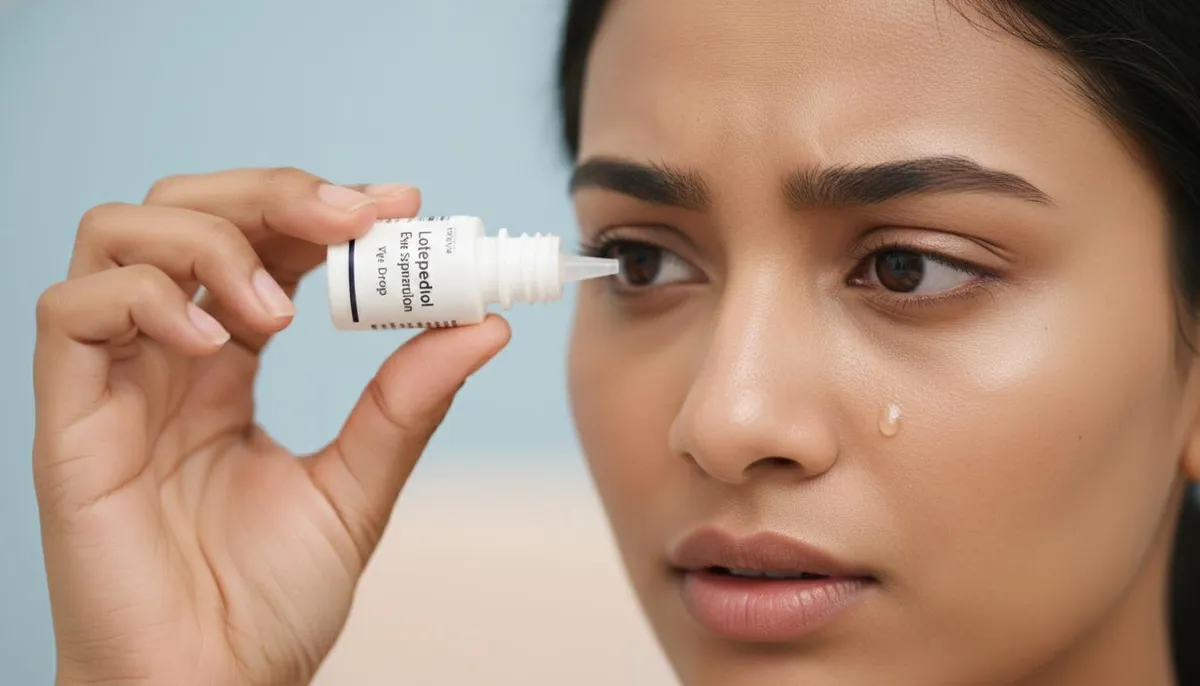
Is your eye red, itchy, or swollen after surgery or a stubborn allergy? You might also feel a dry or gritty sensation throughout the day. When these eye issues pop up, your doctor may prescribe a special liquid medicine called an eye drop. Today, we will look closely at a common eye medicine known as loteprednol eye suspension.
Understanding how your prescription works helps you feel more confident about your daily eye care routine. Let us explore what this medicine does, how to use it safely, and what side effects you might experience. We want you to feel fully informed every step of the way.
Key Takeaways at a Glance
- What it is: Loteprednol is a prescription corticosteroid eye drop designed to lower swelling, pain, and eye allergies.
- Medical supervision: Always share your full health history with your doctor before starting this medicine.
- Clean application: Never let the dropper tip touch your eye, fingers, or any other surface to avoid germs.
- Complete the course: Use the drops for the exact number of days your doctor recommended, even if your eyes feel better.
- Emergency care: Call emergency services or see a doctor right away if you notice sudden vision changes or severe eye pain.
What Exactly Is Loteprednol?
Simply put, loteprednol is a prescription steroid medicine made specifically for your eyes. Doctors call this type of medicine a corticosteroid. Do not worry. When you use it exactly as your doctor directs, it is very safe and helpful.
Doctors primarily prescribe this medicine for a few specific eye conditions:
- After eye surgery: It helps lower swelling, redness, and pain after you have an eye operation.
- For eye allergies: Dust or pollen can cause your eyes to turn red, swell, and itch fiercely. This medicine helps calm those allergic reactions down.
- For dry eyes: In certain medical cases, doctors also use this medicine to treat severe dry eye symptoms.
The most important rule is that you should only use this medicine if a doctor prescribes it for you. Even if you have some leftover medicine from a past visit or a friend offers you theirs, never use it without talking to your doctor first.
Things to Tell Your Doctor Before Starting This Medicine
Before your doctor writes your prescription, they will ask you a few important questions. Answering these questions honestly keeps you safe and protects your vision.
| Health Condition | Why It Matters |
|---|---|
| Active eye or body infections | Steroid medicines can sometimes make it harder for your body to fight off infections. Your doctor needs to treat the infection separately first. |
| Glaucoma | Using this medicine for a long time can raise the pressure inside your eye. Glaucoma is already linked to eye pressure, so your doctor must monitor you closely. |
| Wearing contact lenses | You must take out your contact lenses before putting the drops in. Ask your doctor when it is safe to put your lenses back in. |
| Allergies to steroids | If you had a bad reaction to this medicine or a similar steroid in the past, your doctor needs to know right away. |
| Pregnancy or breastfeeding | You must use any medicine with extra care during pregnancy or while nursing. Always keep your doctor updated on your family plans. |
How to Put In Your Eye Drops Correctly
To get the full benefit of your medicine, you need to put it into your eye correctly. The process is quite simple. Just follow these easy steps every time.
1. Shake the bottle well: Before you use the medicine, shake the bottle gently for a few seconds.
2. Wash your hands: Wash your hands thoroughly with soap and water before and after you use the drops.
3. Get into position: Tilt your head back slightly and look up at the ceiling. Use your clean index finger to pull your lower eyelid down gently to form a tiny pocket.
4. Apply the drops: Keep the dropper tip away from your eye, fingers, and any other surface. Touching the tip can spread germs into your bottle. Release the exact number of drops your doctor told you to use into the pocket of your lower eyelid.
5. Close your eye gently: After you put the drop in, close your eye softly and keep it closed for about thirty seconds. Do not squeeze your eyelids tightly shut. This helps the medicine spread evenly across your entire eye.
6. Stick to the plan: Even if your eyes feel much better, use the medicine for the full number of days your doctor prescribed. Never stop early on your own.
What Should You Do If You Miss a Dose?
Missing a dose can happen to anyone. If you forget, put the drop in as soon as you remember. However, if it is almost time for your next scheduled dose, skip the missed dose completely. Just go back to your normal schedule with the next drop.
Never take a double dose to make up for a missed one. Doubling up will not help your eyes heal faster and can lead to unwanted side effects.
Possible Side Effects of This Medicine
Like almost any medicine, loteprednol can cause mild side effects in some people. However, many people use it without any trouble at all. Let us look at what you might experience.
| Side Effect Category | What to Look For |
|---|---|
| Signs to see a doctor quickly | Allergic reactions like skin rashes, itching, or swelling of your face, lips, and tongue. Also watch for blurry vision or eye pain that gets worse. |
| Mild everyday effects | You might feel a mild stinging sensation right after the drop goes in. Some people also get a mild headache or a runny nose because the tear ducts drain into the nasal passage. |
🚨 When to Call for Emergency Help
If you experience sudden vision loss, severe eye pain, eye discharge, or signs of a serious allergic reaction like trouble breathing, call 911 (US/Canada) or 999 (UK) right away. You can also head straight to your nearest hospital Emergency Department or A&E.
More Important Facts to Keep in Mind
Here are a few final safety tips to keep your eyes healthy while using this treatment:
- If you use too much by accident: While rare, if you get too many drops in your eye or someone swallows the liquid by mistake, contact your local poison control center right away. In the US, call Poison Control at 1-800-222-1222. You can also visit your nearest emergency room.
- How to store your medicine: Store your eye drops at normal room temperature between 15°C and 25°C (59°F to 77°F). Keep the bottle away from direct sunlight and out of reach of children. Do not put your eye drops in the refrigerator or freezer. Keep the cap tightly closed when you are not using it. Throw away any expired medicine safely.
- Never share your medicine: This prescription is meant for you alone. Even if a friend or family member has the exact same symptoms, never give them your eye drops.
If your eye symptoms do not improve after a few days, or if they seem to get worse, reach out to your eye doctor right away for a checkup.






No comments yet. Be the first to share your question or experience below.