

Have you ever wondered how your brain and spinal cord stay safe inside your body? They are very soft and delicate organs. Your body uses a special system of wrappers to protect them. In medicine, we call this protective system the meninges.
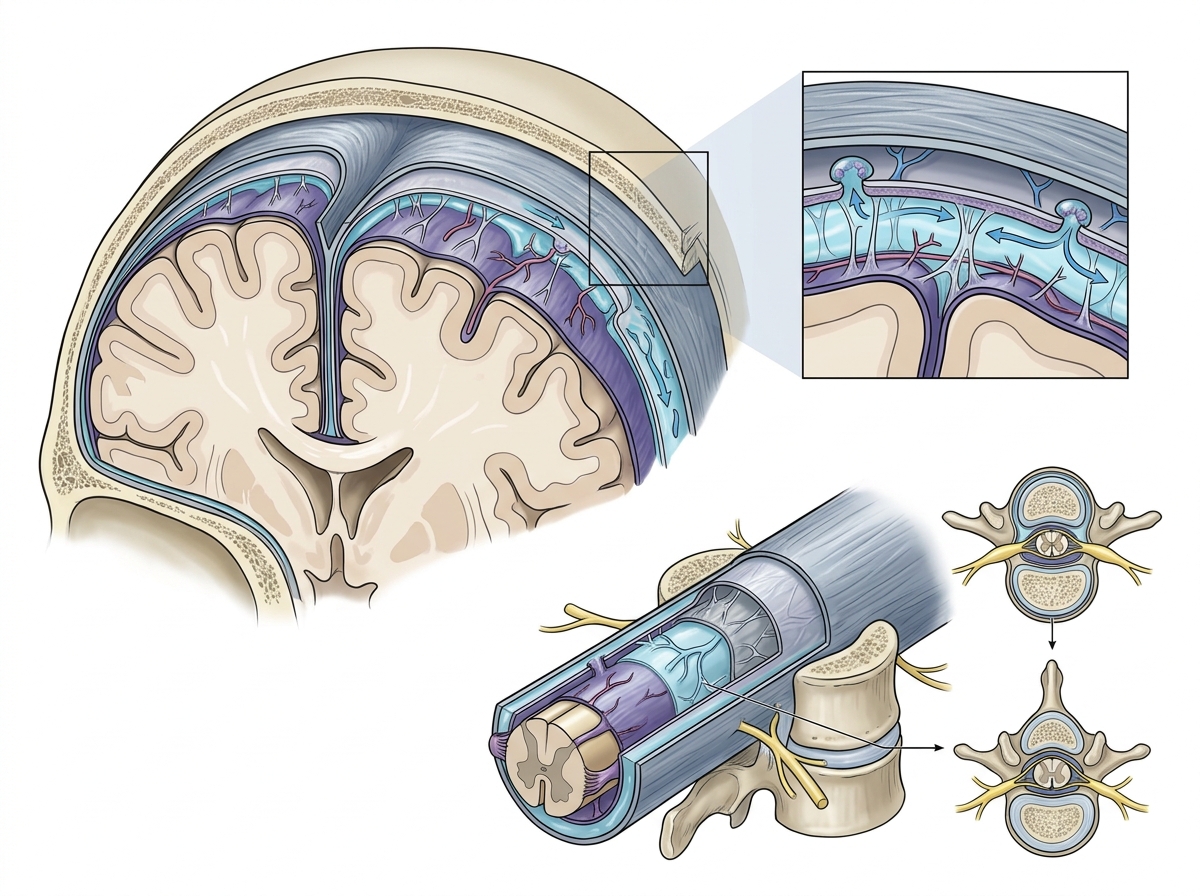
This name might sound hard to say, but the idea is very simple. Today, we will talk about what the meninges are, why they are so important, and what happens if they get sick or injured.
Key Takeaways
- The meninges are three protective tissue layers around your brain and spinal cord.
- They include the dura mater, arachnoid mater, and pia mater.
- A clear liquid called cerebrospinal fluid flows between these layers to cushion your brain.
- Infections in these layers are called meningitis, which requires urgent medical care.
What Are the Meninges?
Simply put, the meninges are three protective layers of tissue that wrap around your brain and spinal cord. Together, doctors call your brain and spinal cord the central nervous system. Think of these layers like soft blankets that hug your brain.
Imagine buying a fragile item online. First, you wrap it in bubble wrap. Then, you put it inside a strong box. The meninges do a very similar job to keep your central nervous system safe from bumps and falls.
These three layers have specific names:
- Dura mater: This is the outermost layer. It sits right next to your skull. The name means "hard mother" in Latin. It is a thick and tough layer.
- Arachnoid mater: This is the middle layer. It gets its name because it looks a bit like a spider web with tiny, fine fibers.
- Pia mater: This is the innermost layer. It hugs your brain tissue tightly. The name means "tender mother." It is a very thin and delicate layer.
Sometimes, doctors use the word leptomeninges. This is just a group name for the middle arachnoid layer and the inner pia layer.
What Are the Spaces Between These Layers?
There are important empty spaces between these three layers. Let us look at what they are and what they do.
- Epidural space: This space sits between your skull and the outer dura mater. Around your spinal cord, it sits between your backbone bones and the dura mater. Doctors sometimes inject pain relief medicine or anesthesia into this space during medical procedures.
Your spinal cord stops in your mid-lower back. Below that point, only a fluid called cerebrospinal fluid fills the space. When doctors do a procedure called a lumbar puncture or spinal tap, they take a small sample of this fluid from that lower area.
- Subdural space: This space sits between the dura mater and the arachnoid mater. Under normal health conditions, this is not a wide-open space. However, if someone hits their head hard and gets a brain bleed, this space can open up with blood.
- Subarachnoid space: This space sits between the arachnoid mater and the inner pia mater. This space is full of cerebrospinal fluid. This fluid acts like a water cushion. It protects your brain and spinal cord from sudden shocks and bumps.
What Are the Benefits of the Meninges?
The meninges do several vital jobs to keep your body healthy and working well every day.
- Providing protection: Their main job is to protect your central nervous system from outside injuries, especially head bumps. These layers act like a shock absorber. If you bump your head, these layers stop your brain from crashing hard against your hard skull bones.
- Keeping your nervous system steady: These layers help hold your central nervous system in place. They stop your brain from sliding around too much inside your skull.
- Supporting blood vessels, nerves, and your lymphatic system: Blood vessels bring blood to your brain and spinal cord. Important nerves, waste-cleaning pathways, and cerebrospinal fluid all rely on the meninges for physical support.
Let Us Look at Each Layer in Detail
What Are the Features of the Dura Mater?
The dura mater is the outer, thick, and strong layer. It lies right underneath your skull and spine bones. It is made of two layers of connective tissue. One side attaches to your skull. This the other side connects to the middle arachnoid layer.
Another special feature of the dura mater is the dural venous sinuses. These act like drainage pipes. They help old blood leave your brain and help cerebrospinal fluid return to your blood stream. Blood gets to the dura mater through the middle meningeal artery and veins. A major nerve called the trigeminal nerve also runs through this area.
The dura mater folds inward to form flat sheets called dural reflections. These sheets help divide and support different parts of your brain.
What Are the Features of the Arachnoid Mater?
The arachnoid mater is the middle layer that sits under the dura mater. It has no blood vessels and no nerves. It looks like a spider web because of tiny tissue fibers that stretch down to the inner layer. The subarachnoid space between this layer and the inner layer holds the protective cerebrospinal fluid.
What Are the Features of the Pia Mater?
The pia mater is the innermost and very thin layer. It hugs every curve of your brain and spinal cord like tight plastic wrap. Many blood vessels run through this layer to feed your brain tissue. It also helps keep cerebrospinal fluid in place. In your spine, the pia mater helps keep your spinal cord stiff and steady.
What Health Conditions Affect the Meninges?
Because the meninges do such important work, various medical conditions can harm them. Let us look at the main ones.
- Meningitis: This is the most famous condition. Simply put, it is an infection of the meninges. Bacteria, viruses, or fungi can cause this infection. Doctors often need to do a lumbar puncture to test your cerebrospinal fluid to find the cause. Rare cases can also stem from cancer, inflammatory diseases, brain surgery, or certain medicines.
- Subdural hematoma: This happens when a blood vessel bursts between the dura mater and the arachnoid mater, causing blood to pool. Severe head injuries often cause this dangerous problem.
- Other meningeal bleeding: Because many blood vessels run through the meninges, any head injury can cause bleeding between these layers. People who take blood thinners or have bleeding disorders face a higher risk.
Important: If you hit your head hard from a car crash, sports injury, or fall, never ignore it. It can cause hidden internal bleeding in your head.
Other conditions can also affect these protective layers:
- Meningiomas: These are tumors that grow in the meninges. Most of the time, these tumors are non-cancerous. However, if they grow large, they can threaten your life and doctors may need to remove them with surgery.
- Meningeal carcinomatoses: This happens when cancer starts somewhere else in your body and spreads to your meninges.
Because the meninges guard your brain, any health problem that damages them can become life-threatening. Quick medical care is always vital.
Take-Home Message
You now know why your brain and spinal cord need these three meningeal layers: the dura mater, the arachnoid mater, and the pia mater. Working together with cerebrospinal fluid, they stop your brain tissue from smashing into your skull bones.
Because of this, if you ever hurt your head from a car crash, sports accident, or a hard fall, do not brush it off. Head injuries can cause dangerous bleeding between your meninges or inside your brain. If this happens, see a doctor right away. Doctors can run tests to check for serious problems and start treatment early.
Your health is precious, and staying informed is one of the best ways to protect yourself.
| Meningeal Layer | Position | Key Function |
|---|---|---|
| Dura Mater | Outer layer | Provides tough structural protection and houses venous sinuses. |
| Arachnoid Mater | Middle layer | Frames the subarachnoid space holding shock-absorbing fluid. |
| Pia Mater | Inner layer | Hugs brain tissue tightly and carries blood vessels inward. |
When to Call the Doctor & Emergency Red Flags
Meningitis and head injuries are medical emergencies. Call 911 (US/Canada), 999 (UK), or go to your nearest Emergency Department right away if you notice these signs:
- A sudden, severe headache unlike any headache you had before.
- High fever accompanied by a stiff neck where you cannot touch your chin to your chest.
- Confusion, extreme sleepiness, or trouble waking up.
- A new skin rash that does not fade when you press a clear glass against it.
- Vomiting, sensitivity to bright lights, or a seizure after hitting your head.
A Note from Nirogi Lanka
The meninges are three vital membranes that guard your brain and spinal cord from physical shocks and harmful germs.
- Infections of these layers are known as meningitis. Seek emergency care right away if you experience a high fever, stiff neck, and severe headache.
- Because meningitis can spread through certain bacteria, keeping up with recommended childhood and adult vaccines is essential.
- If you experience a hard blow to your head, doctors may need to use imaging scans like a CT or MRI to check for internal bleeding between your meningeal layers.


💬 Comments (0)
No comments yet. Be the first to share your thoughts here.
Add Your Comment