
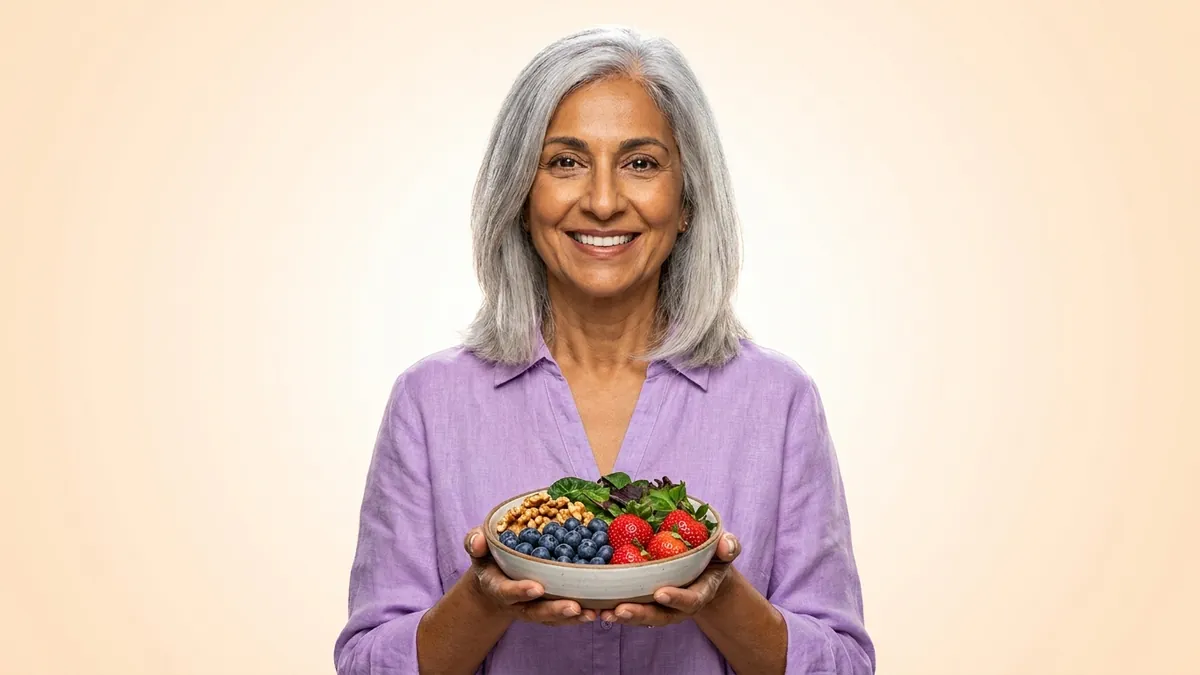
Are you a little worried about memory loss and forgetting things as you get older? Sometimes we think it's a normal part of getting older. But did you know that the foods we eat can actually help protect our brain health and even prevent memory-related diseases that come with age? That's right, today we're talking about a diet designed specifically for brain health.
What is the MIND Diet?
Simply put, the MIND Diet is a brain-friendly diet. It stands for 'Mediterranean-DASH Intervention for Neurodegenerative Delay'. Okay, don't be afraid of these big words. It simply means, "A combination of the Mediterranean and DASH diets that help delay the destruction of brain cells due to aging ."
This is a combination of two really popular and healthy eating patterns.
2. DASH diet (dietary approach to help control high blood pressure )
The MIND Diet is a combination of food groups found in both of these diets that are particularly beneficial for the brain. The main goal is to improve brain function and protect the brain from serious conditions like Alzheimer 's disease that come with aging.
How does this diet work?
The MIND Diet encourages us to eat as much plant-based food as possible, meaning vegetables, fruits, and whole grains . But it's important to eat foods that are minimally processed , without compromising their naturalness.
It also recommends limiting foods high in animal fat (especially saturated fats ) and added sugars. Unlike many diet plans, it focuses on brain health rather than weight loss .
In this method, we mainly talk about 10 food groups that we should eat and 5 food groups that we should limit. For example, you should eat 3 servings of whole grains, fruits, and vegetables every day. You should add beans, chicken, and fish to your diet once or twice a week. You can eat nuts and berries for a snack during the day. It also says to choose olive oil as the oil you use for cooking.
The important thing is, you don't have to completely stop eating meat and dairy. But you should limit the amount you eat. It's recommended to eat them less than four times a week.
What foods should we eat more of?
These are the foods you should add more to your diet according to the MIND Diet. They are packed with nutrients essential for brain health.
| Food category | Recommended quantity |
|---|---|
| Green leafy vegetables (e.g. spinach, kale, collard greens, lettuce) | At least one meal a day |
| All other vegetables | 2 or more meals a day |
| Berries (e.g. strawberries, blueberries) | 2 meals a week or more |
| Nuts ( e.g. cashews, almonds, peanuts) | 5 meals a week or more |
| Olive Oil | Daily as the main oil type |
| Whole Grains (e.g. brown rice, oats, millet, barley) | 3 or more meals a day |
| Fish and seafood (especially oily fish like salmon, mackerel, sardines, and herring) | Once a week or more |
| Beans (e.g. chickpeas, peas, lentils, green beans) | 4 meals a week or more |
| Poultry | 2 meals a week or more |
| Wine | A glass of wine a day (but this is not essential and can be skipped) |
What foods should we limit or stop eating?
Reducing these foods as much as possible is very good for your brain health.
| Foods to limit |
|---|
| Butter and margarine (less than one tablespoon per week) |
| Cheese (less than once a week) |
| Red Meat (e.g. beef, pork, goat meat – less than 4 servings per week) |
| Fried foods (especially fast food – less than once a week) |
| Pastries and sweets (sugary cakes, biscuits, donuts, etc. – less than 5 servings per week) |
What are the benefits of this?
The foods recommended by the MIND Diet are rich in fiber and many nutrients essential for brain health. Some of them include:
- Vitamin E
- Folate
- Omega-3 fatty acids
- Carotenoids
- Flavonoids
Research has found that following the MIND Diet can improve brain health and reduce the risk of Alzheimer's disease , dementia, and other memory-related problems that come with aging.
In fact, some studies have shown that following a healthy diet like this can delay the rate of brain aging by about 7.5 years!
In one study of 1,300 older adults, those who followed the MIND Diet strictly had a 53% lower risk of developing Alzheimer's disease. And even those who followed the diet to a lesser extent had a 35% lower risk.
Should I also follow this MIND Diet?
Whether or not someone in your family has conditions like Alzheimer's, the MIND Diet is a great, healthy eating pattern that anyone can follow to take care of their brain health.
This is also very easy to follow. Because in this you don't have to count calories or restrict food. It's just a matter of getting used to choosing healthy, natural foods. Even if you're a foodie, it's not difficult to choose food according to these principles .
However, before starting any special diet like this, it is best to talk to your family doctor and ask if it is suitable for your health condition. If you have other medical conditions, you may need to make some changes to this diet. Therefore, it is safest to start something like this under medical advice.
Take-Home Message
- The MIND Diet is a combination of two dietary patterns, the Mediterranean and DASH, specifically aimed at brain health.
- It is advised to eat more plant-based foods (vegetables, fruits, grains, nuts) and limit foods high in animal fat and sugar.
- Research has shown that this diet significantly reduces the risk of diseases such as Alzheimer's and dementia.
- This is a healthy lifestyle that doesn't count calories and is easy to follow long-term.
- Before starting any new diet, it's essential to talk to your doctor to make sure it's right for you.






No comments yet. Be the first to share your question or experience below.