
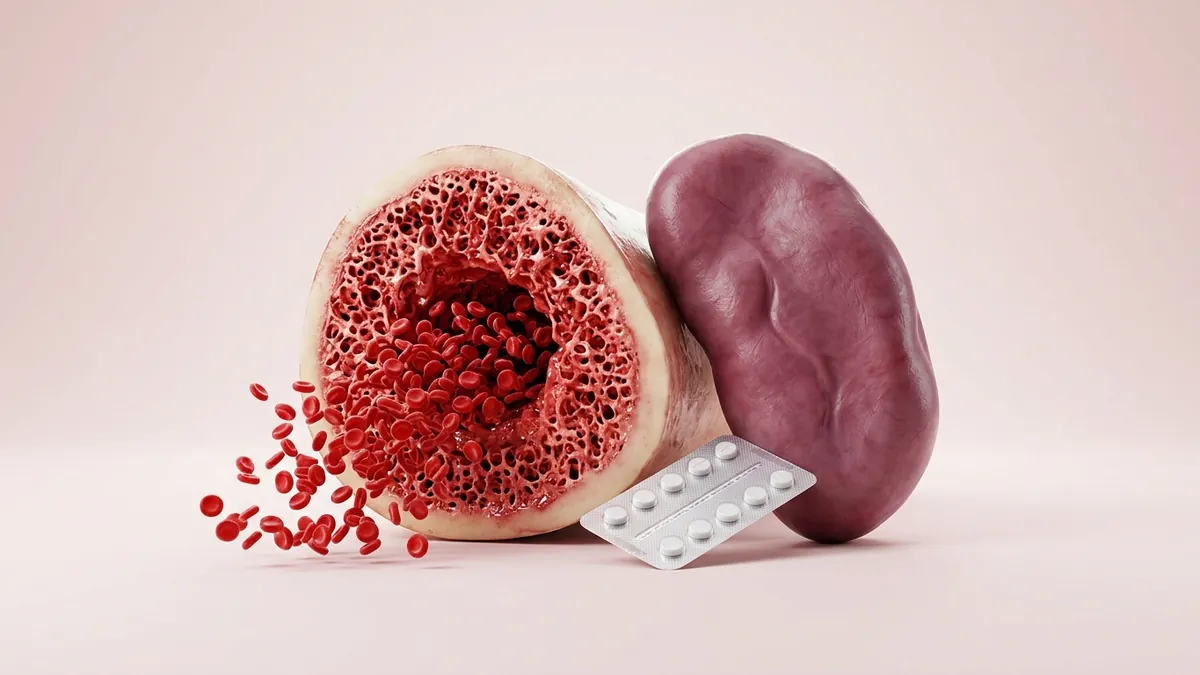
When you are searching for clear answers on Ojjaara (Momelotinib) Once-Daily Tablet for Myelofibrosis with Anemia: How ACVR1 Inhibition Boosts Hemoglobin, you probably already know how draining bone marrow scarring (myelofibrosis) can be on your everyday energy. For years, we doctors faced a frustrating clinical catch-22 when caring for adults with myelofibrosis and a low red blood cell count (anemia). Standard targeted pills could shrink a painfully swollen belly and calm drenching night sweats, yet those very same pills often pushed hemoglobin levels even lower. Pretty frustrating to trade one symptom for another, right?
Have you ever wondered why a single targeted tablet can now tackle spleen discomfort and stubborn anemia at the exact same time? Ojjaara (momelotinib) bridges that long-standing treatment gap by pairing classic Janus kinase blockade with a smart iron-unlocking mechanism inside your liver. Instead of forcing you to rely on endless hospital blood transfusions just to climb a flight of stairs, it helps your own bone marrow put stored iron back to work.
Whether you were just prescribed Ojjaara by your specialist hematologist or you are reviewing options with your Primary Care Physician (PCP) / family GP clinic in the United States, United Kingdom, Canada, or Australia, understanding how this once-daily tablet works puts you firmly in control of your care.
📌 Key Takeaways at a Glance
- Dual-purpose targeted therapy: Ojjaara (momelotinib) is an oral once-daily tablet for adults with intermediate- or high-risk primary or secondary myelofibrosis accompanied by anemia.
- Unique triple inhibition: Unlike older drugs that only block JAK1 and JAK2, momelotinib also blocks ACVR1, lowering the liver hormone hepcidin so trapped iron can build new red blood cells.
- Fewer clinic transfusions: Phase 3 trials showed meaningful rises in hemoglobin, higher transfusion independence rates, and significant spleen shrinkage.
- Simple daily routine: The standard adult dose is 200 mg once daily with or without food, swallowed whole and kept in its original moisture-protected bottle.
- Proactive blood monitoring: Routine blood counts and liver panels allow your care team to fine-tune your dose in 50 mg steps if platelets drop or liver enzymes rise.
What Is Ojjaara (Momelotinib) Once-Daily Tablet for Myelofibrosis with Anemia, and How Does ACVR1 Inhibition Boost Hemoglobin?
Ojjaara (momelotinib) is an oral once-daily prescription kinase inhibitor tablet approved for adults with intermediate- or high-risk myelofibrosis and anemia. Alongside blocking overactive JAK1 and JAK2 enzymes, it uniquely inhibits the ACVR1 receptor to lower liver hepcidin levels, releasing trapped body iron to boost hemoglobin and reduce red blood cell transfusions.
Think about what happens inside healthy bone marrow for a second. Normally, spongy marrow quietly manufactures oxygen-carrying red blood cells, infection-fighting white blood cells, and clotting platelets every single day. In myelofibrosis — whether it starts on its own as primary myelofibrosis or develops after earlier blood conditions like polycythemia vera or essential thrombocythemia — chronic chemical inflammation lays down stiff scar fibers across the marrow.
Roughly one-third of patients already have significant anemia on the day they are diagnosed, and the majority develop it over time. When your hemoglobin drops below 10 g/dL (100 g/L), oxygen delivery to your heart, muscles, and brain slows down, leaving you breathless, dizzy, and exhausted. Approved by regulators across the US, UK, EU, and Canada, Ojjaara treats bothnewly diagnosed patients who have never taken a JAK inhibitor and patients switching over after previous therapies worsened their red blood counts. Now that makes clinical sense, right?
How Does Blocking ACVR1 Lower Hepcidin and Unlock Trapped Iron Compared to Older JAK Inhibitors?
Look closely at what happens inside your body when myelofibrosis flares up. Two overactive signaling enzymes — Janus kinase 1 and Janus kinase 2 (JAK1 and JAK2) — pump out inflammatory messengers that cause night sweats, low-grade fevers, bone aches, weight loss, and an enlarged spleen (splenomegaly) pressing against your stomach. First-generation drugs like ruxolitinib block JAK1 and JAK2 effectively, which calms the spleen, yet JAK2 is also the very switch your marrow needs to respond to erythropoietin and make red blood cells. Blocking JAK2 alone without fixing iron flow often deepens anemia.
Have you ever wondered why taking over-the-counter iron pills rarely fixes myelofibrosis anemia? In myelofibrosis, inflammatory signals switch on a liver receptor called activin A receptor type 1 (ACVR1, also known as ALK2). Overactive ACVR1 tells your liver to flood your bloodstream with a master iron-locking hormone called hepcidin. High hepcidin slams the door shut on iron storage cells, trapping plenty of iron inside your tissues where your bone marrow cannot reach it — a problem we doctors call iron-restricted inflammatory anemia.
By inhibiting ACVR1 right alongside JAK1 and JAK2, momelotinib turns down liver hepcidin production within hours of your daily dose. Stored iron flows freely back into your bloodstream to build fresh hemoglobin. Before starting therapy, we doctors at your PCP / family GP clinic or hematology center still run basic blood tests — checking ferritin, transferrin saturation, vitamin B12, folate, reticulocytes, and stool occult blood — just to rule out hidden gastrointestinal bleeding, nutritional shortages, or red blood cell breakdown (hemolysis) before blaming myelofibrosis alone.
What Clinical Results Can You Expect for Hemoglobin Levels, Transfusion Independence, and Spleen Size?
Be honest — spending half a day every couple of weeks tethered to an IV pole for packed red blood cell transfusions wears down both patients and families, doesn't it? That is why we doctors pay such close attention to three landmark Phase 3 clinical trials — SIMPLIFY-1, SIMPLIFY-2, and MOMENTUM — that tested Ojjaara across hundreds of adults with myelofibrosis.
In the SIMPLIFY-1 study of patients new to JAK inhibitors, 66.5% of adults taking momelotinib achieved transfusion independence — meaning zero red blood cell transfusions for at least 12 weeks with hemoglobin staying at or above 8 g/dL (80 g/L) — compared with 49.3% on ruxolitinib, while matching ruxolitinib on spleen shrinkage. Even among heavily pre-treated, symptomatic, anemic patients in the MOMENTUM trial, momelotinib outperformed danazol on symptom relief (24.6% vs. 9.2%), spleen volume reduction of 35% or greater (22.3% vs. 3.1%), and week-24 transfusion independence (31% vs. 20%).
Even better, patients who switched from danazol onto momelotinib saw average hemoglobin climb from roughly 7.7 g/dL to 9.5 g/dL (77 to 95 g/L) within 20 weeks. Fewer transfusions also mean less excess transfused iron piling up in your heart and liver, alongside long-term data linking transfusion independence with stronger overall survival. Pretty encouraging numbers, right?
How Do You Take Ojjaara Safely, and Which Blood Count Cutoffs Require a Dose Adjustment?
Simplicity helps you stay consistent, and Ojjaara comes in three brown film-coated tablet strengths — 100 mg, 150 mg, and 200 mg — taken just once a day. For most adults, the recommended starting dose is 200 mg orally once daily, taken with or without a meal. Always swallow the tablet whole with a glass of water; never cut, crush, or chew it. If you forget a dose, skip the missed pill and take your regular tablet the next day — never double up. Keep your tablets in their original bottle with the moisture-absorbing desiccant packet inside and the cap tightly closed.
Remember how we talked about liver signaling earlier? Because your liver processes momelotinib, adults with severe liver impairment (Child-Pugh Class C) start at a reduced dose of 150 mg once daily, whereas mild or moderate liver impairment requires no starting change. Before day one, your specialist checks a full blood count / complete blood count (CBC), a liver blood panel (hepatic function panel), hepatitis B virus serology if applicable, and makes sure you have no active bacterial or viral infection.
During treatment, your hematologist adjusts your dose in clean 50 mg steps down to 150 mg or 100 mg daily (stopping treatment if 100 mg daily is not tolerated) based on clear safety cutoffs:
- Low platelet count (thrombocytopenia): Unlike some older drugs, Ojjaara can be started even when baseline platelets are low. If your baseline platelets started at 100 × 10⁹/L or higher and dip between 20 × 10⁹/L and 49 × 10⁹/L, your daily dose steps down by 50 mg. Whenever platelets fall below 20 × 10⁹/L regardless of baseline, treatment pauses until platelets recover to 50 × 10⁹/L (or baseline), then restarts 50 mg lower.
- Low white blood cell neutrophils (neutropenia): If your absolute neutrophil count (ANC) falls below 0.5 × 10⁹/L, dosing pauses until ANC rebounds to at least 0.75 × 10⁹/L, then resumes 50 mg lower.
- Liver enzyme elevations: Lab checks run monthly for the first 6 months and periodically thereafter. Significant spikes in ALT, AST, or bilirubin prompt a temporary hold and a 50 mg step-down.
- Cholesterol & prescription drug interactions: Momelotinib blocks a drug transporter called BCRP, which boosts blood levels of the cholesterol statin rosuvastatin — if you take rosuvastatin, we doctors cap your dose at 5 mg to a maximum of 10 mg once daily to prevent muscle injury. Also tell your pharmacist about OATP1B1/1B3 inhibitors (such as cyclosporine) or herbal St. John's wort.
How Does Ojjaara Compare Across Key Clinical Scenarios, Side Effects, and Lab Findings?
When you are reviewing blood test results on your patient portal between hematology visits, knowing which changes are expected and which ones need a quick phone call keeps anxiety low. Here is how we doctors interpret common real-world scenarios on Ojjaara:
| Clinical Scenario or Lab Finding | Clinical Meaning & Recommended Action |
|---|---|
| Myelofibrosis With Hemoglobin Below 10 g/dL (100 g/L) & Enlarged Spleen | Reflects combined JAK-driven spleen inflammation and ACVR1/hepcidin iron trapping that older JAK inhibitors frequently aggravate. What you should do: Discuss starting Ojjaara 200 mg once daily (or switching from your prior JAK inhibitor without a risky gap, as guided by your hematologist). |
| Platelet Count Drops Below 50 × 10⁹/L (or Below 20 × 10⁹/L) | Signals medication-related or marrow-related thrombocytopenia, occurring in roughly a quarter of patients and increasing easy bruising risk. What you should do: Never change tablets on your own; contact your hematology clinic promptly so they can step your dose down by 50 mg or briefly pause therapy. |
| Mild Loose Stools or Queasy Stomach in Weeks 1–4 | Diarrhea (around 27%) and mild nausea (around 19%) are the most common digestive side effects and are usually mild and non-cumulative. What you should do: Sip oral electrolyte fluids, eat bland foods like oatmeal, bananas, plain rice, and toast, and ask your doctor about safe anti-diarrheal support. |
| New Tingling, Pins-and-Needles, or Numbness in Fingers or Toes | May indicate treatment-emergent nerve irritation (peripheral neuropathy) or a separate vitamin B12 deficiency. What you should do: Report sensory changes at your next PCP / family GP clinic or oncology visit so your doctor can check B12 levels and evaluate nerve safety. |
| Rising Liver Enzymes (ALT/AST) or Creatinine Shift on Routine Bloods | Indicates liver stress (hepatotoxicity) or kidney filtration changes (nephropathy) picked up early through post-approval real-world lab monitoring. What you should do: Keep every monthly blood draw during your first 6 months, avoid excess alcohol and unapproved supplements, and follow any temporary dose hold. |
In everyday life across the US, UK, Canada, and Australia, smooth teamwork makes all the difference. While your hospital hematologist prescribes Ojjaara — often delivered through a dedicated specialty pharmacy — your local Primary Care Physician (PCP) / family GP clinic helps keep your vaccinations (like inactivated flu, COVID-19, and pneumococcal shots) up to date, checks your blood pressure and kidney panels, and evaluates minor coughs or urinary infections early before they escalate. If mild dizziness hits when standing up, take your time getting out of bed and stay steady on hydration with water, clear broths, or herbal tea. Finally, patients who could become pregnant must use highly effective contraception during treatment and for at least 1 week after the final tablet, and avoid breastfeeding during that same window.
✔️ What You Should Do & ❌ What to Avoid
- ✔️ Do take your tablet at the same time each day: Pick a consistent morning or evening cue — with breakfast toast or after brushing your teeth — and swallow the tablet whole.
- ✔️ Do keep every scheduled blood test: Monthly CBC, liver, and kidney panels during the first 6 months catch silent platelet or enzyme shifts long before symptoms appear.
- ✔️ Do share a complete medication list: Remind every prescriber and pharmacist if you take rosuvastatin or other cholesterol, heart, or antifungal drugs.
- ❌ Don't start iron supplements on your own: Remember how Ojjaara unlocks your body's existing iron stores? Extra iron pills can cause stomach upset or iron overload unless blood tests prove true iron deficiency.
- ❌ Don't transfer pills into weekly pillboxes: Leaving tablets outside their original moisture-sealed desiccant bottle can degrade the medication.
- ❌ Don't ignore mild fevers or infections: Because JAK inhibition softens immune defenses, even a lingering sinus, skin, or chest infection deserves same-day advice from your GP clinic or Urgent Care center.
🚨 When to Seek Immediate Emergency Care (Red-Flag Symptoms)
If you or someone near you develops any of these red-flag symptoms, do not wait — call 911 (US & Canada), 999 or 111 (UK), or 000 (Australia) immediately or go straight to the nearest hospital Emergency Room (ER / A&E):
- Signs of serious internal or uncontrolled bleeding: Black, tarry stools, bright red blood in your bowel movements or urine, coughing up or vomiting blood (or dark "coffee-ground" material), or a nosebleed or gum bleed that refuses to stop after 15 minutes of firm pressure.
- Severe infection or sepsis warning signs: A fever of 100.4°F (38.0°C) or higher, shaking chills, confusion, rapid breathing, or extreme weakness.
- Sudden neurological or cardiovascular symptoms: Sudden severe headache after a minor bump, slurred speech, one-sided facial droop or arm weakness, crushing chest pain, or severe shortness of breath at rest.
- Acute liver distress: Noticeable yellowing of your skin or the whites of your eyes (jaundice), dark tea-colored urine, or severe upper-right belly pain.
💡 Key Take-Home Message
- Ojjaara (momelotinib) is the first once-daily oral therapy designed to calm myelofibrosis spleen enlargement and night sweats while actively fighting inflammatory anemia through ACVR1 and hepcidin blockade.
- Most adults start at 200 mg once daily, and flexible 50 mg dose adjustments let your hematologist protect your platelets and liver without abandoning anemia benefits.
- Partnering closely with your hematologist and your local PCP / family GP clinic for routine blood work keeps treatment safe, steady, and focused on your quality of life.




No comments yet. Be the first to share your question or experience below.