
Understanding iovera° Targeted Cold Therapy (Cryoneurolysis) Before Total Knee Replacement: 90-Day Opioid-Reducing Pain Relief can completely transform how you prepare for upcoming joint surgery. Be honest, worrying about post-surgery pain or the side effects of strong narcotic tablets has crossed your mind too, hasn't it? When wear-and-tear joint arthritis (knee osteoarthritis) reaches the point where your orthopedic surgeon recommends a total knee replacement (total knee arthroplasty, or TKA), managing pain during those first twelve weeks of rehabilitation makes all the difference between a stiff recovery and a confident stride.
In everyday practice at your Primary Care Physician (PCP) / family GP clinic, we doctors spend a lot of time helping patients prepare their bodies before surgery—a concept called "pre-hab." Alongside strengthening your thigh muscles and tuning up your nutrition, targeted cold nerve treatment (cryoneurolysis) offers a drug-free way to quiet down superficial knee pain pathways weeks before you ever roll into the operating theater. Let's walk through how this handheld cold technology works, when to schedule it, who should avoid it, and how to team up with your orthopedic specialist for a smoother recovery.
📌 Key Takeaways at a Glance
- Drug-free 90-day nerve block: The iovera° system uses extreme, pinpoint cold—with zero injected medications or steroids—to temporarily pause front-of-knee pain signals for up to three months.
- Proven opioid reduction: Clinical studies show patients treated 1 to 3 weeks before total knee replacement take roughly 35% to 45% fewer opioid painkillers during recovery while bending their knee more comfortably.
- Muscles stay fully awake: Because only shallow skin-and-capsule sensory nerves are treated, your thigh muscles (quadriceps) keep 100% of their motor strength for walking right after surgery.
- Reversible nerve biology: The outer nerve tunnel stays intact, allowing the inner nerve fiber to regrow naturally at about 1 to 2 millimeters per day until normal sensation returns.
- Not for cold-sensitivity disorders: People with conditions like cold-clumping blood proteins (cryoglobulinemia) or severe Raynaud's disease must skip cold nerve blocks and choose alternative pain plans.
What Is iovera° Targeted Cold Therapy (Cryoneurolysis) Before Total Knee Replacement, and Does It Deliver 90-Day Opioid-Reducing Pain Relief?
iovera° targeted cold therapy (cryoneurolysis) is an FDA-cleared, non-opioid outpatient procedure performed 1 to 3 weeks before total knee replacement that temporarily freezes superficial sensory knee nerves using liquid nitrous oxide, blocking pain signals for up to 90 days while lowering postoperative opioid consumption by 35% to 45%.
Have you ever wondered why putting a simple bag of frozen peas on a swollen knee feels soothing for twenty minutes, yet the deep ache comes rushing right back? Surface ice packs only chill the skin. By contrast, percutaneous cold nerve block therapy (percutaneous cryoneurolysis) delivers a tiny, precisely controlled ice crystal directly next to specific peripheral pain nerves beneath the skin around your kneecap.
Because nothing chemical stays behind in your bloodstream or joint space, it fits neatly into modern layered pain control (multimodal analgesia). When we doctors coordinate your pre-surgical workup and refer you to an orthopedic surgeon or interventional pain specialist for this treatment, the goal isn't to numb your entire leg—it is to turn down the volume dial on surgical front-of-knee pain during the exact 6-to-12-week window when daily physical therapy is toughest. Makes sense, right?
How Does the iovera° Cold Nerve Block Actually Stop Knee Pain Without Damaging Your Nerves?
Think about an electrical charging cord in your kitchen for a second. Inside the tough rubber jacket sits a thin copper wire carrying current. When the iovera° handheld device touches a targeted nerve with its closed-end needle tip ("Smart Tip"), pressurized liquid nitrous oxide circulates inside the sealed needle, creating a miniature cold zone between minus 20°C and minus 88°C (-4°F to -126°F) before venting safely back out as gas—meaning zero gas ever enters your body.
Look at what happens inside the knee here. That controlled freeze triggers a predictable, temporary biological process called reversible nerve fiber breakdown (Wallerian degeneration, classified clinically as a Sunderland second-degree nerve injury). The inner signal-carrying wire (axon) and its fatty insulation (myelin sheath) temporarily dissolve from the freeze point outward, immediately halting pain impulses traveling up to your spinal cord and brain. However, the tough outer protective tube of the nerve—made up of microscopic connective layers (endoneurium, perineurium, and epineurium)—remains completely unharmed! Pretty surprising, right?
Because that protective scaffolding stays intact, your nerve never loses its roadmap. Equally important, your specialist targets purely sensory branches—specifically the below-kneecap skin and joint branch (infrapatellar branch of the saphenous nerve, or IPBSN) and the lower front thigh sensory branch (anterior femoral cutaneous nerve, or AFCN). Deep muscle-moving pathways (motor nerves) are left untouched, preventing the temporary leg buckling that sometimes happens right after hospital anesthetic drips.
Who Qualifies for iovera° Before Knee Surgery, and What Is the Ideal Timing Schedule?
Timing is everything with pre-surgical cold therapy. Orthopedic teams typically schedule the session 7 to 21 days before your total knee replacement. Why that exact window? Giving your skin one to three weeks lets the tiny needle entry spots heal completely before your surgeon makes a sterile surgical incision, while still saving the bulk of your 90-day pain-relief window for post-op rehabilitation. Plus, unlike steroid knee shots (intra-articular corticosteroid injections)—which surgeons usually pause for at least 90 days before joint replacement to avoid raising prosthetic infection risk—cryoneurolysis introduces zero immunosuppressing medication into the joint.
Remember how we talked about that intact outer nerve tunnel earlier? Inside that healthy sleeve, your sensory nerve fiber steadily regrows at a natural biological speed of roughly 1 to 2 millimeters per day. Depending on the exact distance from the treatment line above and below your kneecap, pain blockade reliably lasts 60 to 90 days (and occasionally up to 120 days) before sensation gradually returns. In randomized clinical trials, pre-treated knee replacement patients requested nearly 45% fewer opioid pills at twelve weeks and hit knee-bending milestones sooner.
Before referring you, we doctors at your Primary Care Physician (PCP) / family GP clinic always screen for medical red lights (contraindications). You should not undergo iovera° if you have cold-clumping blood proteins (cryoglobulinemia), cold-triggered red blood cell breakdown (paroxysmal cold hemoglobinuria), cold hives (cold urticaria), severe cold-induced vessel spasms (Raynaud's disease), active skin infection over the knee, or uncorrected bleeding risks.
What Happens Step-by-Step During an iovera° Appointment, and Is It Covered by Insurance or Medicare?
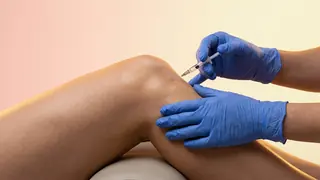
Walking into an unfamiliar procedure room can make anyone tense, so knowing the exact step-by-step routine puts you back in the driver's seat. The appointment happens right in an outpatient orthopedic or pain specialist suite and usually takes 15 to 30 minutes from start to finish, with no fasting or general sedation required:
- Step 1 — Nerve mapping: Your specialist examines your knee landmarks and often uses bedside ultrasound imaging (ultrasonography) to trace your exact sensory nerve paths along the front and inner thigh-to-knee border.
- Step 2 — Skin cleansing and numbing: The skin is sterilized, and a tiny splash of local numbing medicine (lidocaine) or topical numbing spray desensitizes the surface.
- Step 3 — Targeted freeze cycles: Using the handheld iovera° unit, the clinician applies brief 60-to-90-second cooling cycles along mapped treatment lines. Most people feel mild pressure, tingling, or a brief deep chill that quickly fades into numbness.
- Step 4 — Walk right out: Small adhesive bandages cover the pinprick sites, and you walk out of the clinic the same afternoon.
What about cost across different health systems? In the United States, traditional Medicare (under peripheral nerve cryoablation code CPT 64624) and many Medicare Advantage and commercial plans cover medically necessary pre-surgical treatments at hospital outpatient departments or ambulatory clinics, though prior authorization rules vary. In the United Kingdom, Canada, and Australia, availability is expanding chiefly through private orthopedic hospitals, specialist sports-and-pain clinics, and select surgical pre-hab programs—so always ask your surgical coordinator to verify out-of-pocket fees upfront.
How Does iovera° Compare to Steroid Injections, Surgical Nerve Blocks, and Opioids?
We rarely stop to think about how many different ways doctors tackle knee replacement pain until surgery is on the calendar, do we? In truth, iovera° doesn't replace the anesthesia you get on surgery day—it teams up with it so you need far fewer strong pain tablets once hospital blocks wear off. Here is how each common option stacks up in real-world recovery:
| Pain-Control Option | Clinical Meaning & Action Step |
|---|---|
| iovera° Pre-Op Cold Nerve Block (Cryoneurolysis) | Freezes superficial front-of-knee sensory nerves 1 to 3 weeks before surgery for 60 to 90 days of drug-free pain relief while sparing thigh muscle strength. What you should do: Ask your orthopedic surgeon at least a month before your surgery date if pre-hab cryoneurolysis is offered at their center. |
| Hospital Anesthetic Nerve Block (Adductor Canal Block) | Numbing medication injected near thigh nerves on the morning of surgery; gives powerful relief for the first 18 to 48 hours before wearing off completely. What you should do: Tell your anesthesiologist if you already had iovera° so they coordinate your day-of-surgery block smoothly. |
| Cortisone Knee Shot (Intra-Articular Steroid) | Calms arthritis flare-ups for several weeks, but lowers local immune defenses inside the joint if given too close to joint replacement surgery. What you should do: Avoid getting any steroid injection into your knee within 90 days before scheduled knee replacement unless your surgeon explicitly approves. |
| Oral Opioid Tablets (e.g., Oxycodone, Tramadol) | Blunts severe acute pain in the brain and spinal cord, but frequently causes constipation, grogginess, nausea, fall hazards, and physical dependence. What you should do: Use opioids strictly at the lowest prescribed dose as a short-term backup alongside scheduled non-opioid pain relievers. |
| Scheduled Non-Opioids (Acetaminophen / Paracetamol & NSAIDs) | Reduces background pain signaling and surgical joint inflammation around the clock without drowsiness or addiction risk when kidneys and stomach are healthy. What you should do: Review your kidney, stomach, and blood pressure history with your family GP to confirm safe daily dosing after surgery. |
How Should You Care for Your Knee After iovera° to Maximize Your Surgery Recovery?
Once your iovera° session wraps up, you might notice mild bruising, slight swelling, tenderness, or temporary tingling along the front of your knee for a few days. Because a patch of skin around your kneecap will feel numb—just like your cheek after leaving the dentist, only lasting a couple of months—protecting that skin takes a little extra mindfulness. Do you recall what we said a moment ago about sensory nerves being asleep? Because that patch of skin cannot warn you properly about extreme temperatures, never place an electric heating pad, hot water bottle, or bare frozen gel pack directly onto numb skin! Always wrap a cold pack in a clean kitchen tea towel and limit icing to 15 to 20 minutes at a time.
Now that your knee hurts less walking around the house, resist the temptation to overdo heavy yardwork or hike steep hills right before surgery—your underlying worn joint cartilage is still there! Instead, channel that comfortable window into gentle, surgeon-approved pre-hab exercises like seated leg raises, ankle pumps, and short flat walks down your driveway or around your neighborhood park. Fuel tissue healing with protein-rich, anti-inflammatory local staples—think baked salmon, eggs, Greek yogurt, warm oatmeal or porridge topped with berries, and plenty of water or herbal tea—so your body enters surgery rested and strong.
✔️ What You Should Do & ❌ What to Avoid
- ✔️ Do schedule your consultation early: Bring up iovera° with your PCP/GP or orthopedic team 4 to 6 weeks before surgery so insurance checks and the 7-to-21-day treatment window line up easily.
- ✔️ Do share your complete medication list: Flag blood thinners (anticoagulants like apixaban, warfarin, or clopidogrel), aspirin, and herbal supplements beforehand to prevent deep bruising.
- ✔️ Do inspect numb skin daily: Check the front of your knee in good bathroom lighting each evening to make sure tight clothing, knee braces, or ice wraps haven't irritated the numb area.
- ❌ Don't apply direct heat or bare ice: Never put heating pads, hot packs, or unwrapped ice directly over treated skin, as reduced sensation raises accidental burn or frostbite risk.
- ❌ Don't overwork your arthritic joint pre-op: Reduced pain does not mean repaired cartilage; skip high-impact jogging, deep squats, or heavy lifting while awaiting surgery.
- ❌ Don't scrub or soak fresh pinprick sites: Skip hot tubs, swimming pools, and bathtub soaks for 48 hours after your cold nerve block until the tiny entry points seal completely.
🚨 When to Seek Immediate Emergency Care (Red-Flag Symptoms)
If you or someone near you develops any of these red-flag symptoms, do not wait — call 911 (or 999 in the UK / 000 in Australia) immediately or go straight to the nearest hospital Emergency Room (ER / A&E):
- Signs of a leg blood clot (deep vein thrombosis) or lung clot (pulmonary embolism): Sudden, worsening calf swelling, tightness, warmth, or redness, or sudden shortness of breath, sharp chest pain, or coughing up blood (in the UK, call 999 immediately for breathing/chest symptoms or 111 for urgent guidance).
- Spreading skin or joint infection: Rapidly expanding redness, hot throbbing swelling around the knee, pus draining from needle or surgical sites, high fever, or shaking chills.
- Sudden loss of foot movement or circulation: New inability to lift your foot or toes (foot drop), or a foot that turns pale, bluish, or ice-cold with worsening numbness.
- Severe allergic or systemic cold reaction: Widespread hives, facial or throat swelling, dizziness, or difficulty breathing shortly after numbing medicine or cold treatment.
💡 Key Take-Home Message
- Smart pre-hab ally: Pre-surgical iovera° cryoneurolysis quiets superficial knee pain for up to 90 days without drugs, steroids, or thigh-muscle weakness.
- Fewer opioids, smoother rehab: Blocking front-of-knee pain signals 1 to 3 weeks before surgery helps patients participate in physical therapy while taking significantly fewer narcotic pills.
- Teamwork wins: Combining pre-op cold therapy with hospital anesthesia, scheduled non-opioid tablets, and safe skin care gives you a well-rounded recovery plan.





No comments yet. Be the first to share your question or experience below.