

How are you? Sometimes you feel very happy, and other times you feel sad or angry, right? Or have you ever been left scratching your head after forgetting something you studied hard for in an exam? All of these are due to the small but very important messengers that work inside our bodies. We are going to talk about them today.
What are these (Neurotransmitters)?
Simply put, neurotransmitters are a type of chemical messenger that our bodies need . They're like little guys working in our body's post office. Their job is to carry chemical signals, or messages, from one nerve cell (neuron) to the next target cell. This target cell can be another nerve cell, or it can be a muscle cell or a gland.
Our bodies are covered in a network of nerves. We call this the nervous system . It's like a network of electrical wires running through the country. This nervous system sends and receives electrical signals to and from every part of our body. It controls not only what you think, how you feel, how your muscles move, but also how your organs work. In other words, these nerves are involved in everything you do, think, and feel. Our nerve cells receive and send information from all over the body. This constant exchange of information is what helps keep the body functioning properly.
What do nerves and neurotransmitters control in our bodies?
Now look at how many things these little messengers are involved in:
- It controls your heart rate and blood pressure .
- It helps you breathe .
- They also make muscle movements proper.
- They have a big impact on your thoughts, memory, learning, and emotions . Think about it, sometimes we feel very happy, other times we feel sad, scared. They are involved in all of this.
- It also controls the processes of sleep, wound healing, and aging .
- They determine the stress response . These people help with the way the body responds when someone is scared or anxious.
- Regulates hormones .
- It controls digestion, hunger, and thirst .
- They are the ones who respond to our five senses (sight, hearing, feeling, touching, and tasting).
How do neurotransmitters work?
There are billions of nerve cells in our bodies. It's incredible, isn't it? If you take a nerve cell, it has three main parts:
- Cell body: This is very important for the production of neurotransmitters and for the proper functioning of the nerve cell.
- Axon: A long tail-like part of the neuron that carries electrical signals along the neuron to the axon terminal.
- Axon terminal:This is where that electrical message becomes a chemical message. This is helped by (Neurotransmitters). This chemical message is then sent to the next nerve cell, muscle cell, or gland.
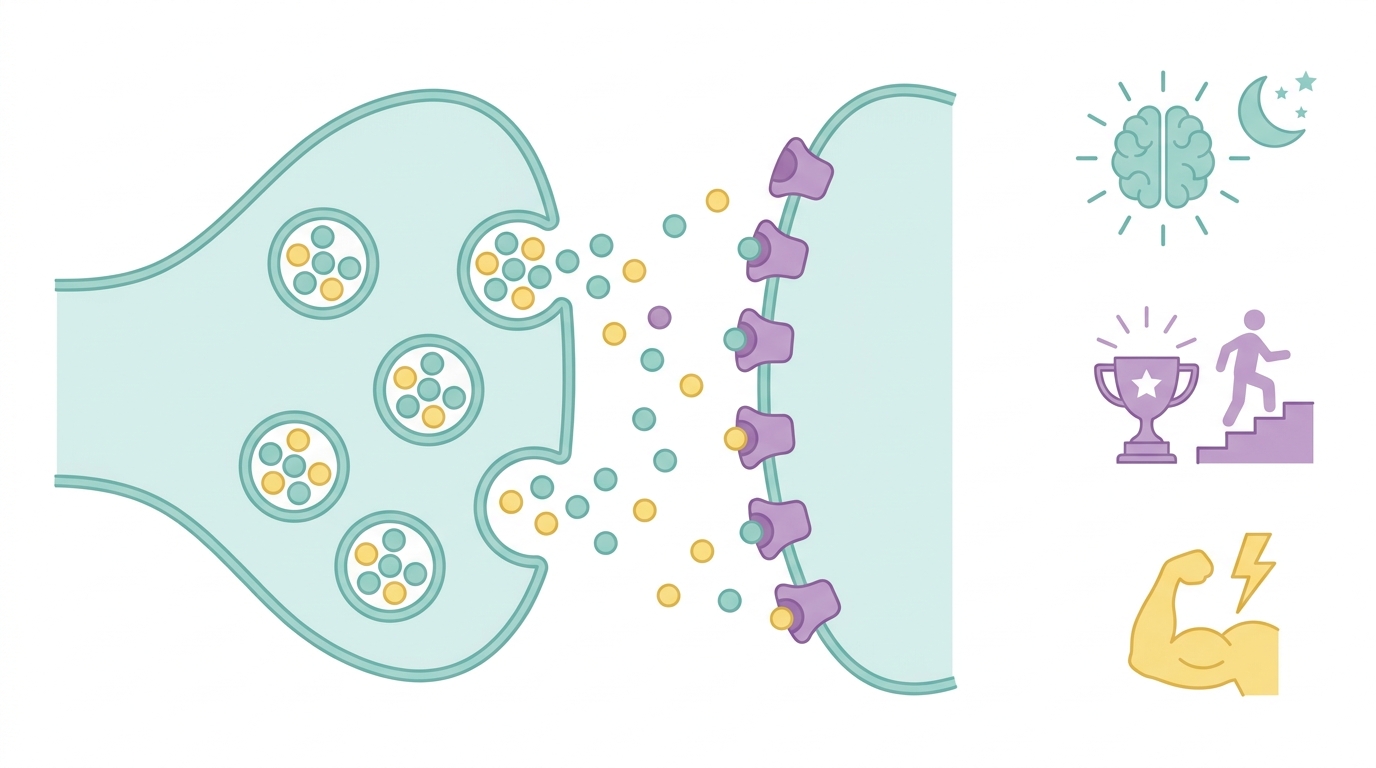
Neurotransmitters are located at the end of the nerve cell's axon. They are stored in small, thin-walled sacs called synaptic vesicles . A single sac can contain thousands of neurotransmitter molecules. Think of it like little packets.
Now, when a message or signal travels along a nerve cell, the electrical charge in that signal causes the neurotransmitter to bind to the nerve cell membrane, right at the end of the cell. Then, the neurotransmitters that are now carrying the message are released out of the axon terminal. This is released into a small space filled with fluid between one nerve cell and the next target cell (which could be another nerve cell, a muscle cell, or a gland). This space is very small, less than 40 nanometers (nm). If you think about how small this space is, a strand of your hair is about 75,000 nanometers wide.
This small space is called the synaptic junction . This is where the neurotransmitters carry the message. Each type of neurotransmitter binds to a specific receptor on the target cell. Just as a key can only be opened by fitting it into a specific keyhole. Once bound, the neurotransmitter triggers a change or action in the target cell. For example, it can cause another nerve cell to fire an electrical signal, a muscle to contract, or a gland to release a hormone.
What kind of message do neurotransmitters send to the target cell?
These messengers, or neurotransmitters, carry out one of three main actions with their messages, depending on the type of neurotransmitter involved.
- Excitatory messages: These types of neurotransmitters "excite" a nerve cell and " pass the message on ." That is, the message goes to the next cell. Examples include Glutamate , Epinephrine, and Norepinephrine .
- Inhibitory messages: These are used to stop or block the chemical message from going any further. Examples of these neurotransmitters include gamma-aminobutyric acid (GABA) , glycine, and serotonin.
- Modulatory messages: These (neurotransmitters) influence the effects of other chemical messengers. Like "changing them a little." That is, they make small adjustments to the way cells communicate at the synapse. Also, they affect a large number of nerve cells at the same time.
What happens to neurotransmitters after the message is delivered?
Okay, now the neurotransmitters have delivered their message. What happens next? These molecules have to leave that synaptic cleft (the space between one nerve cell and its next target cell). Otherwise, they'll just keep sending messages, right? This happens in three main ways:
- They gradually disappear (diffusion) .
- They are reabsorbed and reused by the same nerve cell that released them (reuptake) , as if they were being recycled.
- The enzyme inside the synapse breaks it down (degradation) , making it unable to bind to the receptor cell again.
How many types of neurotransmitters are there?
Scientists have now discovered at least 100 types of neurotransmitters. And it is believed that there are many more to be discovered. They can be classified according to their chemical nature. Let's now look at a few of the most important categories that we often hear about, examples of neurotransmitters that belong to them, and their functions.
Amino acids (Neurotransmitters)
These (neurotransmitters) are involved in many functions of our nervous system.
- Glutamate: This is the main neurotransmitter in our nervous system. It is especially abundant in the brain. It is important for important cognitive functions such as thinking, learning, and memory. Imbalances in glutamate levels have been linked to Alzheimer's disease , dementia , Parkinson's disease, and seizures .
- Gamma-Aminobutyric Acid (GABA): GABA is the main inhibitory neurotransmitter in our nervous system, especially in the brain. It regulates brain activity and prevents problems such as anxiety , irritability, difficulty concentrating, insomnia, epilepsy, and depression .
- Glycine: Glycine is the main inhibitory neurotransmitter in our spinal cord. Glycine is involved in the processing of auditory information, pain transmission, and the regulation of metabolism.
Monoamines (Neurotransmitters)
These (Neurotransmitters) perform many different functions in our nervous system, especially in the brain. They regulate consciousness, perception, attention, and emotions. Many disorders of the nervous system are related to abnormalities in these monoamines (Neurotransmitters). Also, many of the medications we commonly use affect these (Neurotransmitters).
- Serotonin: Serotonin is a neurotransmitter. Serotonin helps regulate our mood, sleep patterns, sexuality, anxiety, appetite, and pain. Diseases associated with serotonin imbalance include:Seasonal affective disorder, anxiety, depression, fibromyalgia, and chronic pain. Medications that treat these conditions by controlling serotonin are called SSRIs (Selective Serotonin Reuptake Inhibitors) and SNRIs (Serotonin-Norepinephrine Reuptake Inhibitors) .
- Histamine: Histamine controls things like wakefulness, eating behavior, and motivation in the body. Histamine is involved in conditions like asthma , bronchospasm, mucosal edema, and multiple sclerosis .
- Dopamine: Dopamine is involved in our body's "reward system." This means feeling pleasure, being highly stimulated, and learning. Dopamine also helps with attention, memory, sleep, mood, and motivation. Diseases associated with dysfunction in the dopamine system include Parkinson's disease , schizophrenia , bipolar disease , restless legs syndrome , and attention deficit hyperactivity disorder (ADHD) . Many addictive drugs (such as cocaine, methamphetamine, and amphetamines) directly affect the dopamine system.
- Epinephrine: Epinephrine (also called adrenaline) and norepinephrine (more on this below) are what trigger our body's " fight-or-flight response " to fear and stress. These neurotransmitters increase our heart rate, breathing, blood pressure, blood sugar levels, blood flow to muscles, and our ability to focus and react to various stressors. Too much epinephrine can lead to health problems like high blood pressure, diabetes, and heart disease. As a medicine, epinephrine is used to treat anaphylaxis (a severe allergic reaction), asthma attacks, heart attacks, and serious infections.
- Norepinephrine: Norepinephrine (also known as noradrenaline) increases blood pressure and heart rate. It is known for its effects on alertness, arousal, decision-making, attention, and concentration. Many medications (stimulants and antidepressants) work by increasing norepinephrine levels to improve attention in conditions like ADHD, or by altering norepinephrine to reduce symptoms of depression.
Peptides (Neurotransmitters)
A peptide is a type of polymer, or chain, of amino acids.
- Endorphins:Endorphins are our body's natural painkillers. They affect the way we feel pain. When endorphins are released, they reduce pain and create a "feel good" feeling . Low levels of endorphins can be linked to fibromyalgia and some types of headaches.
Acetylcholine
This neurotransmitter does a lot of work in our central nervous system (CNS - brain and spinal cord) and peripheral nervous system (nerves that extend out from the central nervous system). Acetylcholine is released from many nerves in our autonomic nervous system, which controls heart rate, blood pressure, and bowel movements. Acetylcholine is involved in muscle contraction, memory, motivation, sexual desire, sleep, and learning. Imbalances in acetylcholine levels are linked to health problems like Alzheimer's disease , epilepsy, and muscle spasms.
What are the reasons why a neurotransmitter does not work properly?
Many things can go wrong and cause neurotransmitters to not work properly. Typically, there are a few problems like these:
- Too much or too little production or release of one or more neurotransmitters.
- The receptor in the cell (nerve, muscle, or gland) that receives the message is not working properly . Then, even the normally functioning neurotransmitter cannot properly signal the next cell.
- Inflammation and damage to the synaptic cleft prevent the cell receptors from receiving enough neurotransmitters (example: a condition called myasthenia gravis ).
- (Neurotransmitters) Rapid reuptake .
- Enzymes limit the amount of neurotransmitters , reducing their passage to the target cell.
Neurotransmitters can be affected by problems with other parts of the nervous system, existing illnesses, or medications you take. Also, when neurotransmitters don't work properly, diseases can develop. For example:
- Insufficient acetylcholine can cause memory loss seen in Alzheimer's disease .
- Excessive serotonin levels may be associated with autism spectrum disorders .
- Either increased glutamate activity or decreased GABA activity can cause sudden, excessive firing of neurons in the brain, resulting in seizures .
- Increased activity of norepinephrine and dopamine and abnormalities in glutamate transmission cause mania.Contributes to the situation.
How do medications affect the action of neurotransmitters?
Scientists have recognized the value and role of neurotransmitters in our nervous system. They have also realized the importance of developing drugs that can affect these chemical messengers to treat many health conditions. Many drugs, especially those that treat brain diseases, work by affecting neurotransmitters in different ways.
Think about it, some drugs are like traffic police officers. Sometimes they close roads to reduce traffic, sometimes they let cars pass. Drugs do the same thing with neurotransmitters.
Medications can:
- Block the enzyme that breaks down a neurotransmitter, allowing more of that neurotransmitter to reach nerve receptors.
- For example: Donepezil, Galantamine, and Rivastigmine block the enzyme acetylcholinesterase, which breaks down the neurotransmitter acetylcholine. These drugs are used to stabilize and improve memory and cognitive function in people with Alzheimer's disease and other neurodegenerative disorders.
- Block the neurotransmitter from reaching its receptor site.
- Example: SSRIs (Selective Serotonin Reuptake Inhibitors) are a class of medications that block the reuptake of serotonin into nerve cells. These medications can help treat depression, anxiety, and other mental health conditions.
- Block the release of a neurotransmitter from a nerve cell.
- Example: Lithium, a drug used to treat mania, works by blocking the release of norepinephrine, to some extent. It is used to treat bipolar disorder .
The most important thing for you to remember (Take-Home Message)
So, you probably understand that neurotransmitters are essential little messengers that are involved in almost every function in our body. Simply put, they are the chemical messengers that carry the message of a nerve from one nerve cell to the next. Without neurotransmitters, our body cannot function.
Too much or too little of a certain neurotransmitter can lead to various health problems. Many of the medications we take work to increase or decrease the amount or activity of these neurotransmitters.
So if you have any mental discomfort, memory problems, insomnia, or if you notice a change in your behavior, don't hesitate to talk to a doctor. It may be due to a change in the functioning of these (neurotransmitters). There are appropriate treatments for that.
I hope that becoming aware of these amazing chemical messengers in your body will help you better understand your health!
Doctor's Note
Neurotransmitters are the main chemical messengers that control the functioning of our brain and nervous system. These directly affect our mood, sleep, appetite, memory and muscle movements. Imbalances in the body's neurotransmitters can lead to many mental health problems such as depression, anxiety and Alzheimer's. A nutritious diet, regular exercise, and adequate sleep can help maintain healthy neurotransmitters in the brain.


💬 Comments (0)
No comments yet. Be the first to share your thoughts here.
Add Your Comment