
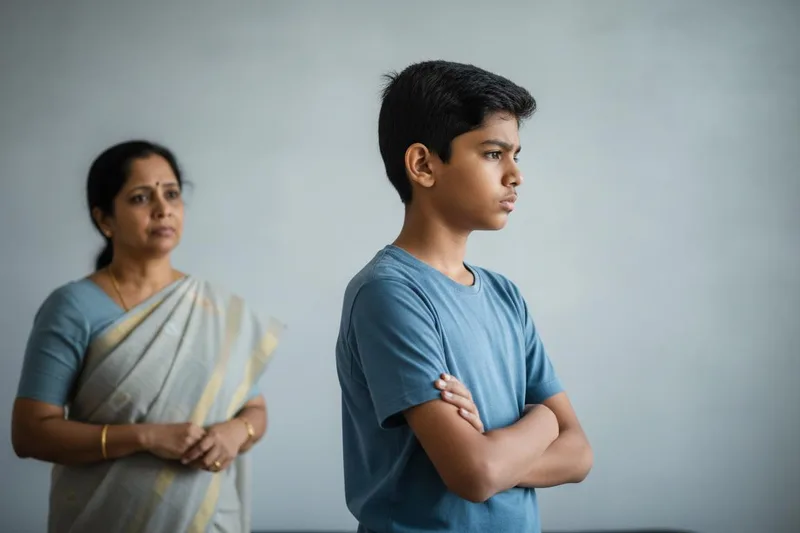
Does your child sometimes refuse to listen to you and start fights? It's normal for children to behave this way when they're young, especially when they're two or three years old, and even when they're a little older (around 13 or 14 years old). But if this stubbornness and disobedience continues for more than six months, and seems to be more than normal for their age, it could be a condition called ODD. Let's talk about this in more detail, don't worry, once we understand these things, there are ways we can help.
What is ODD (Oppositional Defiant Disorder)?
Simply put, ODD (Oppositional Defiant Disorder) is a mental health condition in which a child displays a pattern of persistent uncooperative, disobedient, and sometimes hostile behavior toward adults (such as parents and teachers) . This behavior can significantly interfere with the child's daily activities, family relationships, and schoolwork.
Imagine, you tell your child to put away the toys after playing. Then he/she argues, "I can't, you put them away yourself," or pretends not to hear you. It's normal for this to happen once or twice. But if these things happen regularly, for more than six months, and are severe and out of proportion to the child's age , then we should think about ODD.
The important thing is that not every child with ODD is a "bad" child. This is a condition that is out of their control and requires treatment.
What other mental health problems can occur with ODD?
Many children and young people with ODD also have one or more other mental health conditions. This is also important because all of these need to be taken into account when treating them.
- Attention-deficit hyperactivity disorder (ADHD): This is the most common condition seen with ODD.
- Anxiety disorders: For example, things like irrational fears and obsessive-compulsive disorder (OCD) .
- Learning differences: Some children may have learning difficulties.
- Mood disorders: Conditions like depression .
- Impulse control disorders.
About 30% of children with ODD will later develop a more severe behavioral condition called Conduct Disorder (CD) . If ODD is not properly diagnosed and treated, these symptoms may persist into adulthood.
What is Conduct Disorder (CD)? Is it worse than ODD?
Conduct Disorder (CD) is a condition in which a child or young person behaves aggressively towards others and consistently breaks the rules and accepted norms of society . It can be said to be a bit more severe than ODD.
Some of the characteristics of children with CD are:
- Repeatedly breaking serious rules. For example, running away from home, not listening when told not to go out at night, and truanting from school.
- Being aggressive in a way that harms others. Think of things like bullying other children, fighting, or abusing animals.
- Lying, stealing, and destroying other people's things on purpose .
Children with CD are more likely to get injured, and they also have difficulty getting along with friends.
What is the difference between ODD and ADHD?
These two conditions are often confused. About 40% of children with ADHD (Attention-deficit/hyperactivity disorder) may also have ODD or a related conduct disorder. Although the two may coexist, they are two different conditions.
- ODD is about a child's behavior and how they interact with parents, siblings, teachers, and friends.
- ADHD is a neurodevelopmental disorder that causes a child to be easily distracted, have difficulty staying organized, and be constantly restless.
Simply put, a child with ADHD may be disobedient due to restlessness and lack of attention. But a child with ODD tends to intentionally break rules, argue, and resist .
Who is most affected by ODD? What are the risk factors?
ODD is usually seen in children and young adults. But it can sometimes affect adults too. It often starts around the age of 8. Some children outgrow the condition as they get older, or get better with proper treatment. But for some, these symptoms may persist into adulthood.
Although ODD is more common in boys than girls in childhood, it affects both genders equally in adulthood.
Risk factors for your child developing ODD include:
- Childhood abuse or neglect .
- If a parent or caregiver has a mood disorder , or has problems with drug or alcohol use .
- Exposure to violence.
- Having a frequently changing discipline and lack of adult supervision.
- Instability in the family. For example, parents getting divorced, moving house frequently, changing schools frequently.
- Family financial difficulties .
- If the parents have had or currently have ODD, ADHD, or other behavioral problems.
How common is ODD?
Researchers say that between 2% and 11% of childrenODD affects. The reason for this wide range is that some children may be misdiagnosed as having Conduct Disorder, and the condition is underdiagnosed in younger children. The prevalence of ODD decreases with age.
What are the symptoms of ODD? How do you recognize it?
Symptoms of ODD usually begin around the age of 8. These symptoms remain at a fairly constant level between the ages of 5 and 10, and then usually (though not always) begin to decrease.
Although these symptoms can be seen in several places, such as at home and at school, they may be more pronounced at home or at school .
The symptoms of ODD can be divided into three main categories:
1. Anger and irritability.
2. Arguing and disobedient behavior.
3. Revenge motive.
In addition, many children with ODD may have frequent mood swings, become easily frustrated, have low self-esteem, and may also turn to drugs and alcohol.
Anger and irritability
These symptoms are part of the ODD diagnosis. If your child has ODD, you may see things like:
- Gets angry easily.
- Always bursting into anger and showing resentment .
- Even the smallest things others do can hurt your feelings and make you feel irritated .
- Always angry and speaking disrespectfully .
Arguing and disobedient behavior
This is also a key symptom of ODD. Your child may behave like this:
- Arguing with adults too much.
- They deliberately refuse to obey requests and rules.
- They blame others for their mistakes.
- Deliberately trying to anger and hurt others .
Revenge motive
Here are some of the symptoms of ODD that indicate revenge:
- Holding a grudge and seeking revenge.
- When you get angry and hurt, you say bad, hurtful words .
What are the causes of ODD?
There is no single cause for ODD. Researchers believe that it is caused by a complex combination of biological, genetic, and environmental factors .
Genetic influences
Research suggests that about 50% of ODD is genetic . Many children and young people with ODD have close family members who have other mental health problems, such as mood disorders, anxiety disorders, and personality disorders . Also, many children with ODD have other mental health conditions, such as ADHD, learning disabilities, depression, and anxiety, so it is thought that there may be a genetic link between these conditions.
Biological reasons
Some studies suggest that behavioral disorders may be caused by changes in certain areas of the brain. In addition, ODD may be caused by problems with chemicals called neurotransmitters, which help send messages between nerve cells in the brain . If these chemicals are out of balance or not working properly, messages can not travel through the brain properly, and symptoms can occur.
Environmental factors
A chaotic family life , childhood maltreatment , and inconsistent parental discipline can contribute to the development of ODD. Peer rejection , negative peer groups , poverty , neighborhood violence , and other unstable social or economic factors can also contribute to the development of ODD.
Important: Just because a child has one or more of these factors does not mean that they will develop ODD. Also, ODD can occur without any of these factors. These are only risk factors.
How do you know for sure if you have ODD? (Diagnosis)
Mental health professionals diagnose ODD when a child exhibits at least four of the symptoms listed in the Diagnostic and Statistical Manual of Mental Disorders (DSM-5) for more than six months . The symptoms must also be severe enough to interfere with the child's daily life .
If your child is showing signs of ODD, they should see a child and adolescent psychologist or psychiatrist . These mental health professionals use specially designed interviews and assessments to screen your child for a mental health condition.
Often, psychiatrists and psychologists obtain information from parents, siblings, friends, and teachers to gain a complete understanding of a child's behavior.
Your child's psychiatrist or psychologist will need to carefully examine your child and differentiate ODD from other conditions that may have similar symptoms, such as:
- Mild or moderate levels of protest behavior.
- Untreated ADHD (Attention-deficit/hyperactivity disorder) .
- Mood disorders.
- Anxiety disorders and OCD (Obsessive-compulsive disorder).
What are the treatments for ODD?
Treatment for ODD depends on a number of factors, for example:
- Your child's age .
- Severity of symptoms.
- The child's ability to participate in and tolerate certain treatments.
- Whether the child has other conditions such as ADHD, learning disabilities, or OCD.
Treatment for ODD should involve the child, your family, and the child's school .
Treatment usually consists of a combination of these things:
- Parent Management Training (PMT).
- Psychotherapy (talk therapy).
- School-based interventions.
Parent Management Training (PMT)
This is the main treatment for oppositional behavior associated with ODD. It teaches parents how to modify their child's behavior in the home environment by using positive reinforcement to reduce inappropriate behavior and increase good behavior.
There are different types of training programs. These usually consist of several sessions over a period of several weeks. During these sessions, parents learn to recognize problematic behaviors as well as positive interactions and to provide appropriate punishment or positive feedback.
The PMT method has been proven to help significantly reduce behavioral problems in a variety of families, across a variety of backgrounds.
Psychotherapy
Psychotherapy is a general term for a variety of treatment techniques that help you identify and change problematic feelings, thoughts, and behaviors. Working with a mental health professional, such as a psychologist or psychiatrist, can provide support, education, and guidance for your child and family.
Some common psychotherapy methods that can help treat ODD are:
Cognitive Behavioral Therapy (CBT)
This is a structured, goal-oriented, individualized therapy . The therapist helps the child look deeply into his or her thoughts and feelings. The child understands how his or her thoughts affect his or her actions. Through CBT, the child can learn to let go of negative thoughts and behaviors and develop healthier thought patterns and habits . CBT-based anger management training is very helpful for children with ODD who have anger management issues. For older children, problem-solving skills training and perspective-taking are helpful.
Family-focused therapy
This therapy is for children with ODD and their caregivers. During this therapy, the child and family participate in therapy sessions together to receive psychoeducation about ODD, develop communication skills, and develop problem-solving skills.Learning. This can help identify factors in the home environment that contribute to or worsen aggressive behavior.
School-based interventions
Supportive interventions that help improve schoolwork, peer relationships, and problem-solving skills are very useful in treating ODD.
These interventions may include:
- Providing education and tools to the child's teachers to improve classroom behavior.
- Techniques to prevent disruptive behavior or the worsening of such behavior.
- Other ways to help your child follow classroom rules and acceptable social interactions.
Is there medication for ODD?
Although there is no officially approved medication to treat ODD, your child's doctor or psychiatrist may prescribe medications to treat other conditions he or she may have, such as ADHD, OCD, or depression . If these conditions are not treated, they can make the symptoms of ODD worse.
What is the future course of ODD? (Prognosis)
Children with ODD can have significant problems at school, at home, and in social relationships.
Mild or moderate ODD often improves with age. However, more severe cases can develop into Conduct Disorder .
The prognosis for ODD can be poor due to lack of treatment and parental support. However, with proper treatment of other co-occurring conditions (such as ADHD or OCD), individual or family therapy, and positive parenting, good outcomes can be expected.
Can ODD be prevented?
ODD may not be completely preventable. However, recognizing and acting on the symptoms as soon as they appear can reduce the stress on the child and the family. It can also help prevent many of the problems associated with the condition. Families can also learn what to do if symptoms recur.
Additionally, creating a nurturing, supportive, and stable home environment can help reduce symptoms and prevent instances of oppositional behavior.
How to care for a child with ODD? Advice for parents
If your child has ODD, in addition to providing professional care, here are some ways you can help both you and your child:
- Build on the positives: Praise your child when they show flexibility or support, give them positive feedback , and appreciate even the smallest good deed.
- Take a time-out if necessary: If you feel like you are making the conflict with your child worse instead of better, step away from it for a while.This is a good example for the child. If the child decides to take a break to prevent a bad situation from getting worse, support them.
- Be consistent: Set age-appropriate, reasonable limits with consequences for bad behavior. Enforce these consistently. Be consistent about the rules, too. Don't say one thing today and another tomorrow.
- Take care of yourself: Continue to do the hobbies and activities you enjoy, and take care of yourself (self-care) . Work with other adults who are dealing with your child, and try to get their support. Only if you are well can you help your child.
- Seek medical advice: If your child has been diagnosed with ODD, but their behavior worsens or interferes with family or school life, talk to their mental health professional. If your child is showing behaviors that are harmful to others (other children or animals) , seek immediate treatment.
Finally, the most important things to remember (Take-Home Message)
Dealing with children who are defiant and very disruptive can be a challenge for parents. While it is normal for toddlers and young children to show occasional oppositional behavior, persistent and disruptive behavior may be a sign of ODD (Oppositional Defiant Disorder).
It is very important to start treatment for ODD early . The first step in treatment is to talk to a doctor or mental health counselor . Don't be afraid to ask your doctor questions. They are there to help you. You are not alone , and there are many people who can help you cope with this condition.
Remember, ODD is neither the child's fault nor yours. Understanding this, you can help your child with love, patience, and proper guidance.
👩🏽⚕️ Additional questions (FAQs)
💬 Is ODD (Oppositional Defiant Disorder) just a childish prank?
No! While all children are a little naughty, ODD is a much more serious mental/behavioral disorder. This child consistently, repeatedly, and intentionally 'defies, argues, and speaks hurtfully' to adults (mom, dad, teacher) for years. He does not obey any rules.
💬 How do you differentiate between normal mischief and this disease?
A normal child would be scared when they are teased. But this child deliberately annoys others. He blames others for every mistake he makes, saying it's a lie. He is always 'vindictive', showing extremely dangerous traits that take pleasure in hurting others.
💬 Can't you discipline a child like this by hitting and scolding him?
If you hit or punish, this disease will only get worse a hundredfold! The most effective and only treatment for this is to go to a child psychiatrist and give the child behavior modification therapy (CBT / Behavior Therapy). Along with this, the parents will definitely be given advice (Parent Training) on how to control the child.
` ODD, Conduct Disorder, Child Mental Health, Disobedient Children, Parenting Advice, Stubbornness, Behavior Therapy





💬 Comments (0)
No comments yet. Be the first to share your thoughts here.
Add Your Comment