
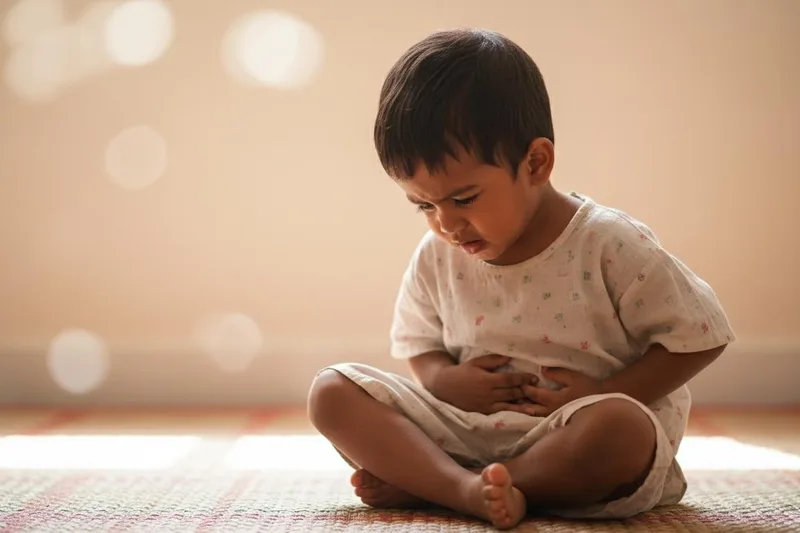
Has your child not gone to the toilet properly in a few days? Or does he cry or have difficulty going to the toilet? Constipation is a common condition in babies. However, most of the time it is not serious. So before you panic, let's talk about it in a little more detail so that you can understand what is happening and what to do.
What exactly is constipation? What are the symptoms when a child has it?
Simply put, constipation is when a child has difficulty passing stools normally. This means that the child may have fewer bowel movements than usual, or they may have difficulty or pain when passing stools.
Think about it, some children go to the toilet two or three times a day. Others may go every other day. This varies from child to child and also by age. The most important thing is to see if your child's usual pattern has changed.
Now let's look at the common symptoms that can be seen in a child with constipation:
- Less frequent bowel movements: If your baby hasn't gone to the bathroom for two or three days, it could be a sign of constipation. It's normal for some newborns to go a few days without a bowel movement while they're exclusively breastfed, but as long as the bowel movements aren't painful or the stools are dry, it's not a problem. However, this pattern will change once solid foods are introduced.
- Straining and pain when defecating: If your child is sitting on the toilet with a red face and seems to be straining, or if they cry when defecating, it may be due to pain.
- Dry, hard, lumpy stools: Normally, a healthy child's stools are soft. However, when they are constipated, the stools may be dry, like small pebbles, or they may be large, hard lumps.
- Larger than normal stools: Sometimes, after a few days of constipation, a very large stool can be passed at once. This can be painful for the child.
- Feeling full or bloated: The child may say, "I feel full, Mommy," or their stomach may look slightly swollen.
- Stomach ache: Although not always, some children may experience stomach aches.
- Slight bleeding with stool: When passing hard stools, you may notice a slight bruising around the anus, and a few drops of blood may be seen on the toilet paper or in the stool. This is usually caused by a small tear called an ``anal fissure.`` However, if the bleeding continues, it is important to seek medical advice.
If your child has one or more of these symptoms, it could be constipation.
What should we do for a child who is constipated?
The good news is that constipation can often be controlled with simple things you can do at home. Let's take a look at what those things are. We call this the "Three Fs of Treatment." That stands for Fluids, Fiber, and Exercise.
1. Fluids - Give more fluids:
- Water is best. Encourage your child to drink small amounts of water throughout the day. Water helps soften stools.
- Fruit juices are also good. Prune juice, apple juice, and pear juice are especially helpful for constipation. However, if your baby is under 6 months old or hasn't started solid foods, don't give them these types of juices without first consulting a doctor.
- Sugary drinks and carbonated beverages are not good for this, as they can make constipation worse.
2. Fiber - Add fiber-rich foods to your diet:
- What is fiber? Simply put, these are the parts that our bodies cannot digest, but that add to our stools, increasing their bulk and softening them.
- Fruits: Fruits like apples (with peel), pears, oranges, bananas (especially lotus-like ones), papaya, mango, and pineapple are very good.
- Vegetables and greens: Add vegetables and greens like spinach, kale, spinach, carrots, beans, pumpkin, and sweet potatoes to your child's diet.
- Grains: Include things like oats, millet, green beans, chickpeas, lentils, as well as bran rice, whole-grain bread, and whole-grain breakfast cereals in your diet.
- Think of it this way: just like a sponge absorbs water, fiber absorbs water in our intestines, making our stools bigger and softer. Then they can pass out easily.
3. Fitness - Encourage your child to exercise daily:
- Physical activity stimulates bowel movements. That is, when a child runs and plays, stool begins to move more easily through the intestines.
- Play with your baby, let them run and jump. If they are crawling, keep them on the floor more. If they are walking, encourage them to run, jump and play ball. Even a short walk is good.
Most importantly: Always talk to your doctor before giving your child any medication for constipation. Some over-the-counter medications are not suitable for children, and giving them too often can disrupt the natural function of the intestines.
In cases like this, you should seek medical advice!
Although constipation usually resolves with home remedies, there are some cases where we should definitely see a doctor. Let's take a look at what they are:
- If constipation lasts more than a week: If it doesn't improve in a few days, you should check if there is another cause.
- If your child has loose stools (like diarrhea) on their underwear when they are not sick: This is a bit confusing, isn't it? How can diarrhea occur when a child is constipated? Well, sometimes when a hard stool mass is stuck in the intestines, a little loose stool can leak out from around it. This is called ``overflow diarrhea''. This is not actually diarrhea, but a symptom of severe constipation.
- If there is severe stomach pain: It is normal for constipation to cause mild stomach pain. However, if the child is in unbearable pain, it could be a sign of another serious condition.
- If vomiting occurs: Seek medical advice if vomiting persists, especially if constipation is present.
- Appetite, poor food intake: If your child is refusing food because it is uncomfortable, that is also something to pay attention to.
- If you are losing weight or not gaining weight: This can especially affect young babies.
- If you often see blood in your stool: As mentioned earlier, it could be due to a minor injury, but if it happens frequently, it's a good idea to get it checked out.
If you have these symptoms, please see a doctor immediately.
What can you do to prevent constipation?
"Prevention is better than cure," they say. So there are things we can do to reduce the chances of developing constipation.
- Limit foods high in oil, sugar, and starch: These can slow down the functioning of the intestines. Reduce the frequency of instant noodles, sweet foods, biscuits, cakes, and fried foods (like French fries).
- Provide a high-fiber diet: Add the previously mentioned fruits, vegetables, legumes, and whole grains to your child's daily diet. It's best to introduce this to your child from an early age.
- Provide adequate fluids: Encourage drinking water throughout the day.
- Regular exercise: Keep your child active.
- Establishing toilet training: You can teach your child to wait a while on the toilet, especially after meals. This will signal the intestines to defecate. But don't force them.
- Don't delay your child's urge to go to the toilet: Sometimes children avoid going to the toilet while they are playing or watching TV. This can make the stool even harder to pass. So encourage your child to go as soon as they feel the need.
Summary: The most important things to remember
So, although constipation is a common problem for children, we can easily control it if we are aware of it.
In short: Add fiber-rich foods (fruits, vegetables, legumes, whole grains) to your child's diet, give them plenty of water to drink, and let them run and play. These simple things can often help control constipation.
However, if you have any doubts, if your child's condition does not improve within a few days, or if any of the serious symptoms mentioned above are observed, please seek medical advice. Do not self-medicate.
The most important thing for us is that your child is healthy and happy!
Constipation, constipation in children, Constipation, constipation, children's health, diet, fibrous foods


💬 Comments (0)
No comments yet. Be the first to share your thoughts here.
Add Your Comment