
How to feed your little one between 1 and 3 months (Infant Feeding: 1-3 Months) – Let's talk about this!

How to feed your little one between 1 and 3 months (Infant Feeding: 1-3 Months) – Let's talk about this!

Your little one is just getting used to the world, right? I know it's very important for you to think about their nutrition during this time. Today we're going to talk about breastfeeding, especially between the ages of 1 and 3 months. During this time, a baby gets all the nutrition they need from breast milk or formula. Doctors say that it's best to start solid foods around 6 months. Some babies may be ready for solid foods even before 6 months, but it's best to wait until at least 4 months. Let's take a closer look at breastfeeding in the first three months.
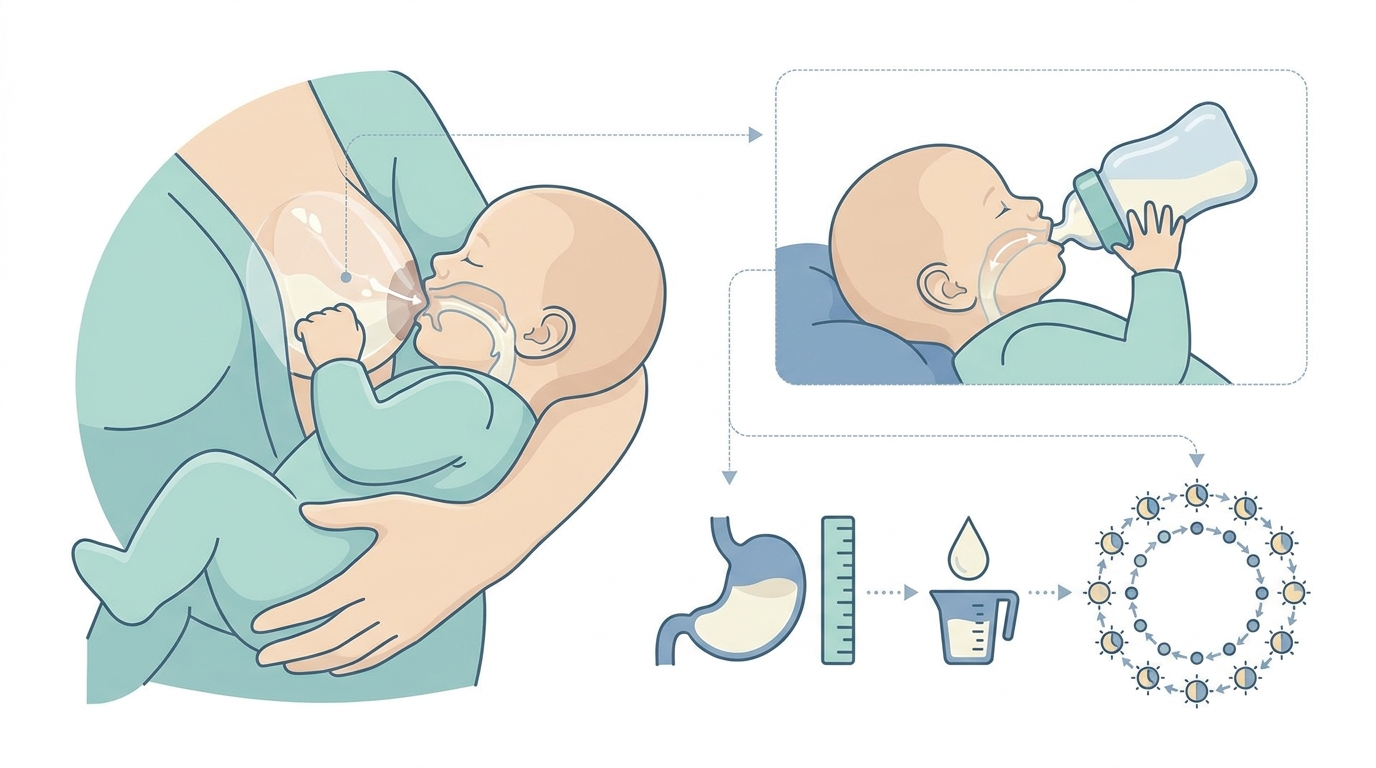
What are the changes in breastfeeding as the baby gets older?

As your baby gets older, the way they breastfeed changes, you know? They may be less likely to breastfeed as often as they were in the beginning, and they may be able to drink more milk at a time. Then they won't need to breastfeed as often, and they may be able to sleep a little longer at night. Isn't that so comforting?

Another thing is that babies go through something called a 'growth spurt' from time to time. Think of it as a period when the baby suddenly grows a little faster. During those days, the baby's hunger may also increase a little. Don't worry about it at such times, and feed the baby on demand. If necessary, increase the frequency of feeding a little.

As the weeks go by, your little one will become more cuddly, spending more time awake. He will start to smile at you, coo, and so on. Then, breastfeeding will become an even more beautiful and loving experience between you and your baby.

But these are just general guidelines . Your baby may be more or less hungry than this. That's why it's important to pay close attention to your baby's hunger and fullness cues. Usually, when a baby is full, he or she will stop feeding, stop feeding, or look away from the breast or bottle. Got it?

If breastfeeding: How much? How often?

As babies get older, they breastfeed less often and start sleeping longer at night. You can tell if your baby is getting enough milk if they have these signs:

  • If the baby is wide awake, happy, and active .
  • If the weight is increasing gradually and the growth is good.
  • If you drink milk about six or eight times a day.
  • If the diaper is wet ( urinates ) and defecates properly.

However, if you see things like this, your baby may not be getting enough milk :

  • If you still don't feel satisfied after drinking the milk.
  • If you keep crying.
  • If you are constantly irritable even after drinking milk.
  • If the diaper is not wet properly (if the amount of urine is small).

If you think your baby isn't getting enough milk, is it definitely a good idea to talk to a doctor? Don't worry, there are solutions.

A few weeks after birth, you may notice that your baby's bowel movements (also known as BMs) are a little less frequent than before. By about two months, your baby may not have a bowel movement after every feeding, or even once a day. This is normal. Don't worry. During those "growth spurts" I mentioned earlier, you'll notice your baby sucking more often. When you suckle more often, it's a signal to your body to "make more milk." In a couple of days, your milk supply and your baby's demand will be in perfect balance.

The most important thing is: Exclusively breastfed babies should be given vitamin D supplements within a few days of birth. Other supplements, water, fruit juice, and solid foods are usually not needed at this time (the first 4-6 months).

If formula is given: How much? How often?

If you are feeding your baby formula, remember that formula takes a little longer to digest than breast milk. Therefore, a bottle-fed baby may need fewer feedings than a breastfed baby. This means that feedings may be given less frequently.

As babies get older, the amount they can drink at one time increases. Then the time between feedings may also increase. You will notice that your baby will start to sleep longer at night.

By about the second month, babies can drink 4 or 5 ounces (about 120-150 milliliters) at a time. By about 3 months, they may need an additional ounce (about 30 milliliters) at a time. However, these are just average amounts, and your baby may need more or less.

There is a small thing about bottle feeding. That is, the baby is more likely to drink too much milk. Because it is easier to get milk from a bottle than from the breast. Therefore, check that the hole in the bottle nipple is exactly the right size. The milk should come out in drops, not all at once. Another important thing is, do not force the baby to drink the rest of the bottle when he shows signs of being full.

Very important: Never prop a bottle up and let your baby drink alone. Doing so increases the risk of choking, ear infections , and tooth decay. This is something you should definitely keep in mind.

Should you be worried about spitting up milk?

It's common for babies to spit up a little milk after a feed or when they burp. This is very normal. A small amount of spit up – usually less than an ounce (about 30 milliliters) – shouldn't be a big deal, especially if it happens within an hour of feeding and your baby isn't bothered by it.

In these early months, you can reduce the amount of milk vomiting you experience by doing the following:

  • Feed the baby before he gets very hungry .
  • Hold the baby in a semi-upright position while breastfeeding and for about an hour after.
  • Always open the baby's eyes.
  • Don't overfeed .
  • Do not play with the baby or shake him vigorously immediately after feeding.

However, if you see things like these , you should talk to a doctor immediately:

  • If the baby vomits a large amount of milk .
  • If you vomit milk forcefully .
  • If the baby seems restless and has difficulty feeding , either during or after feeding.
  • If the baby seems to be losing weight or is not gaining weight as expected.

Also, if your baby has a fever or shows signs of dehydration (for example, diapers not getting wet enough), call a doctor immediately.

If you have any questions or concerns about breastfeeding, it's best to talk to a doctor and get it resolved. Don't be afraid or embarrassed. Your baby's health is the most important thing.

Take-Home Message from What We've Said

Okay, so I hope the things we've talked about have been helpful when breastfeeding your little one. In summary:

  • Breast milk or formula is the best nutrition for a baby in the first 3 months.
  • As the baby grows, the breastfeeding pattern changes. The amount of milk consumed at one time may increase, and the frequency may decrease.
  • During 'growth spurts', babies may be a little hungrier.
  • Pay attention to your baby's hunger and fullness cues.
  • If breastfeeding, check to see if your baby is getting enough milk ( weight gain , activity, diaper wetting). Don't forget to give a Vitamin D supplement.
  • If you are giving formula, be careful about the size of the nipple hole and don't hold the bottle in place.
  • Spitting up a little milk is normal,But if it's sudden, if it's a large amount, or if the baby is uncomfortable, tell the doctor immediately.
  • Never keep a problem to yourself. Talk to a doctor.

If you do these things right, your baby will grow up healthy and happy. Congratulations!

👩🏽‍⚕️ Additional questions (FAQs)

💬 Is it good to give water in addition to breast milk to a child between 1 and 3 months old (Infant feeding 1-3 months)?

Not good at all! Do not give a baby a single drop of water until they are 6 months old. Breast milk is 80% water. Therefore, all the nutrition and water that a baby needs are 100% provided by breast milk or by formula given on medical advice.

💬 Is spitting up a dangerous disease for a baby of this age?

No. The valve between the stomach and esophagus is not yet fully developed, so babies this age may swallow air while drinking, and some of the milk they drink will come back up into their throats. This is completely normal if the baby is gaining weight well.

💬 Is it necessary to burp your baby after feeding him/her?

Yes, it is a must! Especially babies who are bottle-fed swallow a large amount of air along with their milk. Therefore, after feeding or in between feedings, you should hold the baby on your shoulder and pat his back to release the air.


` Feeding a baby, 1-3 month old baby, breastfeeding , formula feeding, infant nutrition, growth spurt, regurgitation

⚠️ Important: The medical articles and information on Nirogi Lanka are for general awareness only, and are by no means a substitute for professional medical advice, diagnosis, or treatment. For any medical problem you have, consult a qualified physician immediately.

💬 Comments (0)

No comments yet. Be the first to share your thoughts here.

Add Your Comment

Please calculate: 1 + 1 =
How to feed your little one between 1 and 3 months (Infant Feeding: 1-3 Months) – Let's talk about this!
Nutrition and FoodApril 2, 2026

How to feed your little one between 1 and 3 months (Infant Feeding: 1-3 Months) – Let's talk about this!

Your little one is just getting used to the world, right? I know it's very important for you to think about their nutrition during this time. Today we're going to talk about breastfeeding, especially between the ages of 1 and 3 months. During this time, a baby gets all the nutrition they need from breast milk or formula. Doctors say that it's best to start solid foods around 6 months. Some babies may be ready for solid foods even before 6 months, but it's best to wait until at least 4 months. Let's take a closer look at breastfeeding in the first three months.

What are the changes in breastfeeding as the baby gets older?

As your baby gets older, the way they breastfeed changes, you know? They may be less likely to breastfeed as often as they were in the beginning, and they may be able to drink more milk at a time. Then they won't need to breastfeed as often, and they may be able to sleep a little longer at night. Isn't that so comforting?

Another thing is that babies go through something called a 'growth spurt' from time to time. Think of it as a period when the baby suddenly grows a little faster. During those days, the baby's hunger may also increase a little. Don't worry about it at such times, and feed the baby on demand. If necessary, increase the frequency of feeding a little.

As the weeks go by, your little one will become more cuddly, spending more time awake. He will start to smile at you, coo, and so on. Then, breastfeeding will become an even more beautiful and loving experience between you and your baby.

But these are just general guidelines . Your baby may be more or less hungry than this. That's why it's important to pay close attention to your baby's hunger and fullness cues. Usually, when a baby is full, he or she will stop feeding, stop feeding, or look away from the breast or bottle. Got it?

If breastfeeding: How much? How often?

As babies get older, they breastfeed less often and start sleeping longer at night. You can tell if your baby is getting enough milk if they have these signs:

  • If the baby is wide awake, happy, and active .
  • If the weight is increasing gradually and the growth is good.
  • If you drink milk about six or eight times a day.
  • If the diaper is wet ( urinates ) and defecates properly.

However, if you see things like this, your baby may not be getting enough milk :

  • If you still don't feel satisfied after drinking the milk.
  • If you keep crying.
  • If you are constantly irritable even after drinking milk.
  • If the diaper is not wet properly (if the amount of urine is small).

If you think your baby isn't getting enough milk, is it definitely a good idea to talk to a doctor? Don't worry, there are solutions.

A few weeks after birth, you may notice that your baby's bowel movements (also known as BMs) are a little less frequent than before. By about two months, your baby may not have a bowel movement after every feeding, or even once a day. This is normal. Don't worry. During those "growth spurts" I mentioned earlier, you'll notice your baby sucking more often. When you suckle more often, it's a signal to your body to "make more milk." In a couple of days, your milk supply and your baby's demand will be in perfect balance.

The most important thing is: Exclusively breastfed babies should be given vitamin D supplements within a few days of birth. Other supplements, water, fruit juice, and solid foods are usually not needed at this time (the first 4-6 months).

If formula is given: How much? How often?

If you are feeding your baby formula, remember that formula takes a little longer to digest than breast milk. Therefore, a bottle-fed baby may need fewer feedings than a breastfed baby. This means that feedings may be given less frequently.

As babies get older, the amount they can drink at one time increases. Then the time between feedings may also increase. You will notice that your baby will start to sleep longer at night.

By about the second month, babies can drink 4 or 5 ounces (about 120-150 milliliters) at a time. By about 3 months, they may need an additional ounce (about 30 milliliters) at a time. However, these are just average amounts, and your baby may need more or less.

There is a small thing about bottle feeding. That is, the baby is more likely to drink too much milk. Because it is easier to get milk from a bottle than from the breast. Therefore, check that the hole in the bottle nipple is exactly the right size. The milk should come out in drops, not all at once. Another important thing is, do not force the baby to drink the rest of the bottle when he shows signs of being full.

Very important: Never prop a bottle up and let your baby drink alone. Doing so increases the risk of choking, ear infections , and tooth decay. This is something you should definitely keep in mind.

Should you be worried about spitting up milk?

It's common for babies to spit up a little milk after a feed or when they burp. This is very normal. A small amount of spit up – usually less than an ounce (about 30 milliliters) – shouldn't be a big deal, especially if it happens within an hour of feeding and your baby isn't bothered by it.

In these early months, you can reduce the amount of milk vomiting you experience by doing the following:

  • Feed the baby before he gets very hungry .
  • Hold the baby in a semi-upright position while breastfeeding and for about an hour after.
  • Always open the baby's eyes.
  • Don't overfeed .
  • Do not play with the baby or shake him vigorously immediately after feeding.

However, if you see things like these , you should talk to a doctor immediately:

  • If the baby vomits a large amount of milk .
  • If you vomit milk forcefully .
  • If the baby seems restless and has difficulty feeding , either during or after feeding.
  • If the baby seems to be losing weight or is not gaining weight as expected.

Also, if your baby has a fever or shows signs of dehydration (for example, diapers not getting wet enough), call a doctor immediately.

If you have any questions or concerns about breastfeeding, it's best to talk to a doctor and get it resolved. Don't be afraid or embarrassed. Your baby's health is the most important thing.

Take-Home Message from What We've Said

Okay, so I hope the things we've talked about have been helpful when breastfeeding your little one. In summary:

  • Breast milk or formula is the best nutrition for a baby in the first 3 months.
  • As the baby grows, the breastfeeding pattern changes. The amount of milk consumed at one time may increase, and the frequency may decrease.
  • During 'growth spurts', babies may be a little hungrier.
  • Pay attention to your baby's hunger and fullness cues.
  • If breastfeeding, check to see if your baby is getting enough milk ( weight gain , activity, diaper wetting). Don't forget to give a Vitamin D supplement.
  • If you are giving formula, be careful about the size of the nipple hole and don't hold the bottle in place.
  • Spitting up a little milk is normal,But if it's sudden, if it's a large amount, or if the baby is uncomfortable, tell the doctor immediately.
  • Never keep a problem to yourself. Talk to a doctor.

If you do these things right, your baby will grow up healthy and happy. Congratulations!

👩🏽‍⚕️ Additional questions (FAQs)

💬 Is it good to give water in addition to breast milk to a child between 1 and 3 months old (Infant feeding 1-3 months)?

Not good at all! Do not give a baby a single drop of water until they are 6 months old. Breast milk is 80% water. Therefore, all the nutrition and water that a baby needs are 100% provided by breast milk or by formula given on medical advice.

💬 Is spitting up a dangerous disease for a baby of this age?

No. The valve between the stomach and esophagus is not yet fully developed, so babies this age may swallow air while drinking, and some of the milk they drink will come back up into their throats. This is completely normal if the baby is gaining weight well.

💬 Is it necessary to burp your baby after feeding him/her?

Yes, it is a must! Especially babies who are bottle-fed swallow a large amount of air along with their milk. Therefore, after feeding or in between feedings, you should hold the baby on your shoulder and pat his back to release the air.


` Feeding a baby, 1-3 month old baby, breastfeeding , formula feeding, infant nutrition, growth spurt, regurgitation

⚠️ Important: The medical articles and information on Nirogi Lanka are for general awareness only, and are by no means a substitute for professional medical advice, diagnosis, or treatment. For any medical problem you have, consult a qualified physician immediately.

💬 Comments (0)

No comments yet. Be the first to share your thoughts here.

Add Your Comment

Please calculate: 1 + 1 =