

You might plan to give your baby formula right from birth. Or you might use formula alongside breastfeeding, or switch from breast milk to formula over time. Either way, feeding your baby can bring up many questions about formula, solid foods, and cow's milk. You are not alone in wondering how to get everything right for your growing child.
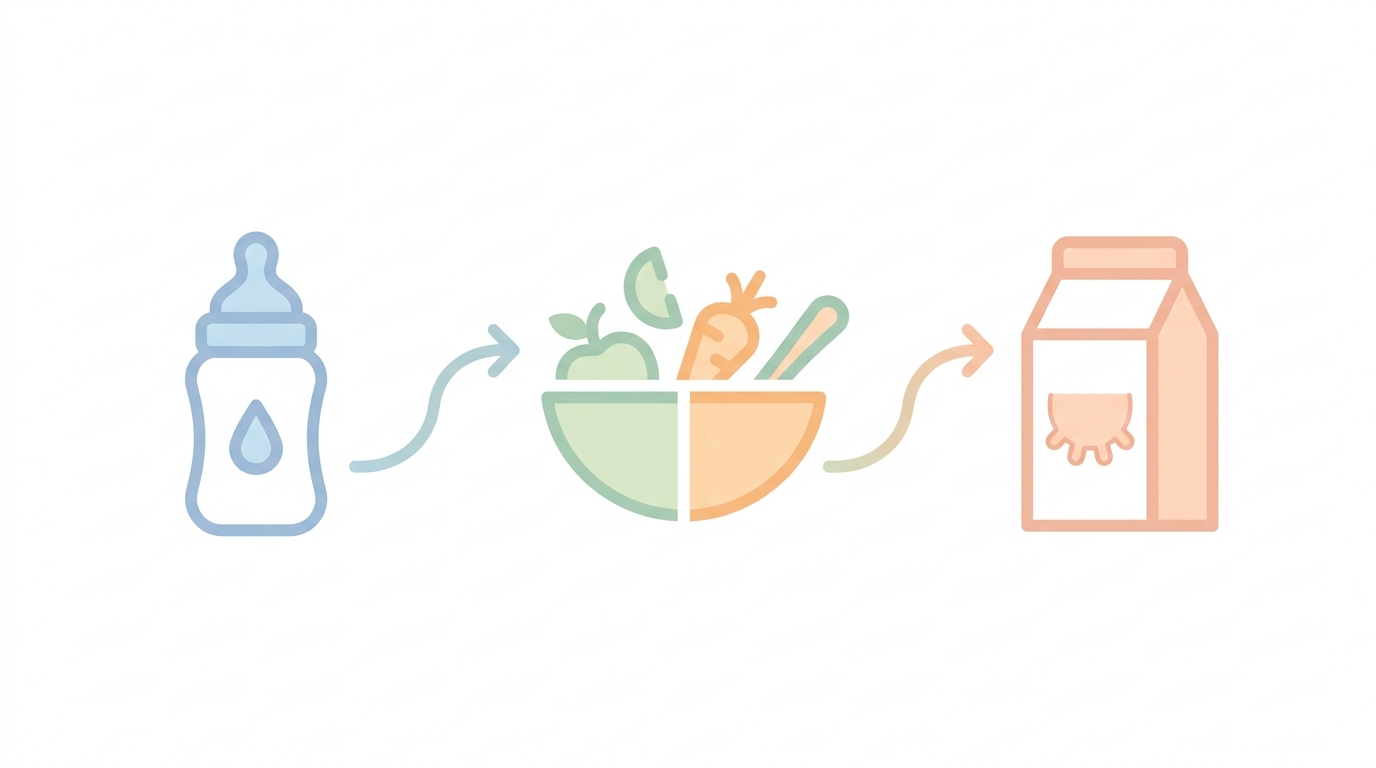
Feeding your baby is an exciting journey full of new milestones. Every baby grows at their own pace and develops unique tastes and needs. This guide will walk you through each step of the process in simple, clear terms so you can feel confident every single day.
Let us look at the essential feeding steps, safety tips, and expert guidance to help your baby thrive.
Key Takeaways at a Glance.
- Start solid foods around six months of age when your baby shows signs of readiness.
- Begin with a single-grain, iron-fortified baby cereal mixed with breast milk, formula, or water.
- Wait three to four days between new foods to check for any allergic reactions.
- Avoid honey, added sugars, high-salt foods, and unpasteurized items during the first year.
- Introduce whole cow's milk only after your baby turns one year old.
When Is the Best Time to Start Solid Foods?
Doctors generally recommend starting solid foods when your baby reaches about six months of age. This timing is ideal because your baby's digestive system and nutritional needs change. Breast milk or formula alone may no longer provide enough iron and zinc as your baby grows actively.
Some babies might show interest a little earlier, around four months of age. Even if your baby seems eager, never start solid foods before four months under any circumstances. Introducing solids too early can harm your baby's developing gut and increase the risk of allergies or choking.
Always talk to your pediatrician before introducing any new foods outside of breast milk or formula. Your doctor can confirm if your baby is truly ready based on weight gain and developmental milestones.
How Do You Know Your Baby Is Ready for Solids?
Your little one will show clear physical and behavioral signs when they are ready to explore solid foods. Watch for these helpful development cues:
- Your baby can hold their head steady and upright without needing support.
- Your baby can sit up well with little or no assistance in a high chair.
- Your baby watches you eat with intense curiosity, reaches for your plate, or opens their mouth when food comes close.
- Your baby has lost the tongue-thrust reflex. This they do not push food straight back out of their mouth with their tongue.
- Your baby has doubled their birth weight, or is very close to reaching that milestone.
Seeing these signs means your baby is growing up fast and getting ready for new tastes and textures.
How to Start Solid Foods the Right Way.
Once your baby is ready, you can begin the exciting adventure of feeding. Start slowly and keep mealtime calm and happy for both you and your baby.
Begin with a single-grain, iron-fortified baby cereal, such as rice cereal. Mix one or two teaspoons of cereal with breast milk, formula, or boiled and cooled water. Stir the mixture well until it forms a smooth, thin paste.
Feed the cereal to your baby using a small, soft infant spoon. Never put cereal in a baby bottle unless your doctor specifically tells you to do so.
As your baby gets used to cereal, you can add other smooth foods. Try pureed meats like chicken or fish, mashed fruits like bananas or papayas, and soft cooked vegetables like sweet potatoes or carrots.
You can also introduce mashed beans, lentils, and plain whole-milk yogurt in small amounts. Always ensure the texture is completely smooth and easy for your baby to swallow.
Allergy Tip: When you introduce a new food, feed it to your baby alone for three to four days. Watch closely for signs of an allergic reaction like a skin rash, swelling, or tummy trouble before offering another new food.
Understanding Common Allergenic Foods.
In the past, parents were told to delay foods that often cause allergies. Current medical guidelines have changed based on recent research.
Common allergenic foods include peanuts, eggs, cow's milk products like yogurt, seafood, tree nuts, wheat, and soy. You can introduce these foods around the same time as other solid foods.
Delaying these foods does not prevent food allergies. In fact, early introduction may help lower the risk of developing certain food allergies later in childhood.
If your baby has severe eczema or an egg allergy, talk to your pediatrician right away. Babies with severe eczema have a higher risk of developing a peanut allergy.
Your doctor may recommend allergy testing or guide you on how to introduce peanut products safely at an early age. Always follow your doctor's specific advice for high-risk babies.
Foods to Avoid Giving Your Baby.
Some foods are dangerous for babies and must be avoided completely during their first year of life. Keep these safety rules in mind to protect your child:
- Never give honey to a baby under one year of age. Honey can contain spores of bacteria that cause infant botulism, a rare and very dangerous illness.
- Avoid foods and drinks with added sugars or zero-calorie artificial sweeteners. They offer no nutrition and can harm your baby's health.
- Do not give high-sodium foods because a baby's immature kidneys cannot process high amounts of salt.
- Never give unpasteurized milk, juice, yogurt, or cheese because they can carry harmful bacteria that cause severe infections.
- Do not give regular cow's milk or soy beverages as a main drink before twelve months of age.
- Avoid choking hazards like whole grapes, popcorn, whole nuts, hard raw vegetables, and hot dogs cut into round coin shapes. Always cut grapes into quarters lengthwise and mash nuts into smooth pastes.
Stay right beside your baby during every single meal and snack. Never leave your baby alone while they are eating to prevent choking emergencies.
Emergency Red Flags: When to Seek Immediate Medical Help.
Call 911 (US/Canada), 999 (UK), your local emergency number, or go to the nearest Emergency Department right away if your baby shows any of these warning signs:
- Difficulty breathing, wheezing, or severe coughing after eating.
- Sudden swelling of the lips, tongue, face, or throat.
- Widespread hives or a severe red skin rash appearing rapidly.
- Persistent vomiting, severe diarrhea, or signs of dehydration like a sunken soft spot.
- Lethargy, limpness, or unresponsiveness.
When Can You Start Giving Cow's Milk?
Before your baby turns one year old, breast milk or formula must remain their primary beverage. These milk sources provide all the essential nutrients your baby needs for healthy growth.
Once your baby celebrates their first birthday, they are ready to transition to cow's milk. Whole cow's milk is recommended for toddlers between one and two years of age.
The fat content in whole milk is crucial for brain development during the toddler years. If your family has a history of obesity, high cholesterol, or heart disease, your doctor might suggest reduced-fat milk instead.
If your baby cannot drink cow's milk due to a milk allergy or lactose intolerance, talk to your doctor. An unsweetened soy beverage fortified with calcium and vitamin D is often a good alternative.
Plant-based milks like almond milk, rice milk, and coconut milk lack enough protein and vital nutrients for growing toddlers. Always consult your pediatrician before choosing a milk alternative.
How to Transition from Formula to Cow's Milk.
Transitioning your baby from formula to cow's milk is usually simple. Start by offering cow's milk in a sippy cup alongside meals.
If your baby hesitates at first, mix formula and cow's milk together in the bottle. Gradually increase the amount of cow's milk over a week or two until your toddler accepts it fully.
A one-year-old toddler should drink about 16 to 24 ounces (480 to 720 milliliters) of whole cow's milk per day. Continue offering a variety of nutritious solid foods to ensure a balanced diet.
Water, Juice, and Other Drinks for Babies.
During the first six months of life, a healthy, well-fed baby drinking enough breast milk or formula does not need extra water. The milk provides all the hydration they require.
Once your baby starts eating solid foods around six months, you can offer small sips of boiled and cooled water between meals. Aim for about 4 to 8 ounces (120 to 240 milliliters) per day at most.
Check if your local tap water contains fluoride, which helps prevent tooth decay. If your tap water lacks fluoride, ask your doctor or dentist if your baby needs fluoride supplements.
Avoid giving fruit juice to babies under twelve months of age. Juice adds excess sugar without providing the healthy fiber found in whole fruits.
After age one, if you choose to give 100% fruit juice, limit it to 4 ounces (120 milliliters) per day. Always serve juice in an open cup or sippy cup rather than a bottle to protect developing teeth.
Never give sugary drinks like sodas, sports drinks, sweetened teas, or flavored milks to infants or toddlers. These drinks lead to tooth decay and unhealthy weight gain.
Summary of Key Feeding Guidelines.
Feeding your baby involves patience, observation, and loving care. Keep these core points in mind as your baby grows:
| Feeding Stage. | Recommended Foods & Drinks. | Important Safety Rules. |
|---|---|---|
| 0 to 6 Months. | Breast milk or infant formula exclusively. No water needed. | No honey, no cow's milk, no solid foods before four months. |
| 6 to 12 Months. | Iron-fortified cereals, pureed meats, mashed fruits, vegetables, and sips of water. | Supervise all meals, avoid choking hazards, watch for allergies. |
| 12+ Months. | Whole cow's milk (16-24 oz daily), family table foods, water. | Limit sugary drinks, avoid unpasteurized juices or milks. |
A Note from Dr. Priya Sammani.
Every baby is unique and develops at their own special pace. Never rush the feeding process or compare your baby to others. If you ever feel unsure about your baby's nutrition, weight gain, or food reactions, consult your pediatrician right away. Trust your instincts, enjoy every milestone, and cherish these precious moments with your little one.


💬 Comments (0)
No comments yet. Be the first to share your thoughts here.
Add Your Comment