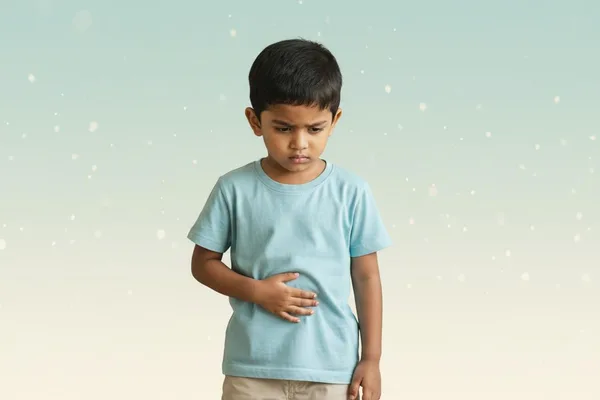
Is your little one feeling nauseous? (Nausea) Don't worry, let's talk about this!

Is your little one feeling nauseous? (Nausea) Don't worry, let's talk about this!

It's a scary feeling for a mother or father when your little one says, "Oh, my stomach hurts," or just feels like they're going crazy. It's very common for babies to experience this nausea, or the feeling of their stomach turning over. Most of the time, it's not a big deal, but it's important to be aware.

What is this nausea?

Simply put, nausea is the strange upset feeling in the stomach before vomiting. It feels like your stomach is about to turn over, like something is going to happen. Young children may not be able to say exactly "I feel sick." Instead, they may say things like "my stomach hurts," "my stomach feels queasy," or "I don't feel well." Sometimes they show aversion to food and say they can't eat. This is what we call nausea.

Just think, sometimes we feel the same way, when we're on the bus or when we're upset after eating something. It's the same for little ones. Most of the time, this nausea goes away on its own after vomiting or when the illness subsides a bit. So there's nothing to worry about , but it's important to know how to take care of your little one during this time.

How do you care for a nauseous child at home?

If your child is feeling nauseous, there are a few ways you can lovingly care for them at home. Keeping these things in mind will make it easier for you and your little one to recover faster.

Keep these things in mind when serving food and drinks.

It's hard for babies to eat when they're nauseous. So don't force them to eat . That can make them even more upset. But you can't starve them either. Try these things:

  • Give light, easily digestible food:
  • Toasted bread (without butter)
  • Crackers with a little salt (like cream crackers)
  • White rice (nothing else)
  • Boil the potatoes and mash them well.
  • Things like kurakkan porridge, rice porridge

The most important thing is to try to feed these foods little by little . Don't give a large amount at once.

  • Don't give these foods:
  • High-fat foods: Fried foods, foods made with oil (like patties, rolls)
  • Foods high in sugar: chocolate, cakes, sweetened drinks (these can increase nausea)
  • Processed foods: Things like sausages and meatballs are not appropriate at this time.
  • Don't let your child run around after eating: Keep your child calm for a while after eating. Even if you let them play, keep them away from things that make them run around for a while.

Give plenty of fluids to prevent dehydration.

When you are sick, especially if you are vomiting, a lot of water is lost from the body. We call this ``(Dehydration)``, which means dehydration. This can be dangerous for little ones. Therefore, you should give as much fluid as possible . But remember here too, don't give too much at once, it is better to give it little by little, often.

  • You can give things like this:
  • Clean water: is the best.
  • Dilute fruit juice with a little water: For example, if it's orange juice, add one part water to the juice.
  • Light soups: Vegetable broth, like chicken soup.
  • Ice pops: Little ones can enjoy these with some gusto.
  • Jelly: This is also good because it has a liquid consistency.
  • Jeevani: Only give it if a doctor recommends it.
  • Definitely do not give these types of drinks:
  • Carbonated drinks: Drinks like soda and cola can increase stomach gas and make nausea worse.
  • Caffeine-containing drinks: Coffee, tea, and some chocolate drinks contain ``(Caffeine).`` These are not suitable at this time.

Imagine, Nisal's son had been feeling nauseous since morning. His mother didn't force-feed him. He was drinking water little by little. During the day, he ate two or three pieces of crackers. By evening, he felt a little better. It's very important to work patiently like this.

About nausea medication

There are some over-the-counter medications that can be purchased at the pharmacy. However, do not give these medications to young children without consulting a doctor . Sometimes, giving medication without properly diagnosing the cause of nausea can lead to other problems. Therefore, it is always safest to consult a doctor before giving medication.

Let me rest well.

Nausea-prone babies are very tired. They just want to sleep well and rest. So let them be free. Put them in a quiet, comfortable place.

Don't forget to keep a basin or bucket nearby, as vomiting is possible. That way, if you vomit, you can catch it without having to panic.

When should I see a doctor?

Although nausea usually subsides within a day or two, sometimes we need to see a doctor. Because it can be a symptom of another serious illness. If your child has any of these symptoms, take them to a doctor immediately:

  • If you vomit more than a few times a day: Continuous vomiting means that a lot of water and salts are being lost from the body, increasing the risk of dehydration.
  • If you have diarrhea (watery stools) along with severe stomach pain: This could be a sign of a stomach infection.
  • If you have a high fever: (Fever over 100.4 degrees F / 38 C)
  • If you have a stiff neck or pain when turning your neck: This could be a sign of a serious condition such as meningitis.
  • If you have a severe headache, or if you often have headaches, especially when you wake up in the morning.
  • If you don't want to eat or drink at all: This can make dehydration worse.
  • If nausea lasts more than a week, or if it gets better and then comes back.

At times like this , the wisest thing to do is to see a doctor quickly and get the necessary treatment, rather than staying at home.

What else do we need to know about nausea?

Knowing what can cause nausea can help us not to panic when it happens. There are several main reasons why babies get nauseated:

  • Infections: Viral gastroenteritis and bacterial infections can cause nausea and vomiting. That's what we call "stomach flu."
  • Stress and Anxiety: Don't be surprised, even little ones feel `(stress)` and `(anxiety)`. Things like a problem at school, an exam, or the difficulty of adjusting to a new environment can also cause nausea. Just like we get stomach cramps before an exam.
  • Certain medications: Some medications, such as antibiotics, can cause nausea as a side effect. Ask your doctor about this when prescribing medication.
  • Motion Sickness: Some people feel sick while traveling in a car, bus, or boat. This is called ``Motion Sickness''. This is common even in young children.
  • Allergic Reactions: Allergic reactions to certain foods, dust, pollen, etc. can also cause nausea.
  • After puberty: Especially if a girl becomes pregnant, that is, during `(pregnancy), nausea in the morning is a condition called `(morning sickness).` This is also one of the causes of nausea.
  • Dehydration: As mentioned earlier, dehydration can also cause nausea.
  • Food Sensitivities / Intolerance: Some people cannot digest certain foods, such as milk and eggs. In such cases, nausea and stomach upset may occur. This is also called `(food intolerance)`.

So, let's recall the most important things we learned from this (Take-Home Message)

Okay, so now I hope you have a better understanding of what we should and shouldn't do when our little ones get nauseated.

The most important thing is to take care of the child patiently and without panicking.

  • Nausea is usually not a big deal. Most of the time, it gets better on its own.
  • Don't force food. Offer light, easy-to-digest foods. Stay away from foods high in oil and sugar.
  • Give plenty of water. It is very important to prevent dehydration.
  • Let me rest well.
  • Do not give nausea medication without the advice of a doctor.
  • If you have any red flags, see a doctor immediately (such as fever, severe stomach pain, persistent vomiting).

Being aware of these things will help you take good care of your child when he or she gets sick. Remember, you are not alone, and never hesitate to seek help from a doctor if needed.


Nausea, vomiting, child health, dehydration, home remedies, stomach upset, pediatric diseases

⚠️ Important: The medical articles and information on Nirogi Lanka are for general awareness only, and are by no means a substitute for professional medical advice, diagnosis, or treatment. For any medical problem you have, consult a qualified physician immediately.

💬 Comments (0)

No comments yet. Be the first to share your thoughts here.

Add Your Comment

Please calculate: 5 + 2 =
Is your little one feeling nauseous? (Nausea) Don't worry, let's talk about this!
Physical FitnessMarch 24, 2026

Is your little one feeling nauseous? (Nausea) Don't worry, let's talk about this!

It's a scary feeling for a mother or father when your little one says, "Oh, my stomach hurts," or just feels like they're going crazy. It's very common for babies to experience this nausea, or the feeling of their stomach turning over. Most of the time, it's not a big deal, but it's important to be aware.

What is this nausea?

Simply put, nausea is the strange upset feeling in the stomach before vomiting. It feels like your stomach is about to turn over, like something is going to happen. Young children may not be able to say exactly "I feel sick." Instead, they may say things like "my stomach hurts," "my stomach feels queasy," or "I don't feel well." Sometimes they show aversion to food and say they can't eat. This is what we call nausea.

Just think, sometimes we feel the same way, when we're on the bus or when we're upset after eating something. It's the same for little ones. Most of the time, this nausea goes away on its own after vomiting or when the illness subsides a bit. So there's nothing to worry about , but it's important to know how to take care of your little one during this time.

How do you care for a nauseous child at home?

If your child is feeling nauseous, there are a few ways you can lovingly care for them at home. Keeping these things in mind will make it easier for you and your little one to recover faster.

Keep these things in mind when serving food and drinks.

It's hard for babies to eat when they're nauseous. So don't force them to eat . That can make them even more upset. But you can't starve them either. Try these things:

  • Give light, easily digestible food:
  • Toasted bread (without butter)
  • Crackers with a little salt (like cream crackers)
  • White rice (nothing else)
  • Boil the potatoes and mash them well.
  • Things like kurakkan porridge, rice porridge

The most important thing is to try to feed these foods little by little . Don't give a large amount at once.

  • Don't give these foods:
  • High-fat foods: Fried foods, foods made with oil (like patties, rolls)
  • Foods high in sugar: chocolate, cakes, sweetened drinks (these can increase nausea)
  • Processed foods: Things like sausages and meatballs are not appropriate at this time.
  • Don't let your child run around after eating: Keep your child calm for a while after eating. Even if you let them play, keep them away from things that make them run around for a while.

Give plenty of fluids to prevent dehydration.

When you are sick, especially if you are vomiting, a lot of water is lost from the body. We call this ``(Dehydration)``, which means dehydration. This can be dangerous for little ones. Therefore, you should give as much fluid as possible . But remember here too, don't give too much at once, it is better to give it little by little, often.

  • You can give things like this:
  • Clean water: is the best.
  • Dilute fruit juice with a little water: For example, if it's orange juice, add one part water to the juice.
  • Light soups: Vegetable broth, like chicken soup.
  • Ice pops: Little ones can enjoy these with some gusto.
  • Jelly: This is also good because it has a liquid consistency.
  • Jeevani: Only give it if a doctor recommends it.
  • Definitely do not give these types of drinks:
  • Carbonated drinks: Drinks like soda and cola can increase stomach gas and make nausea worse.
  • Caffeine-containing drinks: Coffee, tea, and some chocolate drinks contain ``(Caffeine).`` These are not suitable at this time.

Imagine, Nisal's son had been feeling nauseous since morning. His mother didn't force-feed him. He was drinking water little by little. During the day, he ate two or three pieces of crackers. By evening, he felt a little better. It's very important to work patiently like this.

About nausea medication

There are some over-the-counter medications that can be purchased at the pharmacy. However, do not give these medications to young children without consulting a doctor . Sometimes, giving medication without properly diagnosing the cause of nausea can lead to other problems. Therefore, it is always safest to consult a doctor before giving medication.

Let me rest well.

Nausea-prone babies are very tired. They just want to sleep well and rest. So let them be free. Put them in a quiet, comfortable place.

Don't forget to keep a basin or bucket nearby, as vomiting is possible. That way, if you vomit, you can catch it without having to panic.

When should I see a doctor?

Although nausea usually subsides within a day or two, sometimes we need to see a doctor. Because it can be a symptom of another serious illness. If your child has any of these symptoms, take them to a doctor immediately:

  • If you vomit more than a few times a day: Continuous vomiting means that a lot of water and salts are being lost from the body, increasing the risk of dehydration.
  • If you have diarrhea (watery stools) along with severe stomach pain: This could be a sign of a stomach infection.
  • If you have a high fever: (Fever over 100.4 degrees F / 38 C)
  • If you have a stiff neck or pain when turning your neck: This could be a sign of a serious condition such as meningitis.
  • If you have a severe headache, or if you often have headaches, especially when you wake up in the morning.
  • If you don't want to eat or drink at all: This can make dehydration worse.
  • If nausea lasts more than a week, or if it gets better and then comes back.

At times like this , the wisest thing to do is to see a doctor quickly and get the necessary treatment, rather than staying at home.

What else do we need to know about nausea?

Knowing what can cause nausea can help us not to panic when it happens. There are several main reasons why babies get nauseated:

  • Infections: Viral gastroenteritis and bacterial infections can cause nausea and vomiting. That's what we call "stomach flu."
  • Stress and Anxiety: Don't be surprised, even little ones feel `(stress)` and `(anxiety)`. Things like a problem at school, an exam, or the difficulty of adjusting to a new environment can also cause nausea. Just like we get stomach cramps before an exam.
  • Certain medications: Some medications, such as antibiotics, can cause nausea as a side effect. Ask your doctor about this when prescribing medication.
  • Motion Sickness: Some people feel sick while traveling in a car, bus, or boat. This is called ``Motion Sickness''. This is common even in young children.
  • Allergic Reactions: Allergic reactions to certain foods, dust, pollen, etc. can also cause nausea.
  • After puberty: Especially if a girl becomes pregnant, that is, during `(pregnancy), nausea in the morning is a condition called `(morning sickness).` This is also one of the causes of nausea.
  • Dehydration: As mentioned earlier, dehydration can also cause nausea.
  • Food Sensitivities / Intolerance: Some people cannot digest certain foods, such as milk and eggs. In such cases, nausea and stomach upset may occur. This is also called `(food intolerance)`.

So, let's recall the most important things we learned from this (Take-Home Message)

Okay, so now I hope you have a better understanding of what we should and shouldn't do when our little ones get nauseated.

The most important thing is to take care of the child patiently and without panicking.

  • Nausea is usually not a big deal. Most of the time, it gets better on its own.
  • Don't force food. Offer light, easy-to-digest foods. Stay away from foods high in oil and sugar.
  • Give plenty of water. It is very important to prevent dehydration.
  • Let me rest well.
  • Do not give nausea medication without the advice of a doctor.
  • If you have any red flags, see a doctor immediately (such as fever, severe stomach pain, persistent vomiting).

Being aware of these things will help you take good care of your child when he or she gets sick. Remember, you are not alone, and never hesitate to seek help from a doctor if needed.


Nausea, vomiting, child health, dehydration, home remedies, stomach upset, pediatric diseases

⚠️ Important: The medical articles and information on Nirogi Lanka are for general awareness only, and are by no means a substitute for professional medical advice, diagnosis, or treatment. For any medical problem you have, consult a qualified physician immediately.

💬 Comments (0)

No comments yet. Be the first to share your thoughts here.

Add Your Comment

Please calculate: 5 + 2 =