
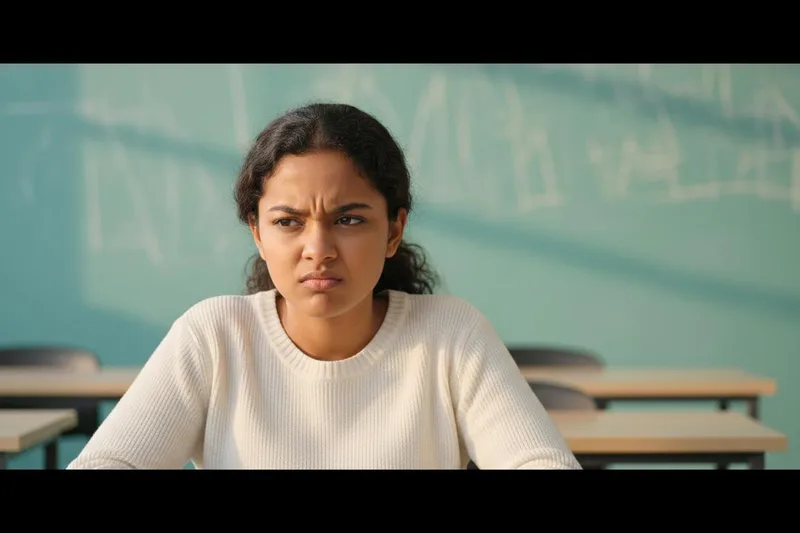
Sometimes you may not be able to see things that are far away clearly, right? In class, the letters on the board appear blurry, or when watching TV, you feel like moving closer. This is a condition that many people have, but it can affect their daily lives. Today we are going to talk about this nearsightedness, which doctors call (Myopia) . There is nothing to be afraid of, we will talk about this simply, in a way that you can understand.
What is myopia?
Simply put, Myopia is when we see things that are close to us, such as when reading a book or looking at our phone, clearly, but things that are far away – such as a bus on the road, a person in the distance, or the blackboard in class – are not clearly visible. Imagine that you are walking on the road and it is difficult to read the number of the bus coming from afar, but you can clearly see the letters on the newspaper in your hand. This is a similar situation.
Our eyes work like a small camera. Light rays from the outside enter the eye and must come together (focus) on a screen called the retina at the back of the eye. Only then can we see a clear image. Just like a camera produces a picture when light hits the film.
However, the light rays entering the eye of a person with Myopia do not focus exactly on the retina. Instead, they focus slightly in front of the retina . That is why distant objects appear blurry and unclear. There can be two main reasons for this:
1. The eye may be slightly longer than normal (increased axial length of the eye).
2. Or an increase in the curvature (bending) of the transparent part at the front of the eye, that is, the cornea , or the lens inside the eye.
Either way, the result is that light is focused in the wrong place and distance vision is impaired.
How do we recognize this? What are the symptoms?
If you suspect that your little one, or yourself, has this condition, keep an eye out for these symptoms. If you have one or more of these, you should be concerned.
- Faraway objects are blurred: This is the most obvious and obvious symptom. If you are a school-going child, you may often complain that you cannot see what is written on the blackboard in class. Or you may watch TV too close, or you may not be able to see signs in the distance when walking.
- Holding things like books and toys too close to their face: If they hold them too close to their face when reading a book, looking at their phone, or drawing, it is also a strong sign of myopia. Because they can only see things that are close to them clearly.
- Squint or blink frequently: Some people squint or squint their eyes in an attempt to see something far away. This is what we call `squinting`. Some people may also squint frequently or rub their eyes.
- Headaches and eye strain: Your eyes have to work harder to focus because you can't see clearly. This can cause headaches, eye pain, and a feeling of pressure inside your eyes. This is especially common after school or after spending a lot of time looking at a computer.
- Lack of interest or attention in schoolwork: Sometimes children don't understand lessons because they can't see what's on the board. This can lead to a lack of interest in learning and a loss of focus in class.
Imagine, your daughter Nimali comes to school and always says, "Mom, I can't see what the teacher is writing on the board properly." Or, you see your son Amal holding the book close to his eyes while reading, as if his face is pressed against the book. At times like these, you have to think a little about this (Myopia).
Why do we develop this nearsightedness?
It's hard to pinpoint just one reason for this. Usually, it's a combination of several factors that contribute to this.
- Genetics: This is often the most important factor. If your parents or other close family members have myopia, you and your children are more likely to develop it. This means that it is something that can be passed down genetically from generation to generation.
- How we use our eyes and environmental factors: This has also become a very important issue today.
- Excessive near work: Doing a lot of near work, such as reading books, staring at a computer screen, playing games on a smartphone, or working on a tablet, can cause increased eye strain. Research has found that this can also cause and worsen myopia.
- Spending less time outdoors: This is also a new discovery, but it is very important. It has now been clearly shown that children who play and spend time outdoors, especially in natural sunlight, have a lower risk of developing myopia. It is said that spending at least two hours outdoors a day is good. So staying indoors, confined to four walls, does not seem to be very good for the eyes.
- Changes with age: Myopia usually begins during school age. It most often begins to appear between the ages of 6 and 14. Then, during the teens, this vision impairment may gradually increase. This increase can usually last until the twenties, after which it often stabilizes.
Simply put, genes influence how our eyes develop, and the things we do with our eyes throughout the day and the environment we live in also have a big impact on this.
How do you know for sure if you have this? (Diagnosis)
If you or your child has any of the symptoms mentioned above, the best and most important thing to do is to see an ophthalmologist or optometrist . They can examine you and tell you exactly if you have the condition and how severe it is (what is the power).
This eye test is not that big of a deal, and it's nothing to be afraid of.
- First, they ask about your vision and whether anyone in your family has eye problems.
- Then you are asked to look at an eye chart with letters, numbers, or pictures (for children) and read them. This is done with one eye closed.
- Then, they use special instruments (such as a phoropter and retinoscope) to direct light into the eye to see if the light is focused correctly and what type of lens will allow you to see properly.
- Sometimes , dilating eye drops are used to dilate the pupil. This allows for a better view of the retina and optic nerve. This may cause temporary blurred vision and a blue tint to the eyes when you go outside, but this will go away after a while.
After this complete examination, the doctor can tell you exactly whether you have Myopia, if so, whether you need glasses or contact lenses to correct it, and what the number is.
Okay, now what can be done about this in terms of treatment and management?
Fortunately, there are good, simple treatments for myopia. These work by focusing light rays entering the eye directly onto the retina.
1. Glasses (Eyeglasses)
This is the simplest, easiest, and safest method used by most people. When you put on a pair of glasses with concave lenses that are designed to fit your vision impairment, it helps to focus light rays directly onto the retina. Then you can see clearly at a distance.
- For children, glasses are often the best and first choice because they are easy to use, easy to maintain, and easy to wear.
- When choosing glasses, they now come in different styles, colors, and lightweight frames. So you can choose the one you like and the one that suits your face. The most important thing is to use glasses that are well-made and have the right number.
2. Contact Lenses
These are small, thin lenses that are placed inside the eye, over the cornea. They are a good option for people who don't want to wear glasses, especially those who play sports, or those who are concerned about their appearance.
- But if you use contact lenses, you need to clean them properly , be very careful when putting them in and taking them out, and use the right solutions. Otherwise, you are more likely to get eye infections.
- Contact lenses are not suitable for everyone. Also, doctors usually recommend them for older children (teenagers) and adults. That also requires proper training and understanding.
3. Refractive Surgery
This involves using a laser beam to permanently change the shape of the cornea, so that light is focused precisely on the retina. LASIK is a well-known type of surgery.
- However, this surgery is usually only performed on people over the age of 18-21 whose vision is stable (meaning the number of glasses has not changed for a year or two). It is not performed on young children, because their eyes are still developing.
- This is not suitable for everyone. It is up to the ophthalmologist to decide whether you are eligible for it.
The most important thing is to talk to an ophthalmologist to choose the treatment that is best for you or your child. He or she will examine your eyes and consider everything, including your age, lifestyle, and needs, to give you the best solution.
4. Methods of controlling Myopia (Myopia Control)
Recently, new methods have been found to control the rapid progression of myopia, especially in children. These do not stop myopia completely, but rather slow down its progression.
- Low-dose Atropine eye drops: These eye drops have been found to significantly reduce the progression of myopia when applied daily.
- Specialty Contact Lenses: There are some types of multifocal contact lenses that help control myopia in children.
- Orthokeratology (Ortho-K): In this, special rigid contact lenses are worn at night while you sleep. These apply gentle pressure to the cornea throughout the night, and when the lenses are removed in the morning, you can see clearly throughout the day without glasses. This can also control the progression of myopia.
You can also ask your ophthalmologist about these (Myopia) control methods.
Is it possible to prevent this nearsightedness from occurring or to slow its progression?
It's difficult to completely prevent myopia, especially if it's hereditary. However, there are a few things we can do to slow its progression and keep our eyes healthy:
- Play and spend time outdoors: This is very important. It has been found that playing, walking, and spending time outdoors in a place with good sunlight for at least an hour a day, preferably two hours, is very good for children's eyes.
- Take a break from near-vision tasks: Give your eyes a break when you're reading books, working on the computer, or looking at your phone. There's something called the "20-20-20 rule." That means every 20 minutes, look at something that's at least 20 seconds away (about 20 feet) . This gives your eye muscles a break and reduces strain.
- Work in good lighting conditions: When reading books or studying, make sure the room is well lit. Working in dim light or watching TV is not good for your eyes. Also, keep things like books and screens at a certain distance from your eyes.
- Eat nutritious foods: Include vegetables (like carrots, spinach), fruits (like oranges, papaya), and fish (like salmon, mackerel, and tuna) that contain vitamins (especially vitamins A, C, and E) and minerals that are good for eye health.
- Get your eyes checked regularly: Even if there are no problems, it is a good idea to have your children's eyes checked by an ophthalmologist at least once a year. This way, any problems can be identified early.
These things may not completely stop the development of myopia, but they can help slow its progression and keep your eyes healthy.
When should we definitely see a doctor?
In these cases, it is imperative that you do not delay seeing an ophthalmologist:
- If your child is showing one or more of the symptoms mentioned above (e.g., saying they can't see the board, squinting, holding books close to their face when reading, or frequently complaining of headaches).
- If you or your child suddenly notice a change in their vision , or if their vision becomes blurry or double vision occurs.
- If you have other problems such as sore, red, or itchy eyes .
- Even if there is no problem, it is a good idea to have your child's first eye exam when they start school (between 3-5 years old). Then, have them checked at regular intervals as recommended by your doctor.
- If someone in the family has myopia or other eye diseases, it is wise to have children tested a little earlier.
Remember, the eyes are a very precious and sensitive organ. So if you have any doubts, it is always best to seek medical advice. Don't make the problem worse by doing whatever you feel like.
So, what are the things we should remember from this story? (Take-Home Message)
Nearsightedness, or Myopia, is a condition that many people, especially school-age children, can have. It is not a serious condition, but it is important to be aware of it and get the necessary treatment and management.
- Recognize the symptoms: Be aware of things like nearsightedness, squinting, reading books too close, and frequent headaches, especially in your children.
- Seek medical advice: If in doubt, definitely see an ophthalmologist and have your eyes checked.
- Get the right treatment: Simple solutions like glasses and contact lenses can help you control this condition and achieve clear vision. Also, be aware of ways to control the increase in myopia in children.
- Take care of your eyes: Simple things like playing outdoors, taking breaks from close tasks, and working in good lighting conditions can keep your eyes healthy.
So, if you or your child think you have this problem, please don't panic or panic. See an ophthalmologist as soon as possible and get the necessary advice and treatment. Then you and your child can see this beautiful world clearly and happily!
Nearsightedness, farsightedness, myopia, eyesight, children's eyes, glasses, Myopia


💬 Comments (0)
No comments yet. Be the first to share your thoughts here.
Add Your Comment