

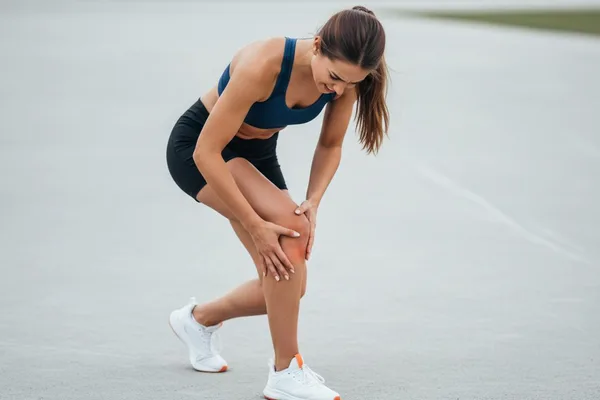
Are you a young man who loves to play sports and is good at running and jumping? But after starting to run, do you experience a strange pain, heaviness, or numbness in the lower leg (calf area) after a short distance? It goes away after a short rest, but the same pain comes back when you start running again? This may not just be a muscle strain. Today we are talking about a rare condition that many people are not aware of, but can especially affect young people who play sports.
Simply put, what is Popliteal Artery Entrapment Syndrome (PAES)?
It may sound a bit complicated, but the process is actually quite simple. PAES is a rare condition that affects the blood vessels in our legs. It occurs when the main artery that runs behind our knees, the popliteal artery, gets blocked by a nearby muscle (the gastrocnemius muscle).
Just like when someone steps on a water pipe, the water flow slows down. When we run or jump, this muscle tightens our blood vessels. Then, the blood flow to the lower leg temporarily decreases. Due to this decrease in blood flow, the muscles do not get the oxygen they need, and things like lactic acid accumulate, which causes symptoms like pain, heaviness, fatigue, and numbness in the leg.
The best part is that these symptoms go away within three to five minutes of stopping exercise. However, if left untreated, the condition can worsen over time. The pain can flare up after just a short run, and it can take a long time to go away.
Who is affected the most by this situation?
PAES is most common in young athletes between the ages of 15 and 25. People who play sports that involve running are at a higher risk. For example:
- Athletics (Track and Field)
- Cross Country Running
- Soccer
- Lacrosse
- Field hockey
This condition is very rare. It is estimated to affect less than 1% of the population. So most of the time, when we experience this kind of pain, we think it is just a simple muscle strain.
Is there another condition that feels like PAES?
Yes. There is a condition that has very similar symptoms to this, but is more common than PAES. It is called Chronic Exertional Compartment Syndrome (CECS) . This is also a pain caused by an abnormal increase in pressure in the leg muscles during exercise. Sometimes a person can have both PAES and CECS at the same time.
A doctor can distinguish between the two by performing tests. In PAES, they look to see if the blood pressure in the leg decreases with exercise. In CECS, they measure the pressure inside the leg muscles before and after exercise.
What are the symptoms of PAES?
You may experience these symptoms in your groin and/or legs while exercising. These usually go away within a few minutes after you stop exercising.
| Symptom | How it feels |
|---|---|
| Aches and pains | It may feel like a sharp pain coming from inside. |
| Tiredness | My legs feel very tired and lifeless. |
| Heaviness | My leg feels too heavy to lift. |
| Muscle rolling | Suddenly, my legs feel tight and knotted. |
| Numbness | There may be tingling in the legs and feet. |
| Inflammation | Some people feel a burning sensation as if their leg is burning from the inside. |
What are the causes of PAES?
There are two main reasons why this blood vessel becomes blocked.
1. Anatomic compression
This is the most serious type. This is caused by a congenital defect in the muscle or tendon behind your knee that causes a blood vessel to become blocked. This is more common in men. It may only occur in one leg. If the blood vessel is blocked for a long time, it can become damaged.
- An ulcer can form inside the blood vessel.
- A blood clot can form and become stuck.
- Over time, the blood vessel can become completely blocked (occluded).
2. Functional or Physiologic compression
In this case, everything from your muscles to your blood vessels is in a normal position from birth. But because of the way your muscles work, especially when you press your foot down (`plantar flexion`), the muscles press on the blood vessels. This type is more common in women, and can occur in both legs at the same time. In this type, there is usually no permanent damage to the blood vessels.
How to accurately identify this disease?
If you have these symptoms, the best thing to do is to see a vascular specialist . He or she will examine you.
- First, they check to see if your pulse drops when you are at rest.
- Then, they check to see if there is a change in the pulse rate when your foot is pressed up and down against some resistance.
A person with PAES may feel their pulse well at rest, but their pulse may decrease or disappear when they exercise or put pressure on their feet.
What tests are done to confirm the disease?
After a physical examination, your doctor may recommend several tests to confirm the diagnosis. These can provide a clear picture of the blood flow through your legs.
| Test | What simply happens |
|---|---|
| Ankle-brachial index with exercise | Your blood pressure in your arms and legs will be measured before and after exercise. If you have PAES, your blood pressure in your legs will be significantly lower than your arm pressure after exercise. |
| Duplex ultrasound | This is a scan that uses sound waves. It can see if the blood vessel is blocked and what happens to the blood flow when your leg is held down and held normally. |
| Computed tomographic angiography (CTA) | A CT scan is performed by injecting a special substance (`dye`) into the body. This also allows you to see the exact location of the blood vessel blockage as a 3D image. |
| Magnetic resonance angiography (MRA) | An MRI scan uses a magnetic field. This can also clearly see the condition of blood vessels and muscles. |
What are the treatments for this?
The best and most successful treatment for PAES is surgery .
Don't worry, this is a surgery that usually takes about an hour and is performed under general anesthesia. The surgeon removes a small piece of the muscle that is blocking the blood vessel. This allows the blood vessel to function freely, and blood flow to the leg returns to normal.
If the blood vessel is damaged and blocked due to an anatomical type of blockage, the surgeon may need to remove the blockage or perform a bypass surgery using a new piece of blood vessel through it.
Are there no other treatments without surgery?
There is a non-surgical treatment for people with functional sciatica. This is Botulinum toxin A (Botox®) injections. In this, with the help of a scan, this medicine is injected into the muscle that is constricting the blood vessel. This temporarily paralyzes the muscle and causes it to contract. However, the effect lasts for about 3-6 months. Sometimes, if the muscle is permanently contracted, the symptoms do not return. However, the success rate of this treatment is less than that of surgery.
Because surgery provides successful results in more than 90% of cases, it is what doctors often recommend.
How long does it take to recover after treatment?
It can take about four to six months to fully recover after surgery and start playing sports again.
- After the surgery, you will usually have to stay in the hospital for one night.
- During the first two weeks, physiotherapy treatment should include leg stretching and flexibility exercises.
- After two weeks, you can begin exercises that develop leg strength.
It is very important for a speedy recovery that you follow the instructions given by your doctor and physical therapist exactly.
What questions should I ask my doctor?
When you see your doctor, don't forget to ask these questions.
- Do I have anatomic or functional PAES?
- Do you recommend surgery for my condition? Why?
- Will I be able to play my sport again in the same way after surgery?
If you're a young athlete, don't just ignore leg pain. There can be many causes. Getting an accurate diagnosis quickly can help you get treatment quickly.
Take-Home Message
- If you are a young athlete and experience persistent leg pain, heaviness, or numbness while exercising, don't ignore it.
- Popliteal Artery Entrapment Syndrome (PAES) is a rare, but treatable condition.
- It is very important to see a vascular specialist for an accurate diagnosis.
- In many cases, surgery can completely cure this condition, allowing athletes to successfully return to their sports activities.




💬 Comments (0)
No comments yet. Be the first to share your thoughts here.
Add Your Comment