
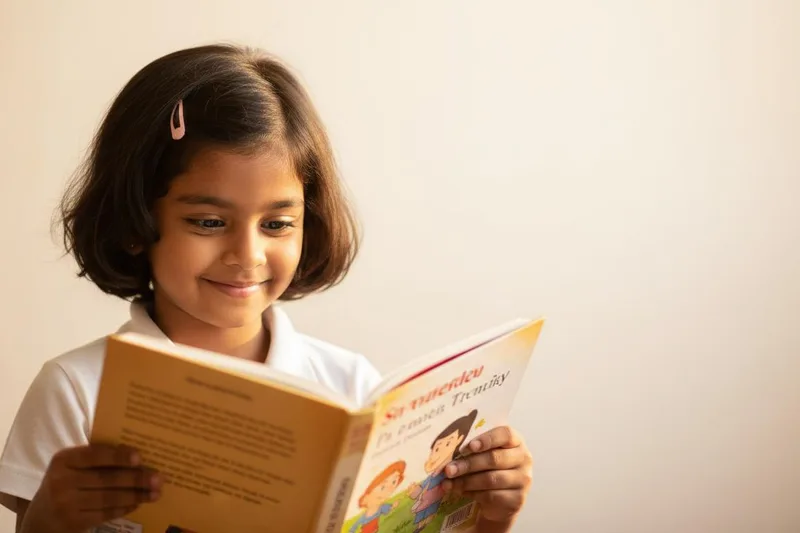
When your child starts school, their life changes dramatically. New friends, new games, new lessons... With all this, they gradually begin to see the world. Among these new things , reading is a very important thing to develop their knowledge, imagination, and language skills. So, as a parent, you can give your child a lot of support in this reading journey. Let's see how their reading skills develop during this time, and how we can help them.
The value of listening and learning
Did you know that young children, especially when they are just starting to read, learn more by listening to someone read to them than by reading a book on their own? This is especially true for vocabulary, that is, learning new words. Imagine that when you read a book with your child, when they come across a new word, you can simply explain its meaning and talk about how to use it. The words they learn by listening and discussing this way are better remembered by them than if they read and understood it on their own.
As your child's reading skills improve, they will start reading books on their own. However, that doesn't mean you should stop reading to them. Reading books together will help your child expand their vocabulary, improve their reading skills, and strengthen your bond with them. Talk about the characters in the book, and share your thoughts about the events in the book. This will help your child understand that what they are reading is relevant to their daily lives.
How to help your little one become a reader
Typically, children's reading skills develop from kindergarten to age three as follows:
In kindergarten class (Kindergarten)
This is when most children start learning to read. By the end of the school year, they will likely recognize many of the letters of the alphabet and the sounds they make. They may be able to match words that start with the same initial sound or end with the same sound. They may be able to read and write a few simple words by now. They may even be able to read very simple sentences on their own.
In First Grade
During the first year, children learn to read many more words. They learn to put the sounds of letters together (this is sometimes called `phonics`) and pronounce words in different ways. The number of words they recognize by sight (this is also called `sight words`) increases. They also begin to connect meaning to the words and sentences they read. Most first-year children can read simple books on their own by the end of the year.
In Second and Third Grade
In the years two and three, children learn new letter sounds and sight words for reading and writing. They begin to read aloud more clearly, fluently, and expressively. They become interested in using reading to discover more about the world around them. They may also begin to choose their favorite authors and favorite types of books at this time. You will notice that your child is gradually becoming more focused on learning new information from what they read. What really needs to happen is that by this age, children are no longer "learning to read" but are beginning to "read to learn."
Imagine, Nimal is in year three. He no longer reads by matching letters like he used to, he can now read a story fluently. He loves reading books about dinosaurs the most. After reading those books, he knows the names of the dinosaurs and the times they lived. That's what "reading to learn" is.
Should you be concerned about reading problems? (Reading Disability)
If you have any concerns or questions about your child's reading level, talk to your child's teacher, school counselor, or family doctor. Children who are not making good progress in reading may have a reading disability, such as dyslexia. Dyslexia is not caused by any intellectual disability, but rather by a change in the way the parts of the brain that deal with language function. But don't worry, with the right educational support, most children can read well. Therefore, recognizing a problem early and taking the necessary steps is the best way to achieve good results.
What is good to read with a toddler?
As your child becomes a confident reader, continue to let him choose a variety of books. When reading aloud together, think about two types of books. One is books that are at a level that your child can read on their own. The other is books that are a little more challenging than your child's current reading level. By keeping a mix like this, your child will be able to read some books on their own over and over again, while you help them read the more difficult books, and they will learn new words.
When choosing books , prioritize your child's interests and hobbies. Does he like games? Singing? Animals? Dinosaurs? Find books on topics he likes. For example, if you know your child loves whales, you can find children's books about famous explorers or whaling ships. As your child gets older, he will also enjoy reading more complex books that talk about the world, social issues, and moral issues.
Talk to your child about the books they are reading on their own and the books they are given to read at school. Ask them about their favorite topics and favorite authors. If an author has written a series of books, encourage your child to read them all. Some children like to make a list of books by their favorite authors and check off the ones they have read.
Here are some other types of books that children might like:
- Biographies of famous people
- Books about children facing challenges in life
- Books that play with words and have fun language patterns
- Mysteries
- Science fiction and fantasy
- Series of books written under the same theme ``(themed series)``
Another great way to engage your child's interest is to choose books that they feel a personal connection to. Tell them about books you enjoyed reading as a child and why you enjoyed them so much. Your child may also enjoy reading the children's editions of the magazines you read.
When and how do you read books with your child?
A school-age child's day can be very busy. It may be after soccer practice and on the way to music class before dinner. But if you can, setting aside even 30 minutes a day to read with your child will go a long way toward helping them succeed in their future reading. Even if you can't find 30 minutes, remember that reading a little is better than nothing at all.
The same strategies your child used when he was a child should be used here as well. Talk about what you read before, during, and after the story. Ask open-ended questions that get your child thinking and talking. Read with enthusiasm, expressing emotions well.
At this age, it's important to let your child read books to you. You can take turns reading ("You read a page, then I'll read a page"). If there are words that are not very familiar, you can "practice" them in advance. That is, you can ask your child to point to the words you say on a given page or in a certain sentence.
If your child comes across a difficult or unfamiliar word while reading, encourage them to "sound it out" or break the word into smaller parts and read one part at a time. But if the word is still difficult, skip it and have them read the rest of the sentence. Then, have them think about what word might fit in the blank ("What word do you think fits this sentence best?").
But don't try to correct every mistake your child makes. If you do, you and your child will both get bored. If the book seems too difficult, ask if you can switch books and let your child choose a book that is easier for them to read and helps them build their self-confidence.
If you are reading a book with longer chapters (a ``chapter book''), these tips will help keep your child interested:
- Before starting a new chapter, talk a little about what happened in the previous chapter.
- Reread the sentence that made the child laugh and that seemed funny to him.
- Let your child read to you (only if he/she wants to).
- If a section is too difficult for your child to read, don't be afraid to summarize it or skip it. Or, offer to read it yourself.
- Ask your child about the actions and decisions of a character in the book. "What would you do if you were in that situation?"
- Just let the child enjoy the story and save the questions until the end.
- Share your honest thoughts about what you read, and ask your child for the same.
How do you find time to read?
Reading aloud is not the only way to encourage children to read. There are many opportunities to read in everyday life. For example, when you are cooking together, you can ask your child to read you the recipe. Or when you bring a new toy, ask your child to read the instructions aloud.
When you're planning a vacation as a family, you can involve your child in the process. Read brochures and magazines about the place you're thinking of going to, and ask them to mark things they like.
Bring a children's dictionary. This will help children find the meaning of new words. Use an encyclopedia or the Internet to help them find answers to questions. But when using the Internet, teach your children to question the information and think critically. Because not all information on the Internet is accurate.
Get your children a library card and give them plenty of opportunities to use it. Let them choose books themselves, or ask the librarian for help.
Set aside time to read together every day. Even if your child gets older and spends less time with you, reading a book together every day can be a great way to connect with him. By talking about what you've read, you can gain a better understanding of your child's imagination and how he thinks about the world.
Finally, remember this!
So, you understand how valuable parental support is in a child's reading journey.
Remember, not all children learn at the same pace. Help your child with patience, love, and encouragement. Don't compare him to other children. Let him enter the world of reading at his own pace, at his own will.
- Read books together with your child. It strengthens their vocabulary, reading skills, and the bond between you and your child.
- Choose books that match your child's interests. This will make them love reading even more.
- Make reading a fun experience. Teach them to read with passion, not force.
- If you have any doubts about your child's reading level, be sure to seek advice from a teacher or doctor. Early intervention can solve many problems.
The joy you will feel when your little one becomes a skilled reader and sees the world through books is priceless!
` Children's reading, reading books, school children, reading ability, parental support, dyslexia, early reading


💬 Comments (0)
No comments yet. Be the first to share your thoughts here.
Add Your Comment