
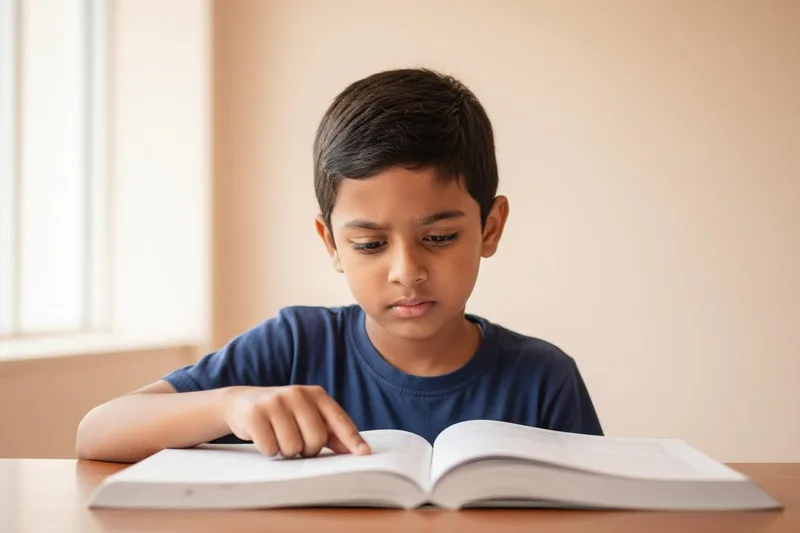
Sometimes our children have a little trouble with schoolwork, don't they? Especially things like reading. So if your child is a little behind other children in reading, he or she may have a condition called dyslexia. Let's talk about this simply, shall we?
What is Dyslexia?
Simply put, dyslexia is a learning disability. But is it a good thing ? A child with a learning disability has a little difficulty understanding and using words, letters, and sometimes numbers. There are several types of learning disabilities like this. So if a child is trying very hard and diligently to learn, but is having difficulty learning to read, that's what we call dyslexia. The important thing is, this doesn't mean your child isn't smart. They may be very smart, but just reading may be difficult.
What causes dyslexia?
As mentioned earlier, dyslexia is not a disease. It is a condition that a person is born with. Often, if someone in the family has the condition, it can also affect children. People with dyslexia are not stupid, nor are they lazy. Most people have average or even higher intelligence. They work incredibly hard to overcome their reading difficulties.
Research has shown that dyslexia is caused by a slight difference in the way the brain processes information. Think of it like a computer. So the brain of someone with dyslexia processes information about words and letters a little differently than someone without dyslexia. When scientists examine the brain's function, they find that the parts of the brain that people with dyslexia use when they read are different from the parts that people without dyslexia use. Also, the brains of people with dyslexia don't work as efficiently when they read. That's why reading can seem so overwhelming and difficult to them.
What really happens in dyslexia?
Most young children begin to read by learning to recognize the small sound units that make up a word (we call this phonemic awareness – which is the ability to recognize the individual sounds in a word) and then by learning to associate those sounds with the letters of the alphabet (we call this phonics – which is the ability to learn what sounds go with each letter). Only then do they learn to put those sounds together to make words. Over time, they will be able to recognize common words by sight.
Think of reading as riding a bicycle. You have to do a lot of things at the same time, and in a very timely manner. With practice, children who can read normally will gradually start reading as soon as they see the words. Then they can use the energy in their brain to understand and remember what they have read.
However, children with dyslexia have problems with phonemic awareness and phonics . So reading doesn't come naturally to them, it's something they have to do very, very hard. When a child struggles with these early steps in reading, it's no wonder they have trouble understanding what they're reading, and they can get frustrated.
A common misconception about dyslexia is that letters or words appear upside down – for example, 'was' looks like 'saw'. This type of problem can be part of the dyslexic condition. However, it is very common for young children to see and write letters upside down until they are in their first or second year. This is not unique to children with dyslexia. The main problems for children with dyslexia are in the areas of phonemic awareness, letter-sound relationships (phonics), and quick word recognition.
What are the symptoms that can identify someone with dyslexia?
These characteristics may vary from child to child, but there are a few things that can be seen in common. Let's see what they are.
Characteristics of preschool and primary school children
If your little one is in preschool or elementary school, keep an eye out for these things:
- If it's too late to start talking.
- If long words are difficult to pronounce (e.g. 'snake' sounds like 'sapphire').
- If you have difficulty pronouncing words, look for rhyming words (e.g. pen, hand, food, drink).
- If you have difficulty learning the order of the letters of the alphabet, the days of the week, colors, shapes, and numbers.
- If you have difficulty learning the names of letters and their sounds (e.g. the sound of the letter 'A' is 'a', the sound of the letter 'B' is 'b').
- If you have difficulty learning to read and write your name.
- If it is difficult to distinguish between the syllables (e.g., 'am-ma') and the sounds (phonemes - e.g., 'b', 'a', 'l' in a word like 'ba-l-di-ya') in a word.
- If you have difficulty sounding out simple words by combining letters (e.g., say 'ಗಾ-ಸ' = 'ಗಾಸ').
- If you have difficulty placing the letters in the correct order when reading or writing words (for example, you write or read something like 'audience' instead of 'speech').
- If you have difficulty with neat handwriting and doing small things neatly (fine-motor coordination – e.g., buttoning buttons, tying shoelaces).
Characteristics of older children, young children, and adults
Older children, young adults, and adults may also have the symptoms mentioned above. In addition, you may also see:
- If they are much weaker in reading and spelling than others their age.
- If they try to avoid reading and writing (e.g., they say they are too lazy to read books, but when they are asked to write, they give in).
- If you work really hard on reading, writing assignments, and exams, and if you take longer than others.
- If a foreign language (e.g. English, French) is very difficult to learn.
How do you accurately diagnose dyslexia?
Dyslexia is often diagnosed when a child is in primary school. However, sometimes it becomes apparent when a child is a little older and is expected to read and understand long, complex material. If a bright young child who is a good learner still has difficulty reading and writing, this can also be a sign of dyslexia.
Dyslexia can only be officially diagnosed after a comprehensive evaluation by a reading specialist or psychologist. This can be done through the school or outside. Your child's pediatrician is also familiar with the symptoms of dyslexia and can refer you to the right help.
The most important thing is that the longer you delay helping children with dyslexia, the greater the reading problem and the lower the child's self-esteem. Therefore, it is very important to recognize these symptoms and begin specialized reading training during elementary school.
How to manage dyslexia?
The good news is that with the right support and help, many children with dyslexia can learn to read and develop strategies that help them learn in the regular classroom.
They usually work with a specially trained teacher, tutor, or reading specialist to learn how to read, write, and deal with the condition. Your child's teacher, psychologist, or pediatrician may recommend an academic therapist (sometimes called an education therapist or academic language therapist). These are people who have been specially trained to work with children with dyslexia.
In Sri Lanka, the support these children receive at the school level may vary. However, it is important to talk to the teachers at the school and discuss specific teaching methods your child needs, such as extra time for exams or homework, or help with note-taking. Some schools may have special programs to help these children. So don't be afraid to talk to the teachers. Also, ask these experts about ways you can help your child at home.
What else do we need to know about this?
Children with dyslexia may feel like they are not as smart as their peers because they have difficulty working with others. These problems can become more severe as they move up the primary grades, where reading becomes more important for learning. As a result, children may lose interest in schoolwork.
Children with disabilities often avoid reading because it is difficult and stressful for them. This means they miss out on valuable reading practice and fall further behind other children.
It is very important to support your child's efforts, encourage them to read at home, and help them. Praise them when they read even a small word. Also, try to build your child's self-confidence and give them opportunities to succeed in other areas – such as sports, hobbies, music, art, and drama. Think about how many artists, athletes, scientists, entrepreneurs, doctors, lawyers, and diplomats there are in the world who have had reading difficulties but have done great things! So don't think that just because one thing was difficult, your child's entire future is bleak.
If you think your child may have dyslexia, talk to your doctor, your child's teacher, or a reading specialist. The sooner a reading problem is identified, the sooner you can get your child the right help.
So, what are the most important things we should take home from this story?
- Dyslexia is not a disease, nor is it a lack of intelligence. It is a learning disability caused by a slight difference in the way the brain processes information.
- This is something that comes from birth, and often from the family. So don't make the child or yourself feel guilty about this.
- It is important to recognize the signs early and provide expert support so that the child can learn to read and maintain self-confidence.
- Support and encourage your child's efforts. In addition to reading, encourage your child to pursue other areas of expertise to develop their abilities.
- Don't be afraid! Don't panic! With the right help, children with dyslexia can also live successful, happy lives. Your child is not alone, there are many people who can help children like this.
` Dyslexia, reading difficulties, learning disabilities, children, education, parents


💬 Comments (0)
No comments yet. Be the first to share your thoughts here.
Add Your Comment