
Pregnancy Week 38: Just a few more days until baby arrives! Let's see what happens!

Pregnancy Week 38: Just a few more days until baby arrives! Let's see what happens!

Hello! Here we are, the 38th week of your pregnancy . It's hard to believe how quickly time has flown by. In just a few days, you'll be able to hold your little one in your arms. Today, we'll talk in detail about what's happening to you and your baby this week, and what you need to prepare for. Read on with a relaxed mind.
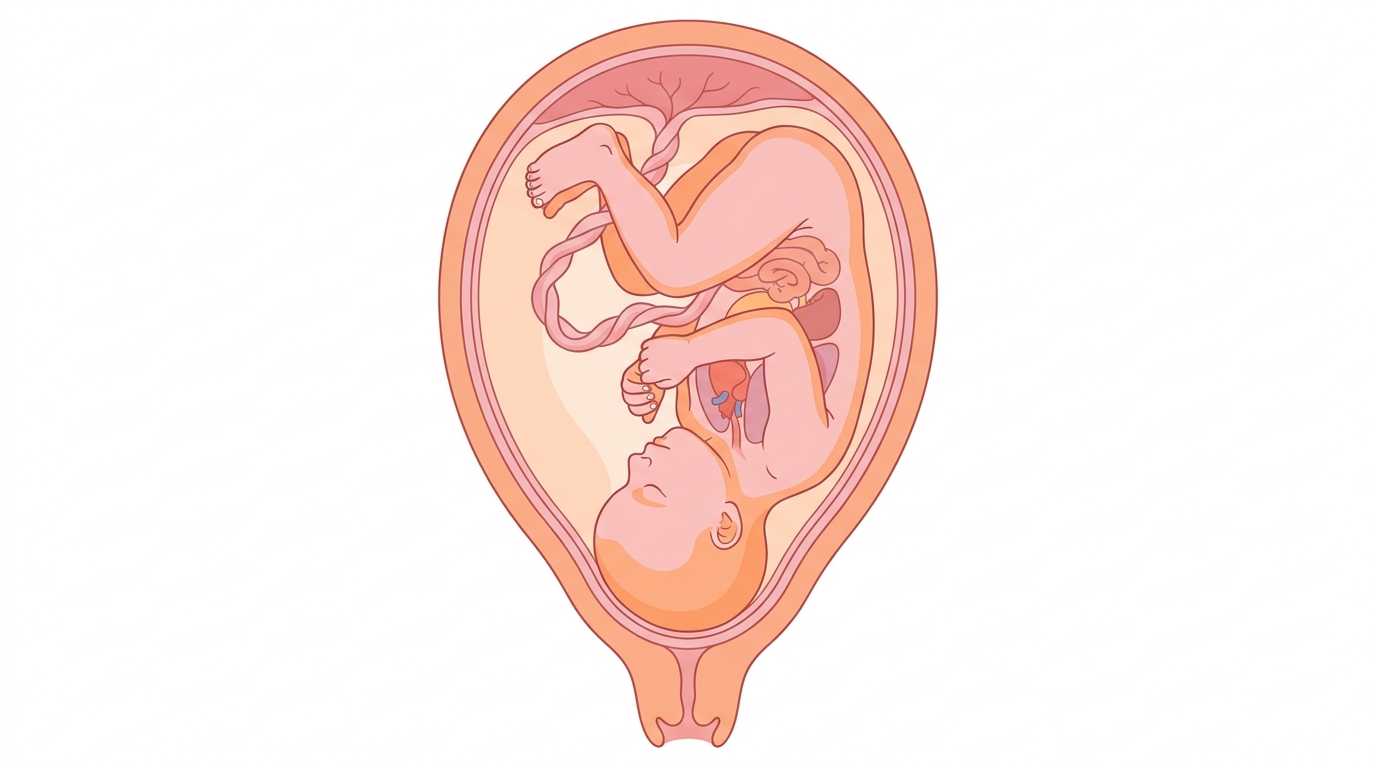
Pregnancy Week 38: Just a few more days until baby arrives! Let's see what happens! Infographic

How is your baby's development this week?

Now your baby is almost fully grown and ready to enter the world. Just imagine, you'll be able to hold him in your arms in no time!

Baby's weight and body size

By now, your baby weighs about 2900 grams, which is about 2.9 kilograms . Some babies may be a little heavier or a little lighter. That's normal. The height is about 34 centimeters, if you measure from the head to the buttocks. But the full height is much longer, about 48-50 centimeters.

This week, the baby's body is also accumulating more fat . This layer of fat helps the baby regulate its body temperature after birth. However, the baby is not growing as fast as it was in previous weeks. The growth is a little slower. The reason for this is that the baby is now more ready to come out.

Let's learn about the baby's intestines and first stool (Meconium)

Remember when we talked about the baby now sucking the amniotic fluid , the fluid that surrounds the baby? This isn't the baby's main source of nutrition, but it's how the baby learns to swallow and breathe. So, that amniotic fluid is mixed with cells from the intestines , dead skin cells, and the baby's fine hair called lanugo hair to form meconium .

Simply put, meconium is the baby's first stool. It is usually a dark green, black, sticky substance. It is the first thing that comes out of the baby's body within the first day or two after birth. Sometimes, before or during labor, the baby can pass some meconium into the amniotic fluid . If this happens, the color of the fluid will change. That is also something that doctors should take into account. Therefore, it is a good idea to pay attention to the color of the fluid when it passes.

Is it a boy? Is it a girl? Sexual development

  • If you are having a baby boy (a son): His testicles are now fully descended.The testicles should be in the scrotum. Imagine how much goes on inside that little body! But sometimes one or both testicles may not have descended completely. We call this an undescended testicle . If this is the case, the doctor will talk to you about it after the baby is born and give you the necessary advice. Most of the time, it will completely go away on its own in a few months. Otherwise, you may need to undergo a little treatment.
  • If you are having a baby girl: Her labia, or labia , are now fully developed.

Other important things

  • Lungs : The baby's lungs are now largely ready to come into the world. A special substance called surfactant continues to be produced in the lungs. This is what helps keep the lungs inflated like a balloon after the baby is born, making it easier for the baby to breathe on its own.
  • Brain: Brain development also occurs rapidly in these last weeks. The brain continues to develop even after the baby is born. That's why we say that the first few years are very important for a baby's development.
  • (Vernix Caseosa) and (Lanugo Hair) : The white, thick coating called (Vernix Caseosa) and the fine hair called (Lanugo Hair) that was on the baby's body have mostly fallen off now. However, at birth, there may still be some in some places, in the folds of the skin. This is normal.

The baby is probably sucking its thumb now, raising and lowering its chest as if breathing. All of this is training for survival after it comes out.

How is your body feeling this week?

Your weight gain has probably slowed down or stopped. Some mothers may even lose a little weight during this time. Don't worry, it's normal. Since the baby is so big now, you may be feeling a little uncomfortable.

  • Pelvic Pressure : The baby is now further down in the pelvis , so you may feel a lot of pressure on your lower abdomen, vagina , and back. This is called lightening . This may make it easier to breathe, but you may also need to urinate more often.
  • Braxton Hicks contractions: Braxton Hicks contractions, or false labor, can feel a little more intense and more intense. They are not as regular as real labor and will go away after a while, either by changing positions or drinking a little water. They are like the body's training to prepare for labor.
  • Back pain: Back pain is a common occurrence these days. Try to maintain proper posture as much as possible.
  • Swelling: You may have some swelling in your hands and feet. But if it suddenly becomes very swollen, if your face also swells, if it is accompanied by symptoms like headache and blurred vision, it could be a sign of a dangerous condition called preeclampsia . If that happens , you should see a doctor right away. It is not something to be trifled with.
  • Insomnia: With all these discomforts, it can be a bit difficult to get a good night's sleep. Try sleeping on your side as much as possible, with a pillow between your legs.
  • (Nesting Instinct) : You're feeling a strange urge to clean the house, prepare the baby's things, and decorate the room these days, aren't you? That's called (Nesting Instinct) . It's also very normal. It's a way for mothers to prepare to welcome their baby. But remember, don't overdo it .
  • (Mucus Plug) and (Bloody Show) : The (Mucus Plug) , which is the mucus plug that used to cover the cervix, can now be shed. It can also be mixed with a little blood and appear as (Bloody Show) . This often means that there are still a few days or hours until labor. Not everyone sees this, so keep that in mind.

What should we prepare for now?

This is the time to further strengthen your final preparations!

Have a good understanding of the signs of labor

  • Real Wednesday:
  • This pain gradually becomes more severe and more frequent .
  • The interval between two contractions gradually decreases (e.g., one that was present every 10 minutes, now occurs every 5 minutes).
  • The duration of a single pain episode gradually increases (e.g., one that lasted 30 seconds becomes 45-60 seconds).
  • Changing positions or walking does not relieve this pain, and may even worsen it.
  • The pain usually starts in the back and travels to the abdomen.
  • Water Breaking:
  • A lot of fluid can leak out all at once, or it can leak out gradually. This is called amniotic fluid . It is usually clear and doesn't smell like urine .
  • If this happens, even if there is no pain, you should go to the hospital immediately because the baby is now at risk of infection.
  • (Bloody Show) : As mentioned earlier, the mucus plug coming out with blood is also a sign that labor is near.

When should I call the doctor /go to the hospital?

If these things happen, you should definitely talk to your doctor or go to the hospital:

  • If your water bag breaks .
  • If the contractions come about every 5 minutes , if there is one pain for about a minute, and if it comes like this for about an hour straight (if this is the first baby, if it is the second baby, it may go earlier).
  • If you have heavy bleeding (more than your normal menstrual period).
  • If you feel that your baby's movements are very few , or if you feel that the pattern is different than usual.
  • If you have a severe headache, blurred vision, sudden severe swelling of the face/hands, severe pain in the upper abdomen, or a fever .

Other preparations

  • Hospital Bag : Your hospital bag should be by the door by now. Double-check that it contains everything you and your baby will need, including clothes, toiletries, important documents ( Antenatal Record , ID), and phone charger.
  • Mental preparation: This is a life-changing experience. You may feel a little scared, anxious. These are all normal feelings. Stay strong. Talk to your husband and family. Follow the advice of your doctor. Practice relaxation techniques.

Things you can do this week

  • Rest: Get as much rest as possible . You may be feeling very tired right now. It would be great if you could take a nap during the day.
  • Light exercise: If your doctor has given you permission, do light exercise like walking . It will make your body a little easier and will also help with labor.
  • Nutrition: Don't skip out on eating nutritious foods . Include foods high in fiber (whole grains, vegetables, fruits), iron-rich foods, and calcium-rich foods (milk, yogurt) in your diet. This will also help prevent things like constipation.
  • Water: Drink plenty of water . You should drink at least 8-10 glasses of water a day.
  • (Kick Counts) : Keep an eye on your baby's movements. Do (Kick Counts) at a specific time each day. See if your baby moves at least 10 times in two hours. Tell your doctor if you notice any changes.
  • Perineal Massage : Some doctors recommend perineal massage, which involves gently massaging the area around the vagina. It is said that this can help reduce vaginal tearing during childbirth. Talk to your doctor about this.

The most important thing to remember (Take-Home Message)

So, this 38th week is a time of great anticipation, a little bit of impatience, and maybe a little bit of fear. There's still a little while until you meet your baby! A lot of important things are happening inside your body and your baby at this very moment.

Get as much rest as you can, eat well, and be happy. Don't worry about the little things. Your body is used to this. If you have any doubts about anything, no matter how small, don't be afraid or embarrassed to ask your doctor or nurse. They are there to help you.

You are not going through this journey alone. Your family, your friends, we are all with you! Soon you will be able to hold your baby in your arms!

👩‍⚕️ Frequently Asked Questions (FAQ) from the doctor

Watch our doctor explain the common problems a mother may face at 38 weeks below:


Pregnancy Week 38, Baby's Development, Mother's Health, Preparing for Childbirth, Meconium, Undescended Testicle, Pregnancy Week 38, Signs of Labor

Doctor's Note

The 38th week of pregnancy is a week to prepare for childbirth at any time (full term). Now all the baby's organs are 100% ready to live in the outside environment. The delicate fur layer (Lanugo) and protective cheese-like coating (Vernix) surrounding the baby's body has now come off. During these days, the mother may see the mucous plug (Mucus plug) coming off or a slight bleeding (Show). Pay attention to the symptoms of labor pain (True labor pain), water bag explosion (Water breaking) and prepare to go to the hospital immediately.

Some more questions you may encounter (FAQ)

What is baby's weight and size at 38 weeks?

Now the baby is about the size of a bunch of leeks, weighs about 3.0-3.1 kg and is about 19.6 inches long.

How to distinguish true labor pain from false pain (Braxton Hicks)?

True labor pains get progressively worse over time and don't ease with walking or resting. It also occurs in regular intervals spreading from back to front.

What to do immediately after the water bag bursts?

Even if there is no pain, there is a risk of germs entering, so immediately put on a clean sanitary towel and go to the hospital.

📖 Sources and scientific sources (References)

⚠️ Important: The medical articles and information on Nirogi Lanka are for general awareness only, and are by no means a substitute for professional medical advice, diagnosis, or treatment. For any medical problem you have, consult a qualified physician immediately.

💬 Comments (0)

No comments yet. Be the first to share your thoughts here.

Add Your Comment

Please calculate: 2 + 8 =
Pregnancy Week 38: Just a few more days until baby arrives! Let's see what happens!

Pregnancy Week 38: Just a few more days until baby arrives! Let's see what happens!

Hello! Here we are, the 38th week of your pregnancy . It's hard to believe how quickly time has flown by. In just a few days, you'll be able to hold your little one in your arms. Today, we'll talk in detail about what's happening to you and your baby this week, and what you need to prepare for. Read on with a relaxed mind.

Pregnancy Week 38: Just a few more days until baby arrives! Let's see what happens! Infographic

How is your baby's development this week?

Now your baby is almost fully grown and ready to enter the world. Just imagine, you'll be able to hold him in your arms in no time!

Baby's weight and body size

By now, your baby weighs about 2900 grams, which is about 2.9 kilograms . Some babies may be a little heavier or a little lighter. That's normal. The height is about 34 centimeters, if you measure from the head to the buttocks. But the full height is much longer, about 48-50 centimeters.

This week, the baby's body is also accumulating more fat . This layer of fat helps the baby regulate its body temperature after birth. However, the baby is not growing as fast as it was in previous weeks. The growth is a little slower. The reason for this is that the baby is now more ready to come out.

Let's learn about the baby's intestines and first stool (Meconium)

Remember when we talked about the baby now sucking the amniotic fluid , the fluid that surrounds the baby? This isn't the baby's main source of nutrition, but it's how the baby learns to swallow and breathe. So, that amniotic fluid is mixed with cells from the intestines , dead skin cells, and the baby's fine hair called lanugo hair to form meconium .

Simply put, meconium is the baby's first stool. It is usually a dark green, black, sticky substance. It is the first thing that comes out of the baby's body within the first day or two after birth. Sometimes, before or during labor, the baby can pass some meconium into the amniotic fluid . If this happens, the color of the fluid will change. That is also something that doctors should take into account. Therefore, it is a good idea to pay attention to the color of the fluid when it passes.

Is it a boy? Is it a girl? Sexual development

  • If you are having a baby boy (a son): His testicles are now fully descended.The testicles should be in the scrotum. Imagine how much goes on inside that little body! But sometimes one or both testicles may not have descended completely. We call this an undescended testicle . If this is the case, the doctor will talk to you about it after the baby is born and give you the necessary advice. Most of the time, it will completely go away on its own in a few months. Otherwise, you may need to undergo a little treatment.
  • If you are having a baby girl: Her labia, or labia , are now fully developed.

Other important things

  • Lungs : The baby's lungs are now largely ready to come into the world. A special substance called surfactant continues to be produced in the lungs. This is what helps keep the lungs inflated like a balloon after the baby is born, making it easier for the baby to breathe on its own.
  • Brain: Brain development also occurs rapidly in these last weeks. The brain continues to develop even after the baby is born. That's why we say that the first few years are very important for a baby's development.
  • (Vernix Caseosa) and (Lanugo Hair) : The white, thick coating called (Vernix Caseosa) and the fine hair called (Lanugo Hair) that was on the baby's body have mostly fallen off now. However, at birth, there may still be some in some places, in the folds of the skin. This is normal.

The baby is probably sucking its thumb now, raising and lowering its chest as if breathing. All of this is training for survival after it comes out.

How is your body feeling this week?

Your weight gain has probably slowed down or stopped. Some mothers may even lose a little weight during this time. Don't worry, it's normal. Since the baby is so big now, you may be feeling a little uncomfortable.

  • Pelvic Pressure : The baby is now further down in the pelvis , so you may feel a lot of pressure on your lower abdomen, vagina , and back. This is called lightening . This may make it easier to breathe, but you may also need to urinate more often.
  • Braxton Hicks contractions: Braxton Hicks contractions, or false labor, can feel a little more intense and more intense. They are not as regular as real labor and will go away after a while, either by changing positions or drinking a little water. They are like the body's training to prepare for labor.
  • Back pain: Back pain is a common occurrence these days. Try to maintain proper posture as much as possible.
  • Swelling: You may have some swelling in your hands and feet. But if it suddenly becomes very swollen, if your face also swells, if it is accompanied by symptoms like headache and blurred vision, it could be a sign of a dangerous condition called preeclampsia . If that happens , you should see a doctor right away. It is not something to be trifled with.
  • Insomnia: With all these discomforts, it can be a bit difficult to get a good night's sleep. Try sleeping on your side as much as possible, with a pillow between your legs.
  • (Nesting Instinct) : You're feeling a strange urge to clean the house, prepare the baby's things, and decorate the room these days, aren't you? That's called (Nesting Instinct) . It's also very normal. It's a way for mothers to prepare to welcome their baby. But remember, don't overdo it .
  • (Mucus Plug) and (Bloody Show) : The (Mucus Plug) , which is the mucus plug that used to cover the cervix, can now be shed. It can also be mixed with a little blood and appear as (Bloody Show) . This often means that there are still a few days or hours until labor. Not everyone sees this, so keep that in mind.

What should we prepare for now?

This is the time to further strengthen your final preparations!

Have a good understanding of the signs of labor

  • Real Wednesday:
  • This pain gradually becomes more severe and more frequent .
  • The interval between two contractions gradually decreases (e.g., one that was present every 10 minutes, now occurs every 5 minutes).
  • The duration of a single pain episode gradually increases (e.g., one that lasted 30 seconds becomes 45-60 seconds).
  • Changing positions or walking does not relieve this pain, and may even worsen it.
  • The pain usually starts in the back and travels to the abdomen.
  • Water Breaking:
  • A lot of fluid can leak out all at once, or it can leak out gradually. This is called amniotic fluid . It is usually clear and doesn't smell like urine .
  • If this happens, even if there is no pain, you should go to the hospital immediately because the baby is now at risk of infection.
  • (Bloody Show) : As mentioned earlier, the mucus plug coming out with blood is also a sign that labor is near.

When should I call the doctor /go to the hospital?

If these things happen, you should definitely talk to your doctor or go to the hospital:

  • If your water bag breaks .
  • If the contractions come about every 5 minutes , if there is one pain for about a minute, and if it comes like this for about an hour straight (if this is the first baby, if it is the second baby, it may go earlier).
  • If you have heavy bleeding (more than your normal menstrual period).
  • If you feel that your baby's movements are very few , or if you feel that the pattern is different than usual.
  • If you have a severe headache, blurred vision, sudden severe swelling of the face/hands, severe pain in the upper abdomen, or a fever .

Other preparations

  • Hospital Bag : Your hospital bag should be by the door by now. Double-check that it contains everything you and your baby will need, including clothes, toiletries, important documents ( Antenatal Record , ID), and phone charger.
  • Mental preparation: This is a life-changing experience. You may feel a little scared, anxious. These are all normal feelings. Stay strong. Talk to your husband and family. Follow the advice of your doctor. Practice relaxation techniques.

Things you can do this week

  • Rest: Get as much rest as possible . You may be feeling very tired right now. It would be great if you could take a nap during the day.
  • Light exercise: If your doctor has given you permission, do light exercise like walking . It will make your body a little easier and will also help with labor.
  • Nutrition: Don't skip out on eating nutritious foods . Include foods high in fiber (whole grains, vegetables, fruits), iron-rich foods, and calcium-rich foods (milk, yogurt) in your diet. This will also help prevent things like constipation.
  • Water: Drink plenty of water . You should drink at least 8-10 glasses of water a day.
  • (Kick Counts) : Keep an eye on your baby's movements. Do (Kick Counts) at a specific time each day. See if your baby moves at least 10 times in two hours. Tell your doctor if you notice any changes.
  • Perineal Massage : Some doctors recommend perineal massage, which involves gently massaging the area around the vagina. It is said that this can help reduce vaginal tearing during childbirth. Talk to your doctor about this.

The most important thing to remember (Take-Home Message)

So, this 38th week is a time of great anticipation, a little bit of impatience, and maybe a little bit of fear. There's still a little while until you meet your baby! A lot of important things are happening inside your body and your baby at this very moment.

Get as much rest as you can, eat well, and be happy. Don't worry about the little things. Your body is used to this. If you have any doubts about anything, no matter how small, don't be afraid or embarrassed to ask your doctor or nurse. They are there to help you.

You are not going through this journey alone. Your family, your friends, we are all with you! Soon you will be able to hold your baby in your arms!

👩‍⚕️ Frequently Asked Questions (FAQ) from the doctor

Watch our doctor explain the common problems a mother may face at 38 weeks below:


Pregnancy Week 38, Baby's Development, Mother's Health, Preparing for Childbirth, Meconium, Undescended Testicle, Pregnancy Week 38, Signs of Labor

Doctor's Note

The 38th week of pregnancy is a week to prepare for childbirth at any time (full term). Now all the baby's organs are 100% ready to live in the outside environment. The delicate fur layer (Lanugo) and protective cheese-like coating (Vernix) surrounding the baby's body has now come off. During these days, the mother may see the mucous plug (Mucus plug) coming off or a slight bleeding (Show). Pay attention to the symptoms of labor pain (True labor pain), water bag explosion (Water breaking) and prepare to go to the hospital immediately.

Some more questions you may encounter (FAQ)

What is baby's weight and size at 38 weeks?

Now the baby is about the size of a bunch of leeks, weighs about 3.0-3.1 kg and is about 19.6 inches long.

How to distinguish true labor pain from false pain (Braxton Hicks)?

True labor pains get progressively worse over time and don't ease with walking or resting. It also occurs in regular intervals spreading from back to front.

What to do immediately after the water bag bursts?

Even if there is no pain, there is a risk of germs entering, so immediately put on a clean sanitary towel and go to the hospital.

📖 Sources and scientific sources (References)

⚠️ Important: The medical articles and information on Nirogi Lanka are for general awareness only, and are by no means a substitute for professional medical advice, diagnosis, or treatment. For any medical problem you have, consult a qualified physician immediately.

💬 Comments (0)

No comments yet. Be the first to share your thoughts here.

Add Your Comment

Please calculate: 2 + 8 =