

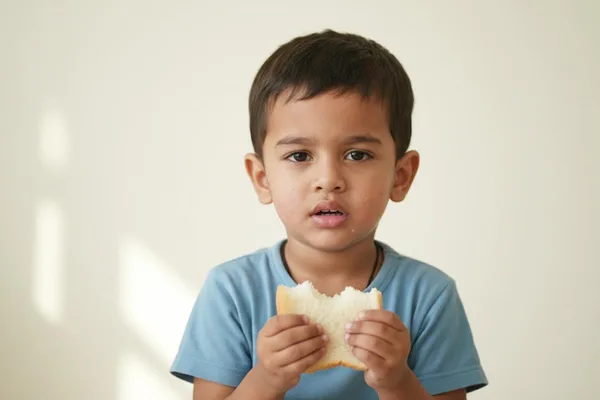
Today we are going to talk about a problem that affects many mothers, fathers, and even some adults. That is wheat allergy , or as we say in English, ``(Wheat Allergy)``. Sometimes you may have seen that when a small child eats a piece of bread or a biscuit, he suddenly gets sick and has difficulty breathing. At times like these, you have to think a little about this so-called wheat allergy. So let's see what it is, why it happens, what are the symptoms, and how to deal with it.
What is Wheat Allergy?
Simply put, a wheat allergy is when our immune system (the body's defense system that protects us from disease ) overreacts to certain proteins in wheat. Think of it this way: our immune system is like the soldiers in our body. Their job is to fight off germs and diseases that enter our body. But when someone with a wheat allergy eats a food that contains wheat, those soldiers see the proteins in the wheat as if they were a big enemy. So they start a big fight with this "enemy." That fight results in the allergy symptoms .
This wheat allergy is most common in young children . Fortunately, most children outgrow it as they grow older, meaning they can eat wheat again. However, some people may have it for the rest of their lives.
What are the symptoms of a wheat allergy?
When someone has a wheat allergy, when they eat something that contains wheat, chemicals called `(Histamine)` are released in the body. This is what causes the various symptoms. These symptoms can vary from person to person, and even the same person can be affected differently at different times. Sometimes it is very mild, sometimes it is a little severe.
Here are some of the features you can see:
- Wheezing (a whistling sound coming from the chest when breathing)
- Difficulty breathing
- Cough
- Voice becoming hoarse or hoarse
- Feeling like your throat is constricted
- Stomach ache
- Vomiting
- Diarrhea (bloating)
- Itchy, watery, or swollen eyes
- Skin rash (hives)
- Red spots on the skin
- Body swelling
- Sometimes, low blood pressure can cause dizziness or even loss of consciousness.
The important thing is that these symptoms do not occur in the same way for everyone. For some people, they may only leave a few small skin lesions. For others, it can be very severe.
Let's also be aware of the serious condition called Anaphylaxis!
Anaphylaxis is a very serious, life-threatening condition that can occur due to wheat allergy. It may start with the usual allergy symptoms mentioned earlier. But after a while, the condition can quickly worsen. You may not be able to breathe, you may lose consciousness. It can affect several body systems at once. If this is not treated quickly, it can be fatal. Therefore, you need to be very careful about this.
Imagine, Nimal's son eats a piece of cake made from wheat flour and within a few minutes his face turns red, his lips swell, and he feels like he's having trouble breathing. At times like these, it's important to remember that this could be a condition called ``Anaphylaxis''.
Are wheat allergy and celiac disease the same thing?
Yes, this is where many people get confused. A wheat allergy and Celiac Disease are two completely different conditions.
- A wheat allergy is an allergic response by the body's immune system to a protein found in wheat.
- Celiac disease is a condition in which the immune system reacts abnormally to a protein called ``gluten'' (found in grains like wheat, barley, and rye). This is not an allergic reaction. This causes problems with the body's ability to absorb food properly.
People with wheat allergies can sometimes eat other grains (wheat-free). But people with Celiac Disease cannot eat any foods containing gluten (that is, not just wheat, but also barley, rye, and sometimes even oats).
How do you treat a wheat allergy?
If your child has a wheat allergy (or any other severe food allergy), it's essential to always keep two epinephrine injections on hand. This can be life-saving in the event of a severe allergic reaction.
- Epinephrine is a medicine prescribed by a doctor. It comes in a small, easy-to-carry device. It is very easy to use. Your doctor will teach you how to use it. Older children can also be taught how to give themselves this injection. If your child carries epinephrine, it should be kept with them at all times. It should not be in a locker or in the school nurse's office, but where the child is.
- Allergy Action Plan: Your doctor will give you an Allergy Action Plan, a clear plan of how to prepare, recognize the symptoms, and treat an allergy. Share this with everyone who cares for your child (relatives, school officials, parents of friends). Also consider having your child wear a medical alert bracelet.
- In an emergency: Every second counts in an allergic reaction. Give your child an epinephrine auto-injector as soon as they start to show severe symptoms of an allergic reaction (such as swelling of the mouth or throat, difficulty breathing). Or, if they have symptoms that affect two parts of the body at once (for example, skin rash with vomiting), give them an epinephrine auto-injector right away. Then call 911 or take your child to the nearest hospital emergency room immediately. It is important to keep your child under medical supervision. Sometimes, even when the worst of the symptoms seem to have passed, a second wave of severe symptoms can occur.
- Antihistamines: Sometimes allergy specialists recommend that you keep antihistamines on hand. These can help control minor allergy symptoms. But remember, you cannot use antihistamines in place of epinephrine in severe cases. Antihistamines are only given if necessary after epinephrine has been given.
What else do you need to know when living with a wheat allergy?
If your child has a wheat allergy, help them avoid foods that contain wheat. Read food labels carefully. Sometimes ingredients can change, and foods may contain wheat that we don't even think about.
- Avoid wheat products entirely: Most allergies are triggered by eating a food containing wheat. However, sometimes, allergies can also be triggered by inhaling raw wheat flour (for example, someone working in a bakery inhaling flour).
- Substitute foods: You can usually find wheat-free breads, crackers, and breakfast cereals in health food stores and supermarkets. There are also alternatives to wheat flour, such as potato, rice, and corn flour. Sometimes, people who are allergic to wheat only can eat refined, unprocessed barley and oats. However, it is best to discuss this with your doctor.
- Label reading is a must: Always read the label to find out if a food contains wheat. In countries like the United States, it is mandatory to list the major allergens (including wheat) on the label. "Wheat" should be in the list of ingredients, or "contains wheat" should be mentioned after the list. In our country, everything can be labeled like that, so we have to be careful.
- Be aware of cross-contamination: This is a point that many people overlook, but it's very important. Cross-contamination is the unknowing introduction of wheat into a wheat-free food from a place where another wheat-containing food was prepared, or from shared utensils (knives, cutting boards, toasters, grills, etc.).
- Some packages have labels that say things like "May contain wheat" and "Processed in a facility that also processes wheat." Be aware of these. If in doubt, it's best to check with the company in question (this may not always be possible in our country, but try if possible).
- Be especially careful with foods fried in oil, as there is a high chance of cross-contamination when non-wheat foods are fried in the same oil that was used to fry wheat-containing foods.
- When eating out:
- The child should always have two unexpired Epinephrine injections with them.
- Clearly inform those who prepare and serve food about this wheat allergy.
- Sometimes, it's good to take a trusted meal from home.
- If the cook, manager, or owner doesn't care about your request, or if they don't understand it, it's safest to just not eat there.
- At school:
- Talk to staff about the risk of cross-contamination of school canteen food.
- In most cases, it is safest for a child to prepare a meal at home.
The most important things to remember (Take-Home Message)
Wheat allergy is a condition that requires attention, but if managed properly, the child can live a normal life.
- Always be vigilant: be mindful of what you eat and where you eat it.
- (Epinephrine): Always keep it with you and know how to use it properly.
- Read labels: Read the label on every food package carefully.
- Inform others: Make everyone who cares for your child aware of this allergy.
- Don't be afraid, be informed: The most important thing is to be well informed about this and follow your doctor's advice.
If you have any further questions about this, be sure to talk to your family doctor or an allergist. They will be able to help you further.
` Wheat Allergy, Food Allergy, Symptoms, Anaphylaxis, Epinephrine, Food Labels, Cross-Contamination, Celiac Disease




💬 Comments (0)
No comments yet. Be the first to share your thoughts here.
Add Your Comment