

There are no words to describe the joy you feel when you see your little one's sweet smile, right? That smile becomes even more beautiful when they have a pair of healthy teeth. So, today we are going to talk about a doctor who has a lot of expertise in the dental health of your baby, your little one. That is a pediatric dentist, or as we say in English, a `(Pediatric Dentist)`. Some also call it `(Pedodontist)`.
Who is this pediatric dentist? Is he different from a regular dentist?
Simply put, a pediatric dentist is a doctor who specializes in diagnosing and treating oral health problems in infants, toddlers, and young children . They are similar to adult dentists, but with a few differences.
These doctors and nurses have a deep understanding of the specific conditions that can arise as children's teeth, jaws, and gums develop. This means they have a good understanding of any problems that may arise as a child's mouth changes as they grow.
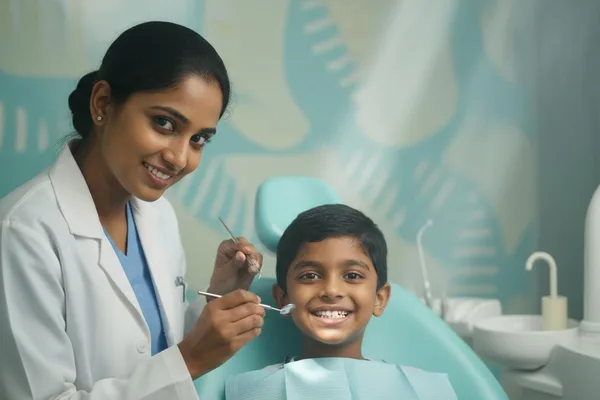
Usually, the places where pediatric dentists work, that is, their clinics, are very beautiful and designed in a way that children will love . There are beautiful colorful pictures and cartoon characters on the walls, and there are toys, books, and puzzles for the little ones to play with, and it is a fun and non-threatening environment. Because doctors know that little ones are a little scared to go to the doctor.
What kind of training do they receive to become a pediatric dentist?
This is also a very important point. In countries like the United States, pediatric dentists, like general dentists, must obtain a degree from a four-year dental school. After that degree, they must undergo an additional two to three years of specialized training to become a pediatric dentist.
During this special training, they learn not only about teeth, but also many other things. Take a look:
- Child psychology: This knowledge is very important to understand the minds of young children, talk to them in a friendly manner, and allay their fears.
- Childhood growth and development: How a child's teeth and jaws develop, and what common conditions come with it.
- Calming techniques used to reduce children's fears: Some children are a little afraid of the doctor's chair. So they are trained in the techniques needed to calm them down and provide treatment.
- Treating children (and sometimes adults) with special needs: Some children may have special health conditions. They also learn how to provide dental care to such children.
You see, this is a bit more specialized knowledge than that of a regular dentist.
What does a pediatric dentist do? What kind of treatments can you expect from them?
Pediatric dentists do a lot of things to help keep children's teeth healthy. They also treat dental problems if they arise. Let's take a look at the main things they do:
- Crowns: Sometimes, if a child's tooth is badly decayed or weakened, a crown may be needed to protect it. Crowns for children are usually made of stainless steel or a tooth-colored material.
- Dental X-rays: These allow the doctor to see the condition of your child's teeth and jawbone. They can also help determine how many permanent teeth are erupting in the gums, how they are developing, and what problems may arise in the future.
- Treatment for dental emergencies: Imagine a child falls while playing and loses a tooth. Or a tooth breaks. In such an emergency, a pediatric dentist can provide the necessary treatment.
- Oral exams and checkups: Regular checkups by a doctor can help ensure that your child's teeth and gums are healthy.
- Extractions: If a child's tooth is badly decayed or damaged, it may need to be extracted. Also, if the tooth is slightly crooked, it may be necessary to extract the tooth to reduce crowding before getting braces.
- Fillings: Tooth decay is the most common dental problem among children. Your pediatric dentist can fill the cavities using a tooth-colored material, such as composite resin.
- Fluoride treatments: Fluoride strengthens the enamel on the outside of your teeth. This treatment can help reduce your child's risk of tooth decay.
- Sealants: Some people have deep grooves on the top of their teeth, the chewing surface. These grooves can easily become clogged with food and cause tooth decay. Your dentist can apply a protective coating called a sealant over these grooves. This will help reduce the growth of bacteria and tooth decay.
- Teeth cleanings: Regular teeth cleanings are essential to maintain healthy teeth for a long time. At this time, a dental hygienist can teach your child how to brush and floss properly.
When should I take my child to a pediatric dentist for the first time?
This is a question that many parents have. The best time to take your child to the doctor is when they turn one year old, or when their first tooth erupts . You may be thinking, "Oh, isn't this a little too early?"
But, pediatric dentists don't just look at teeth. They also examine your child's jawbone, facial bones, and even the teeth that are still developing under the gums. This way, they can spot potential problems early and help prevent them before they get worse.
Another question you may have is, "Baby teeth fall out anyway, so why do we need to worry about them so much?" But baby teeth are just as important as permanent teeth. Baby teeth help your child eat and talk. They also help keep the space for permanent teeth to grow as the child's jawbone grows. Some baby teeth will stay in your child's mouth until they are 12 or 13 years old! So it's important to take good care of them.
What should I ask my child's pediatric dentist?
Before you take your child to the doctor, it's a good idea to have a few questions in mind. You can ask the doctor or nurse:
- Do you offer orthodontic consultations? (i.e., braces).
- Do you have sedation dentistry for kids?
- What can I do to make brushing and flossing fun for my child?
- How do I properly care for my child's teeth?
- How do you help children who are afraid and anxious about going to the doctor?
- How often does my child need teeth cleanings?
- Should my child wear a mouthguard to protect their teeth when playing sports?
- What preventive treatments do you recommend for my child? (e.g., fluoride, sealants).
- What should I know about thumb sucking or pacifier use?
- When will my child's baby teeth start falling out?
As a parent, you have so many things to focus on! Between schoolwork, playtime, and other activities, going to the doctor may not be a top priority. But taking care of your child's teeth now can help prevent many oral health problems later. A pediatric dentist can teach your child good health habits that will last a lifetime.
Finally, what to remember (Take-Home Message)
So, we've talked a lot about pediatric dentists. The most important thing is to take care of your child's oral health from a young age. It's important to brush your child's teeth, feed them a balanced diet, and have your child checked by a pediatric dentist on a regular basis.
Don't worry, pediatric dentists are very friendly and have a lot of experience working with children. They will definitely help you and your little one maintain a beautiful, healthy smile! So, whether you have a question about your little one's teeth or just for a check-up, don't forget to visit a pediatric dentist near you.
` Pediatric Dentistry, Children's Teeth, Baby Teeth, Dental Fillings, Dental Protection, Oral Health, Children's Doctor




💬 Comments (0)
No comments yet. Be the first to share your thoughts here.
Add Your Comment