
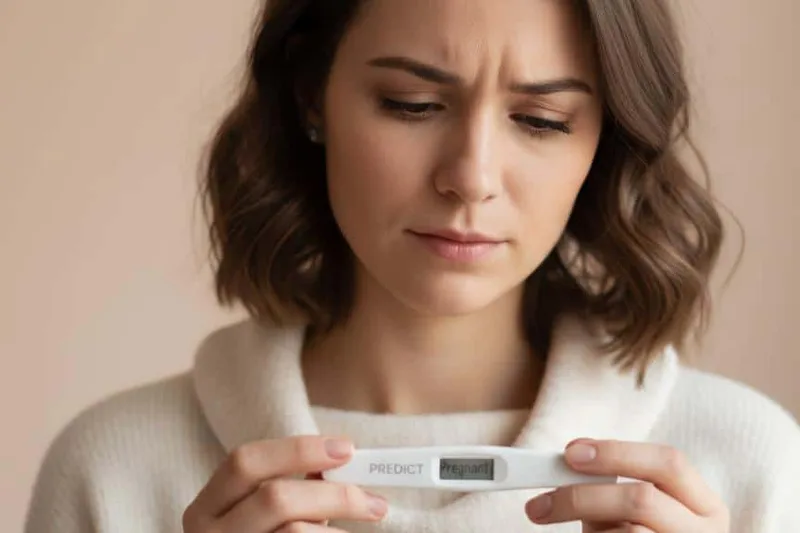
Is your period over? Maybe you're expecting a baby. Or maybe you're feeling a little scared that something like this has happened to you unexpectedly. Whatever the reason, the easiest and quickest way to find out if you're pregnant is to take a pregnancy test. So today we're going to talk about this and find answers to all the questions you have in mind.
How does a pregnancy test work?
Simply put, when you get pregnant, your body starts producing a special hormone. We call this Human Chorionic Gonadotropin , or HCG for short. This hormone starts to be produced after a fertilized egg implants itself in the wall of your uterus.
This usually happens about 6 days after fertilization. After that, the level of this HCG hormone in your body increases very rapidly, doubling every two to three days. A pregnancy test checks for the presence of this HCG hormone in your urine or blood.
What types of pregnancy tests are there?
There are two main types of tests. These are urine tests and blood tests. Let's look at the difference between the two.
| Test type | Description |
|---|---|
| Urine Test | This is a Home Pregnancy Test that you can do at home. You can easily get it from a pharmacy. It is very easy to use, and you can know the results quickly. It is about 99% accurate if you follow the instructions exactly. |
| Blood Test | This should be done under the guidance of a doctor, in a lab. It can detect pregnancy earlier than a home test, which is 7-10 days after ovulation. It is also more accurate. |
A little more information about blood tests
There are two types of blood tests:
1. Qualitative hCG test: This only checks whether the HCG hormone is present in your blood. It only gives a "yes" or "no" answer.
2. Quantitative hCG test (Beta hCG): This test measures the amount of the hormone HCG in your blood. Doctors may recommend this test in special cases, such as if there is a suspicion of a complication early in pregnancy, such as an ectopic pregnancy , or to check if your HCG levels are dropping after a miscarriage.
How effective is a home test?
If you do the test exactly as the instructions say, it is about 99% accurate. But this accuracy depends on several factors.
- Whether you follow the instructions exactly.
- The day you ovulated and the time it took for the fertilized egg to implant in the uterus.
- How soon after conception you take the test (if you do it too soon, the HCG level may be low and it may not be detected).
- The sensitivity of the test kit you are using.
For best results, it is best to take the test at least a day after your period is due.
Another important thing is to test with your first urine in the morning , if possible. This is because the concentration of the HCG hormone is higher in that urine, which has been stored overnight. Therefore, the results are more likely to be accurate.
How to understand test results?
The test result may be displayed as a line, a color, or a '+' or '-' sign. Digital tests will display the words "Pregnant" or "Not Pregnant." Let's see what these results mean.
If a positive (+) result is obtained
This means that you are pregnant. Sometimes the second line can be very faint . However, it often means that you are pregnant. This is because if the HCG hormone is not at the right level, the line will not appear at all. If you get a positive result, the best thing to do is to see your doctor to discuss what to do next.
If a negative (-) result is obtained
This usually means that you are not pregnant. However, sometimes you can get a negative result even though you are pregnant. This is called a "False Negative".
| Wrong result type | Possible causes |
|---|---|
| False Positive (Showing positive when not pregnant) | This happens very rarely. It can be caused by things like blood or protein in your urine, taking certain fertility drugs, or taking certain other medications. |
| False Negative (Showing negative even though pregnant) |
|
If you get a negative result but your period hasn't arrived yet, it's best to test again in a few days. Or, it's best to talk to your doctor.
What is an evaporation line?
Sometimes, if you wait longer than the recommended time to read the test results, you may see a faint, colorless line (Evaporation Line) where the results appear. This does not mean that you are pregnant. Therefore, you should read the results as soon as the instructions say. If in doubt, retest with a new test.
If it comes back positive, what do you do next?
Once you get a positive result, make an appointment to see your doctor . He or she will do a blood test to confirm if necessary. It is important to know as soon as possible that you are pregnant. This is so that you can start getting the prenatal care you and your baby need. It will also help you make the necessary changes to your lifestyle.
Other questions on your mind
I don't have my period, but the test is negative. Why is that?
There could be many other reasons why your period is late, even if you're not pregnant.
- Severe stress
- Breastfeeding
- Hormonal imbalances (e.g. polycystic ovary syndrome - `(PCOS)`)
- Thyroid problems
- Excessive exercise
- Sleep disorders
- A recent significant change in body weight
If you have a situation like this, it is very important to see your doctor for advice.
Be very careful about these symptoms!
If your period is late and you have any of the following symptoms, see a doctor immediately or go to a hospital's Emergency Department (ETU).
- Severe pain on one side of the stomach
- Pain in one shoulder
- Your period is irregular, there is vaginal bleeding.
- Dizziness or fainting
- Nausea or vomiting
These could be signs of a dangerous condition like an ectopic pregnancy. So, never ignore them.
Take-Home Message
- A pregnancy test checks for the presence of a hormone called HCG in your body.
- For the most accurate results, take the test at least a day after your period. If possible, use your first urine in the morning.
- Even if the line on the test result appears very faint, it is often considered a positive result.
- If you receive a positive result, see a doctor as soon as possible and begin the necessary prenatal care.
- If your test is negative but you still haven't had your period, there could be other medical reasons. Talk to your doctor to find out.




💬 Comments (0)
No comments yet. Be the first to share your thoughts here.
Add Your Comment