
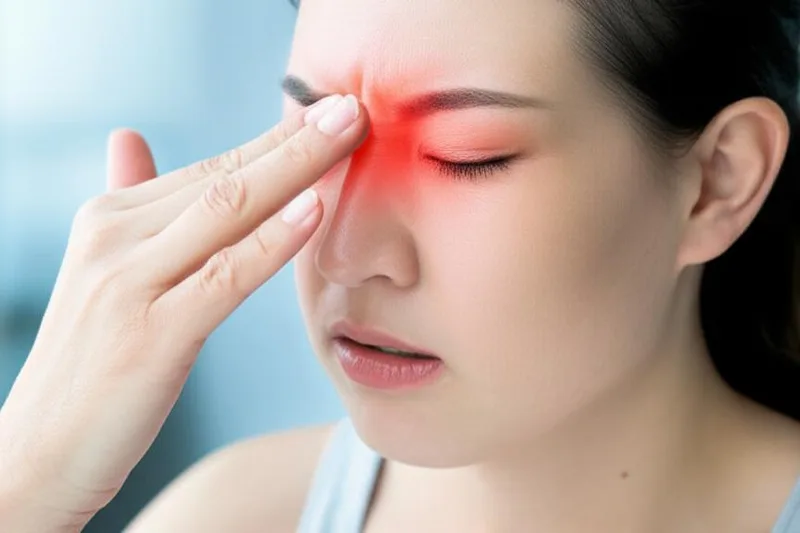
Do you also suffer from sinus problems? Let's learn about the remedies for this pain!

Do you also suffer from sinus problems? Let's learn about the remedies for this pain!

Do you feel like your head is going to explode when you wake up in the morning? Do you have a stuffy nose, facial pain that makes it difficult to speak, and a feeling of tightness under your eyes and on both sides of your forehead? These are common symptoms of sinusitis for many people. If this heaviness and pain in your head do not subside even after you have had a cold, you may have sinusitis . Today, let's talk simply and politely about sinusitis, which everyone talks about but is not exactly aware of.

What exactly is this sinus problem?

Simply put, we call ' sinuses ' the small air-filled cavities (hollow spaces) in our skull around our nose, above our eyes, and between our eyes. Just like rooms in a house. Normally, these cavities only contain air. That makes our head feel light.

However, when you get a virus like a cold, or sometimes a bacterial infection, the delicate membranes inside these sinus cavities swell. Then the air passages into these cavities become blocked, and the inside starts to fill with fluids like mucus. Think of it like a drainpipe getting clogged with dirt. When this mucus fills up, it creates a perfect environment for bacteria to grow. This is what we call sinusitis, or a sinus infection .

There are two main types of this:

  • Acute Sinusitis: This is the type that comes on suddenly. It usually lasts less than 4 weeks. Most often, it resolves within 10 days.
  • Chronic Sinusitis: This is a more persistent, bothersome type. It can last for 3 months or more. Some people may have it for years. It is sometimes difficult to find the cause.

What are some home remedies for sinus pain?

Before rushing to the doctor as soon as sinus pain starts, there are some simple and very effective remedies we can try at home. These can provide you with great relief.

Remedy How it works and how to use it
Steam Inhalation This is the most popular and effective method. When you inhale the steam from hot water, the thick mucus that has been trapped will melt and begin to come out easily. Pour hot water into a basin, put a towel over your head, and inhale the steam. Or, taking a hot bath is also very good.
Nasal Irrigation This is also called 'Nasal Lavage'. It involves rinsing the nose with boiled water or pure saline solution, available from a pharmacy, using a 'Neti pot', which can be purchased at a pharmacy. This helps to clear out mucus and dust from the nose, making it easier to breathe.
Allergy Medicines If you are allergic to things like dust or animals, that can also cause sinus problems. You may find relief by asking your doctor about allergy medications like antihistamines.
Decongestants These types of medications are available in pharmacies as pills or syrups. They help reduce swelling in the nose and help clear out blocked mucus. However, it is not good to use them continuously, so it is best to consult a doctor before using them.
Nasal Sprays There are nasal sprays that contain corticosteroids. These are prescribed by a doctor. They help reduce swelling in the nasal membranes and provide long-term relief. Some sprays available at pharmacies can cause rebound congestion if used for more than a few days. Therefore, it is essential to follow your doctor's instructions.
Pain relievers Nonsteroidal anti-inflammatory drugs (NSAIDs) such as acetaminophen or ibuprofen can provide temporary relief from sinus headaches and facial pain. But keep in mind that some studies have shown that taking these over the counter can actually make symptoms worse for some people. So don't take them without talking to your doctor.
Have a good rest. This is not a cure, but it is very important. Resting your body gives your immune system the strength to fight this infection. Get at least 8 hours of sleep a day. Don't overwork your body.

Remember, it's safest to talk to your doctor before using any of these medications, especially if you have other medical conditions like diabetes , high blood pressure , or heart disease .

When do you need to see a doctor?

If home remedies do not provide relief, or if you have any of the following symptoms, be sure to see a doctor.

  • If you have a fever that lasts more than 3-4 days.
  • If you have an unbearable headache or facial pain.
  • If the symptoms subside a bit, then return and become more severe than before.
  • If there is no improvement after 10 days of home remedies.
  • If there are any changes in your vision, such as blurred vision or swollen, red eyes.

Why is it important to see a doctor?

The main reason is that only a doctor can accurately determine whether you have a viral or bacterial infection.

Simply put, antibiotics are useless for a viral infection. They don't kill viruses. Antibiotics should only be given for bacterial infections. Using antibiotics unnecessarily will only harm the body.

Therefore, your doctor will examine you and prescribe antibiotics only if necessary. It is very important to take the full course of antibiotics that he or she prescribes. If you do not feel better after taking the medicine for about 7 days, see your doctor again. The medicine may need to be changed or other tests may be needed.

Take-Home Message

  • Sinusitis is the inflammation and swelling of the sinuses around the nose, causing symptoms such as a headache and facial pain .
  • Simple home remedies like steam inhalation , nasal irrigation, and getting plenty of rest can often provide relief.
  • It's best to talk to your doctor before using painkillers or any other medication.
  • If symptoms do not improve after 10 days, if there is a fever, or if the pain is severe, be sure to seek medical advice.
  • Never use antibiotics on your own without a doctor's recommendation.

Sinusitis, sinusitis sinhala, sinus pain, headache, stuffy nose, sinus medicine, mucus

Frequently Asked Questions (FAQ)

Why is it important to see a doctor?

The main reason is that only a doctor can accurately determine whether you have a viral or bacterial infection.

⚠️ Important: The medical articles and information on Nirogi Lanka are for general awareness only, and are by no means a substitute for professional medical advice, diagnosis, or treatment. For any medical problem you have, consult a qualified physician immediately.

💬 Comments (0)

No comments yet. Be the first to share your thoughts here.

Add Your Comment

Please calculate: 1 + 1 =
Do you also suffer from sinus problems? Let's learn about the remedies for this pain!

Do you also suffer from sinus problems? Let's learn about the remedies for this pain!

Do you feel like your head is going to explode when you wake up in the morning? Do you have a stuffy nose, facial pain that makes it difficult to speak, and a feeling of tightness under your eyes and on both sides of your forehead? These are common symptoms of sinusitis for many people. If this heaviness and pain in your head do not subside even after you have had a cold, you may have sinusitis . Today, let's talk simply and politely about sinusitis, which everyone talks about but is not exactly aware of.

What exactly is this sinus problem?

Simply put, we call ' sinuses ' the small air-filled cavities (hollow spaces) in our skull around our nose, above our eyes, and between our eyes. Just like rooms in a house. Normally, these cavities only contain air. That makes our head feel light.

However, when you get a virus like a cold, or sometimes a bacterial infection, the delicate membranes inside these sinus cavities swell. Then the air passages into these cavities become blocked, and the inside starts to fill with fluids like mucus. Think of it like a drainpipe getting clogged with dirt. When this mucus fills up, it creates a perfect environment for bacteria to grow. This is what we call sinusitis, or a sinus infection .

There are two main types of this:

  • Acute Sinusitis: This is the type that comes on suddenly. It usually lasts less than 4 weeks. Most often, it resolves within 10 days.
  • Chronic Sinusitis: This is a more persistent, bothersome type. It can last for 3 months or more. Some people may have it for years. It is sometimes difficult to find the cause.

What are some home remedies for sinus pain?

Before rushing to the doctor as soon as sinus pain starts, there are some simple and very effective remedies we can try at home. These can provide you with great relief.

Remedy How it works and how to use it
Steam Inhalation This is the most popular and effective method. When you inhale the steam from hot water, the thick mucus that has been trapped will melt and begin to come out easily. Pour hot water into a basin, put a towel over your head, and inhale the steam. Or, taking a hot bath is also very good.
Nasal Irrigation This is also called 'Nasal Lavage'. It involves rinsing the nose with boiled water or pure saline solution, available from a pharmacy, using a 'Neti pot', which can be purchased at a pharmacy. This helps to clear out mucus and dust from the nose, making it easier to breathe.
Allergy Medicines If you are allergic to things like dust or animals, that can also cause sinus problems. You may find relief by asking your doctor about allergy medications like antihistamines.
Decongestants These types of medications are available in pharmacies as pills or syrups. They help reduce swelling in the nose and help clear out blocked mucus. However, it is not good to use them continuously, so it is best to consult a doctor before using them.
Nasal Sprays There are nasal sprays that contain corticosteroids. These are prescribed by a doctor. They help reduce swelling in the nasal membranes and provide long-term relief. Some sprays available at pharmacies can cause rebound congestion if used for more than a few days. Therefore, it is essential to follow your doctor's instructions.
Pain relievers Nonsteroidal anti-inflammatory drugs (NSAIDs) such as acetaminophen or ibuprofen can provide temporary relief from sinus headaches and facial pain. But keep in mind that some studies have shown that taking these over the counter can actually make symptoms worse for some people. So don't take them without talking to your doctor.
Have a good rest. This is not a cure, but it is very important. Resting your body gives your immune system the strength to fight this infection. Get at least 8 hours of sleep a day. Don't overwork your body.

Remember, it's safest to talk to your doctor before using any of these medications, especially if you have other medical conditions like diabetes , high blood pressure , or heart disease .

When do you need to see a doctor?

If home remedies do not provide relief, or if you have any of the following symptoms, be sure to see a doctor.

  • If you have a fever that lasts more than 3-4 days.
  • If you have an unbearable headache or facial pain.
  • If the symptoms subside a bit, then return and become more severe than before.
  • If there is no improvement after 10 days of home remedies.
  • If there are any changes in your vision, such as blurred vision or swollen, red eyes.

Why is it important to see a doctor?

The main reason is that only a doctor can accurately determine whether you have a viral or bacterial infection.

Simply put, antibiotics are useless for a viral infection. They don't kill viruses. Antibiotics should only be given for bacterial infections. Using antibiotics unnecessarily will only harm the body.

Therefore, your doctor will examine you and prescribe antibiotics only if necessary. It is very important to take the full course of antibiotics that he or she prescribes. If you do not feel better after taking the medicine for about 7 days, see your doctor again. The medicine may need to be changed or other tests may be needed.

Take-Home Message

  • Sinusitis is the inflammation and swelling of the sinuses around the nose, causing symptoms such as a headache and facial pain .
  • Simple home remedies like steam inhalation , nasal irrigation, and getting plenty of rest can often provide relief.
  • It's best to talk to your doctor before using painkillers or any other medication.
  • If symptoms do not improve after 10 days, if there is a fever, or if the pain is severe, be sure to seek medical advice.
  • Never use antibiotics on your own without a doctor's recommendation.

Sinusitis, sinusitis sinhala, sinus pain, headache, stuffy nose, sinus medicine, mucus

Frequently Asked Questions (FAQ)

Why is it important to see a doctor?

The main reason is that only a doctor can accurately determine whether you have a viral or bacterial infection.

⚠️ Important: The medical articles and information on Nirogi Lanka are for general awareness only, and are by no means a substitute for professional medical advice, diagnosis, or treatment. For any medical problem you have, consult a qualified physician immediately.

💬 Comments (0)

No comments yet. Be the first to share your thoughts here.

Add Your Comment

Please calculate: 1 + 1 =