
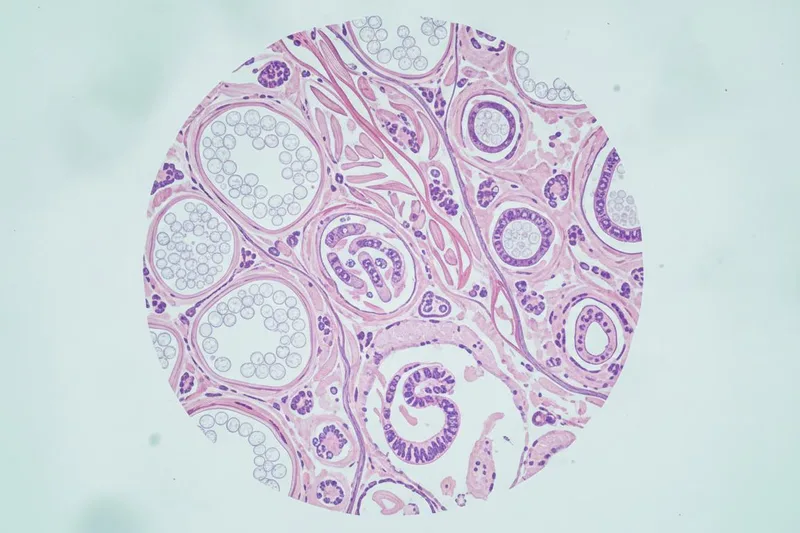
Do you have a tumor like this in your kidney? (Renal Angiomyolipoma) – Don't worry, let's talk about this in detail!

Do you have a tumor like this in your kidney? (Renal Angiomyolipoma) – Don't worry, let's talk about this in detail!

Have you ever thought that various tumors can develop inside our kidneys? Sometimes these tumors are found accidentally during a test done for something else without any symptoms. For example, a type of tumor that develops in the kidney, but is often non-cancerous (i.e. benign), is called `(Renal Angiomyolipoma)` or `(AML)`. Although the name may sound a bit complicated, let's talk about it simply, in a way that you can understand.

What is this `(Renal Angiomyolipoma)` or `(AML)`?

Simply put, a Renal Angiomyolipoma is a tumor that develops in your kidney. The best part is that most of these tumors are not cancerous (benign) . This means they are unlikely to cause any major problems. However, in rare cases, these tumors can rupture and cause a hemorrhage , which can be quite serious, and sometimes even life-threatening.

Now you may be wondering, "What does it mean to develop a tumor?" Our body has cells that divide and grow normally to maintain our body. However, sometimes these cells start to grow uncontrollably and excessively . That's when a tumor forms. This tumor called `(Renal Angiomyolipoma)` is made up of three main parts:

  • Blood vessels
  • Muscle cells
  • and fat cells (fat)

All three of these come together to create this special fruit.

How common is this condition called `(AML)`?

In fact, this is the most common type of benign (non-cancerous) kidney tumor. Statistically, this condition affects between 2 and 6 out of every 1,000 people . It is especially common in women over the age of 50. Therefore, if you are a woman in this age group, it is good to be aware of this.

Yes, sometimes this `(Renal AML)` condition can be seen together with several other health problems. That is, there is a certain tendency for these `(AML)` tumors to develop among people with those diseases. Some of such diseases are:

  • Lymphangioleiomyomatosis (LAM) - This is a rare disease that mainly affects the lungs.
  • Neurofibromatosis type 1 - This is a genetic condition that causes tumors in the nervous system.
  • Tuberous Sclerosis Complex (TSC) - This is also a genetic condition. Benign tumors develop in various parts of the body, such as the brain, kidneys, heart, lungs, and skin. AML tumors are also commonly seen with this condition.
  • `(von Hippel-Lindau disease)` - This is also a genetic condition, which can cause tumors and fluid-filled cysts to form in various organs.

So, if you have this condition, doctors will also look for `(AML)`.

Why does this `(Renal Angiomyolipoma)` develop? What is the cause?

The main reason for this is ourA change in a gene is called a genetic mutation. To be precise, this change occurs in two genes called `(TSC1)` or `(TSC2)`. These genes are called "tumor suppressor genes" . That is, the function of these genes is to control the unwanted growth of our cells.

This `(TSC)` gene produces a protein called tuberin . This protein helps control the growth and size of cells. So, imagine, what happens if there is a mutation or change in this `(TSC)` gene? Then the production of the tuberin protein is disrupted. Then the signal to "stop" the cells does not go properly. As a result, the cells start to grow uncontrollably , and eventually a tumor like `(AML)` forms. Do you understand?

What are the symptoms of `(Renal Angiomyolipoma)`?

Many people don't even know they have Renal AML! This is because most of the time there are no symptoms . It is only discovered incidentally when a kidney test (such as an ultrasound scan) is done for another reason.

However, rarely, this `(AML)` tumor can cause symptoms. Sometimes the tumor is discovered due to a condition called `(retroperitoneal hemorrhage)` . This is a bit more serious. Simply put, part of the tumor ruptures and starts bleeding into the space behind the abdominal cavity. This is an emergency and can be life-threatening.

In addition, there are several other symptoms that are very rarely seen:

  • Anemia - This means that the body does not have enough healthy red blood cells.
  • Feeling pain or discomfort in the abdomen, back, and pelvis .
  • Presence of blood or blood cells in the urine (Hematuria) .
  • High blood pressure (Hypertension) .
  • Kidney failure - This is very rare.
  • Feeling a lump that feels like it's being caught in the hand .
  • Urinary tract infection .

If you have one or more of these symptoms, it is best to seek medical advice.

How is this disease `(Renal Angiomyolipoma)` diagnosed?

As we mentioned earlier, most of the time, these ``AML'' tumors are discovered incidentally. They are found during an abdominal examination for another reason, or during routine screening of people with related diseases, such as the ``Tuberous Sclerosis'' we talked about earlier.

A doctor can tell for sure if you have renal AML by doing several imaging tests that take pictures of the inside of your abdomen :

  • (CT scan) (Computed Tomography scan)
  • (MRI) (Magnetic Resonance Imaging)
  • `(Ultrasound scan)` (Ultrasound scan)

In most cases, one of these imaging tests is enough to make the diagnosis. Because these Renal Angiomyolipomas contain fat, they often appear golden yellow on scans. These tumors can range in size from 1 cm to about 20 cm . The most common size seen is about 9 cm.

But, what if sometimes the medical team can't tell for sure whether a tumor is benign or cancerous? In that case, they may recommend a kidney biopsy . This involves surgically removing a small piece of the tumor and examining it under a microscope. This will help determine whether the cells are cancerous or not.

What are the treatments for `(Renal Angiomyolipoma)`?

Treatment for `(Renal Angiomyolipoma)` can vary greatly. It depends on many factors, such as the size of the tumor, whether there are symptoms, and your overall health. There are several main treatment options:

1. Active surveillance:

This is also called "watch and wait." If the Renal Angiomyolipoma is small (usually less than 4 centimeters) and has no symptoms , your doctor may suggest this approach. You will not be given any treatment. However, you will be monitored for any changes in the tumor with scans at regular intervals .

2. Medication:

Some AML tumors respond to a class of drugs called mTOR inhibitors . These are targeted therapies that target the gene mutation. These drugs can stop the tumor from growing or shrink it.

3. Surgery:

The doctor may recommend surgery in the following cases:

  • If `(AML)` causes symptoms (e.g. pain, bleeding).
  • If the tumor is 4 centimeters or larger (because larger tumors are more likely to burst and bleed).
  • If there is a suspicion that the tumor may be cancerous .
  • If you are a woman of childbearing age (hormonal changes during pregnancy can reduce the risk of the tumor growing and bursting).
  • You live in an area where it is difficult to access emergency care or follow-up services (because, in an emergency, such as bleeding, quick treatment is required).

There are several surgical treatment methods:

  • Embolization: This involves blocking the blood vessels that supply blood to the tumor. This is a very useful procedure in cases of bleeding due to Renal AML.
  • `(Nephrectomy)` (Nephrectomy):In this, part or all of the affected kidney is removed.
  • Partial nephrectomy or Nephron-sparing surgery: This involves removing only the tumor, leaving the healthy part of the kidney intact. Doctors try to use this method whenever possible.
  • Radiofrequency ablation: This uses high heat to destroy abnormal tissue (tumor).

Can I reduce my risk of developing Renal AML?

To be honest, there is nothing we can do to prevent the genetic mutations that lead to the development of `(Renal Angiomyolipoma)`. They are things that happen beyond our control.

However, if you have any of the associated conditions we discussed earlier (e.g. Tuberous Sclerosis Complex, Lymphangioleiomyomatosis, Neurofibromatosis type 1, von Hippel-Lindau disease) , it is very important to have regular imaging tests . Then, if AML has developed, it can be detected at an early stage . That way, the necessary treatment can be started early and the risk of complications can be reduced.

If I have this condition, what should I expect?

The good news is that most Renal Angiomyolipomas are small and rarely cause serious problems . However, a small percentage can become malignant or bleed severely. Therefore, it is important to monitor them carefully if you have Renal AML. Your doctor will tell you how often you need to have imaging tests.

Remember, AML can recur even after treatment. Therefore, it is very important to stay in touch with your medical team and have regular checkups as they recommend.

When should I seek medical advice?

If you have been diagnosed with renal AML, or if you have a condition that is associated with AML, it is important to be aware of the symptoms of retroperitoneal bleeding . If you experience any of these symptoms, seek medical attention immediately :

  • If there is blood in your urine.
  • If you have persistent, unrelenting pain in your upper abdomen or hip area.
  • If you see signs of shock:
  • Confusion
  • Rapid heart rate
  • Dizziness
  • Shallow breathing
  • Pale skin

If you see something like this, don't delay.

Finally, what to remember (Take-Home Message)

Okay, so the `(Renal Angiomyolipoma)` or `(AML)` we were talking about is a tumor that forms in the kidney, and is usually non-cancerous (benign).. Most often, this is found by chance, during another test. If you have been diagnosed with this type of `(Renal AML)`, don't panic . Talk to your doctor to decide what treatment or monitoring method is best for you.

The most important thing is to monitor these tumors regularly . By doing so, you can prevent a serious condition like bleeding from developing. Because if something like that happens, it can be life-threatening. Therefore, follow your doctor's instructions and get tested on time. Your health is in your hands!

👩🏽‍⚕️ Additional questions (FAQs)

💬 Is Renal Angiomyolipoma a kidney cancer?

No! This is the most common, but non-cancerous (benign) tumor that forms in the kidneys. As the name suggests, this tumor is formed by the combination of blood vessels (Angio), muscle (Myo), and fat/oil (Lipo). It never spreads to other parts of the body.

💬 Isn't this a problem even though it's not cancer?

If this tumor is smaller than 4 centimeters (diameter), there is no problem, and the person does not even feel that it is there. However, when the tumor grows, the blood vessels inside it burst and blood suddenly starts flowing into the kidney (internal bleeding), causing severe pain and even death.

💬 If the tumor is large, do I need to cut out the entire kidney and remove it?

In the past, the entire kidney was removed. But now there are new ways to save the kidney. A tube is passed through the leg and the vein supplying blood to the tumor is blocked (embolization), which causes the tumor to shrink on its own. Or, only the part of the tumor that is there is removed (partial nephrectomy).


` Renal Angiomyolipoma, AML, Kidney Tumors, Kidney Disease, Tuberous Sclerosis, Kidney Bleeding, Genetic Mutations

⚠️ Important: The medical articles and information on Nirogi Lanka are for general awareness only, and are by no means a substitute for professional medical advice, diagnosis, or treatment. For any medical problem you have, consult a qualified physician immediately.

💬 Comments (0)

No comments yet. Be the first to share your thoughts here.

Add Your Comment

Please calculate: 9 + 2 =
Do you have a tumor like this in your kidney? (Renal Angiomyolipoma) – Don't worry, let's talk about this in detail!

Do you have a tumor like this in your kidney? (Renal Angiomyolipoma) – Don't worry, let's talk about this in detail!

Have you ever thought that various tumors can develop inside our kidneys? Sometimes these tumors are found accidentally during a test done for something else without any symptoms. For example, a type of tumor that develops in the kidney, but is often non-cancerous (i.e. benign), is called `(Renal Angiomyolipoma)` or `(AML)`. Although the name may sound a bit complicated, let's talk about it simply, in a way that you can understand.

What is this `(Renal Angiomyolipoma)` or `(AML)`?

Simply put, a Renal Angiomyolipoma is a tumor that develops in your kidney. The best part is that most of these tumors are not cancerous (benign) . This means they are unlikely to cause any major problems. However, in rare cases, these tumors can rupture and cause a hemorrhage , which can be quite serious, and sometimes even life-threatening.

Now you may be wondering, "What does it mean to develop a tumor?" Our body has cells that divide and grow normally to maintain our body. However, sometimes these cells start to grow uncontrollably and excessively . That's when a tumor forms. This tumor called `(Renal Angiomyolipoma)` is made up of three main parts:

  • Blood vessels
  • Muscle cells
  • and fat cells (fat)

All three of these come together to create this special fruit.

How common is this condition called `(AML)`?

In fact, this is the most common type of benign (non-cancerous) kidney tumor. Statistically, this condition affects between 2 and 6 out of every 1,000 people . It is especially common in women over the age of 50. Therefore, if you are a woman in this age group, it is good to be aware of this.

Yes, sometimes this `(Renal AML)` condition can be seen together with several other health problems. That is, there is a certain tendency for these `(AML)` tumors to develop among people with those diseases. Some of such diseases are:

  • Lymphangioleiomyomatosis (LAM) - This is a rare disease that mainly affects the lungs.
  • Neurofibromatosis type 1 - This is a genetic condition that causes tumors in the nervous system.
  • Tuberous Sclerosis Complex (TSC) - This is also a genetic condition. Benign tumors develop in various parts of the body, such as the brain, kidneys, heart, lungs, and skin. AML tumors are also commonly seen with this condition.
  • `(von Hippel-Lindau disease)` - This is also a genetic condition, which can cause tumors and fluid-filled cysts to form in various organs.

So, if you have this condition, doctors will also look for `(AML)`.

Why does this `(Renal Angiomyolipoma)` develop? What is the cause?

The main reason for this is ourA change in a gene is called a genetic mutation. To be precise, this change occurs in two genes called `(TSC1)` or `(TSC2)`. These genes are called "tumor suppressor genes" . That is, the function of these genes is to control the unwanted growth of our cells.

This `(TSC)` gene produces a protein called tuberin . This protein helps control the growth and size of cells. So, imagine, what happens if there is a mutation or change in this `(TSC)` gene? Then the production of the tuberin protein is disrupted. Then the signal to "stop" the cells does not go properly. As a result, the cells start to grow uncontrollably , and eventually a tumor like `(AML)` forms. Do you understand?

What are the symptoms of `(Renal Angiomyolipoma)`?

Many people don't even know they have Renal AML! This is because most of the time there are no symptoms . It is only discovered incidentally when a kidney test (such as an ultrasound scan) is done for another reason.

However, rarely, this `(AML)` tumor can cause symptoms. Sometimes the tumor is discovered due to a condition called `(retroperitoneal hemorrhage)` . This is a bit more serious. Simply put, part of the tumor ruptures and starts bleeding into the space behind the abdominal cavity. This is an emergency and can be life-threatening.

In addition, there are several other symptoms that are very rarely seen:

  • Anemia - This means that the body does not have enough healthy red blood cells.
  • Feeling pain or discomfort in the abdomen, back, and pelvis .
  • Presence of blood or blood cells in the urine (Hematuria) .
  • High blood pressure (Hypertension) .
  • Kidney failure - This is very rare.
  • Feeling a lump that feels like it's being caught in the hand .
  • Urinary tract infection .

If you have one or more of these symptoms, it is best to seek medical advice.

How is this disease `(Renal Angiomyolipoma)` diagnosed?

As we mentioned earlier, most of the time, these ``AML'' tumors are discovered incidentally. They are found during an abdominal examination for another reason, or during routine screening of people with related diseases, such as the ``Tuberous Sclerosis'' we talked about earlier.

A doctor can tell for sure if you have renal AML by doing several imaging tests that take pictures of the inside of your abdomen :

  • (CT scan) (Computed Tomography scan)
  • (MRI) (Magnetic Resonance Imaging)
  • `(Ultrasound scan)` (Ultrasound scan)

In most cases, one of these imaging tests is enough to make the diagnosis. Because these Renal Angiomyolipomas contain fat, they often appear golden yellow on scans. These tumors can range in size from 1 cm to about 20 cm . The most common size seen is about 9 cm.

But, what if sometimes the medical team can't tell for sure whether a tumor is benign or cancerous? In that case, they may recommend a kidney biopsy . This involves surgically removing a small piece of the tumor and examining it under a microscope. This will help determine whether the cells are cancerous or not.

What are the treatments for `(Renal Angiomyolipoma)`?

Treatment for `(Renal Angiomyolipoma)` can vary greatly. It depends on many factors, such as the size of the tumor, whether there are symptoms, and your overall health. There are several main treatment options:

1. Active surveillance:

This is also called "watch and wait." If the Renal Angiomyolipoma is small (usually less than 4 centimeters) and has no symptoms , your doctor may suggest this approach. You will not be given any treatment. However, you will be monitored for any changes in the tumor with scans at regular intervals .

2. Medication:

Some AML tumors respond to a class of drugs called mTOR inhibitors . These are targeted therapies that target the gene mutation. These drugs can stop the tumor from growing or shrink it.

3. Surgery:

The doctor may recommend surgery in the following cases:

  • If `(AML)` causes symptoms (e.g. pain, bleeding).
  • If the tumor is 4 centimeters or larger (because larger tumors are more likely to burst and bleed).
  • If there is a suspicion that the tumor may be cancerous .
  • If you are a woman of childbearing age (hormonal changes during pregnancy can reduce the risk of the tumor growing and bursting).
  • You live in an area where it is difficult to access emergency care or follow-up services (because, in an emergency, such as bleeding, quick treatment is required).

There are several surgical treatment methods:

  • Embolization: This involves blocking the blood vessels that supply blood to the tumor. This is a very useful procedure in cases of bleeding due to Renal AML.
  • `(Nephrectomy)` (Nephrectomy):In this, part or all of the affected kidney is removed.
  • Partial nephrectomy or Nephron-sparing surgery: This involves removing only the tumor, leaving the healthy part of the kidney intact. Doctors try to use this method whenever possible.
  • Radiofrequency ablation: This uses high heat to destroy abnormal tissue (tumor).

Can I reduce my risk of developing Renal AML?

To be honest, there is nothing we can do to prevent the genetic mutations that lead to the development of `(Renal Angiomyolipoma)`. They are things that happen beyond our control.

However, if you have any of the associated conditions we discussed earlier (e.g. Tuberous Sclerosis Complex, Lymphangioleiomyomatosis, Neurofibromatosis type 1, von Hippel-Lindau disease) , it is very important to have regular imaging tests . Then, if AML has developed, it can be detected at an early stage . That way, the necessary treatment can be started early and the risk of complications can be reduced.

If I have this condition, what should I expect?

The good news is that most Renal Angiomyolipomas are small and rarely cause serious problems . However, a small percentage can become malignant or bleed severely. Therefore, it is important to monitor them carefully if you have Renal AML. Your doctor will tell you how often you need to have imaging tests.

Remember, AML can recur even after treatment. Therefore, it is very important to stay in touch with your medical team and have regular checkups as they recommend.

When should I seek medical advice?

If you have been diagnosed with renal AML, or if you have a condition that is associated with AML, it is important to be aware of the symptoms of retroperitoneal bleeding . If you experience any of these symptoms, seek medical attention immediately :

  • If there is blood in your urine.
  • If you have persistent, unrelenting pain in your upper abdomen or hip area.
  • If you see signs of shock:
  • Confusion
  • Rapid heart rate
  • Dizziness
  • Shallow breathing
  • Pale skin

If you see something like this, don't delay.

Finally, what to remember (Take-Home Message)

Okay, so the `(Renal Angiomyolipoma)` or `(AML)` we were talking about is a tumor that forms in the kidney, and is usually non-cancerous (benign).. Most often, this is found by chance, during another test. If you have been diagnosed with this type of `(Renal AML)`, don't panic . Talk to your doctor to decide what treatment or monitoring method is best for you.

The most important thing is to monitor these tumors regularly . By doing so, you can prevent a serious condition like bleeding from developing. Because if something like that happens, it can be life-threatening. Therefore, follow your doctor's instructions and get tested on time. Your health is in your hands!

👩🏽‍⚕️ Additional questions (FAQs)

💬 Is Renal Angiomyolipoma a kidney cancer?

No! This is the most common, but non-cancerous (benign) tumor that forms in the kidneys. As the name suggests, this tumor is formed by the combination of blood vessels (Angio), muscle (Myo), and fat/oil (Lipo). It never spreads to other parts of the body.

💬 Isn't this a problem even though it's not cancer?

If this tumor is smaller than 4 centimeters (diameter), there is no problem, and the person does not even feel that it is there. However, when the tumor grows, the blood vessels inside it burst and blood suddenly starts flowing into the kidney (internal bleeding), causing severe pain and even death.

💬 If the tumor is large, do I need to cut out the entire kidney and remove it?

In the past, the entire kidney was removed. But now there are new ways to save the kidney. A tube is passed through the leg and the vein supplying blood to the tumor is blocked (embolization), which causes the tumor to shrink on its own. Or, only the part of the tumor that is there is removed (partial nephrectomy).


` Renal Angiomyolipoma, AML, Kidney Tumors, Kidney Disease, Tuberous Sclerosis, Kidney Bleeding, Genetic Mutations

⚠️ Important: The medical articles and information on Nirogi Lanka are for general awareness only, and are by no means a substitute for professional medical advice, diagnosis, or treatment. For any medical problem you have, consult a qualified physician immediately.

💬 Comments (0)

No comments yet. Be the first to share your thoughts here.

Add Your Comment

Please calculate: 9 + 2 =