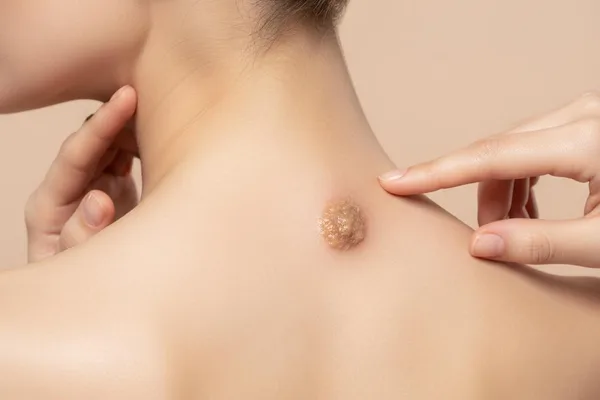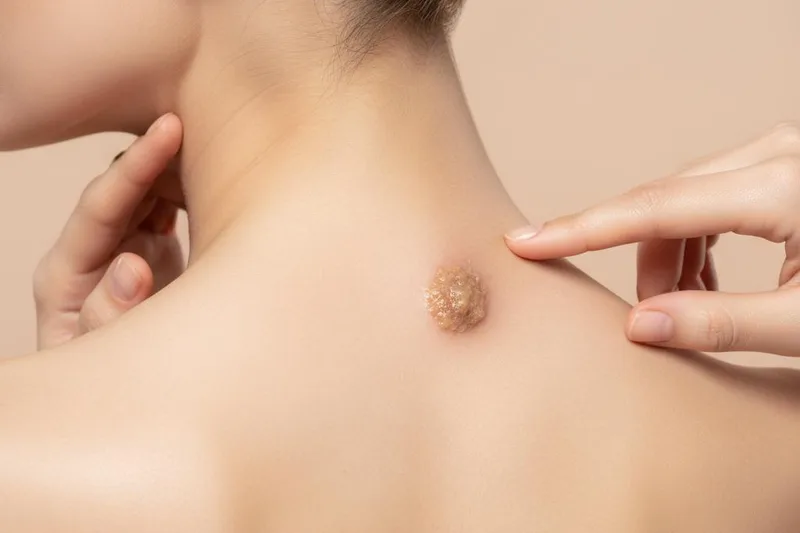
Have you also developed brown spots like this on your body? Let's learn about (Seborrheic Keratosis)

Have you also developed brown spots like this on your body? Let's learn about (Seborrheic Keratosis)

Do you have small brown spots on your body, perhaps on your neck, back, or face? They are slightly raised, have a waxy appearance, and look like something stuck on the skin... Many people are afraid when they see these, wondering if they are skin cancer. But don't worry, these are very common and harmless conditions. Today we are talking about this 'Seborrheic Keratosis' that many people develop.

What is Seborrheic Keratosis?

Simply put, it is a benign growth on the skin that looks like a birthmark. Most people develop one at some point in their lives. They are most common in middle age. They can increase in number as you get older. They are harmless and do not require treatment. However, if they bother you or make you feel unattractive, you can have them removed.

Sometimes doctors call these 'epidermal tumors'. Don't be alarmed by that name. It doesn't mean that it's cancer. Things like moles and warts that we know about also belong to this category. It just means that some cells in the top layer of our skin (epidermis) have gathered together and formed a small growth. This is not considered a risk factor for skin cancer.

What do these spots look like?

These are usually round or oval-shaped, and look like they are stuck on the skin. Some people describe them as being waxy or like coral. They are raised above the skin. Sometimes they are flat, but you can feel the difference if you touch them with your finger.

Most often, these are brown in color. But sometimes they can be black, light brown, pink, yellow, or white. Often, more than one can be seen at a time.

The surface of these spots is made of a protein called keratin. This is the same material that makes up our fingernails and animal horns. That's why they have a particularly rough texture. Some spots look like small bubbles or cysts inside. Some look like a crust or a wart. Others look like the wrinkles on a brain.

Characteristic Description
Shape Round or oval
Appearance Stuck-on appearance, waxy, scaly
Color Usually brown, but can be black, light brown, yellow, pink, or white
Nature It's protruding from the skin, you can feel it with your finger.

Who makes these?

These can happen to anyone, but they are especially common in the following people:

  • People over 50: These usually start to appear in middle age. Younger people are much less likely to develop them. About 30% of people have one by age 40, and about 75% by age 70.
  • People with a family history: If your mother, father, or siblings have these conditions, you are more likely to develop them. This means there may be a genetic influence.
  • People with fair skin: These are more common in people with fair skin. However, a similar but slightly different type of skin condition called ``Dermatosis Papulosa Nigra'' is more common in people with dark skin, such as those of African or Asian descent.

What causes these to occur?

The exact cause of these is not known. But we do know that they are associated with aging. Some studies suggest that sun exposure may also be a factor in their development. There is also a genetic component, as they tend to run in families.

The most important thing is that these are not caused by a virus or bacteria. Therefore, they are not contagious and do not spread from person to person.

These spots usually grow very slowly. But if you suddenly see a lot of these spots all over your body in a short period of time, it's something to be concerned about. Very rarely, this can be a sign of cancer inside the body. Doctors call this the 'Sign of Leser-Trélat'. But this connection has not yet been proven. But if you see something like this, your doctor will recommend some other tests.

Do these spots cause other symptoms?

Most of the time, there are no symptoms, but some people report things like:

  • Itching
  • Redness and irritation of the skin caused by clothing
  • Sometimes a slight injury causes bleeding.

If these symptoms bother you, you may want to consider removing this spot.

How can these be distinguished from cancerous conditions?

This is the most important part. Because some types of skin cancer can look similar to `Seborrheic Keratosis`. Therefore, it is very important to know the difference exactly.

Difference Between Seborrheic Keratosis and Actinic Keratosis

`Actinic Keratosis` is also a type of skin cancer that appears as you age, and looks like a coral. However, it is not as harmful as `Seborrheic Keratosis`. `Actinic Keratosis` is caused by skin exposure to the sun. It also has a small risk (5%-10%) of developing into skin cancer. Therefore, it is important to know the difference between the two. `Actinic Keratosis` is usually flat, rough, and occurs most often in sun-exposed areas.

The difference between Seborrheic Keratosis and Melanoma (skin cancer)

Seborrheic Keratosis will never develop into the serious skin cancer called Melanoma. However, some Melanoma cancers can look like Seborrheic Keratosis. So be aware of these changes.

Characteristic Seborrheic Keratosis (harmless) Melanoma (cancer)
Number Often more than one occurs. Often one develops on its own.
Surface texture Waxy, scaly, rough Often smooth
Edge There is a clear, well-defined edge May have a fuzzy, drawn, irregular edge
Color and shape It has the same shape, the same color. The shape is asymmetrical, and there may be several colors.
Growth It changes a lot. Can grow quickly, change shape/color

If you have any doubts about a mole on your body, please show it to a doctor immediately, especially a dermatologist. Do not self-diagnose.

How does a doctor diagnose this?

  • Visual examination: A dermatologist can usually tell if this is Seborrheic Keratosis just by looking at it.
  • Dermoscopy: If there is any doubt, the doctor will use a special instrument (a `dermascope`) that is like a small hand lens to magnify the spot.
  • Biopsy: If cancer is suspected in any way, the doctor will take a small piece of the lesion (or remove it completely) and send it to the lab for testing. This is called a biopsy.

Treatment and removal methods

First of all, remember that this is harmless and does not require treatment. However, if you are bothered by itching, rubbing against clothes, or are uncomfortable with the way it looks, you can remove it. There are a few simple methods that can be done right at your doctor's office.

  • Cryotherapy: A very cold substance called liquid nitrogen is used to freeze the mole. It will fall off on its own in a few weeks.
  • Electrodessication/Curettage: The mole is burned using an electric current and then scraped away with a special device.
  • Shave Excision: This method is used if you want to send a biopsy. A numbing medication is injected and the mole is carefully scraped away.
  • Laser Therapy: The spot is burned and removed using laser rays.
  • Prescription Hydrogen Peroxide: This is a newer treatment. A doctor applies a highly concentrated hydrogen peroxide solution to the spot.

Important: Never try to cut, scrape, or remove these yourself at home. This can lead to infection and scarring.

Take-Home Message

  • Seborrheic Keratosis is a harmless skin growth that occurs commonly as we age.
  • These are not cancerous, and they will not become cancerous.
  • Some dangerous types of skin cancer can look similar to these, so if you are suspicious of any new or changing spots on your skin, be sure to see a doctor.
  • These do not need to be treated. If they are removed, it is only for cosmetic reasons or because of problems such as itching.
  • Do not try to treat or remove these yourself without consulting a doctor.

seborrheic keratosis sinhala, same lapa, dumburu lapa, same pilika, skin growth sinhala, charma roga, waisata yaddi hadena lapa

⚠️ Important: The medical articles and information on Nirogi Lanka are for general awareness only, and are by no means a substitute for professional medical advice, diagnosis, or treatment. For any medical problem you have, consult a qualified physician immediately.

💬 Comments (0)

No comments yet. Be the first to share your thoughts here.

Add Your Comment

Please calculate: 1 + 7 =
Have you also developed brown spots like this on your body? Let's learn about (Seborrheic Keratosis)

Have you also developed brown spots like this on your body? Let's learn about (Seborrheic Keratosis)

Do you have small brown spots on your body, perhaps on your neck, back, or face? They are slightly raised, have a waxy appearance, and look like something stuck on the skin... Many people are afraid when they see these, wondering if they are skin cancer. But don't worry, these are very common and harmless conditions. Today we are talking about this 'Seborrheic Keratosis' that many people develop.

What is Seborrheic Keratosis?

Simply put, it is a benign growth on the skin that looks like a birthmark. Most people develop one at some point in their lives. They are most common in middle age. They can increase in number as you get older. They are harmless and do not require treatment. However, if they bother you or make you feel unattractive, you can have them removed.

Sometimes doctors call these 'epidermal tumors'. Don't be alarmed by that name. It doesn't mean that it's cancer. Things like moles and warts that we know about also belong to this category. It just means that some cells in the top layer of our skin (epidermis) have gathered together and formed a small growth. This is not considered a risk factor for skin cancer.

What do these spots look like?

These are usually round or oval-shaped, and look like they are stuck on the skin. Some people describe them as being waxy or like coral. They are raised above the skin. Sometimes they are flat, but you can feel the difference if you touch them with your finger.

Most often, these are brown in color. But sometimes they can be black, light brown, pink, yellow, or white. Often, more than one can be seen at a time.

The surface of these spots is made of a protein called keratin. This is the same material that makes up our fingernails and animal horns. That's why they have a particularly rough texture. Some spots look like small bubbles or cysts inside. Some look like a crust or a wart. Others look like the wrinkles on a brain.

Characteristic Description
Shape Round or oval
Appearance Stuck-on appearance, waxy, scaly
Color Usually brown, but can be black, light brown, yellow, pink, or white
Nature It's protruding from the skin, you can feel it with your finger.

Who makes these?

These can happen to anyone, but they are especially common in the following people:

  • People over 50: These usually start to appear in middle age. Younger people are much less likely to develop them. About 30% of people have one by age 40, and about 75% by age 70.
  • People with a family history: If your mother, father, or siblings have these conditions, you are more likely to develop them. This means there may be a genetic influence.
  • People with fair skin: These are more common in people with fair skin. However, a similar but slightly different type of skin condition called ``Dermatosis Papulosa Nigra'' is more common in people with dark skin, such as those of African or Asian descent.

What causes these to occur?

The exact cause of these is not known. But we do know that they are associated with aging. Some studies suggest that sun exposure may also be a factor in their development. There is also a genetic component, as they tend to run in families.

The most important thing is that these are not caused by a virus or bacteria. Therefore, they are not contagious and do not spread from person to person.

These spots usually grow very slowly. But if you suddenly see a lot of these spots all over your body in a short period of time, it's something to be concerned about. Very rarely, this can be a sign of cancer inside the body. Doctors call this the 'Sign of Leser-Trélat'. But this connection has not yet been proven. But if you see something like this, your doctor will recommend some other tests.

Do these spots cause other symptoms?

Most of the time, there are no symptoms, but some people report things like:

  • Itching
  • Redness and irritation of the skin caused by clothing
  • Sometimes a slight injury causes bleeding.

If these symptoms bother you, you may want to consider removing this spot.

How can these be distinguished from cancerous conditions?

This is the most important part. Because some types of skin cancer can look similar to `Seborrheic Keratosis`. Therefore, it is very important to know the difference exactly.

Difference Between Seborrheic Keratosis and Actinic Keratosis

`Actinic Keratosis` is also a type of skin cancer that appears as you age, and looks like a coral. However, it is not as harmful as `Seborrheic Keratosis`. `Actinic Keratosis` is caused by skin exposure to the sun. It also has a small risk (5%-10%) of developing into skin cancer. Therefore, it is important to know the difference between the two. `Actinic Keratosis` is usually flat, rough, and occurs most often in sun-exposed areas.

The difference between Seborrheic Keratosis and Melanoma (skin cancer)

Seborrheic Keratosis will never develop into the serious skin cancer called Melanoma. However, some Melanoma cancers can look like Seborrheic Keratosis. So be aware of these changes.

Characteristic Seborrheic Keratosis (harmless) Melanoma (cancer)
Number Often more than one occurs. Often one develops on its own.
Surface texture Waxy, scaly, rough Often smooth
Edge There is a clear, well-defined edge May have a fuzzy, drawn, irregular edge
Color and shape It has the same shape, the same color. The shape is asymmetrical, and there may be several colors.
Growth It changes a lot. Can grow quickly, change shape/color

If you have any doubts about a mole on your body, please show it to a doctor immediately, especially a dermatologist. Do not self-diagnose.

How does a doctor diagnose this?

  • Visual examination: A dermatologist can usually tell if this is Seborrheic Keratosis just by looking at it.
  • Dermoscopy: If there is any doubt, the doctor will use a special instrument (a `dermascope`) that is like a small hand lens to magnify the spot.
  • Biopsy: If cancer is suspected in any way, the doctor will take a small piece of the lesion (or remove it completely) and send it to the lab for testing. This is called a biopsy.

Treatment and removal methods

First of all, remember that this is harmless and does not require treatment. However, if you are bothered by itching, rubbing against clothes, or are uncomfortable with the way it looks, you can remove it. There are a few simple methods that can be done right at your doctor's office.

  • Cryotherapy: A very cold substance called liquid nitrogen is used to freeze the mole. It will fall off on its own in a few weeks.
  • Electrodessication/Curettage: The mole is burned using an electric current and then scraped away with a special device.
  • Shave Excision: This method is used if you want to send a biopsy. A numbing medication is injected and the mole is carefully scraped away.
  • Laser Therapy: The spot is burned and removed using laser rays.
  • Prescription Hydrogen Peroxide: This is a newer treatment. A doctor applies a highly concentrated hydrogen peroxide solution to the spot.

Important: Never try to cut, scrape, or remove these yourself at home. This can lead to infection and scarring.

Take-Home Message

  • Seborrheic Keratosis is a harmless skin growth that occurs commonly as we age.
  • These are not cancerous, and they will not become cancerous.
  • Some dangerous types of skin cancer can look similar to these, so if you are suspicious of any new or changing spots on your skin, be sure to see a doctor.
  • These do not need to be treated. If they are removed, it is only for cosmetic reasons or because of problems such as itching.
  • Do not try to treat or remove these yourself without consulting a doctor.

seborrheic keratosis sinhala, same lapa, dumburu lapa, same pilika, skin growth sinhala, charma roga, waisata yaddi hadena lapa

⚠️ Important: The medical articles and information on Nirogi Lanka are for general awareness only, and are by no means a substitute for professional medical advice, diagnosis, or treatment. For any medical problem you have, consult a qualified physician immediately.

💬 Comments (0)

No comments yet. Be the first to share your thoughts here.

Add Your Comment

Please calculate: 1 + 7 =