
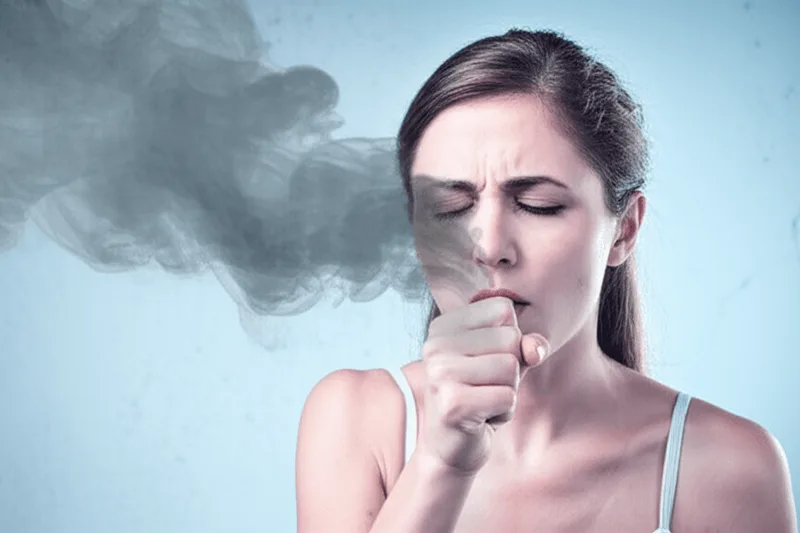
We all know how harmful smoking is to your body. But have you ever thought that even if you don't smoke, the smoke from someone else's cigarette can be just as harmful to your body? That's what we call ``Secondhand Smoke'' or "passive smoking ." Simply put, this is the tobacco smoke that you don't intentionally inhale, but is present in the environment.
So what is this ``Secondhand Smoke''?
Very simple. ``Secondhand Smoke`` is essentially a combination of two parts.
- The smoke that is released directly into the air when a cigarette, cigar, or pipe is lit. This is the most harmful part, because it is not cleaned by any filter.
- The smoke that comes out of the breath of a cigarette smoker.
So, if someone is smoking a cigarette near you, you are likely to inhale both types of smoke. Don't think, "I don't smoke, so what's wrong with me?" Did you know that in the United States alone, passive smoking causes more than 7,000 lung cancer deaths and more than 33,000 heart disease deaths per year? That's a serious matter.
This ``Secondhand Smoke`` is also called:
- Passive smoking
- Environmental smoking
- Involuntary smoking
How dangerous is passive smoking really?
Think about it, when tobacco is burned, a large amount of harmful chemicals , what we call `(toxins),` are released. Even if you don't smoke a cigarette, when you breathe in someone else's smoke, all these toxins enter your body. Especially the smoke that comes directly from the end of a cigarette, because it is not filtered, can sometimes be more harmful than the smoke that the smoker inhales.
It is said that there are more than 7,000 chemicals in tobacco smoke. About 69 of them are cancer-causing, or ``carcinogens'' . Another 250 are directly harmful to your health.
Some of these dangerous chemicals are:
| Chemical substance | Common locations |
|---|---|
| Benzene | Petrol |
| Butane | Lighter fluid |
| Ammonia | Household cleaning supplies |
| Toluene | Paint thinner |
| Cadmium | Battery |
| Formaldehyde `(Formaldehyde)` | Embalming fluid |
When you hear these things, you can imagine how bad this smoke is.
Is passive smoking worse than smoking cigarettes?
No, you can't say that. Direct smoking is the most harmful to health. However, that doesn't mean that passive smoking is not harmful. Those who inhale passive smoking are also definitely affected by the chemicals in that smoke. That is also very dangerous.
What effects does passive smoking have on us?
The side effects of passive smoking are very dangerous for adults and young children alike. They can cause a variety of health problems, from increased risk of lung cancer and heart disease to frequent ear infections.
The effects of passive smoking on adults
Passive smoking harms your body in many ways. Adults exposed to passive smoking can develop conditions such as:
- Cardiovascular diseases: High blood pressure , arteriosclerosis, heart attack , stroke, etc.
- Lung problems: Conditions like chronic obstructive pulmonary disease (COPD) and asthma.
- Increased risk of cancer: especially lung cancer and breast cancer.
- Reproductive health problems: Exposure to passive smoking during pregnancy can lead to low birth weight babies.
Studies have shown that if you are regularly exposed to secondhand smoke, your risk of developing heart disease increases by about 30%.
The effects of passive smoking on young children
Because young children and babies' bodies are still developing, the harm they can suffer from secondhand smoke is particularly severe. They are more likely to experience the following:
- Respiratory problems such as frequent coughing, sneezing, and difficulty breathing.
- Frequent and chronic ear infections.
- Frequent and more severe asthma attacks.
- Respiratory tract infections, for example bronchitis or pneumonia.
- Damage to eyes and teeth.
- Sudden Infant Death Syndrome (SIDS).
- Increased risk of brain tumors and lung cancer.
Because of these dangerous conditions, the best thing you can do for your children, family, and loved ones is to quit smoking. Ask your doctor about ways to get help.
How long does exposure to secondhand smoke cause damage?
There is no "safe" amount of time to be exposed to secondhand smoke. The damage can begin in as little as five minutes. Studies have shown that damage can begin in as little as five minutes. Respiratory and inflammatory responses occur almost immediately.
- After 5 minutes: Your blood vessels become less flexible, just like someone who smokes a cigarette.
- After 20-30 minutes: Blood begins to clot, and fatty deposits in blood vessels increase the risk of heart attack and stroke.
- After two hours: Heart rhythm irregularities (arrhythmia) may occur, leading to a heart attack or other serious heart condition.
Have you seen how dangerous it is, even for a short moment?
How long does secondhand smoke linger in a room?
Secondhand smoke can linger in a room for up to five hours. In fact, this smoke can travel down stairs and even through ventilation units. This means that people living in apartment buildings can be at risk even without leaving their homes.
Even more dangerous is that the tiny particles in tobacco smoke can remain on furniture, walls, and carpets for months. This is called thirdhand smoke . This is also very harmful, especially for young children who play on the floor.
Who is most at risk from passive smoking?
Anyone who is exposed to smoking tobacco is affected by secondhand smoke, but some groups are at higher risk:
- People in the service industry: For example, people who work in public places where smoking is allowed, such as restaurant workers and bar workers, have a hard time getting away with it.
- Babies, young children, and pets: Young children and animals cannot choose to leave a smoke-filled room. Repeated exposure increases the risk of harm.
If you are pregnant, it is especially important to be aware that passive smoking reduces the amount of oxygen your baby gets in the womb. This can increase the baby's heart rate and lead to low birth weight or premature birth.
Can passive smoking cause cancer?
Yes, you can. According to the Centers for Disease Control and Prevention (CDC), passive smoking is responsible for more than 7,300 lung cancer deaths per year among non-smoking adults.
How can we protect ourselves from passive smoking?
The best way to avoid exposure is to stay away from places where people smoke. That means avoiding places like concert halls and places where people are allowed to smoke.
Neither opening windows nor using air filters can completely eliminate secondhand smoke. However, they can help reduce some of the toxins in smoke. There is nothing wrong with telling someone not to smoke in your home or in your car.
Other things you can do to protect yourself from passive smoking:
- Stay away from smoking areas and stay or sit in a smoke-free area.
- Go to places where smoking is prohibited.
- Inform guests coming to your home in advance that smoking is not allowed inside the house.
- Do not allow passengers in your vehicle to smoke inside, even if the windows are open.
The number of people who use tobacco products has been steadily declining over the past few decades. However, one survey found that 1 in 4 non-smokers still say they breathe in second-hand smoke. Remember, the only way to completely protect yourself is to stay away from people who smoke.
What is the outlook for those exposed to secondhand smoke?
Regular exposure to secondhand smoke can damage your heart and lungs. The best way to stay healthy is to avoid secondhand smoke. Fortunately, many cities and some states have now banned smoking in public places, as awareness of its dangers has increased. While these bans reduce your risk, they don't eliminate it completely.
When should I see a doctor?
If you are a frequent smoker, it is a good idea to see your doctor. You can ask him/her about the dangers of secondhand smoke and ways to stay healthy. If you have developed heart disease or respiratory problems due to continued exposure to secondhand smoke, talk to your doctor about options for managing it.
Your doctor may be able to treat specific symptoms or conditions caused by exposure to secondhand smoke. For example, you may need medications to control high blood pressure or inhalers to treat conditions such as asthma or COPD.
The most important thing to remember (Take-Home Message)
By now you probably understand that breathing in secondhand smoke can also affect your health, although not as much as smoking cigarettes. Understanding the dangers of secondhand smoke will help protect yourself and others.
Often, you are exposed to secondhand smoke because someone you know uses tobacco products. If so, consider their health as well as yours and encourage them to quit. There are many resources that can help you (or a loved one) quit smoking. A smoke-free environment is good for everyone's health!




💬 Comments (0)
No comments yet. Be the first to share your thoughts here.
Add Your Comment