
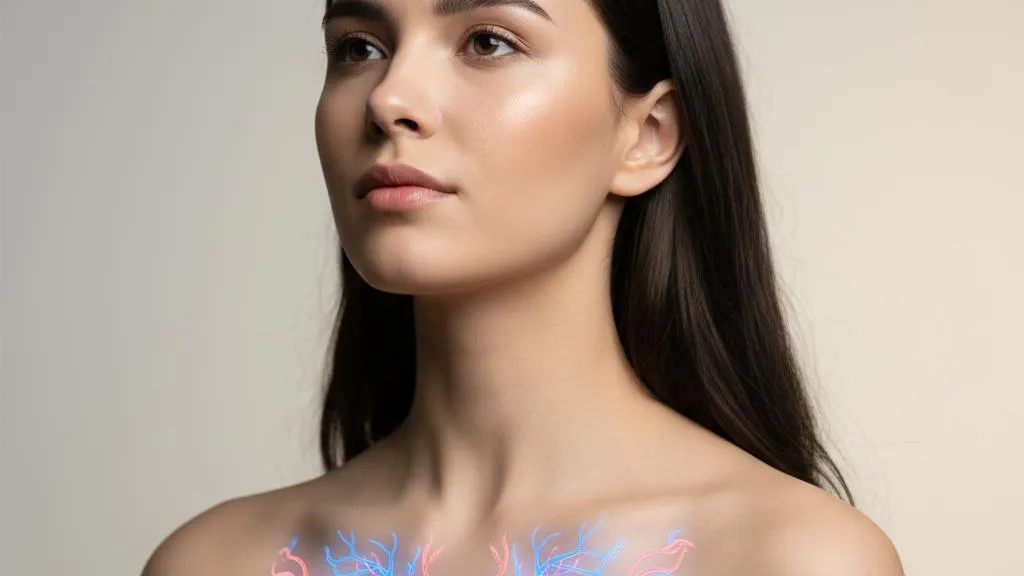
Just last week in my clinic, a young college swimmer came in holding his right arm after noticing it looked unusually puffy, felt heavy, and had a slight bluish-red tint after a heavy week of weight training. When I examined his shoulder and chest and sent him for an urgent ultrasound scan, he was surprised to learn that the root of the problem wasn't a pulled muscle at all—it was a pinched blood vessel tucked right beneath his collarbone known as the subclavian vein (vena subclavia). Whether you are looking up your own anatomy, preparing for a medical procedure, or wondering why people sometimes call this the "clavicle vein" or "subclavicular vein," understanding how this hidden highway works is simpler than it sounds.
Have you ever thought of the blood vessel system inside your body as a bustling network of highways in a major city? Some roads are tiny neighborhood side streets, while others are massive multi-lane freeways. Every single one of those roads connects to keep you alive and thriving. Today, we are going to take a close look at one of the most important upper-body freeways running quietly beneath your collarbone. Pretty fascinating how much goes on right under the surface without us ever noticing, right?
📌 Key Takeaways at a Glance
- What It Is: The subclavian vein (scientifically called the vena subclavia and often referred to in everyday conversation as the clavicle vein) is a paired, large deep vein—one on the right and one on the left—that returns oxygen-poor blood from your arms and upper body back toward your heart.
- Exact Location: It sits tucked directly underneath your collarbone (clavicle), arcing from the outer edge of your first rib toward the center of your upper chest.
- Where It Drains Into: Each subclavian vein joins the internal jugular vein from your neck to form the brachiocephalic vein, which then merges into the superior vena cava and empties into the right atrium (including the right atrial appendage) of your heart.
- Medical Importance: Because it is wide, deep, and close to the heart, hospital specialists frequently use it to place central venous catheters ("central lines") and pacemaker leads.
- Warning Signs to Watch For: Sudden one-sided arm swelling, a deep aching heaviness, prominent chest or shoulder veins, or bluish-red skin discoloration can point to a subclavian vein blood clot (subclavian vein thrombosis) and require prompt medical care.
What Is the Subclavian Vein and What Is Its Function?
The subclavian vein is a major paired deep vein located directly beneath the collarbone (clavicle) that drains deoxygenated blood from the upper extremities and shoulders back toward the heart. Each subclavian vein begins at the outer border of the first rib as a continuation of the axillary vein and joins the internal jugular vein to form the brachiocephalic vein.
Let's unpack that in everyday language. What is the main subclavian vein function in your daily life? Simply put, your body has two of these major vessels—a right subclavian vein and a left subclavian vein. Their primary job is to act as the main return pipeline for blood that has already delivered its oxygen to your fingers, hands, forearms, upper arms, and shoulders. Once your muscles and tissues have used up that fresh oxygen and dropped off metabolic waste products, your veins collect that used blood and guide it right back to your heart and lungs for a fresh refill.
Think about it for a second: how does blood get out to your arms in the first place, and how does it get back without crashing into oncoming traffic? Your circulation operates just like a divided two-way highway:
- The Outbound Highway (Arteries): Fresh, oxygen-rich blood leaves your heart and travels outward toward your shoulders and arms through a powerful partner vessel called the subclavian artery.
- The Inbound Highway (Veins): Running almost parallel to that artery is the subclavian vein, carrying the oxygen-depleted blood safely back inward toward the center of your chest.
Even more impressively, the subclavian veins have a second hidden job that we rarely stop to think about, do we? Right at the spot where your subclavian vein meets the major vein coming down from your neck, your body's lymphatic system empties back into your bloodstream. On the left side, the left subclavian vein receives the thoracic duct (which carries clear lymphatic fluid and absorbed dietary fats from most of your body), while the right subclavian vein receives the right lymphatic duct. That means these veins don't just move blood—they also help maintain your fluid balance and immune defenses!
Where Is the Subclavian Vein Located and Where Does It Drain Into?
One of the most common questions patients ask us doctors is, "Where is the subclavian vein located, and why do people call it the clavicle vein?" The name itself gives away the secret! In medical Latin, "sub" means under, and "clavian" comes from the clavicle—your collarbone. That is why patients often search for it as the clavicle vein or subclavicular vein.
Both of your subclavian veins sit tucked right behind and beneath your collarbones at the very top of your chest. To picture this easily without needing an anatomy textbook, stand in front of a mirror and imagine drawing a giant curved letter "M" across your upper chest from one armpit to the other:
- The Outer Legs of the "M" (Axillary Veins): As blood travels up out of your arms and passes through your armpit area, it flows through a vessel called the axillary vein. The exact moment that vessel crosses the outer border of your very first rib, its name officially changes to the subclavian vein.
- The Two High Peaks of the "M" (The Subclavian Veins): Rising up and curving neatly underneath each collarbone are the right and left subclavian veins. They travel inward toward the center of your breastbone, passing directly in front of the anterior scalene muscle in your lower neck. (Interestingly, the subclavian artery travels behind that very same muscle, keeping the two highways neatly separated!)
- Where the Subclavian Vein Drains Into (Brachiocephalic Veins): People often ask, "What does the subclavian vein drain into?" Just behind the inner corner of your collarbone (the sternoclavicular joint), each subclavian vein merges with the internal jugular vein coming down from your head and neck. This junction forms a downward-sloping vein on each side called the brachiocephalic vein (also known as the innominate vein).
- The Center Valley of the "M" (Superior Vena Cava to the Heart): Finally, the left and right brachiocephalic veins unite in the middle of your upper chest to form one massive trunk called the Superior Vena Cava. This giant vessel pours all the returning blood from your upper body directly into the upper right chamber of your heart—the right atrium and its muscular pouch, the right atrial appendage.
Now that makes sense, right? When you trace that path from your wrist to your shoulder, under your collarbone, and straight into your heart, you can see why the subclavian vein is the ultimate gateway connecting your arms to your central circulation.
Why Is the Subclavian Vein So Important in Medical Treatment?
Beyond its 24/7 job of moving blood and lymphatic fluid, the subclavian vein plays a massive role in modern hospital care. Have you ever wondered why doctors in the Emergency Room (ER / A&E) or Intensive Care Unit (ICU) sometimes place an IV line near a patient's collarbone rather than in the back of their hand?
The tiny veins in your hands and forearms are great for basic fluids or short courses of antibiotics, but they can become irritated or collapse if strong life-saving medications are pumped through them. Because the subclavian vein is wide, carries a high volume of fast-moving blood, and sits just inches away from the heart, hospital specialists rely on it for several critical procedures:
- Central Venous Catheters ("Central Lines"): When a patient in the ICU or operating room needs rapid fluids, specialized heart and blood pressure medications, kidney dialysis access, or long-term intravenous nutrition (TPN), an experienced specialist can numb the skin beneath the collarbone and guide a soft, thin tube (catheter) directly into the subclavian vein.
- Pacemakers and Defibrillators (ICDs): If someone has a dangerously slow or irregular heartbeat, cardiologists often implant a small pacemaker device just under the skin near the collarbone. The tiny insulated electrical wires (leads) of the pacemaker are threaded smoothly through the subclavian vein, down the superior vena cava, and directly into the chambers of the heart.
- Implanted Chemotherapy Ports (Mediports): For patients receiving cancer treatments or frequent blood draws, surgeons often place a small port beneath the chest skin with its delicate tube sitting inside the subclavian vein so nurses can give medication comfortably without poking arm veins repeatedly.
Of course, because the subclavian vein sits in a very tight anatomical neighborhood—right above the top dome of your lung (the pleura) and right next to the subclavian artery and major nerves—placing a line here requires high skill and strict sterile care. Feeling nervous before getting a central line or port placed is completely normal, and that wave of pre-procedure nervousness can even trigger an adrenaline rush that makes your heart beat faster. Potential complications that hospital teams carefully guard against include accidental bleeding, bloodstream infection, temporary irregular heartbeats (arrhythmia) as the guidewire nears the heart, blood clots around the catheter, or air leaking around the lung causing a collapsed lung (pneumothorax). That is why specialists use sterile drapes, anatomical landmarks, and ultrasound or X-ray guidance to keep the procedure as safe as possible.
What Medical Conditions Affect the Subclavian Vein?
Remember the young college swimmer we talked about at the beginning of our conversation? You might be wondering how a healthy person—or someone recovering in the hospital—can develop a problem in a vein protected beneath a bone. Let's look at the main clinical conditions that can affect the subclavian vein.
1. Subclavian Vein Thrombosis (Upper Extremity Deep Vein Thrombosis / DVT)
When most people hear the term "Deep Vein Thrombosis" (DVT), they immediately think of a blood clot in the calf or thigh after a long airplane flight. However, blood clots can also form in the deep veins of your upper body—a condition known medically as subclavian vein thrombosis. Because the clot blocks the main exit highway coming out of your arm, blood backs up behind the blockage.
There are two main reasons a blood clot forms in the subclavian vein:
- Secondary Subclavian Vein Thrombosis (Catheter-Related): This is the most common cause we see in hospitals today. Having a central line, PICC line, port, or pacemaker wire sitting inside the subclavian vein can mildly irritate the inner lining of the vessel or slow down blood flow, encouraging a clot to form around the tube.
- Primary Subclavian Vein Thrombosis (Paget-Schroetter Syndrome / "Effort Thrombosis"): This is exactly what happened to the swimmer in my clinic! It frequently affects healthy, active young adults or athletes who perform repetitive overhead arm movements—like swimming, pitching a baseball, weightlifting, rowing, or even painting ceilings and stacking high shelves. Over time, the heavy muscle and surrounding bones pinch the subclavian vein repeatedly until tiny micro-tears form inside the vein wall and trigger a sudden blood clot.
2. Venous Thoracic Outlet Syndrome (vTOS)
Why does the subclavian vein get pinched during overhead movements? The narrow passageway between your first rib, your collarbone (clavicle), and the tight muscles of your neck is called the thoracic outlet. Think of it like a narrow tunnel under a low bridge. If you were born with a slightly narrower tunnel, an extra small rib in your neck (a cervical rib), or heavily built chest and shoulder muscles from sports, lifting your arm overhead squeezes the subclavian vein between the collarbone and first rib. We call this venous thoracic outlet syndrome.
3. Subclavian Vein Stenosis (Narrowing) and External Compression
Even without a fresh blood clot, scar tissue from old IV catheters, previous radiation therapy to the chest, a healed collarbone fracture, or enlarged lymph nodes in the chest can gradually narrow (stenose) or press against the subclavian vein. When strong compression slows down blood return from the upper body and head, patients sometimes notice fullness in the neck or even brief visual symptoms like seeing stars or flashing lights when bending forward or straining.
To help you compare these issues clearly, let's look at the key conditions and symptoms that can involve your subclavian vein and what action you should take:
| Condition or Symptom Pattern | What Happens in the Body & What You Should Do |
|---|---|
| Effort Thrombosis (Paget-Schroetter Syndrome) | Repetitive overhead arm movements (swimming, weightlifting, throwing, or overhead labor) pinch the subclavian vein between the collarbone and first rib, triggering a sudden blood clot. The affected arm rapidly swells, feels heavy or tight, and turns dusky red or bluish. What you should do: Seek same-day emergency evaluation at your nearest hospital Emergency Room (ER / A&E) so doctors can perform a Doppler ultrasound and start blood-thinning treatment promptly. |
| Catheter-Related Subclavian Vein Clot | A blood clot forms around an existing central line, chemotherapy port, PICC line, or pacemaker wire sitting inside the subclavian vein. You may notice swelling in the arm, shoulder, or side of the neck, dull aching pain, or difficulty flushing the medical line. What you should do: Never attempt to forcefully flush a blocked central line or port at home. Contact your specialist team or go to the hospital immediately for a scan and safe line management. |
| Venous Thoracic Outlet Compression (Without a Clot) | The subclavian vein gets temporarily squeezed beneath the collarbone when you raise your arms overhead. Your arm may feel tired, heavy, slightly puffy, or tingly during overhead activities, and spider-like veins may become visible across the front of your shoulder and chest. What you should do: Schedule an appointment with your Primary Care Physician (PCP) or family GP clinic for a physical exam and a referral to a vascular specialist or physical therapist. |
| Suspected Pulmonary Embolism (Clot Traveling to Lungs) | A piece of a blood clot inside the subclavian vein breaks loose, travels through the right side of the heart, and lodges in the blood vessels of the lungs. This causes sudden shortness of breath, sharp chest pain when taking a deep breath, a racing heart, or lightheadedness. What you should do: Treat this as a life-threatening emergency. Call 911 (US/Canada), 999 (UK), or 000 (Australia) immediately rather than driving yourself to the hospital. |
How Do We Doctors Diagnose and Treat Subclavian Vein Problems?
If you come into your Primary Care Physician (PCP) or family GP clinic—or visit a local Urgent Care center or hospital—with one-sided arm swelling or shoulder aching, how do we figure out if your subclavian vein is the culprit? You will be relieved to know that the initial checkup is completely painless and straightforward.
First, we take a careful medical history and examine both of your arms side by side. We check your pulse at the wrist, look for any subtle skin color changes (like a reddish-blue tint called cyanosis), and inspect your upper chest and shoulder to see if small surface veins have popped out—a classic clue that blood is taking "detour side streets" because the main subclavian freeway is blocked! From there, we rely on specialized tests and treatments:
- Duplex Ultrasound Scan: This is almost always our first test. A trained sonographer places warm gel and an ultrasound wand over your neck, collarbone area, and upper arm to watch the blood flowing through your subclavian vein in real time and check for any clots.
- CT Venogram or MR Venogram: Because the collarbone is solid bone, ultrasound waves sometimes cannot see directly through the middle of the clavicle. If we need a clearer 3D picture of the exact pinch point under the bone, we refer you to radiology for a specialized CT or MRI scan of your veins.
- Blood Thinners (Anticoagulants): If a subclavian vein blood clot is found, the immediate cornerstone of treatment is starting blood-thinning medication (anticoagulation). These medications stop the clot from growing larger and prevent pieces from breaking off and traveling to your lungs while your body stabilizes the vessel.
- Specialist Vascular Procedures: When an athlete or young adult develops a fresh "effort thrombosis" clot from a pinched thoracic outlet, vascular specialists at the hospital may perform catheter-directed thrombolysis (delivering clot-busting medicine directly to the clot) followed by surgical relief to open up the tight space around the first rib so the vein never gets pinched again.
✔️ What You Should Do & ❌ What to Avoid
- ✔️ DO pay attention to one-sided arm changes: If one arm suddenly looks noticeably thicker, feels tight like a stuffed sausage, or looks darker red or blue compared to the other arm, get checked by a doctor right away.
- ✔️ DO take regular movement breaks: Whether you are working long hours at a computer desk, gaming, or traveling on a long-haul flight or road trip, roll your shoulders gently, stretch your neck, and walk around at least once every hour.
- ✔️ DO keep central lines and ports clean and dry: If you or a loved one has a chemotherapy port, PICC line, or central catheter, follow your nurse's sterile dressing care instructions carefully and report any redness, warmth, or swelling near the collarbone immediately.
- ❌ DON'T vigorously massage a suddenly swollen arm: Be honest, when an arm or shoulder aches after a workout, your first instinct is to rub it deeply, isn't it? If the swelling is caused by a deep vein blood clot, heavy massage can accidentally dislodge the clot toward your lungs. Leave it alone until a doctor scans it.
- ❌ DON'T push through severe arm heaviness during overhead workouts: If lifting weights overhead, swimming laps, or throwing causes your arm to go numb, turn pale or bluish, or swell up, stop the exercise and get evaluated for thoracic outlet compression.
- ❌ DON'T smoke or use nicotine vapes: Nicotine damages the delicate inner lining of your veins and makes your blood significantly stickier and more prone to dangerous clots.
🚨 When to Seek Immediate Emergency Care (Red-Flag Symptoms)
If you or someone near you develops any of these red-flag symptoms, do not wait — call 911 (US & Canada), 999 or 111 (UK), or 000 (Australia) immediately or go straight to the nearest hospital Emergency Room (ER / A&E):
- Sudden, pronounced swelling of one entire arm, shoulder, or side of the neck accompanied by aching pain, tightness, or skin that looks bluish, purple, or dusky red.
- Sudden shortness of breath or difficulty breathing that comes on at rest or with minimal effort (a critical warning sign that a clot may have traveled to the lungs, causing a pulmonary embolism).
- Sharp, stabbing chest pain that worsens when you take a deep breath in or cough.
- Coughing up blood or pink, blood-streaked mucus, accompanied by a racing heartbeat, sweating, or sudden dizziness and feeling faint.
- Fever, chills, pus, or spreading redness and swelling around the collarbone if you currently have a central venous catheter, port, or recently implanted pacemaker.
How Can We Keep Our Subclavian Veins and Circulation Healthy Every Day?
We rarely stop to think about our veins until something goes wrong, do we? The great news is that the everyday habits that protect your heart also keep your subclavian veins—and every other blood vessel in your body—flexible, clear, and flowing smoothly.
- Make Daily Brisk Walking a Habit: Aim for at least 30 minutes of brisk walking around your neighborhood or local park 5 days a week. Every time your muscles contract and relax, they help pump venous blood steadily back toward your heart.
- Practice Smart Shoulder Posture and Warm-Ups: Slouching forward over a laptop or phone all day rounds your shoulders and narrows the space beneath your collarbones. Sit tall, gently draw your shoulder blades back, and always warm up your shoulder girdle before heavy swimming, cross-training, or racket sports.
- Stay Well Hydrated Throughout the Day: When you get dehydrated—especially during hot summer days or heavy gym sessions—your blood volume drops slightly and your blood becomes thicker and more sluggish. Keep a reusable water bottle at your desk and sip plain water or unsweetened herbal tea regularly.
- Enjoy a Heart- and Vein-Friendly Diet: Build your everyday meals around colorful vegetables, berries, oats, whole-grain bread, beans, olive oil, nuts, and omega-3-rich fish like salmon or trout. Cutting back on ultra-processed salty snacks and sugary drinks helps keep your blood pressure, cholesterol, and blood vessel linings in top shape.
- Never Ignore Subtle Warning Signs: Remember how we talked earlier about catching vein compression early? If you notice one arm feeling unusually heavy, achy, or swollen compared to the other, book a quick visit with your Primary Care Physician (PCP) or family GP clinic rather than brushing it off as a strained muscle.
💡 Key Take-Home Message
- The subclavian vein (often called the clavicle vein or vena subclavia) is a vital paired deep vein tucked beneath each collarbone that returns used blood from your arms and drains important lymphatic fluid back into your bloodstream.
- Each subclavian vein begins at the outer edge of the first rib (continuing from the axillary vein) and drains into the brachiocephalic vein, which leads to the superior vena cava and the heart.
- Because of its large size and central location, hospital specialists safely rely on it for life-saving central lines, chemotherapy ports, and pacemaker wires.
- While rare in the general public, a blood clot in this vessel (subclavian vein thrombosis) can happen from repetitive overhead arm sports or medical catheters—making sudden one-sided arm swelling and bluish skin a symptom you should always have checked urgently.





No comments yet. Be the first to share your question or experience below.