
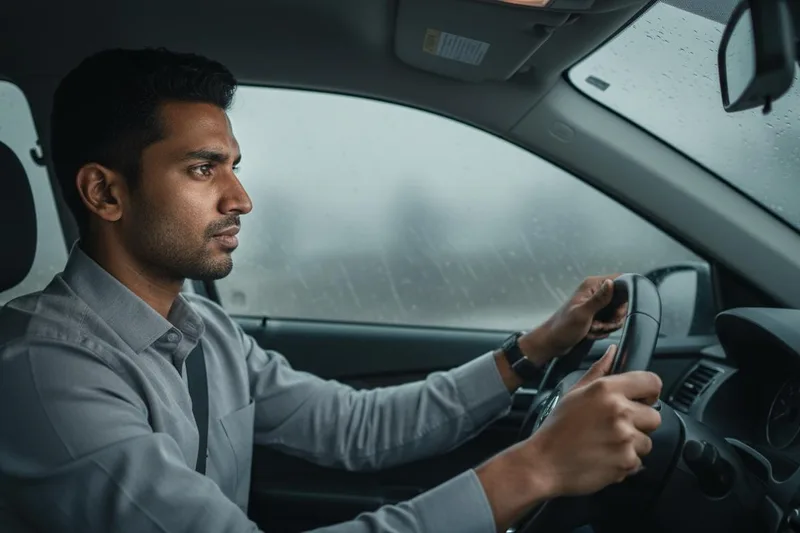
You probably know before you even get in the car, "Wow, today is going to be a tough ride." But then again, there are times when the weather suddenly turns bad when we're on the road, right? Heavy rain, fog that makes it impossible to see the road, or bright sunlight that makes your eyes water... Driving a car is not as easy as you think. Also, if you get a little nervous at a time like this, it can become a big problem. So, today, let's talk about a few things that will help you drive as safely as possible , without worrying, even in the midst of such bad weather. Think of these as advice from a family member or best friend who is lovingly giving you advice.
How is the vehicle prepared? Let's take a look at this first!
Before we talk about driving in bad weather, the most important thing to remember is to check your vehicle is in good condition before hitting the road at any time. This is similar to taking precautions before you get sick.
Imagine if you were driving in the rain and your wipers suddenly stopped working? Or if your headlights didn't come on while you were driving in fog at night? So, always be aware of these things:
- Battery: Is your vehicle's battery in good condition? If it's old, replace it on time.
- Wipers: Are the wiper blades badly worn? If they don't clear the water properly when it rains, install a new set of wiper blades. Also check if there is water in the wiper fluid tank.
- Tires: This is very important. If the tires are not properly aligned, it will be very difficult to control the vehicle on slippery roads. The tires should also be properly inflated.
- Headlights: Headlights, taillights, turn signals, brake lights - always check to make sure they are all working properly.
"Remember, having these things in place means your safety is largely assured in the event of an emergency!"
Also, don't forget to always fasten your seat belt when getting into the vehicle. It is your first line of defense.
How do you cope with difficult weather conditions?
Okay, now let's see how we can be careful in the midst of things like rain, snow (although this is rare in our country, it's good to be aware of this), slippery roads, fog, or even the harsh sun that makes our eyes blue.
1. Give full attention to driving!
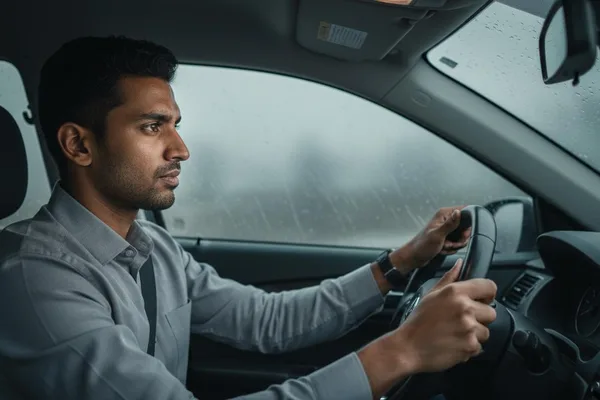
This is the most important thing. In bad weather, your full attention should be on driving.
- Keep both hands on the steering wheel.
- Keep your eyes on the road.
- Keep your mind fully focused on driving.
- Avoid using the phone, eating, changing channels on the radio, or engaging in serious discussions with other people in the vehicle during this time. Even a moment of distraction can lead to a serious accident.
2. Turn on the headlights!
If the surroundings seem a bit dark, if it's raining lightly, or if there's fog, be sure to turn on your car's headlights.
- This will help you see the road better, and other vehicles will be able to see you clearly.
- In some countries, there is a law that requires you to turn on your headlights if you use the wipers. It's a good habit.
3. Leave enough space for the vehicle in front!
This is something that many people miss. Keep more distance between your vehicle and the vehicle in front than you would normally have on a normal day.
- Imagine, if the road is slippery and you have to brake suddenly, the stopping distance of the car will be longer than on a normal day.
- Therefore, if there is more space, you will have extra time to safely park your vehicle or take other action.
4. Slow down!
This is not something to be taken lightly. If the road conditions are not good, definitely reduce your speed.
- When braking on slippery roads, the vehicle takes longer to stop.
- When you slow down, you have more time and opportunity to see and react to hazards on the road (e.g., potholes, animals crossing the road).
"Slowing down is not cowardice, it's intelligence!"
5. Be very careful near intersections!
Even if you have a green light, don't go straight when passing an intersection.
- Always look both ways. There may be other vehicles, pedestrians, cyclists, or something else you're not looking for.
- In bad weather, other drivers' visibility is reduced, so they may not see you.
6. Stay in the same lane as much as possible!
Avoid switching lanes frequently at times like this.
- Don't change lanes unless absolutely necessary. It's safest to stay in the same lane at a steady speed.
How to drive safely in snow?
Snowfall is not something we are very familiar with in Sri Lanka. But who knows, maybe you are abroad, or in high altitude areas like Nuwara Eliya in our country, there are times when the ground freezes in the morning. These tips may be important during such times as the roads can be slippery just like during this snow.
- Before driving in the snow, it's a good idea to practice in an empty parking lot. Get a feel for how to start, stop, and turn the car.
- Remember, braking and turning in snow takes longer than usual.
- Bridges and overpasses freeze before other roads, so be extra careful in those areas.
- Reduce speed significantly. Do not accelerate or brake suddenly. Do it slowly and systematically.
- Before setting off, remove all snow from the roof, lights, and mirrors of your vehicle.
- Keep the gas tank full.
- Keep a safe distance from snowplows and sand/salt trucks. Avoid passing them if possible.
Be especially careful of these things when driving in the rain!
In our country, rain is something we see all the time. So let's be a little more aware of this.
- If you are driving and it suddenly starts raining heavily and the road becomes so bad that you can't see the road, the best thing to do is to pull off the road, park in a safe place, and wait until the rain lets up. Don't panic and try to drive away.
- Do not get out of the vehicle, as there may be lightning strikes. Stay inside the vehicle.
What is `Hydroplaning`? How to avoid it?
This is very important. Hydroplaning is a condition in which a vehicle traveling at high speed loses contact with the road surface and floats on water. It is like sliding on the surface of water. This is very dangerous because it can cause complete loss of control of the vehicle.
To avoid hydroplaning:
- Always check that your tires are properly inflated and have good tread. It is difficult to remove water from worn-out tires.
- If there are standing water or running water on the road, avoid them as much as possible.
- Slow down. Go very slowly, especially on curves and turns.
In the unlikely event that your vehicle hydroplanes:
- Don't panic! Don't hit the brakes suddenly! Doing so may cause the vehicle to spin.
- Hold the steering wheel firmly and keep it straight.
- Take your foot off the accelerator. Let the vehicle slow down on its own.
- Wait until the tires feel traction again. Then slowly control the vehicle.
"If the road is flooded or there is a large puddle, do not try to cross it! Turn around and take another road. The water may be deeper than you can see, or there may be potholes you cannot see."
Safety in other weather conditions
It's not just rain and snow, there are other things that can bother us.
Sun Glare
- When the sun is strong, use the sun visor in your car.
- Also, keep a good pair of UV (Ultraviolet) protective sunglasses in your car. They provide great relief to your eyes and allow you to see the road clearly.
Fog
Fog is also very dangerous. It reduces visibility a lot.
- Definitely slow down.
- If your vehicle has fog lights, turn them on. They help you see the edges of the road.
- However, never use your headlights on high beams when there is fog. Doing so will scatter the light back into the fog, reducing your visibility even further. You should use regular headlights on low beams.
What items should you keep in your car in case of an emergency? (Emergency Kit)
As doctors, we always say, "Prevention is the best cure." Similarly, being prepared for an emergency can help minimize the damage that can occur in an accident and help you deal with it without unnecessary stress or anxiety. So, having these things in your car will give you peace of mind.
- First-aid kit: Use it in case of a minor injury or scrape.
- Phone charger: It's a good idea to have a battery in your phone in case you need to call someone in an emergency.
- Jumper cables: If the battery is dead and you can't start the vehicle.
- Flashlight and extra batteries: In case you need to see something at night.
- An ice scraper and snow brush: Although these are not very relevant in Sri Lanka, they are important for someone traveling abroad.
- A bag of sand, salt, or cat litter: To give your tires traction if you get stuck in the snow. (This is also for those traveling abroad).
- Emergency warning flares or triangles: If you have to stop your vehicle on the side of the road, warn others.
- Blankets: Wrap up in case of a sudden cold, or if someone goes into shock.
- Gloves or mittens: In cold weather.
- Bottled water and nonperishable food: In case you suddenly get stuck somewhere.
- A cup: Melt snow and get water (for cold countries).
It's wise to put all these things in one bag and keep them in the trunk of your car at all times. We never know when they might come in handy.
Finally, some things you need to remember (Take-Home Message)
Okay, so we've talked about a lot today, haven't we? Driving in bad weather is no small feat. But, with the right knowledge, preparation, and patience, we can successfully face this challenge.
Here are the main points to remember in summary:
- Before hitting the road, take care of the condition of your vehicle. Tires, lights, wipers, battery – all of these should be in good condition.
- Attention! Attention! Attention! Give your full attention to driving. Don't let anything distract you.
- Slow down. If the weather is bad, speed can be your biggest enemy.
- Keep a safe distance from the vehicle in front. This will help you if you have to stop suddenly.
- Use headlights. It's important for you to see the road, and for others to see you.
- Be aware of hydroplaning and remember how to avoid it.
- Never cross flooded roads.
- Keep an emergency kit in your vehicle to deal with emergencies.
"Remember, your life and the lives of others are very valuable. Therefore, think twice when driving in bad weather and follow these tips. Then you can reach your destination safely, without accidents."
Have a good trip! Be careful!
Driving, bad weather, safety, rain, fog, hydroplaning, emergency kit




💬 Comments (0)
No comments yet. Be the first to share your thoughts here.
Add Your Comment