
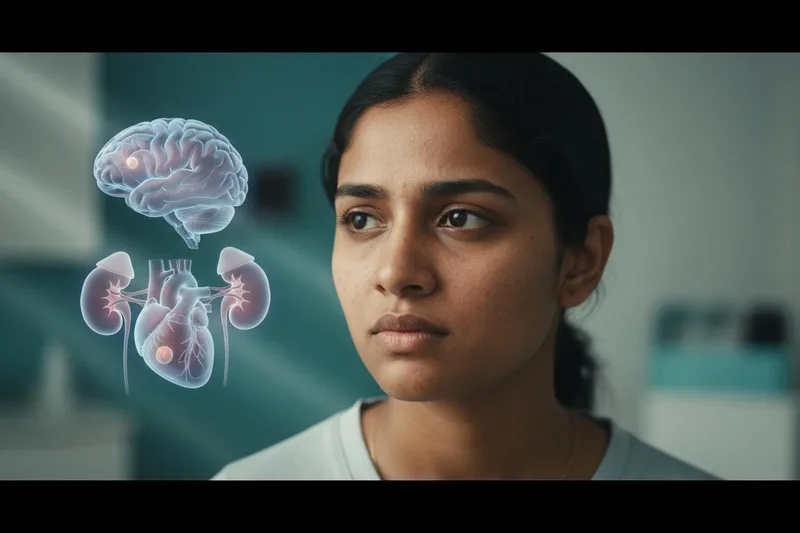
Sometimes in our lives, we hear about diseases that are unimaginable and a bit strange, don't we? Well, a disease that many people have not heard of, but is very important to know about, is Tuberous Sclerosis Complex (TSC) , or simply Tuberous Sclerosis . What happens in this is that noncancerous tumors, or tumors, develop in various parts of your body, especially in places like the brain, skin, kidneys, heart, and lungs. This is a genetic disease. But don't worry, we will talk about everything clearly and simply.
What exactly is Tuberous Sclerosis?
Simply put, tuberous sclerosis (TSC) is a rare genetic disease. It can cause noncancerous tumors to form in various parts of your body, such as your brain, skin, kidneys, heart, eyes, and lungs. It's important to remember that these tumors are not cancer . This means they are not dangerous tumors that spread from one part of the body to another. However, these tumors can cause various health problems, depending on where they occur and their size.
Some people are not affected by this condition so severely. They can live a normal life. But for some, it can be more severe and can lead to various complications. This disease develops gradually. Some symptoms may start at a young age, but others may take years to appear. Therefore, a person with this condition needs lifelong medical advice and monitoring.
Who is most affected by this condition? How common is it?
Tuberous sclerosis (TSC) is a condition that is present at birth . About half of children are diagnosed with the condition by the time they are about 7 months old. However, sometimes the symptoms are not so obvious, and it may not be diagnosed for years. Even if the condition is diagnosed in childhood, new symptoms may appear as they become adults.
This condition can affect anyone, regardless of gender, race, or ethnic group. That means there is no specific group that is susceptible to it.
Imagine how rare this is. Tuberous sclerosis (TSC) is actually a very rare disease . There are only about 50,000 people in the United States with this disease. Worldwide, there are about a million. So you can imagine how rare this condition is.
How does tuberous sclerosis (TSC) affect the body?
The main effect of tuberous sclerosis (TSC) is that cells in the body grow together into small lumps (tumors). This most often happens in the brain . In addition, you may also experience changes in your skin, especially when you are very young. In fact, these skin changes are often the first sign that someone has the disease.
Not only that, but tuberous sclerosis (TSC) can also affect your heart and kidneys. It's common for various types of lumps to form in these organs. It's less common for lumps to form in other places.
What are the symptoms? How do they manifest?
The symptoms of tuberous sclerosis (TSC) can vary greatly depending on the organ or body part affected. Symptoms can be divided into three main groups:
- Brain-related symptoms
- Skin-related symptoms
- Other internal changes in the body
Let's now look at each of these separately.
Brain-related symptoms
Brain-related symptoms occur when tumors or cortical tubers (hamartomas) form in the brain due to tuberous sclerosis (TSC). Although these tumors are not cancerous, they can cause brain damage and interfere with brain function. Some examples are:
- Subependymal giant cell astrocytoma (SEGA) : These are tumors that form on the surface of the brain, especially on the surface of the small fluid-filled cavities (ventricles) inside the brain. These can sometimes block the flow of cerebrospinal fluid, causing fluid to build up in and around the brain. This condition is called hydrocephalus .
- Cortical tubers (hamartomas) : These are noncancerous clusters of cells. These clusters of cells form inside the brain, close to where they should be, but in a somewhat chaotic manner. This is because too many cells have formed and there is not enough room for them to grow.
Often, tuberous sclerosis (TSC) can cause additional conditions, which also have related symptoms:
- Seizures : This is a very common occurrence.
- Developmental delays and mental disabilities : For example, a child may have delays in speaking, walking, etc. Learning disabilities may also occur.
- Conditions related to brain development: Conditions such as autism spectrum disorder or attention-deficit/hyperactivity disorder (ADHD) .
Although seizures and mental disorders are common with tuberous sclerosis (TSC), not everyone with the disease will have them. It is also possible to have seizures alone without mental disorders.
Skin-related symptoms
Skin symptoms are often the first sign of tuberous sclerosis (TSC). Experts say that 90% of people with the disease experience one or more of the following:
- Ash leaf spots : These are areas of the skin that are low in melanin (the pigment that gives skin its color). They look like a gray leaf. They can sometimes be difficult to see in people with light skin. These spots glow under a specific type of ultraviolet (UV) light .
- Confetti marks : These look like freckles. However, while regular freckles are darker than the surrounding skin, these confetti marks are lighter in color than the surrounding skin. These can also occur at a young age.
- Facial fibromas : These are noncancerous growths that form on the skin of the face. When they become large, or when several are close together, they can appear as large formations called "plaques." They may be darker in color than the surrounding skin.
- Fingernail and toenail fibromas : These are similar to facial fibromas, but they form around or under the fingernails of the fingers and toes. They usually appear during puberty and can grow throughout life.
- Shagreen patches : These are areas of fibrous tissue that form under the outermost layer of skin (epidermis). They usually occur on the lower back. They resemble the skin of an orange or grapefruit.
Remember, just seeing these spots or bumps on your skin doesn't necessarily mean you have tuberous sclerosis. It's important to get checked out by a doctor.
Other internal changes in the body
The tumors or cysts that occur with tuberous sclerosis (TSC) can occur in many other parts of the body. Other changes may also occur. Some of them are:
- Mouth changes : Fibromas (tumors) develop inside the mouth, and pitting of the teeth due to loss of tooth enamel. These changes in tooth enamel are seen in almost everyone with TSC. The gums can become sore and bleed due to the lumps. The pitting of the enamel can also lead to cavities.
- Kidney cysts : When these develop in the kidneys, they can interfere with kidney function. Symptoms can include pain in the back or flank, blood in the urine, and kidney stones. Sometimes, kidney failure and a type of kidney cancer called renal cell carcinoma can also occur.
- Tumors of the retina or optic nerves : These tumors can cause vision problems, but this is not common.
- Heart tumors (cardiac rhabdomyomas) : These are most serious in infants. The risk decreases with age. Larger tumors can block blood flow through the heart, but this is also uncommon.
- Lung nodules : If these become severe, they can cause difficulty breathing.
What causes tuberous sclerosis (TSC)?
Tuberous sclerosis (TSC) is a genetic disease . This means that it is caused by changes (mutations) in our DNA . Many cells in our body divide and are replaced by new cells. This process is controlled by tumor-suppressing proteins.
These proteins control the rate at which cells divide and the size of cells. Imagine what happens if these proteins are out of balance? Then, cells that are too big, too many, start to grow. When they have nowhere to go, they grow out of control and form tumors. That's what happens in tuberous sclerosis.
Is this something that comes from generations?
The genetic mutations that cause tuberous sclerosis (TSC) can occur in two forms:
- Sporadic : These are random errors that occur right after conception (that is, after a sperm and an egg have joined to form an embryo). It's like a typo in a book being printed. These are more common than inherited cases.
- Inherited : About one-third of tuberous sclerosis (TSC) patients inherit it from a parent.
How is tuberous sclerosis (TSC) diagnosed?
Experts divide the signs and symptoms of the disease into two main categories: major features and minor features . To be definitively diagnosed with tuberous sclerosis (TSC), you must have two or more major features. Because symptoms can develop over time, a doctor may classify your condition as "possible TSC" if you have only one major feature or two minor features.
Major features
- At least three ash leaf spots (each spot should be at least 5 mm wide).
- Having at least two facial fibromas or one fibroma plaque on the face/head.
- Having at least one fingernail or toenail fibroma.
- Having at least one shagreen patch.
- Having more than one retinal lesion.
- The presence of specific tissue growths within or on the surface of the brain.
- A special type of growth in the heart.
- Having a specific type of non-cancerous tumor (benign tumor) affecting the lungs, kidneys, or lymph nodes.
Minor features
- Confetti skin lesion.
- Having four or more pits in the enamel of the teeth.
- Having two or more lumps inside the mouth.
- Retinal nodules.
- Having more than one cyst in the kidneys.
- Non-cancerous lumps (benign growths) in other organs or areas.
Diagnostic tests
Because tuberous sclerosis (TSC) can cause a variety of symptoms and effects, there are many tests that can be done. These tests will vary depending on your symptoms. Your doctor can best explain what tests you need and why they are being done. Below are some of the most common tests for tuberous sclerosis (TSC). Genetic testing is the final step in confirming a TSC diagnosis and identifying the specific mutation in the TSC gene.
Tests for brain-related symptoms
If you have symptoms related to the brain, especially if you have seizures (or if there is evidence that you may be having seizures), you may be more likely to have diagnostic imaging and other tests. These scans and tests include:
- CT scan (Computed tomography - CT scan)
- MRI scan (Magnetic resonance imaging - MRI scan)
- EEG (Electroencephalogram - EEG) (This tests the electrical activity of the brain)
If a doctor suspects that you have an intellectual disability, they may recommend specific cognitive tests. These tests help identify problems with how your brain and thinking processes work. These usually include problems or tasks related to things like memory, judgment, and decision-making.
Tests for skin-related symptoms
A physical examination is very important in diagnosing tuberous sclerosis (TSC). Many of the signs and symptoms of this condition can be seen in early childhood. There are some tests that can help a doctor confirm whether you have TSC. The most common ones are:
- Wood's lamp examination : This is a non-invasive test that uses ultraviolet light to see if ash leaf spots glow.
- Skin biopsy : A small piece of skin is taken and examined.
Tests for internal changes in the body
Genetic testing is a key tool in diagnosing TSC. Between 75% and 95% of patients have a mutation in the TSC1 or TSC2 genes. It is possible to have the disease without a detectable mutation, but this is rare.
Many of the changes associated with TSC begin when a person is developing as a fetus in the womb. Doctors can sometimes detect these changes during routine prenatal care, especially during ultrasound examinations, or with CT or MRI scans done soon after birth.
What are the treatments for tuberous sclerosis (TSC)?
Tuberous sclerosis (TSC) cannot be cured completely . However, it can often be treated . Treatment options usually depend on the type of symptoms you have. The most common treatments are:
- Medications : Medications can help with many of the symptoms of TSC. Some medications can control brain-related symptoms, such as seizures. Other medications can treat symptoms caused by tumors and growths in various parts of the body.
- Surgery : In some cases, surgery is necessary to remove tumors that have formed inside the body.
- Dermatology treatments : These remove the visible parts (completely or partially) of the growths on or beneath the skin surface.
Medications
Depending on your symptoms, your doctor may also prescribe other medications. However, these often depend on many things, such as your symptoms, health history, personal needs, and preferences.
Different types of medications can help treat the symptoms of TSC. There are medications that slow, stop, or shrink the growth of tumors. Another common medication is one that prevents seizures. Seizures are one of the most common and dangerous symptoms of TSC.
Surgery
The growths that occur with TSC can sometimes cause problems, depending on where they occur. Sometimes, surgery is needed to remove growths that are causing problems for different organs or body systems. Your doctor can tell you more about the surgeries and other treatment options that are available to you.
Dermatology treatments
Many of the symptoms of TSC are visible. This can make you feel anxious, embarrassed, and embarrassed. A dermatologist can help reduce or eliminate the skin changes that come with TSC. Although these treatments are usually temporary, they can make a big difference to your mental health.
Some examples of dermatological treatments for skin symptoms associated with TSC include:
- Cryoablation ( destruction of tissue using extreme cold)
- Laser skin resurfacing (laser skin resurfacing)
- Dermabrasion or dermaplaning (scraping away the surface of the skin)
- Excision ( a minor surgery, similar to removing a birthmark)
- Skin grafts
Complications/side effects of treatment
The potential side effects or complications of TSC treatment vary greatly, especially since there are so many different symptoms and treatment options. For this reason, your doctor can best explain to you what side effects or complications you may experience. He or she can also tell you how long it will take to recover from treatment.
Can the risk of tuberous sclerosis (TSC) be reduced or prevented?
In fact, there is no way to prevent tuberous sclerosis (TSC) . If someone in your family (a parent or sibling) has TSC, genetic counseling can help you understand the risk of your child inheriting the condition and whether there are any steps you can take to reduce it. Experts often recommend this counseling.
What can you expect if you have tuberous sclerosis (TSC)?
Many people with TSC need regular imaging tests, especially MRI scans, about once or twice a year. This usually starts in early childhood and continues until about age 21. Some people need regular scans throughout their lives, either to check for new growths or to monitor existing growths.
The effects of TSC can vary greatly depending on its severity:
- Mild cases : People with mild cases may need to take medication or receive treatment regularly, but the condition does not significantly affect their lives. These people can generally expect to live the same life expectancy as people without TSC.
- Moderate cases : In moderate cases, symptoms may cause some disruption. However, with treatment and regular medical care, these effects can often be managed. These people can usually expect a normal life expectancy or a slightly shorter one.
- Severe cases : These people may have intellectual disabilities, severe epilepsy, or other problems. Some may be unable to live independently, or may require skilled medical care for most or all of their lives.
How long does tuberous sclerosis (TSC) last?
Tuberous sclerosis (TSC) is a permanent, lifelong condition .
How do I take care of myself?
If your doctor prescribes medication, you should take it exactly as prescribed. Do not stop taking the medication without talking to your doctor. Stopping it suddenly may increase the risk of your symptoms coming back or getting worse.
The other ways you should take care of yourself can vary from person to person. Many factors affect this. Your doctor is the best person to give you guidance on what you should and can do to take care of yourself and manage your condition.
When should I see the doctor?
If you have tuberous sclerosis (TSC), you will likely need to see a doctor regularly throughout your life. This allows your doctor to monitor your condition and watch for any changes. Both of these are very important to prevent serious complications that can occur with TSC.
When should I go to the Emergency Department (ETU) ?
Depending on your symptoms and where your seizures are located, there are some signs that indicate you need immediate medical attention. One of the most common of these is Status Epilepticus (SE) .
SE is when you have a seizure that lasts longer than five minutes, or two or more seizures in a row with no time to recover. SE is a life-threatening medical emergency . If you are with someone who is having a seizure and has either of these symptoms, you should call 911 (or your local emergency number) immediately.
Other symptoms that require medical attention may vary. Your doctor can best explain to you what symptoms you should look out for and what you can do if you experience or see them.
Finally, things to remember
Tuberous sclerosis complex (TSC), or tuberous sclerosis, is a rare genetic condition that causes noncancerous growths to develop in various parts of the body, especially the brain or skin.
Don't worry. With advances in modern medicine and imaging technology, this condition can often be monitored and treated as needed throughout life. Many people with TSC can live long, healthy lives.
If you have any further questions or concerns about this, be sure to talk to your doctor. They are the ones who can give you the most accurate and best advice.
` Tuberous sclerosis, genetic diseases, brain tumors, skin spots, seizures, developmental delays, treatment


💬 Comments (0)
No comments yet. Be the first to share your thoughts here.
Add Your Comment