
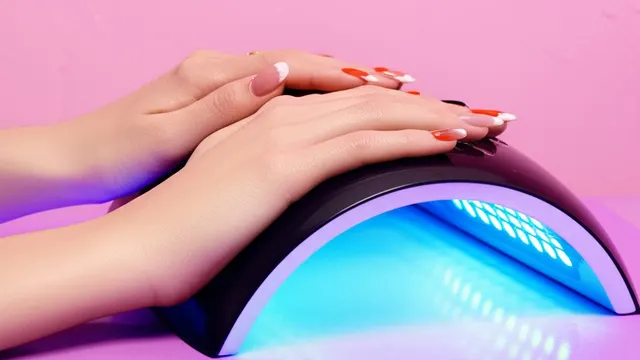
Picture this. You walk into your favorite local nail salon for a relaxing afternoon treat. You choose a gorgeous, glossy gel polish color that promises to stay chip-free for weeks. When the technician paints your nails, you slide your hands into a sleek machine that glows with a bright blue light. Within minutes, your manicure is completely dry, hard, and ready to show off.
It feels like pure magic, and it is a huge part of why gel manicures are so popular worldwide today. But have you ever paused to wonder what that mysterious blue light is actually doing to your skin? Beneath the convenience and shiny finish lies a hidden question about skin health that researchers are finally starting to answer.
Let us take a close, honest look at what modern science says about ultraviolet nail dryers. We will break down how these machines work, what recent laboratory studies found, and how you can continue enjoying your manicures safely and smartly.
Key Takeaways at a Glance
- Gel nail dryers use ultraviolet (UV-A) radiation to harden special liquid polishes into a durable finish.
- A recent laboratory study published in Nature Communications showed that UV dryer exposure can cause significant cell death and DNA damage in human cells.
- Your personal risk depends greatly on how often you visit the salon and use these machines over time.
- You do not need to give up gel nails entirely. Simple steps like applying sunscreen or wearing UV-protective gloves keep your hands safe.
- Always check your hands for new spots, moles, or skin changes, and talk to your doctor if anything looks unusual.
Know your body mass index (BMI) and weight classification
What Are UV Nail Dryers Really?
To understand the potential risks, we first need to understand what these machines emit. Nail polish dryers use ultraviolet radiation, commonly known as UV light. This is the exact same type of radiation that comes from the sun.
We all know that sunlight carries UV rays. Overexposure to natural sunlight causes sunburns, premature skin aging, and increases your risk of developing skin cancer over time. Nail dryers belong to this very same family of energy waves.
Nail salons primarily use UV-A radiation lamps to cure gel manicures. When the liquid gel polish absorbs this specific wavelength of light, a chemical reaction occurs. This reaction transforms the liquid into a tough, plastic-like shield on your fingernails.
For many years, dermatologists and scientists studied tanning beds because they also use UV-A radiation. Tanning beds carry a well-known risk of causing skin cancer. This led medical researchers to ask an important question: do ultraviolet nail dryers carry a similar hidden danger for our hands?
What Did Recent Scientific Research Discover?
A team of researchers at the University of California, San Diego, decided to investigate this question thoroughly. They published their striking findings in the prestigious scientific journal Nature Communications. Their discoveries gave beauty enthusiasts and medical professionals a lot to think about.
The researchers conducted a controlled experiment in their laboratory. They took human and mouse skin cells and placed them in petri dishes. Then, they exposed these living cells to the UV light emitted by standard commercial nail polish dryers.
The results were eye-opening and demand our attention.
- Exposing skin cells to the UV nail light for just 20 minutes in a single session killed about 30% of the cells.
- When the cells went through three consecutive 20-minute sessions, the death rate skyrocketed to between 65% and 70%.
"Our experimental results show clearly that radiation from UV nail dryers can damage human skin cells, leading to significant cell death and lasting cellular stress."
The story does not end with cell death alone. When scientists examined the cells that survived the UV light exposure, they discovered deep internal damage. Specifically, the ultraviolet radiation harmed the cell nuclei where DNA stores our genetic instructions.
The UV exposure also damaged mitochondria, which are the tiny power plants inside cells that produce energy. Also, the genetic mutations seen in these damaged cells looked very similar to the mutations found in real skin cancer patients. This finding suggests a plausible biological link between regular nail dryer use and long-term skin health risks.
Should You Panic Now? Understanding Your Real Personal Risk
Reading about cell death and DNA damage naturally causes worry. You might look at your hands and wonder if your weekly gel manicure habit is putting you in immediate danger.
Take a deep breath and let us put these findings into proper clinical perspective. Panic is not necessary, but informed caution is wise.
First, remember that this study was performed on isolated cells in a laboratory petri dish, not on living human hands in the real world. Proving exactly how much real-world risk human skin faces requires long-term epidemiological studies that track people over ten years or more.
Second, and most importantly, your personal risk depends heavily on your exposure frequency. There is a huge difference between getting gel nails once a year for a wedding and visiting the salon every two weeks for a fresh set. The more often your hands enter that UV box, the more cumulative radiation damage your skin absorbs over time.
While the risk from an occasional manicure is likely quite low, medical experts agree that we should no longer dismiss these devices as completely harmless. Taking sensible precautions is simply smart healthcare.
Practical Steps to Protect Your Hands and Skin
Does this mean you must throw away your gel polishes and never visit a nail salon again? Absolutely not. You can still enjoy beautiful manicures while protecting your skin by adopting a few smart habits.
The following table outlines practical, dermatologist-recommended steps you can take starting today:
| Protection Strategy | How to Do It Properly |
|---|---|
| Reduce Frequency | Save gel manicures for special occasions instead of getting them done every single week. Lowering your salon visits reduces your cumulative UV exposure. |
| Apply Sunscreen | Apply a broad-spectrum sunscreen with an SPF of 30 or higher to your hands about 20 minutes before your manicure appointment. |
| Wear UV Gloves | Wear special fingerless UV-protective gloves during your nail curing sessions to shield the skin on your hands from direct radiation. |
| Choose Air-Dry Polishes | If you worry about UV exposure, switch to traditional regular nail polishes that dry naturally in the air without needing any lamps. |
| Monitor Your Skin | Inspect your hands regularly for new spots, changing moles, or unusual growths. See a doctor right away if anything looks suspicious. |
If skin cancer runs in your family, or if you have very fair, sun-sensitive skin that burns easily, you should be especially cautious. Talk openly with your doctor or dermatologist about your manicure habits before booking your next salon visit.
When to See a Doctor (Emergency & Red Flag Signs)
While nail dryer exposure develops risk over many years, you should schedule an appointment with a doctor or dermatologist promptly if you notice:
- A new growth, bump, or dark spot on your hands, fingers, or nail beds that does not go away.
- An existing mole that changes in size, shape, color, or starts bleeding and itching.
- A dark stripe or discoloration under your fingernail that is not the result of an obvious physical injury.
Call emergency services (911 in the US/Canada, 999 in the UK) or go to the nearest emergency room right away if you experience sudden, severe skin reactions, widespread blistering, or signs of acute systemic allergic shock.
Key Takeaways: What You Need to Know
To help you remember the most important points from this guide, keep these core facts in mind:
- Gel nail polish dryers emit UV-A radiation, which can penetrate skin and cause cellular damage.
- Laboratory research proves that UV nail lights kill skin cells and harm vital DNA and cellular structures.
- Your personal risk increases the more often you expose your hands to these ultraviolet lamps.
- You can protect your skin easily by wearing UV-blocking gloves, applying sunscreen, and reducing salon frequency.
- Always inspect your hands and nail beds regularly, and consult your doctor if you spot any unusual skin changes.






No comments yet. Be the first to share your question or experience below.