

Hello! Does your face get oily all day long? Are you constantly dealing with annoying pimples and blackheads ? Then you have probably heard the word `(Astringent)`. Sometimes from a friend, a salon, or an advertisement. So, what is this `(Astringent)`? Is it really good for our skin? Let's talk about it in detail, very simply.
What exactly is an astringent?
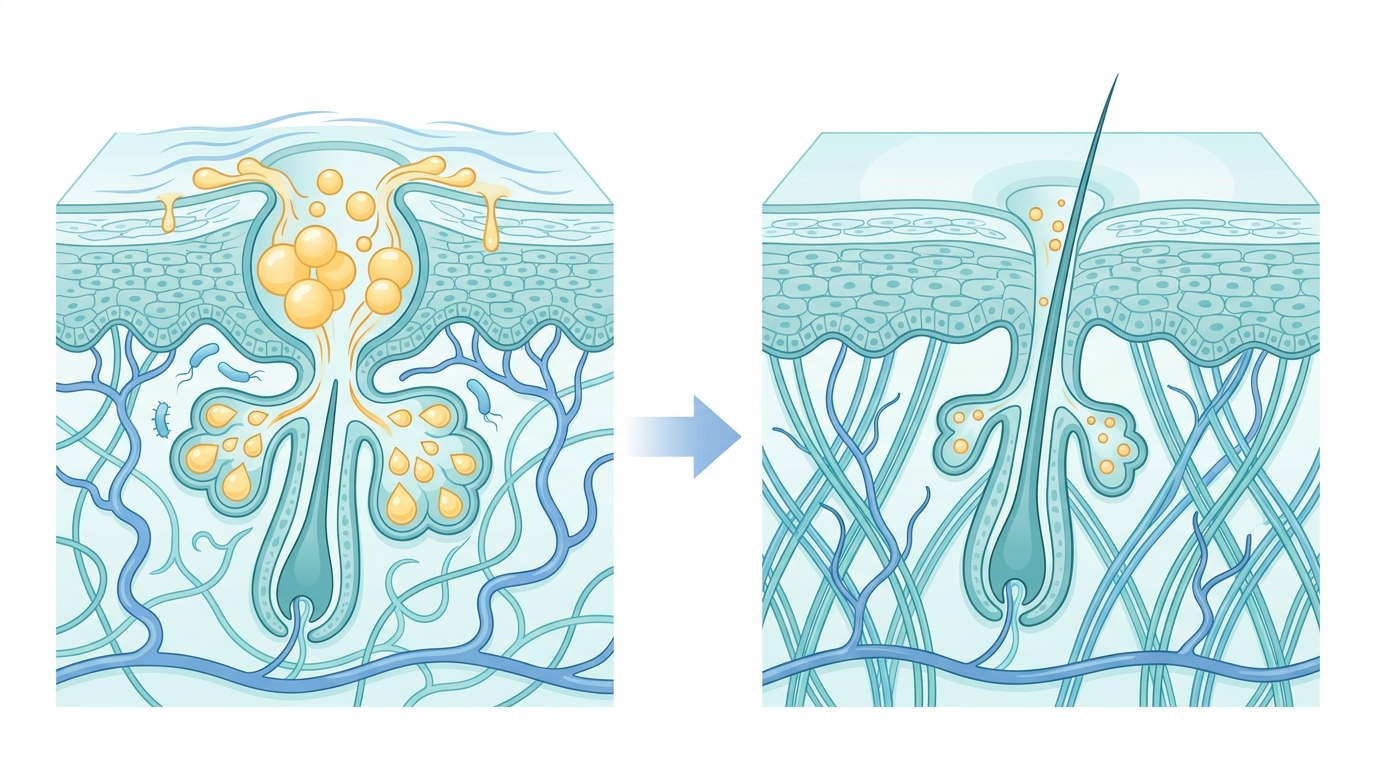
Simply put, an ``astringent`` is a liquid ointment used to cleanse the skin, especially to control excess oiliness. Think of it like something that temporarily shrinks and tightens the tiny pores on the surface of our skin. This reduces the skin's oil production a bit and helps keep the skin cleaner and clearer.
Often, people with oily skin or acne problems are advised to use an astringent. This is because excess oil, or sebum, in this skin is the main cause of acne.
How does an astringent work on our skin?
Now you're probably thinking, "Okay, this says it reduces oil on the skin, but how does that happen?" Here's how it works:
1. Temporary pore tightening: Some of the ingredients in astringents can temporarily shrink the small pores on the surface of our skin, or pores. This helps control oil production on the surface of the skin. It also gives the skin a smoother appearance.
2. Removing excess oil: One of the main functions of an astringent is to remove excess oil and dirt from the skin and cleanse it thoroughly. When you come home from a day of work outside and are covered in dust, you may be surprised to find that even after washing your face with a cleanser, you still have dirt on the cotton pad.
3. Sometimes controlling bacteria: Some astringents may contain ingredients that help control acne-causing bacteria. For example, an astringent containing salicylic acid or tea tree oil may help with this.
4. Cooling and refreshing the skin: When applied with a lot of astringent, the skin feels cool with a slight tingling sensation. This gives the skin a refreshing feel.
Important: An astringent only temporarily shrinks the pores on the skin. It cannot permanently shrink the pores. We need to understand that.
What are the benefits of using astringents?
Okay, now let's see what are the main benefits we get from using an `(Astringent)`.
- Controls oily skin : This is the main benefit. If your skin is excessively oily, an astringent can reduce the oiliness and control shine.
- Reduces acne and blackheads: By removing excess oil and dirt, pores become less clogged. This helps reduce the occurrence of acne, blackheads, and whiteheads.
- Keeping the skin clean: It helps to deeply cleanse the skin and remove dirt, dust, and makeup residue.
- Improving the appearance of the skin: As pores temporarily appear smaller and the skin becomes clearer, the skin may appear brighter and smoother.
Imagine, there is a young child named Nimali. She has `(oily skin)` and often gets pimples on her forehead and chin. Even though she uses a `(Cleanser)`, her face becomes oily again by the afternoon. Her dermatologist advises her to use an `(Astringent)` that is suitable for her skin. After a while, Nimali realizes that her skin oiliness has been controlled and the acne has also reduced. However, she uses it exactly as the doctor said.
Who is an astringent really suitable for?
This is a very important question. Astringents are not suitable for everyone. These are mainly recommended:
- For those with very oily skin: If your skin becomes oily again within an hour of washing, you may benefit from an astringent.
- For those with acne-prone skin: It can help control acne, especially those caused by oily skin.
- For those living in hot, humid climates: In such an environment, the skin can become oily and sweaty quickly. At such times, an astringent may provide relief.
But remember, it's very important to know exactly your skin type and choose an astringent that suits it.
Who should be careful when using astringents?
Astringents don't work for every skin type and every person. Some people need to be very careful when using them.
- People with dry skin: If your skin is already dry, using an astringent can make your skin even drier, more flaky, and itchy. Therefore, it is best for people with dry skin to stay away from astringents.
- People with sensitive skin: Some harsh ingredients in astringents can cause redness, irritation, and allergies in people with sensitive skin. If your skin is sensitive, consider an astringent that is alcohol-free and very gentle, orConsult a dermatologist .
- People with skin conditions such as eczema or rosacea : For people with these skin conditions, using astringents may worsen the condition. Therefore, do not use without medical advice.
What types of astringents are there?
There are many different types of astringents on the market. They differ in terms of the main ingredients they contain.
- Alcohol -based astringents: These are the most effective at removing oil. However, they can sometimes be very drying to the skin. They are not suitable for all skin types, except for very oily skin.
- Alcohol-free astringents: These are relatively mild and may be more suitable for those with sensitive skin or normal skin (if a little oily).
- Astringents containing natural ingredients:
- Witch Hazel: This is a well-known natural astringent. It helps soothe the skin and control oiliness.
- Tea Tree Oil: This is also good for acne because it has antibacterial properties. However, it is not good to apply directly to the skin, it should be used diluted or as contained in another product.
- Green Tea: Green tea is beneficial for the skin due to its antioxidants and anti-inflammatory properties.
- Some fruit extracts: For example, lemon and orange have natural astringent properties. However, you should be careful when applying these directly to the skin, as they can sometimes cause photosensitivity.
A word about DIY Astringents:
Some people use apple cider vinegar diluted with water as an astringent. Be very careful when using this. It can damage the skin if not diluted properly. Therefore, if you are not sure, it is safest to ask a dermatologist.
How do you use an astringent properly?
To get the most out of an astringent, you need to know how to use it properly.
1. First, cleanse your face thoroughly: Wash your face with a mild cleanser and gently pat dry.
2. Take a little astringent on a cotton ball: don't use a lot, just a little is enough.
3. Gently apply to skin: Gently apply to face and neck (if necessary) with a cotton pad.You should definitely avoid the area around your eyes. Also, don't rub too hard.
4. Let it dry: Apply the astringent to your skin and let it dry. There is no need to rinse it off.
5. Apply a moisturizer afterwards: Since an astringent can dry out your skin, it is important to apply a good moisturizer that suits your skin type. Those with oily skin should use an oil-free, non-comedogenic moisturizer.
6. How many times a day? Usually you can use it once or twice a day. However, if your skin feels dry, use it only once a day, or use it every other day. Always follow the instructions on the product.
When starting to use a new astringent: First, do a patch test on a small area, like the inside of your arm, for 24 hours to see if you have any allergies, redness, or itching. Only use on your face if there are no problems.
Can astringents cause side effects?
Yes, sometimes the use of `(Astringent)` can cause minor side effects. There is nothing to worry about, most of the time these can be managed.
- Dry skin: This is the most common side effect, especially when using `(alcohol-based)` `(astringent)`.
- Skin redness and itching: Some people may experience redness, itching, or burning sensation on the skin.
- Skin cracking or peeling: This can happen if it is too dry.
- Increased acne (temporarily): Sometimes, when you first start using an astringent, you may experience a temporary increase in acne due to the purging of dirt on the skin. However, if this persists, seek medical advice.
What do you do if something like this happens?
- Reduce the frequency of use of `(Astringent)` (e.g. once a day instead of twice).
- Switch to a milder, alcohol-free astringent.
- Be sure to use a good moisturizer.
- If the problem persists, stop using the astringent and see a dermatologist.
What is the difference between an astringent and a toner?
Many people confuse these two because they are used after cleansing the skin. There is a slight difference:
- Astringent: Mainly used to remove oil and tighten pores. Often contains alcohol (or none). Best for oily, acne-prone skin.
- Toner:This is much gentler. The main function is to balance the skin's `(pH balance)` after cleansing, soothe the skin, and prepare the skin for moisturizer. `(Toner)` usually has little or no `(alcohol)`. You can find a `(Toner)` for almost every skin type.
Simply put, an ``Astringent'' is something that is a little harsher than a ``Toner'' and is specifically designed to control oil. If you don't have oily skin, a ``Toner'' may be enough.
When should you seek medical advice?
Not all skin problems can be solved at home. In cases like these, it is best to see a dermatologist:
- If your acne problem is very severe and appears as painful boils.
- If there is no reduction even after using the products available in the market.
- If you have a severe allergy, inflammation, or persistent itching after using an astringent.
- If you're not sure about your skin type or the products that suit you.
A doctor can thoroughly examine your skin and advise you on the best treatments and products for you.
The most important things to keep in mind (Take-Home Message)
Okay, so we've talked a lot about `(Astringent)` now, haven't we? Finally, remember these things:
- An astringent is a product that can be especially beneficial for oily and acne-prone skin .
- They help remove excess oil from the skin, temporarily tighten pores, and keep the skin clean.
- If your skin is dry or sensitive, you should be very careful about using an astringent. You may not need an astringent at all.
- When choosing an `(Astringent)`, choose one that is gentle and suitable for your skin type. `(Alcohol-free)` ones are usually better.
- Do a patch test before using anything new.
- After applying `(Astringent)` , be sure to apply `(Moisturizer)`.
- If any problems arise, don't be afraid to stop use and seek medical advice.
Remember, beautiful, healthy skin doesn't happen overnight. It takes patience and proper skin care. Never hesitate to talk to a doctor about any concerns you may have. Wishing you healthy skin!
` Astringent, Astringent, Oily skin, Acne, Skin care, Facial cleansing, Skin protection
Doctor's Note
Astringents are liquids used to temporarily tighten pores and control excess sebum. These are mostly recommended for those with oily or acne-prone skin. Using astringents kills bacteria on the skin and removes dirt and oil. However, those with dry or sensitive skin should avoid using astringents, as the alcohol they contain can cause severe drying of the skin.
❓ Some more questions you may encounter (FAQ)
What do astringents do to the skin?▼
The pores of the skin are temporarily reduced and the skin is tightened (Tightening) and the excess oil on the surface of the skin is removed.
What is the difference between astringent and toner?▼
Astringents contain alcohol and are suitable for oily skin. Toners are more gentle and help to retain moisture in the skin (Hydration).
What should be considered when using astringent?▼
As excessive use can cause skin dryness and inflammation, it is advisable to use only once a day and follow with a moisturizer.


💬 Comments (0)
No comments yet. Be the first to share your thoughts here.
Add Your Comment