
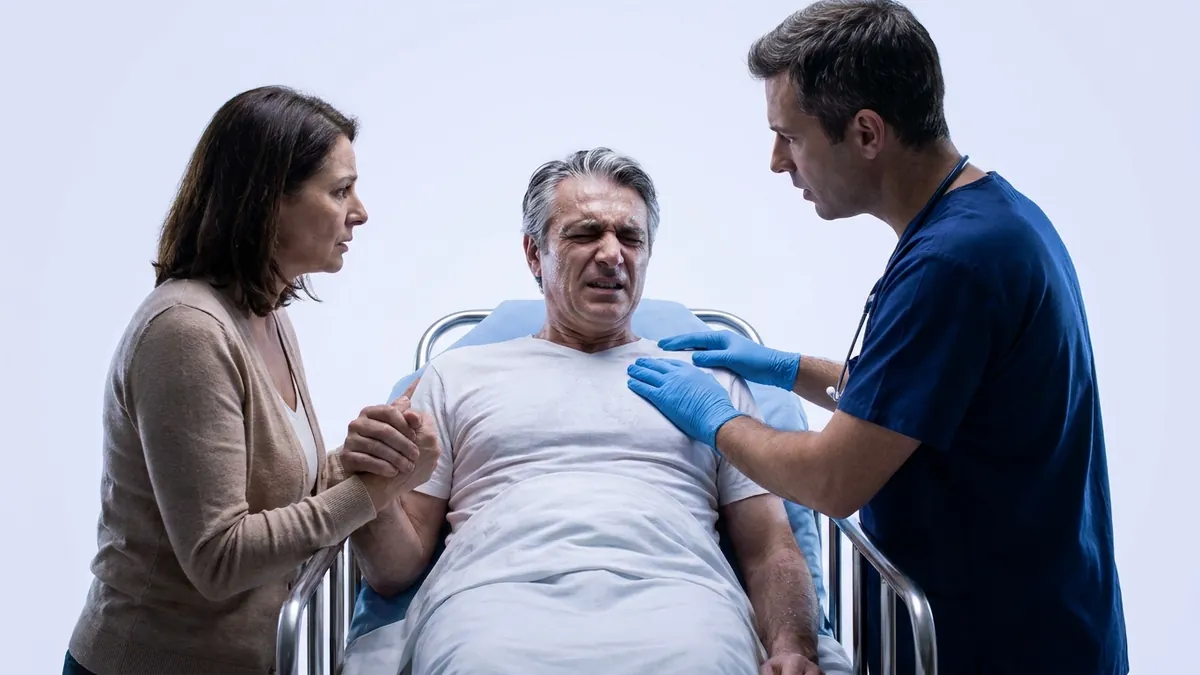
Not long ago, a 58-year-old man with type 2 diabetes came into my clinic looking pale, sweating, and barely able to sit down in the chair. He told me he had developed sudden, agonizing pain and swelling around his scrotum over the past 24 hours, along with a high fever. The very first question his frightened wife asked me was whether Fournier's gangrene contagious spread was something she could catch from sharing a bed or caring for him at home. I immediately reassured her that she could not catch this condition from him, while at the same time arranging an immediate ambulance transfer to the nearest hospital Emergency Room (ER / A&E) because every single hour counts with an infection like this.
Have you ever looked up a sudden, painful skin symptom online and felt your stomach drop when the word "gangrene" popped up? We doctors completely understand how alarming that sounds. Let's sit down together and walk through everything you need to know in plain, everyday English—from whether it can pass from person to person to the exact early warning signs that mean you need emergency medical care right away.
📌 Key Takeaways at a Glance
- It is not contagious: Fournier's gangrene does not spread from person to person through casual contact, caregiving, or sharing a household; it happens when bacteria enter deep tissues through a break in the skin or an internal infection.
- What it actually is: It is a rare, life-threatening, rapidly spreading bacterial infection of the genitals and the area between the genitals and anus (perineum), classified medically as a type of flesh-eating infection (necrotizing fasciitis).
- The hallmark early sign: Pain that feels overwhelmingly severe compared to how mild the skin looks on the outside, accompanied by sudden swelling, redness, and fever.
- Main risk factors: Uncontrolled diabetes, a weakened immune system, alcohol misuse, and occasionally certain type 2 diabetes medications (SGLT2 inhibitors).
- Every hour matters: This is a true medical emergency requiring immediate intravenous (IV) antibiotics and emergency surgery to remove damaged tissue at a hospital ER / A&E.
Is Fournier's Gangrene Contagious, and What Exactly Is It?
No, Fournier's gangrene is not contagious from person to person through everyday contact, intimate touch, or nursing care. It is a rare, rapidly progressing deep-tissue bacterial infection (necrotizing fasciitis) affecting the genitals and perineum, triggered when ordinary bacteria enter beneath the skin through a cut, abscess, or urinary tract infection.
That brings a huge sigh of relief right away, doesn't it? When people hear the word "infection," they naturally worry about passing it to a spouse or family member. In reality, the bacteria responsible for Fournier's gangrene are usually bugs that already live harmlessly on our skin, in our gut, or in our urinary tract. The problem isn't catching a "superbug" from someone else; the problem happens when those bacteria slip deep beneath the skin barrier in someone whose immune defenses are lowered.
So, what is the exact Fournier gangrene meaning? Simply put, gangrene is the medical term for the death of body tissue due to a severe bacterial infection or a complete loss of blood supply. In Fournier's gangrene, aggressive bacteria get trapped inside the connective tissue layers (fascia) of your genital region—such as the sac holding the testicles (scrotum), the penis, the vulva in women, or the area between the genitals and the rectum (the perineum).
Once inside, these bacteria release harmful toxins that clot off tiny blood vessels and rapidly destroy the soft tissues surrounding your muscles, nerves, and fat. Because it destroys the tissue lining so quickly, you will often hear it described in the news as a "flesh-eating disease" (necrotizing fasciitis). If it isn't stopped promptly at the hospital, the dead tissue can spread outward to the thighs, up across the stomach wall, and even toward the chest. Now that makes sense why we doctors treat it as a top-priority emergency, right?
How Common Is This Disease, and Is Fournier Gangrene Fatal?
After learning how fast this infection spreads, you might be wondering just how likely you or someone you love is to develop it. Here is the reassuring news: Fournier's gangrene is actually very rare. In the United States, the United Kingdom, Canada, and Australia, it affects only about 1.6 out of every 100,000 men each year. While women and children can occasionally develop the condition, men—especially men over the age of 50—are about ten times more likely to experience it.
What about the scary question so many patients type into search engines at midnight: is Fournier gangrene fatal? We doctors always believe in being honest while giving you clear perspective. Because the infection moves so quickly and can trigger life-threatening blood poisoning (sepsis) and organ failure, clinical studies show that the mortality rate ranges between 20% and 40%. Pretty sobering, right?
Think about it for a second, though—those numbers also mean that the majority of patients survive, and survival rates climb dramatically when a patient gets to the nearest hospital Emergency Room (ER / A&E) within the first few hours of symptoms starting. The biggest danger isn't that doctors don't know how to treat it; the biggest danger is that patients feel embarrassed examining or talking about pain in their private parts and wait days at home hoping it will clear up on its own.
What Are the Early and Late Signs of Fournier's Gangrene?
Have you ever wondered why some skin infections stay mild like a simple boil, while this one requires emergency surgery? It all comes down to how deep the bacteria travel. Because the damage starts underneath the surface of the skin before working its way up, early signs can easily be mistaken for a regular skin rash or urinary discomfort.
A lot of readers ask us: is Fournier's gangrene painful? Yes, intensely so! In fact, the number-one clue we doctors look for early on is "pain out of proportion to physical findings." That means the skin might only look slightly pink or swollen on the surface, yet pressing on it causes unbearable, agonizing pain. Ironically, as the infection progresses into the late stage and kills the local nerves, the sharp pain can suddenly turn into complete numbness.
To help you spot the difference between early warning clues and late, critical danger signs, look at how the symptoms evolve step by step in the comparison table below:
| Stage & Symptom Category | What Happens in Your Body & What You Should Do |
|---|---|
| Early Local Skin Signs (First 12 to 24 hours) |
Sudden redness, warmth, tenderness, or itching around the scrotum, penis, vulva, or anus, often accompanied by rapid swelling and shiny, tight skin. What you should do: Do not apply home creams or wait overnight. Go straight to an Urgent Care center or hospital ER for an immediate medical exam. |
| Severe Disproportionate Pain (Key Early Warning) |
Deep, throbbing, or burning pain in the groin or perineum that feels far worse than the mild redness visible on the outside. What you should do: Treat intense genital or perineal pain as a medical emergency and head directly to the nearest hospital Emergency Room (ER / A&E). |
| Early Whole-Body Symptoms (Systemic Flu-Like Response) |
Sudden high fever, shivering chills, extreme exhaustion, body aches, nausea, fast heart rate, or dehydration. What you should do: When fever combines with groin swelling or pain, skip your routine family GP clinic wait list and seek emergency hospital care immediately. |
| Crackling Under the Skin & Odor (Advancing Infection) |
Gas-producing bacteria create tiny air bubbles under the skin that feel like popping bubble wrap or walking on crunchy snow when touched (subcutaneous crepitus), along with foul-smelling pus or fluid. What you should do: Call an emergency ambulance right away; this indicates active gas gangrene in the deep tissues requiring immediate surgery. |
| Late Skin Color Changes & Shock (Critical Emergency Stage) |
Skin turns dusky purple, blue-gray, or bronze before turning black and peeling away with blisters, while pain may turn to numbness and blood pressure drops dangerously. What you should do: Call 911 (US/Canada), 999 (UK), or 000 (Australia) immediately for life-saving emergency resuscitation and surgical care. |
How Do You Get Gangrene Here? Causes and Bacterial Triggers
Remember how we talked earlier about how this condition isn't caught from someone else? So how do you get gangrene in such a sensitive area in the first place? In about 80% to 90% of patients, we doctors can trace the exact entry doorway where bacteria slipped past the skin or mucosal lining.
Most of the time, Fournier's gangrene is what we call a "polymicrobial infection"—meaning three or four different types of aerobic (oxygen-loving) and anaerobic (non-oxygen-loving) bacteria team up together to cause rapid tissue destruction. Common culprits include Escherichia coli (E. coli), Staphylococcus aureus, Group A Streptococcus, Pseudomonas aeruginosa, and gas-producing bacteria like Clostridium or Bacteroides.
Look at the most common ways these bacteria find a way inside the deep perineal tissues:
- Anorectal abscesses and anal fissures: Pus-filled pockets around the rectum, infected hemorrhoids, deeper bowel perforations, or untreated anal tears are the single most common starting point.
- Urinary tract and bladder infections: Severe urinary tract infections (UTIs), blocked urine flow from urethral strictures, prostate gland infections, or injuries from long-term urinary catheters.
- Minor skin cuts and friction wounds: Small razor nicks from shaving pubic hair, scratches from sexual intercourse, insect bites, genital piercings, or chafed skin creases in humid weather.
- Recent surgeries or medical procedures: Rarely, bacteria can enter following a prostate biopsy, hemorrhoid surgery, hernia repair, or circumcision.
Who Is at Higher Risk, and Can Diabetes Medication Cause It?
We rarely stop to think about how hard our immune system works every single day to keep minor skin scratches from turning into serious infections, do we? If you have a healthy immune system and good blood circulation, a tiny razor nick or mild skin boil heals up quickly. However, certain chronic health conditions make it much harder for white blood cells to fight off bacteria and much easier for small blood vessels to clog.
You are at significantly higher risk of developing Fournier's gangrene if you live with any of the following factors:
- Diabetes mellitus: This is by far the biggest risk factor. Between 20% and 70% of all patients diagnosed with Fournier's gangrene have diabetes. High blood sugar feeds bacteria while slowing down your body's infection-fighting white blood cells and damaging tiny blood vessels.
- Weakened immune system: People undergoing cancer chemotherapy, taking long-term oral steroid medications, living with HIV/AIDS, or taking anti-rejection drugs after an organ transplant.
- Alcohol misuse and liver disease: Heavy alcohol intake and liver cirrhosis severely weaken immune defenses and tissue healing.
- Obesity and poor circulation: High body weight creates warm, moist skin folds around the groin, while high blood pressure, peripheral artery disease, heart disease, kidney failure, and smoking reduce healthy oxygen flow to skin tissues.
Can SGLT2 Inhibitor Diabetes Medications Trigger Fournier's Gangrene?
If you take prescription tablets for type 2 diabetes, you might have heard safety warnings from the US Food and Drug Administration (FDA), the UK Medicines and Healthcare products Regulatory Agency (MHRA), Health Canada, or Australia's TGA about a specific class of drugs called SGLT2 inhibitors. These popular medications include canagliflozin (Invokana), dapagliflozin (Farxiga / Forxiga), empagliflozin (Jardiance), and ertugliflozin (Steglatro).
How do these tablets connect to this infection? SGLT2 inhibitors lower your blood sugar by causing your kidneys to flush extra glucose out of your body through your urine. While these medicines are fantastic for protecting your heart and kidneys, having sweet, sugar-rich urine passing over your genital skin increases the risk of yeast infections and urinary tract infections—and in very rare cases, Fournier's gangrene. Please never stop taking your prescribed diabetes or heart medication suddenly on your own! Instead, keep the area clean, talk to your Primary Care Physician (PCP) or family GP about your risk, and know what symptoms to watch for.
Doctor, How Do You Diagnose and Treat Fournier's Gangrene?
What happens the moment you arrive at the hospital Emergency Room with suspected Fournier's gangrene? First, let us reassure you that emergency doctors and urologists treat this condition with complete sensitivity and urgency. Because time is tissue, we doctors make the initial diagnosis predominantly at the bedside by listening to your history and carefully examining the skin around your groin and perineum.
If your clinical exam clearly points to Fournier's gangrene and your blood pressure or vital signs are unstable, the surgical team will rush you directly to the operating room without even waiting for imaging scans. When there is a brief window to confirm how far the infection has traveled or to rule out less dangerous conditions like testicular torsion or a simple skin abscess, hospital doctors rely on rapid tests:
- CT scan (Computed Tomography): The gold-standard imaging scan to spot deep fluid pockets and trace microscopic gas bubbles spreading along the tissue layers before they can even be felt by hand.
- Ultrasound or X-ray: Bedside ultrasound quickly checks blood flow to the testicles and looks for trapped fluid or subcutaneous gas, while plain X-rays can also highlight air pockets formed by gas-producing bacteria.
- Emergency blood tests and tissue cultures: We check your white blood cell count, inflammatory markers, blood sugar, kidney function, sodium levels, and blood lactate to check for sepsis, while taking swab samples during surgery to identify the exact bacteria.
How Is It Treated in the Hospital?
Treating Fournier's gangrene requires an aggressive, three-pronged hospital approach:
- Emergency Surgical Debridement: Within hours of arrival, surgeons take the patient to the operating room under general anesthesia to carefully cut away and remove all dead, infected tissue (debridement). Antibiotics alone cannot penetrate dead tissue because it has no blood supply. Patients frequently need two or three follow-up operations over the next few days to make sure every trace of spreading infection is completely halted.
- Broad-Spectrum Intravenous (IV) Antibiotics: Immediately upon arrival in the ER, powerful combination antibiotics and intravenous fluids are started straight into a vein to kill both oxygen-loving and non-oxygen-loving bacteria throughout the bloodstream.
- Wound Care, Hyperbaric Oxygen, and Reconstructive Surgery: Once the infection is cleared, specialized vacuum dressings (negative-pressure wound therapy) and sometimes Hyperbaric Oxygen Therapy (breathing 100% pure oxygen inside a pressurized chamber) are used to speed up tissue healing and fight leftover bacteria. Because the testicles have an independent blood supply directly from the abdomen, they are almost always spared! Later on, plastic and reconstructive surgeons can use skin grafts or tissue flaps to repair the area so you can heal comfortably.
What Practical Steps Can We Take to Prevent This?
Just like we said a moment ago, you don't need to live in constant fear of a condition this rare, especially when simple daily habits drastically cut your risk. Whether you live in a warm, humid climate like Florida or Queensland, or bundle up in heavy clothing through a Canadian or UK winter, taking care of your metabolic health and groin skin makes all the difference.
✔️ What You Should Do & ❌ What to Avoid
- ✔️ DO keep your genital and perineal skin clean and dry: Wash daily with mild, fragrance-free soap and warm water, patting dry gently with a clean towel—especially after workouts, swimming, or using the bathroom.
- ✔️ DO keep your blood sugar well controlled: If you have diabetes, work closely with your Primary Care Physician (PCP) or family GP, limit sugary sodas and ultra-processed snacks, stay active with daily walks, and check your HbA1c regularly.
- ✔️ DO inspect your groin area regularly: If you have diabetes or take an SGLT2 inhibitor, take ten seconds after your shower to check for redness, small sores, ingrown hairs, or tender bumps.
- ✔️ DO wash minor cuts or scrapes right away: If you get a small nick or chafed spot in the groin, clean it immediately with soap and water and monitor it daily for increasing redness.
- ❌ DON'T use harsh razor blades directly on delicate genital skin: Shaving right down to the skin creates tiny micro-cuts; if you groom body hair, use a clean electric trimmer with a safety guard instead.
- ❌ DON'T squeeze or pop boils and bumps around your groin or buttocks: Squeezing an abscess can push bacteria deeper into the connective tissue layers; always let a doctor drain skin abscesses safely.
- ❌ DON'T smoke or ignore rising alcohol intake: Nicotine constricts tiny blood vessels needed for skin healing, while heavy drinking blunts your immune system's early response to bacteria.
🚨 When to Seek Immediate Emergency Care (Red-Flag Symptoms)
If you or someone near you develops any of these red-flag symptoms, do not wait — call 911 (or 999 in the UK / 000 in Australia) immediately or go straight to the nearest hospital Emergency Room (ER / A&E):
- Sudden, severe, or rapidly worsening pain in the scrotum, penis, vulva, groin, or the area around the anus (perineum)—especially if the pain feels unbearable compared to how the skin looks.
- Rapidly spreading redness, warmth, tightness, or swelling in the genital or anal area accompanied by a fever, chills, or feeling faint.
- Skin in the groin or genital area turning dusky purple, blue-gray, bronze, or black, or developing fluid-filled blisters.
- A crackling, popping, or crunchy feeling under the skin when gently pressed, or foul-smelling dishwater-like fluid draining from the area.
- Sudden confusion, dizziness when standing up, racing heartbeat, or sudden numbness where severe pain used to be.
💡 Key Take-Home Message
- Fournier's gangrene is never contagious to partners or caregivers, so you never have to worry about catching it from someone you are helping.
- It is a rare medical emergency where ordinary bacteria travel deep beneath the genital or perineal skin and rapidly destroy soft tissue.
- Never let embarrassment keep you at home—going straight to the nearest hospital Emergency Room at the very first sign of severe genital pain, swelling, and fever saves both tissue and lives.
- Managing your blood sugar, quitting smoking, practicing gentle daily hygiene, and having your doctor check any persistent groin boils early are your strongest protections.






No comments yet. Be the first to share your question or experience below.