

Our bodies are truly amazing creations, aren't they? But sometimes, when we are born, there may be small changes in our body organs. Most of these are harmless and we don't even know about them for the rest of our lives. The one we are going to talk about today is `Pancreas Divisum`, a small structural change related to the pancreas that is present from birth. Don't be scared when you hear this name, let's talk about it simply.
What exactly is Pancreas Divisum?
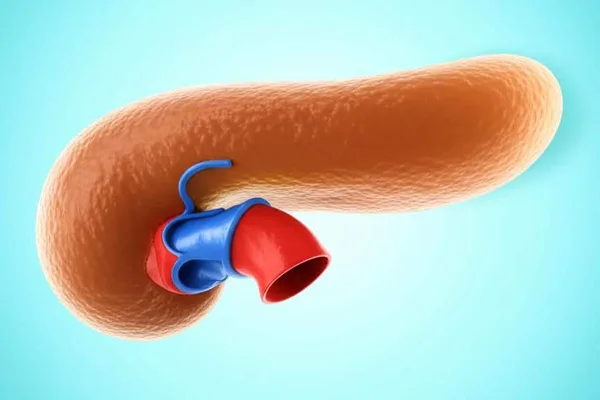
Simply put, `Pancreas Divisum` is a congenital abnormality in the structure, that is, the shape, of our pancreas. Now you may be wondering what this pancreas is. It is a very important organ located inside our abdomen, close to the stomach. Its two main functions are to produce enzymes that help digest the food we eat, and to control the sugar levels in our blood.
Imagine that when a baby is developing in its mother's womb, there are two main ducts through which pancreatic juice flows. Normally, before the baby is born, these two ducts join together to form one large, main duct.
But in someone with the condition `Pancreas Divisum`, these two ducts do not join together. They remain separate and independent.
This causes more of the digestive juices produced by the pancreas to flow through a smaller duct and opening than normal. Most of the time, this does not cause any problems . However, very rarely, there is a small chance that these ducts will become blocked and cause inflammation of the pancreas, a condition called `acute pancreatitis`.
Is this something that is passed down through generations? Should we be afraid?
Yes, this is a congenital condition, meaning it is present in the body at birth. So there may be some genetic influence. According to estimates, about 10% of the general population, or about one in every 10 people, may have this condition, `Pancreas Divisum`.
But the most important and comforting thing here is that the vast majority of these people will never experience any symptoms throughout their lives . They do not need any treatment or awareness about this.
A rare risk is pancreatitis. This is when the pancreas becomes inflamed and painful. This pancreatitis is something we need to be a little careful about. Because if it is not treated properly, it can lead to serious conditions like kidney failure. But I repeat, this does not happen to everyone with `Pancreas Divisum`. This is a very rare complication .
What are the symptoms of Pancreas Divisum?
Let me reiterate what I said earlier. Many people have no symptoms! Even if you have this condition, you will most likely not know it for the rest of your life. That is normal.
However, in the very rare case that someone develops symptoms, they may be those in the table below.
| Symptom |
|---|
| Pain in the abdomen, especially in the upper abdomen |
| Nausea |
| Vomiting |
| Recurrent acute pancreatitis |
| Chronic pancreatitis |
How does a doctor find this?
If you have symptoms such as persistent abdominal pain, your doctor may suspect Pancreas Divisum and recommend several tests to confirm the diagnosis. There are several commonly used scans for this.
| Test Name | In simple terms... |
|---|---|
| Magnetic Resonance Cholangiopancreatography (MRCP) | This is a special MRI scan. It uses a magnetic field to take clear pictures of your pancreas and the bile ducts that surround it. There is no exposure to X-rays. This is the most common and best way to find Pancreas Divisum. |
| Computed Tomography (CT scan) | A CT scan combines X-rays and computer technology to take cross-sectional images of organs inside the body. It is much more detailed than a regular X-ray. |
| Magnetic Resonance Imaging (MRI) | This is also a test that uses a magnetic field. You go inside a machine that looks like a large tube. It uses water particles in the body to create detailed pictures of the organs. |
What are the treatments for this?
Here's the most important thing: If you don't have any symptoms, Pancreas Divisum doesn't require any treatment. You can just ignore it and go about your life as normal.
However, if you continue to have symptoms such as pain and your doctors confirm that the cause is Pancreas Divisum, you may want to consider treatment options.
- ERCP treatment: The most common treatment is a procedure called Endoscopic Retrograde Cholangiopancreatography (ERCP) . In this, an endoscope, a thin tube with a camera attached, is inserted through the mouth, into the narrowed duct in the pancreas, and the opening of the duct is slightly enlarged (minor papilla sphincterotomy). Sometimes a small tube (stent) may be inserted to keep the duct open.
- Risks: However, this ERCP procedure is a bit risky. Sometimes it can cause or worsen pancreatitis. Therefore, doctors recommend this treatment only after careful consideration and if it is really necessary.
- Other surgeries: In some severe cases, other types of surgery (e.g., Puestow or Frey's procedure) may be recommended to open the pancreatic duct and allow the fluid to drain.
All of this is decided by your doctor after carefully examining your condition. So, don't just do whatever you feel like doing, always talk to your doctor before making any decisions.
How to prevent the health effects of Pancreas Divisum?
Since this is a congenital condition, we cannot prevent the occurrence of the condition called `Pancreas Divisum.` However, the best way to avoid the complications that it can cause is to maintain a healthy lifestyle .
Simply put, if you don't have symptoms, your health won't be affected. All you have to do is stay healthy.
Things you can do are:
- Eat a well-balanced diet.
- Exercise regularly.
- Limit or completely stop drinking alcohol (as alcohol increases the risk of pancreatitis).
- Most importantly, if you continue to experience any of the symptoms we discussed earlier (stomach ache, nausea), don't waste time and see a doctor.
Get the tests your doctor orders and follow the treatment he gives you exactly. Remember, the majority of people with `Pancreas Divisum` live healthy lives without any problems.
Take-Home Message
- Pancreas Divisum is a common congenital structural abnormality of the pancreas.
- The majority of people with this condition have no symptoms and do not require any treatment.
- In rare cases, if symptoms such as persistent abdominal pain and nausea occur, seek medical advice immediately.
- This can be easily diagnosed with a scan such as MRCP.
- Treatment is only needed for those with symptoms. Your doctor will decide what treatment is best for you.
- Maintaining a healthy lifestyle is the best way to prevent any complications that may arise from this condition.




💬 Comments (0)
No comments yet. Be the first to share your thoughts here.
Add Your Comment