
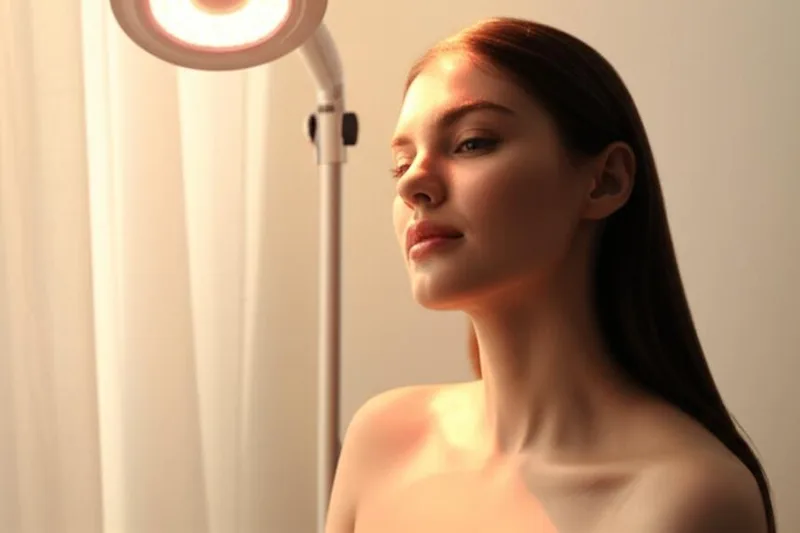
Do you remember the feeling of well-being when the morning sunlight hits your body? Just think, would you believe it if it were said that just like this sunlight, specially prepared light rays could be used to treat health problems? Yes, it is true. In medicine, we call this phototherapy or light therapy . In this, special types of light, such as ultraviolet rays, are used in a controlled manner to treat various medical conditions.
What kind of diseases is this treatment used for?
Light therapy is not limited to one disease. This treatment method is used for a wide range of health problems. Let's take a look at what they are.
| Illness/problem | A simple explanation |
|---|---|
| Skin Diseases | This is a very effective treatment for many skin diseases such as psoriasis, eczema, dermatitis, and vitiligo. |
| Skin Cancers | It is used to treat certain types of skin cancer, for example, cutaneous lymphoma. |
| Acne | It also helps control moderate to severe acne (Acne Vulgaris) conditions. |
| Jaundice in babies | You've probably seen doctors put your little baby under a blue light when he has jaundice, right? That's phototherapy. |
| Mental Health Conditions | It is also a treatment for depression, sleep problems, and especially Seasonal Affective Disorder (SAD), a type of depression that only occurs during certain times of the year. |
How does light therapy help with skin diseases?
Simply put, when these special light rays hit our skin, they trigger certain biological processes within the skin.
- Vitamin D production: This light helps the skin produce more vitamin D. Vitamin D is very important for reducing inflammation in the skin and fighting bacteria that cause skin diseases.
- Inflammation control: UVA (Ultraviolet A) and UVB (Ultraviolet B) rays can control inflammatory conditions such as itching and redness on the skin. Currently, a specific type of light called Narrowband UVB is most commonly used for conditions such as eczema.
- Treatment for jaundice: A blue-green light is used to treat jaundice in newborns. This does not contain ultraviolet rays. The reason for the yellow color of the baby's body is the accumulation of a substance called bilirubin in the blood. This blue-green light breaks down the bilirubin particles and makes them easier for the body to absorb and eliminate. That is why the baby's yellow color decreases over time.
What equipment is available for skin diseases?
You can get this treatment at a hospital, doctor's office, or clinic. Sometimes, if your doctor prescribes it, there are also portable devices that you can use at home.
- Handheld lamps (treat a small area of skin).
- Small devices that treat only the hand or foot.
- Booths that provide light to the entire body, like a standing shower.
- Devices like combs that send light through the hair, for conditions like scalp warts.
- Excimer lasers emit high-intensity UVB rays to a very small area of the skin.
You may have also heard of a treatment called PUVA . This involves light therapy with a herbal medicine called psoralens , which helps the skin absorb light better. This is used for conditions like severe psoriasis.
How does this affect mental health?
Let's talk about a condition called Seasonal Affective Disorder (SAD), in particular. This is a condition in which a person experiences mood swings and symptoms of depression at a specific time of the year (often during rainy, cold, and dark seasons). A major cause of this may be a lack of natural sunlight.
Symptoms of SAD include:
- Feeling unhappy and sad most of the day.
- Constant fatigue.
- Increased appetite, especially for sweet foods.
- Sleeping too much.
- Weight gain.
- Quick to anger.
- Feeling of heaviness in the limbs.
- In some severe cases, thoughts of disappointment about life.
Scientists are still figuring out exactly how light therapy helps with this. But what we do know is that exposure to bright light resets the "body clock" in our brain. We call this our circadian rhythm . This clock controls things like our sleep, wakefulness, and mood. This clock can get out of whack during periods of low sunlight. By providing artificial light, this clock can be set back in proper order.
What should you know when undergoing treatment?
This is not a one-time treatment. To get good results, the doctor says, you need to have several treatments according to a specific schedule .
- In the early days: Your skin may be a little red and itchy during the first few days of treatment. This is normal. If this happens, your doctor will adjust the treatment by reducing the amount of light.
- Don't make wrong substitutions:
- Be careful with other medications: If you are using other topical drugs for skin conditions, you should definitely tell your doctor about it, as some topical drugs can make your skin more sensitive to light.
- If you have a medical condition that increases your sensitivity to sunlight (e.g. Lupus, Xeroderma Pigmentosum ).
- If some medications you are taking make your body sensitive to light.
- Phototherapy is a recognized medical treatment method that uses controlled light under the supervision of a physician.
- It is successfully used for skin diseases, jaundice in newborns, and mental conditions such as SAD.
- For best results, it is essential to complete the treatment sessions according to the schedule prescribed by the doctor.
- Avoid using tanning beds or other light sources as a substitute for this without medical advice. It is very dangerous.
- If you are using other medications or cosmetics, inform your doctor before starting phototherapy.
Very important: Only use phototherapy devices prescribed by your doctor. Tanning beds, salon lights, and self-tanning are not a substitute for this. They can seriously damage your skin and increase your risk of skin cancer.
Are there any cases where this treatment should not be taken?
Yes, this treatment is not suitable for everyone. If you have the following conditions, you should avoid phototherapy.
If you have any doubts about this, the best and safest thing to do is to talk openly about it with your doctor. He or she will examine your condition and decide whether this treatment is suitable for you or not.


💬 Comments (0)
No comments yet. Be the first to share your thoughts here.
Add Your Comment