
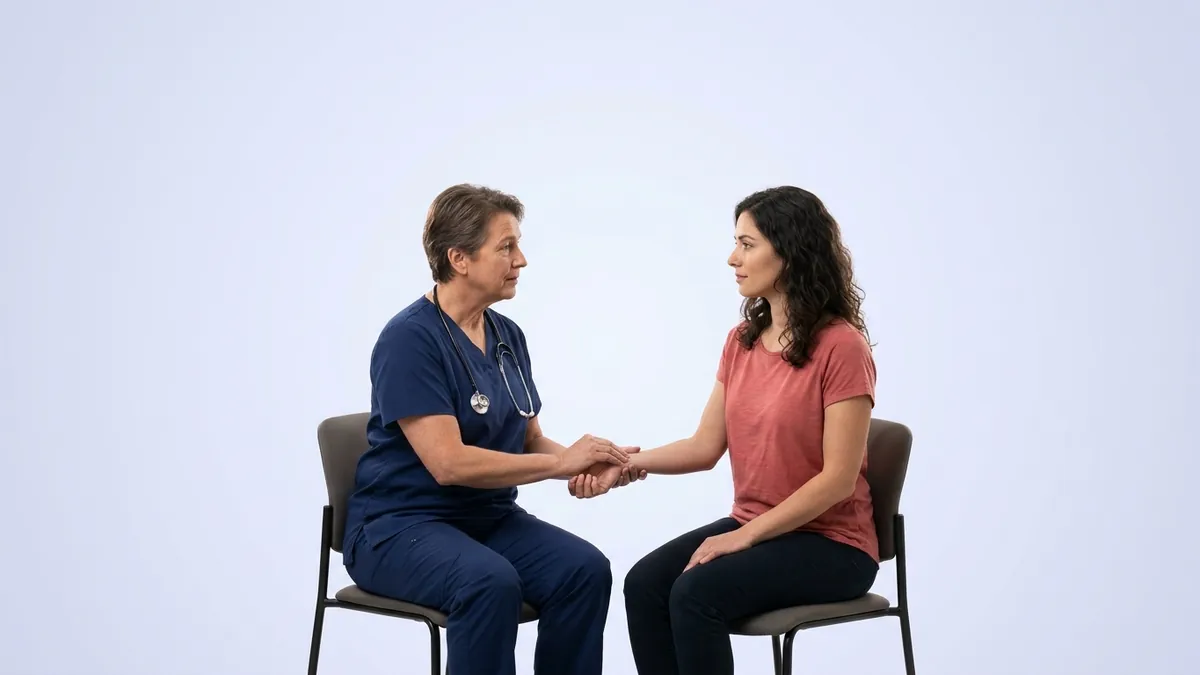
Has a doctor recently mentioned the words "Robertsonian translocation" after a routine blood test, fertility evaluation, or pregnancy loss—leaving you wondering whether you have a serious medical condition or what it means for your future children? When complex genetic terms come up during an appointment, it is completely natural for your mind to race.
Take a deep breath, because the reality is far more reassuring than the medical name sounds. Roughly 1 in 900 to 1 in 1,000 people carry a Robertsonian translocation, and the vast majority live completely healthy, everyday lives without ever realizing their chromosomes are arranged slightly differently. When we doctors look at this finding, we are not looking for an illness in you—we are simply mapping out how your genetic instructions might be passed along to a future baby.
📌 Key Takeaways at a Glance
- 45 chromosomes instead of 46: A Robertsonian translocation occurs when two specific chromosomes fuse together, reducing the total count by one without losing vital genetic instructions.
- Carriers are healthy: People with a balanced Robertsonian translocation have no physical symptoms, normal lifespans, and everyday health.
- Main impact is on family planning: Carriers have a higher chance of early miscarriage, lowered sperm count in men, or passing an unbalanced chromosome set to a baby.
- Easy to diagnose: A simple blood test called a chromosome analysis (karyotype) ordered through your Primary Care Physician (PCP) or family GP clinic confirms the diagnosis.
What Is a Robertsonian Translocation?
A Robertsonian translocation is a common, usually harmless chromosome rearrangement (balanced translocation) where two specific chromosomes fuse together into one, leaving a person with 45 chromosomes instead of the usual 46. Because almost no essential genetic material is lost during this fusion, carriers typically experience no symptoms or health problems.
In medical genetics, a "translocation" simply means that a piece of a chromosome has moved or attached itself to another chromosome. Named after the American biologist William Rees Brebner Robertson, who first described the pattern in 1916, this specific rearrangement is the most frequent structural chromosome change seen in humans.
Pretty surprising, right? Most of us grow up learning in school that every human being has exactly 46 chromosomes, so hearing that you have 45 can feel alarming at first. Yet in a balanced Robertsonian translocation, all the important genetic chapters are still right there inside your cells—two books have simply been bound together under a single cover.
Simply Put, What Are Genes and Chromosomes?
Before diving deeper into how chromosomes fuse, it helps to picture how our bodies organize genetic instructions. Imagine your body as a massive library filled with bookshelves. Every single book on those shelves holds detailed recipes that tell your body how to grow, function, and repair itself.
In medicine, those instruction books are called chromosomes, and the individual recipes printed inside them are your genes. They determine everything from your eye color, hair texture, and adult height to how your heart beats and how your immune system fights off a cold.
Normally, every cell in a healthy human body holds 46 chromosomes, arranged neatly into 23 matching pairs. You inherit one set of 23 chromosomes from your biological mother and the other set of 23 from your biological father. We rarely stop to think about how neatly all that biological information is packed inside every microscopic cell, do we?
So How Does a Robertsonian Translocation Occur?
Not every chromosome in your body can form a Robertsonian translocation. Out of your 23 pairs, five specific chromosomes—numbered 13, 14, 15, 21, and 22—have an unusual, lopsided shape. Doctors and geneticists call these acrocentric chromosomes (chromosomes with one very long arm and one tiny, stubby short arm).
Here is why that shape matters so much. Those tiny short arms contain repetitive genetic code (ribosomal RNA genes) that is already duplicated across all five acrocentric pairs. Because your body has plenty of backup copies on the remaining chromosomes, losing two of those tiny short arms does not harm your health at all.
Just think about it for a second: imagine snapping the tiny plastic caps off two pencils and gluing the two long wooden shafts together end-to-end. In a Robertsonian translocation, the tiny short arms of two acrocentric chromosomes break off and disappear, while their two long arms fuse together at the center. Your total chromosome count drops from 46 to 45, yet every vital gene remains intact.
Are There Different Types of Robertsonian Translocation?
Yes, we doctors and geneticists look at two major distinctions when reviewing a lab report: whether the rearrangement is balanced or unbalanced, and whether the two fused chromosomes come from different pairs or the exact same pair. Most commonly, fusions occur between chromosomes 13 and 14 (accounting for roughly three-quarters of all cases) or between chromosomes 14 and 21.
Look at how the main forms compare when we sit down with patients to discuss their results and next steps:
| Translocation Category | Clinical Meaning & Recommended Next Step |
|---|---|
| Balanced Non-Homologous Carrier (Two different chromosomes fused, such as 13 and 14) | You have 45 chromosomes with all essential genes present in normal amounts. You have no symptoms, and when conceiving, you can have healthy children, carrier children, or unbalanced pregnancies. What you should do: Schedule a preconception visit with your Primary Care Physician (PCP) or family GP clinic for a referral to a certified genetic counselor before trying to conceive. |
| Balanced Homologous Carrier (Two identical chromosomes fused, such as 21 and 21) | You are completely healthy with 45 chromosomes, but because both copies of that chromosome are fused together, every egg or sperm cell carries either both copies or none at all. What you should do: Speak with a clinical geneticist right away to discuss specialized reproductive options, such as donor gametes or adoption, as natural pregnancies face a very high risk of miscarriage or trisomy. |
| Unbalanced Robertsonian Translocation (Extra or missing chromosome long arm) | The person or developing baby has 46 chromosomes, including the fused chromosome plus two separate copies, resulting in three copies of a long arm (trisomy) and causing congenital health conditions. What you should do: Connect promptly with a pediatric specialist, maternal-fetal medicine doctor, or clinical genetics team for tailored medical care and family support. |
How Does a Child Inherit This Condition?
Remember how we talked earlier about passing 23 chromosomes from each parent into a new pregnancy? When one parent is a balanced Robertsonian translocation carrier, their eggs or sperm divide those fused chromosomes in several ways, leading to three main outcomes for a child:
- A completely typical chromosome set (46 chromosomes): Your baby inherits the separate, unfused chromosome from you alongside the normal chromosome from your partner. The child has 46 separate chromosomes, is completely healthy, and is not a carrier.
- A balanced carrier like you (45 chromosomes): Your baby inherits the fused chromosome from you and a single normal chromosome from your partner. Just like you, your child will grow up completely healthy with no physical symptoms, though they will carry the translocation into adulthood.
- An unbalanced chromosome set: Your baby inherits the fused chromosome plus an extra separate copy of one of those chromosomes—meaning three copies of a long arm instead of two. Depending on which chromosome is involved, this can lead to conditions such as translocation Down syndrome (an extra copy of chromosome 21) or Patau syndrome (an extra copy of chromosome 13). Conversely, if a chromosome copy is missing altogether, the pregnancy almost always ends in a very early miscarriage.
Are There Other Fertility or Pregnancy Risks?
Beyond the chromosome combinations a baby can inherit, carrying a Robertsonian translocation can affect fertility and early pregnancy in ways that catch many couples off guard. Have you ever wondered why doctors routinely check parental chromosomes after two or three unexplained pregnancy losses?
First, couples where either partner carries a Robertsonian translocation face a higher chance of early miscarriage. When a fertilized egg ends up with an unbalanced number of chromosomes, nature frequently recognizes that the genetic instructions cannot support healthy development, resulting in a miscarriage—often within the first trimester.
Second, some men who carry a balanced Robertsonian translocation experience reduced fertility or a low sperm count (oligozoospermia). During sperm production, the fused chromosome pairs up awkwardly with its two separate partner chromosomes, which can slow down cell division and lower overall sperm numbers or movement. Finally, for translocations involving chromosomes 14 or 15, there is a small chance (less than 1%) of uniparental disomy (inheriting both copies of a chromosome from just one parent), which geneticists keep in mind during prenatal screening.
How Do Doctors Recognize and Diagnose This Condition?
Because balanced carriers look, feel, and function just like anyone else, you cannot spot a Robertsonian translocation during a routine physical exam. Most people only discover they carry one when investigating recurrent miscarriages, exploring male fertility challenges, undergoing prenatal screening, or getting tested after a relative receives a diagnosis.
Fortunately, getting a clear answer is straightforward. If you have concerns, start by visiting your Primary Care Physician (PCP) or family GP clinic. We doctors will take a detailed family and pregnancy history and arrange a simple, routine blood draw called a chromosome analysis (karyotyping), often alongside a referral to a clinical geneticist or genetic counselor.
In the genetics laboratory, specialists stain the white blood cells from your blood sample and examine your chromosomes under a high-powered microscope. They count the total number (45 instead of 46) and map out exactly which two chromosomes have joined together. For carriers planning a family, specialists can also discuss options ranging from natural conception with targeted prenatal testing—such as chorionic villus sampling (CVS) or amniocentesis—to in vitro fertilization with preimplantation genetic testing (IVF with PGT-SR) to select chromosomally balanced embryos.
✔️ What You Should Do & ❌ What to Avoid
- ✔️ Do ask for a genetic counseling referral: Meet with a certified genetic counselor before or early in pregnancy so they can calculate personalized odds based on your exact chromosome numbers.
- ✔️ Do share results with close biological relatives: Because Robertsonian translocations often run silently in families, letting siblings and adult children know gives them the choice to get a simple blood karyotype test.
- ✔️ Do keep up standard preconception health habits: Take a daily prenatal vitamin containing at least 400 micrograms of folic acid, eat balanced whole foods, stay hydrated, and avoid smoking or alcohol while trying to conceive.
- ❌ Do not blame yourself or your partner: Chromosomal rearrangements happen naturally at conception or are inherited silently across generations—nothing you ate, drank, or did caused this.
- ❌ Do not rely on unverified supplements or "genetic cleanses": No diet, herbal remedy, or over-the-counter pill can un-fuse chromosomes; stick to evidence-based care from your medical team.
🚨 When to Seek Immediate Emergency Care (Red-Flag Symptoms)
If you or someone near you develops any of these red-flag symptoms, do not wait — call 911 (or 999 in the UK / 000 in Australia) immediately or go straight to the nearest hospital Emergency Room (ER / A&E):
- Heavy vaginal bleeding during pregnancy: Soaking through one or more full-sized sanitary pads per hour for two consecutive hours, or passing large blood clots.
- Severe, sharp abdominal or pelvic pain: Intense pain on one side of your lower belly or shoulder-tip pain during early pregnancy, which can be a warning sign of an ectopic pregnancy.
- Dizziness, fainting, or extreme weakness: Feeling lightheaded, pale, sweaty, or short of breath alongside pregnancy bleeding or abdominal cramps.
- High fever or chills after a pregnancy loss or procedure: A temperature above 100.4°F (38°C) or foul-smelling vaginal discharge following a miscarriage, CVS, or amniocentesis.
💡 Key Take-Home Message
- Not an illness: A balanced Robertsonian translocation means two acrocentric chromosomes (13, 14, 15, 21, or 22) have joined together, leaving 45 chromosomes without harming your personal health.
- Healthy pregnancies are very achievable: Most carriers can conceive and welcome healthy babies, especially with informed genetic counseling and modern prenatal or fertility support.
- A simple blood test gives clarity: If you have experienced recurrent miscarriages, low sperm count, or a family history of chromosomal conditions, ask your doctor about a karyotype blood test.


No comments yet. Be the first to share your question or experience below.