
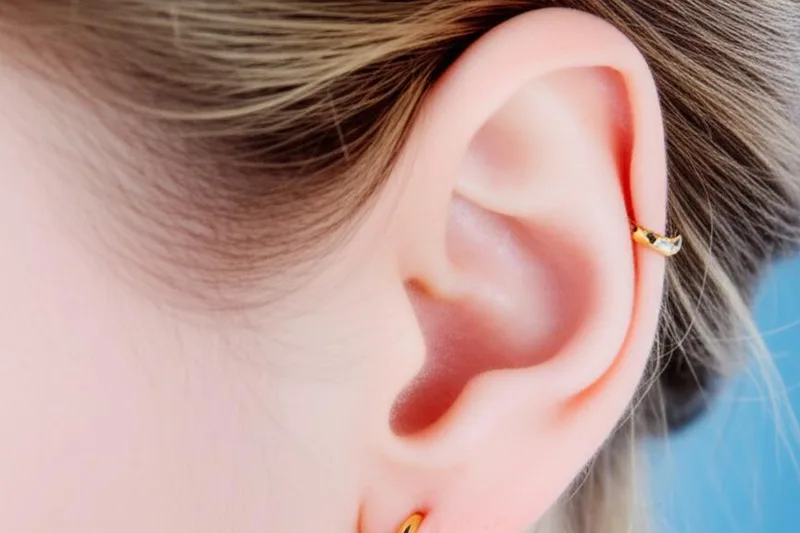
Body piercings are very popular among young people these days. Among them, the conch piercing, which is a piercing of the ear cartilage, has a special place. Maybe you have also thought about getting one. But this is not as simple as just piercing the earlobe. There are several important things to consider before and after getting this done. Let's find out more about it today.
What is a Conch Piercing?
Simply put, a conch piercing is a piercing of the cup-shaped part of your ear. This part is scientifically called the 'concha'. It is made up of two parts. The upper conch and the lower conch. As you may recall, unlike the earlobe, this part is made up of cartilage. Cartilage is a bit stronger and thicker than the soft tissue in the earlobe.
Because of this, a conch piercing is more likely to become infected than a regular earlobe piercing. It also takes longer to heal completely, so special care is definitely needed.
Are there types of conch piercings?
Yes, there are several types to choose from depending on your preference and the location of the piercing.
- Inner conch piercing: This is done in the cup-like part of the ear that goes inside, that is, close to the earlobe. Since this is located inside the ear, beautiful little studs are often used for this.
- Outer conch piercing: This is done on the flat part of the ear, between the helix and the antihelix. Many people also like to wear hoops and studs for this type of piercing.
- Double conch piercing: In this, you can get two piercings, one above and one below the inner conch, or you can get piercings on both the inner and outer conch.
How is this piercing done?
If you are going to get a piercing like this, you should definitely go to an experienced, clean, professional piercer. They usually use two methods.
- Piercing methods: Some people use a thin needle for this. Another method is a dermal punch. This involves removing a small circular section of your ear cartilage, similar to a hole punch. This method is most often used for the outer conch, because that part is a bit flatter.
- Procedure: Regardless of the method you choose, a good piercer will follow these steps:
- First, we will talk to you and confirm exactly where you want to have fun.
- Clean your ear thoroughly with a disinfectant like alcohol.
- The piercing site is marked on the skin.
- Only then is the piercing done.
- Once pierced, you will insert the sterilized jewelry of your choice.
- If there is bleeding, it will be stopped.
- Finally, the area is cleaned once again with a disinfectant.
Does a conch piercing hurt a lot?
This really varies from person to person. But to be honest, it hurts a little . You may feel a slight tingling sensation during the piercing, followed by a sharp pain and a slight throbbing sensation for a while. Since this is going through the cartilage, it hurts more than getting your earlobe pierced. But the sharp pain is only temporary. If you're worried about pain, you can ask your piercer if it's okay to numb the area with an ice pack before the piercing.
It's completely normal for your ear to be sore, bleed a little, look bruised, be red, and swell for the first few days after getting your piercing. You may also experience some itching and discoloration during the healing process. These are all part of the normal healing process.
| Common symptoms during recovery |
|---|
| - Slight bleeding. |
| - A little swelling around the puncture site. |
| - Slight change in skin color. |
| - Itching. |
| - A white-yellow liquid comes out, which dries and forms a crust (this is not pus). |
How long does it take for a conch piercing to heal?
If you've had an earlobe piercing, you probably know that it usually heals within about 6 weeks. However, a conch piercing takes much longer to heal. It can usually take anywhere from 4 months to a year to fully heal.
It is very important to note that even though the piercing may appear to be healed on the outside within a few days, the internal tissues take time to heal. Therefore, do not stop cleaning until the full healing period has passed.
Follow these steps to heal your wound quickly.
- Avoid touching the piercing frequently, rubbing it against clothing, or twisting it unnecessarily .
- Do not let your piercing come into contact with other people's bodily fluids.
- Drug use, excessive caffeine, nicotine (smoking), or alcohol use delay the healing process.
- Do not let things like body lotion, makeup, or hairspray get on the piercing.
- Do not sleep with the pierced side down. This is very important.
- Wash bed sheets and pillowcases regularly and keep them clean.
- Keep things like headphones, phones, glasses, and hats clean.
How do you properly clean a piercing?
This is the best way to prevent infection.
1. First , wash your hands thoroughly with soap .
2. To make the cleaning solution, dissolve 1/4 teaspoon of sea salt in a cup of warm water. Alternatively, you can use a mild liquid antibacterial soap diluted in half with water.
3. Never use hydrogen peroxide or alcohol. They will destroy the new cells that help the wound heal and delay healing.
4. Do not apply any ointments. They can block air circulation and cause the wound to fester.
5. Soak a clean cotton swab in the prepared solution and thoroughly wet the piercing area.
6. Slowly rotate the jewelry while it is still wet.
7. Do this twice a day.
Causes and symptoms of a piercing infection
An infection occurs when bacteria enter the wound before it heals. It is very important to recognize the causes and symptoms of an infection.
| Reason | Signs of an infection (see a doctor immediately if you have these) |
|---|---|
| Piercing with unsterilized equipment or in an unclean environment. | A yellow/green pus-like fluid is draining from the puncture site. |
| Removing jewelry before it heals. | Fever. |
| Frequent touching with dirty hands. | The skin around the puncture site becomes warm, red, and swollen. |
| Not cleaning daily. | Unbearable pain. |
| Swimming in ponds, rivers, or swimming pools. |
If you suspect you have symptoms of this type of infection, please see your doctor immediately.
What are the other risks?
- Blood-borne infections: Using dirty, unsterilized equipment can transmit serious diseases such as hepatitis B, C, or tetanus. Therefore, it is essential to get your piercing done at a trusted place.
- Keloids: Keloids are thick, raised scars that form when a wound heals, larger than a normal scar. Some people are more prone to developing them. They can appear 3-12 months after the piercing. If you are prone to keloids, it is best to avoid piercings.
- Allergic reactions: Nickel is the most common metal to cause allergies. Therefore, it is important to choose good quality, nickel-free jewelry.
How to choose the right jewelry for piercing?
It is not a good idea to put any jewelry in a newly pierced area. It is best to choose a metal that is compatible with the body, such as Surgical Steel, Titanium, Niobium, 14k or higher Gold (nickel-free), Platinum. Your piercer should be well-versed in this. It is safer to choose jewelry that has quality certifications such as ASTM or ISO.
Take-Home Message
- Before getting a conch piercing, do your research. Choose someone who is experienced, clean, and professional.
- This is not like piercing your earlobe, but rather piercing the cartilage, so it can take anywhere from 4 months to a year to heal. Be patient.
- It is essential to clean the area with salt water twice a day throughout the healing period. Never apply alcohol or ointments.
- Distinguish between normal healing symptoms (minor swelling, itching) and signs of infection (pus, fever, severe pain).
- If you have even the slightest suspicion of an infection, be sure to see your doctor.


💬 Comments (0)
No comments yet. Be the first to share your thoughts here.
Add Your Comment