
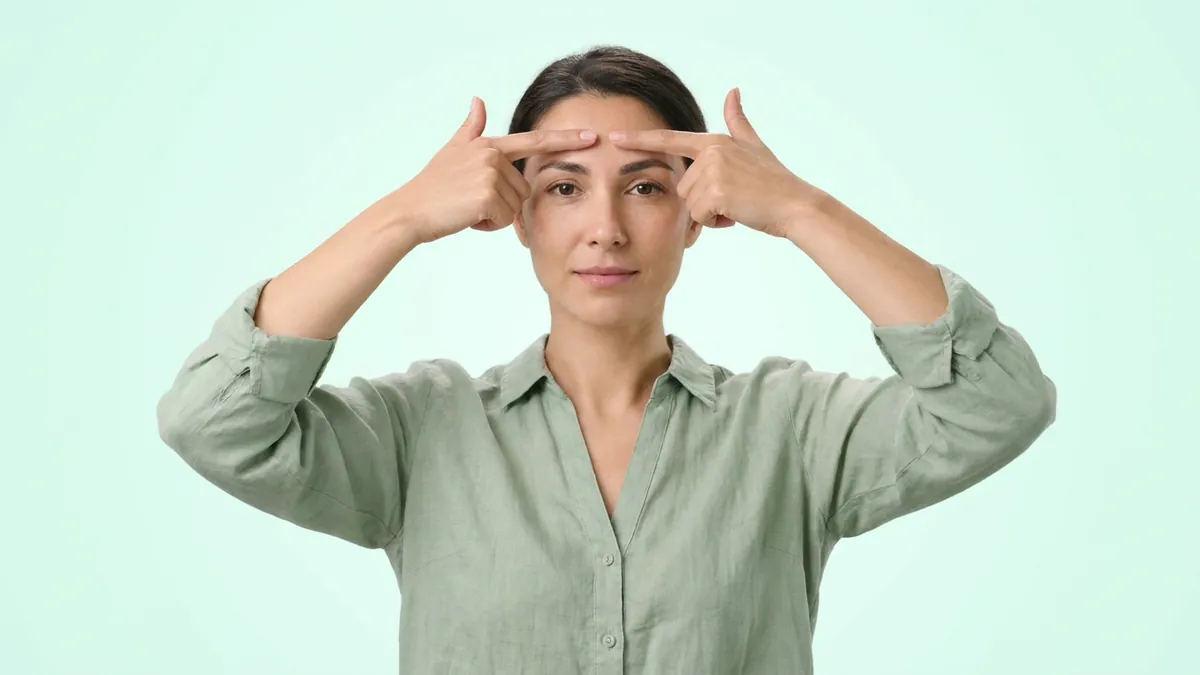
What exactly is Acupressure?
Acupressure is a traditional Chinese medicine method that is over 2000 years old. It involves using specific pressure points on our bodies to send a signal to the body. It is believed that this signal activates the body's self-healing mechanisms. Simply put, according to Chinese medicine, our body's vital energy, called 'Qi', flows through specific channels. These channels are called 'Meridians'. If this energy flow is blocked or the body's balance is disrupted in any way, we experience illness or pain. So, what Acupressure does is restore this blocked energy flow and restore balance to the body.How exactly is this treatment done?
This is something you can do yourself. All you have to do is use your fingers, press firmly on the trigger point, and massage it in a circular or up and down motion for about 3 minutes at a time. Doing this regularly can help you get long-term relief from sinus pain and prevent it from coming back. There are a few more things to keep in mind while doing this:- Apply deep, firm pressure when massaging each point.
- Sit in a comfortable position and relax.
- Do this with your eyes closed and breathing deeply.
- You can repeat this as many times as you want.
- If it's difficult for you, you can ask someone else to do this.
Where are these sinus cavities in our head?
There are four pairs of sinus cavities inside our heads. These are connected to each other by very narrow passages. Normally, these sinus cavities produce a thin type of mucus that drains down our nose. This keeps our nose clean and prevents things like bacteria from entering our nose. Normally, these cavities are filled with air. However, if those passages become blocked for any reason, these cavities fill with fluid, causing sinus congestion. The four pairs of sinus cavities in our heads are:- Maxillary sinuses – These are located under your eyes, in the cheek area.
- Ethmoidal sinuses – These are located between your eyes, above your nose.
- Frontal sinuses – These are located above your eyes, in the forehead area.
- Sphenoidal sinuses – These are located behind your eyes, inside your skull .
Key Pressure Points That Help With Sinus Problems
Here are some key pressure points that can help relieve sinus pain. The key is to find them and massage them properly.| Point | Location | Relief received |
|---|---|---|
| Large Intestine 20 (LI 20) | On either side of the nose, just above the nostrils, where the cheekbones and nose meet. | Helps with facial swelling, sinus congestion, and breathing difficulties. |
| Large Intestine 4 (LI 4) | The highest point of the flesh that emerges between the thumb and index finger of the hand when you bring them together. | Very good for headaches and jaw pain. |
| Bladder 2 (B 2) | The inner corner of the eyebrow, where the nose and eyebrow meet, is the small groove just below the bone. | Relieves facial pain and headaches in the forehead area. |
| Gallbladder 20 (GB 20) | The two grooves at the back of the skull, where the neck muscles attach to the skull. | Helps with headaches and neck pain. |
| Liver 3 (LV 3) | The point where the big toe meets the second toe, about two finger widths up the space between the big toe and the second toe. | It provides relief from conditions such as headaches and irritability. |
What does research say about this method?
Although research on acupressure is still limited, the few studies that have been done have shown promising results. For example, in a 2016 study of 25 people with allergic rhinitis, those who massaged pressure points on their hands for 30 minutes daily saw a significant reduction in their symptoms. They were also able to reduce the amount of medication they needed.Acupressure is a low-risk, inexpensive, and easy-to-use method, so it can be a good strategy for managing pain.But remember, this is just a general relief for sinus congestion and pain. If you have severe symptoms like fever, severe headache, and green/yellow mucus, it could be a bacterial infection. At such times, don't just limit yourself to these things, but definitely see your doctor and get proper treatment.
💡 Take-Home Message
- Acupressure is a safe, inexpensive way to relieve symptoms such as sinus pain and congestion.
- Press firmly on each point and massage for about 3 minutes at a time. Do this daily for best results.
- This is an adjunctive therapy that can be used in addition to regular medical treatments, not a replacement for them.
- If you have severe symptoms like fever, severe headache , or colored mucus, this alone is not enough. Definitely seek medical advice.
- You can even do this method on someone else. You can achieve better results by doing this slowly and breathing deeply.





No comments yet. Be the first to share your question or experience below.