
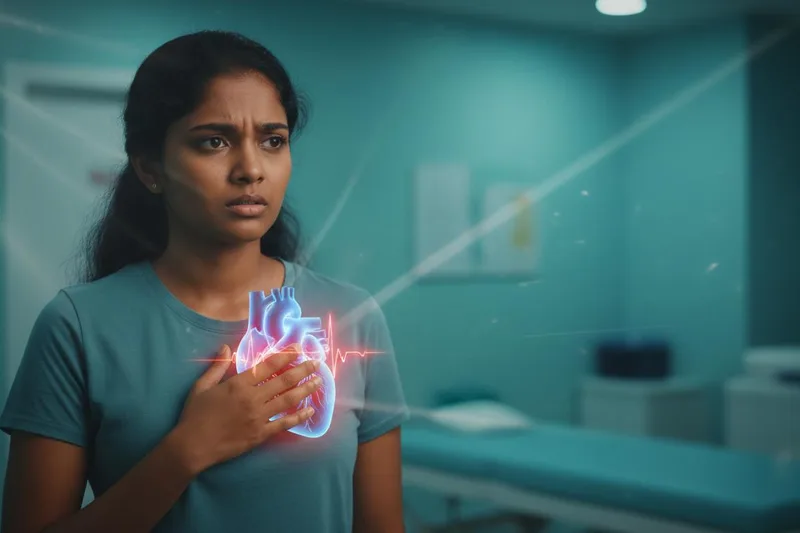
Have you ever noticed that your heart suddenly starts beating like crazy for no reason? At that time, you feel a little scared, don't you? Sometimes the cause of this can be a condition called Wolff-Parkinson-White Syndrome, which we are going to talk about today. Although the name may sound like a big deal, let's talk about it simply.
What is Wolff-Parkinson-White Syndrome?
Simply put, Wolff-Parkinson-White syndrome (WPW) is a condition caused by an extra electrical pathway in the heart that is present at birth . Our hearts beat because electrical signals travel through the heart. Normally, these signals have a specific path to take. But in people with WPW, there is a small "shortcut" in the heart in addition to this specific path.
Imagine, when you are driving on the road, if you take a small side road in addition to the main road, you can go faster. Because of this extra electrical path, the signals to the heart travel very quickly. As a result, the heart suddenly starts beating very fast. Doctors call this supraventricular tachycardia (SVT) , which means a fast heartbeat that starts in the upper parts of the heart.
When the heart beats so fast, the heart chambers don't have enough time to fill with blood before the next beat. This means the heart can't pump enough blood to the body.
How common is this WPW condition?
Wolff-Parkinson-White syndrome is actually a relatively rare condition . Worldwide, it affects approximately 1 to 3 people in 1,000. Anyone can develop WPW, and it sometimes runs in families. It is also said to be slightly more common in people of Chinese descent.
What are the symptoms?
The symptoms of WPW can vary from person to person. Most people don't have any symptoms at all . But some people may experience symptoms every day for a few seconds to a few hours. Others may experience them several times a year.
You may feel things like this:
- Just feeling uneasy and anxious .
- Feeling pain or tightness in the chest.
- Feeling like vertigo (spinal vertigo).
- Fainting .
- Feeling very tired.
- Palpitations are a sudden feeling of your heart beating faster. This can last for a few seconds or a few hours.
- Feeling short of breath (dyspnea) .
Every year, between 1% and 2% of people with WPW develop an abnormal heart rhythm, or arrhythmia .
What causes WPW?
Often, doctors have difficulty finding a specific cause for WPW . It may be that someone in your family has had the condition before, or it may develop for no apparent reason.
Is WPW hereditary?
Researchers are still not sure whether it is passed from parents to children. Most people with WPW do not have parents with the condition. However, some genes that cause WPW can be passed down through generations. This inherited condition is also called familial Wolff-Parkinson-White syndrome .
What complications can occur due to WPW?
Sometimes, people can fall and get injured when they put on the brace. Some people may experience low blood pressure when their heart beats too fast. A very rare but dangerous complication of WPW is sudden cardiac death .
If you have symptoms of WPW, see a doctor immediately. Early treatment of this condition can prevent complications.
How is WPW diagnosed?
Doctors usually diagnose WPW with an ECG (electrocardiogram) . We simply say "take a picture of the heart," and that's it. Sometimes, your doctor can see changes in your heart rate during a physical examination. If your symptoms get worse when you exercise, you may also be asked to do an exercise stress test . If your heart rate feels different, or if you have other symptoms that are related to WPW, be sure to tell your doctor.
What tests are used to diagnose WPW?
To check your heart rate, your doctor may recommend tests like these:
- Electrocardiogram (ECG): This is the most important test.
- Electrophysiology study: This is a very detailed examination of the heart's electrical activity. This is done by passing small wire-like devices into the heart.
- Holter monitor: This is a small device that is worn on your body for 24 to 48 hours. It records your heart activity throughout the entire period.
- Long-term ambulatory monitoring: Similar to a Holter monitor, but the heart rate is monitored for a longer period of time (several days or weeks).
These tests give your doctor a better idea of your heart's rate, rhythm, and whether there are any problems with the way electrical signals travel. The ECG of someone with WPW can show more obvious changes than a normal ECG.
When is WPW usually diagnosed?
Sometimes doctors diagnose WPW in infancy . However, it is most often diagnosed when you are young, between the ages of 15 and 25 , because that is when symptoms start to appear the most.
Are there other conditions associated with WPW?
Some people with WPW may also have other heart conditions. For example:
- Atrial fibrillation: A condition in which the upper chambers of the heart beat irregularly and rapidly.
- Ebstein anomaly: A congenital defect in a heart valve.
- Ventricular fibrillation (V-fib): A potentially life-threatening condition in which the lower chambers of the heart beat very rapidly and uncontrollably.
If you have several of these heart conditions, your doctor will explain to you how to manage your heart health.
How is WPW treated?
Treatment for WPW varies from person to person. If you don't have frequent symptoms, you may not need any treatment . Your symptoms may decrease or even disappear over time.
However, if you have frequent heart palpitations and are also experiencing symptoms such as dizziness and fainting, your doctor may recommend treatments such as:
- Radiofrequency ablation: This is a type of treatment called catheter ablation . In this, the extra electrical pathway in the heart is identified and a small part of it is destroyed using radio wave energy. The heart rate then returns to normal. This is a very effective treatment.
- Cardioversion: This procedure is used to stop an abnormally fast heart rate (especially in cases like SVT) and restore normal heart rhythm. This can be done by giving medication (chemical cardioversion) or by giving a small electric shock to the chest (electrical cardioversion).
- Medication: Medications may be given to control your rapid heartbeat or to keep your heart rate normal in the long term.
Does WPW require surgery?
Most people with WPW do not need surgery. However, very rarely, doctors may perform open heart surgery to block the extra electrical pathway in the heart. This type of surgery is usually done at the same time as another heart problem in addition to WPW.
How to manage WPW symptoms at home?
If you suddenly experience rapid heartbeat while you're at home, your doctor may tell you to do things like:
- Valsalva maneuver: This involves pinching your nose and blowing air out of your mouth, like trying to blow a balloon. Or, take a deep breath and hold it in while pushing your stomach in.
- Cough.
- Carotid sinus massage: Gently massage one side of the neck (where the carotid sinus is located). Only do this if your doctor tells you to.
These can sometimes help control a rapid heartbeat.
Are there any side effects/complications of the treatment?
Any medication can have side effects. Talk to your doctor about them.
Although radiofrequency ablation is a safe and effective procedure, the following can rarely occur:
- Blood clots.
- Infection.
- Stroke.
- Bleeding.
Complications from cardioversion are also very rare. Some people may develop blood clots, a small cut on the skin where the electric shock was given, or a worsening of the heart rhythm. These are very rare.
How soon will I feel better after treatment?
Things you can do at home, such as the Valsalva maneuver and coughing, may help to slow your heart rate down a bit in the moment. If you are taking medication for WPW, ask your doctor what kind of results you can expect from them.
After an ablation or surgery, your doctor will tell you how long it will take for your symptoms to improve, what to expect during your recovery, and when you can return to normal activities.
Can WPW be prevented?
No. Wolff-Parkinson-White syndrome is a condition that you are born with . There is nothing you can do to prevent it.
What happens if I have WPW?
If you have WPW, you need to work with your doctor to manage your symptoms. You need to see your doctor at regular appointments to make sure your symptoms don't get worse. Follow your doctor's instructions exactly. Tell your doctor right away if you have new symptoms or if your symptoms get worse.
What is the future outlook for people with WPW?
The life expectancy of people with WPW who receive treatment is normal . Many people can be completely cured with radiofrequency ablation or surgery.
In general, people without symptoms have a low risk of dying from sudden cardiac death. People with symptoms of tachycardia have a slightly higher risk. However, sudden cardiac death is very rare among people with WPW.
How can I take care of my health?
See your doctor regularly. Always follow your doctor's instructions. Take care of your health in this way:
- Eat healthy foods .
- Control your blood pressure .
- Do not use tobacco products.
- Avoid or limit your intake of stimulants (caffeine, some medications). Talk to your doctor about this.
- Maintain a healthy weight that suits you.
What are the best things to eat and drink when you have WPW?
Some things can make your heart beat faster. Ask your doctor about these:
- Alcohol.
- Caffeine ( found in coffee, tea, and some drinks).
- Stimulants like amphetamines or nicotine.
Can you exercise if you have WPW?
Being physically active is good for your body and mind. Ask your doctor about exercising with WPW. Talk to him about any special risks you should be aware of and what activities you can't do.
When should I see the doctor?
If you suddenly experience a rapid heartbeat that you can't control with home remedies, especially if it's accompanied by symptoms of WPW, such as dizziness, fainting, or chest pain, call your doctor immediately .
When should I go to the Emergency Department (ETU) ?
A person may need emergency treatment in a situation like this:
- If you have chest pain for more than 15 minutes.
- If you have chest pain , difficulty breathing, or stomach discomfort .
- If you are tired and don't get up .
- If the heartbeat remains abnormal after a few minutes.
What questions should I ask the doctor?
If you or your child has WPW, ask your doctor these questions:
- Is it safe to take medication for WPW with other medications I take?
- If I have WPW, will my children also have it?
- How do I know if a fast heartbeat is an emergency?
- Will my child be safe if he has a heart attack at school?
- Is it safe to play sports with Wolff-Parkinson-White syndrome?
- Do I need to have an invasive treatment like ablation?
Many parents don't expect their child to have heart disease. It can be scary when your child has a fast heart rate due to Wolff-Parkinson-White syndrome. However, treatments for this condition can help and cure many people. Ask your doctor about how you can manage your symptoms and what the best long-term solutions are for you and your child.
Take-Home Message
Wolff-Parkinson-White syndrome (WPW) is a condition caused by an extra electrical pathway in the heart that can cause the heart to beat too fast. Not everyone has symptoms, but some people may experience things like chest pain, dizziness, and fainting. Don't worry, there are good treatments for this. Sometimes, it can be completely cured with treatments like radiofrequency ablation. The most important thing is to see a doctor as soon as possible if you have these symptoms. It's also important to live a healthy lifestyle. Talk to your doctor to develop a treatment plan that works best for you.
` Wolff-Parkinson-White Syndrome, Heart palpitations, Rapid heartbeat, SVT, ECG, Heart disease, Ablation, Cardioversion, Sri Lanka Health


💬 Comments (0)
No comments yet. Be the first to share your thoughts here.
Add Your Comment