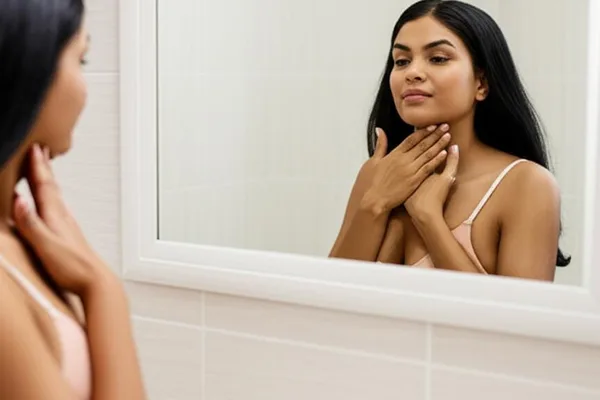
How to Check Your Breasts Yourself (Breast Self-Exam) - Shall we talk about this?

How to Check Your Breasts Yourself (Breast Self-Exam) - Shall we talk about this?
Most of the time, we take care of other parts of our body, but we don't think much about our breasts, do we? However, it is very important that we are aware of the health of our breasts. Examining your breasts yourself (that is, doing a `Breast Self-Exam`) is a good step towards that. This can help you gain a better understanding of your own breasts.

What is a Breast Self-Exam?

Simply put, breast self-examination is a way for you to examine your breasts on a regular basis. When you regularly look at your breasts and feel them, you can quickly identify any changes or if they feel more strange than usual. While many healthcare providers, that is, doctors, say that the best way to detect breast abnormalities is with a mammogram, this breast exam, which you can do at home, is the best way to get to know your breasts better.

Do I really need to do a breast self-exam?

Yes, absolutely! By doing this monthly breast self-exam, you can quickly identify changes that could be signs of infection, other breast diseases, or breast cancer . The main goal of this is to know exactly what is "normal" in your breasts. Then you will quickly recognize any changes (if any). But you should also remember this. This self-exam that you do at home is never a substitute for a breast exam or a mammogram done by your doctor. You should definitely continue to see your family doctor or gynecologist to get tested for breast cancer. Talk to your doctor about doing this breast self-exam. Then he or she can give you advice that suits you based on your health history and teach you how to do it correctly.

How often should I do this?

Many health organizations recommend that you perform a breast self-exam at least once a month . While this is not the only reliable way to detect breast cancer, it is one of the most important things you can do at home to help keep your breasts healthy. Research has shown that many people with breast cancer say that the first time they noticed something was when they felt something, such as a lump, in their breast. So, if you know what your breasts look like, you can tell your doctor as soon as you notice something different.

What day of the month is best to do this?

For those who are still menstruating, meaning they have a regular menstrual cycle, it is best to do this test the day after their period ends. For those who are postmenopausal (meaning they have stopped menstruating) and those with very irregular menstrual cycles, choose one day a month. The same day every month, a day that is easy for you to remember.Choose. For example, the first day of the month, the last day of the month, or a day with a favorite number on it. Write down the things you see and feel in a book, or put it in a `Note` on your phone.

How exactly do you do this breast self-examination?

There are several ways to perform a breast exam at home. Let's take a look at what they are.

1. How to look in front of the mirror:

This is the first method.
  • Take off your top and bottom (bra) and go in front of a mirror.
  • First, place your hands on your sides and look for any changes in the shape of your breasts, swelling, dimpling of the skin (like little dimples), or changes in the position of your nipples.
  • Next, raise your arms high above your head and look again at the same things you looked at before.
  • Finally, place your hands on your hips and press your chest muscles forward to tighten. Look at the same changes again. Is it okay to look at both breasts this way?

2. Standing hand examination method:

This is also a method that many people do.
  • Take off your top and bra.
  • You should check your left breast with your right hand and your right breast with your left hand .
  • Use the tips of your middle three fingers (the soft part underneath) to press down on each breast. Press lightly at first, then medium, then a little harder . Look for lumps , thickening, or other changes. By checking in a circular motion, you can make sure you don't miss any areas.
  • Then, squeeze the area of ​​tissue near the armpit . Don't forget to check the area under the areola. Finally, squeeze the nipple to see if any discharge comes out.
  • Examine the other side of the breast in the same way. Many people do this standing examination while bathing. They say it's easier because the skin is wet.

3. Reclining hand examination method:

When you lie down, your breast tissue is spread out more evenly. So, this is a good position to notice changes, especially if your breasts are large.
  • Lie down, place a pillow under your right shoulder. Place your right hand behind your head.
  • Now, using your left hand, press down on all the breast tissue and the armpit area with your middle fingers, just as you did before (method 2).
  • Finally, turn the pillow over and check the other breast and armpit in the same way. Check the area under the areola, the dark circle around the nipple, and squeeze the nipple to see if there is any discharge.
Remember, your breast tissue extends to your armpits, your groin area, and your upper abdomen. Breast tissue is not just about the appearance of your breasts and your nipples .

How long does this test take?

A breast self-exam only takes a few minutes. It's easy to incorporate it into your daily routine. For example:
  • Whether it's when you get dressed during the day or when you take off your clothes at night.
  • Right in the morning when you're in bed, right before you go to sleep at night.
  • During bath time.

Can breast self-examination cause problems?

This self-exam is very useful for you to be aware of the normal appearance and feel of your breasts. However, some problems can also arise. These include:
  • Self-examination is a way of thinking that breast self-examination is a substitute for a clinical breast exam or a mammogram performed by a doctor. This is a misconception. Breast self-examination is simply a tool you can use at home to familiarize yourself with your body. Some people mistakenly think that because they can do this at home, they don't need to see a doctor. That's not true.
  • It is unnecessary to worry or stress about a lump or abnormality. Most of the time, not every lump you feel is cancerous. However, thinking that it is cancerous can be a cause for concern.

What are the common lumps in the breasts?

It's normal to feel lumps in your breast tissue, and it's not a cause for concern. Some people's breasts are naturally a little lumpy. When you know what's normal for you, it's easier to distinguish and recognize anything unusual.

When should I see a doctor?

If you feel or see anything like this, see a doctor immediately:
  • A new lump in the breast tissue or a different feeling than usual.
  • Irregular or bloody discharge from the nipple.
  • Skin rash, redness, or swelling.
  • A change in the direction of the nipple, for example , inversion.
But keep in mind that things like menstruation can also change the way your breasts look and feel. A doctor can perform a breast exam and determine if diagnostic tests, such as an ultrasound or a mammogram, are needed.

What are the warning signs of breast cancer?

A breast self-exam is not a diagnostic tool for breast cancer. Only a trained doctor can determine whether a lump you feel during a self-exam is harmful. However, as you become more familiar with your breasts, it is helpful to be aware of the symptoms of breast cancer. Here are some warning signs of breast cancer:
  • Nipples sinking in or stopping protruding.
  • Redness, soreness, rash , or swelling in the breasts.
  • Dimpling or wrinkling of the breast skin (like an orange peel).
  • Irregular nipple discharge.

Is it true that breast self-examination is no longer recommended?

No, it's not. It's not that doctors don't recommend it. The truth is, doctors know that self-examination is not the most effective way to detect or screen for breast cancer. But many doctors still recommend that you do breast exams at home and become familiar with your breasts. Because it's the best way to know what's normal for you. Then, if something changes (and it does), you can tell your doctor about it.

Is self-examination better than a mammogram?

No, a breast self-exam is not a substitute for a mammogram or a breast exam performed by a doctor. Breast self-exam is just an additional tool that you can use at home between your annual mammogram or a clinical breast exam performed by a doctor. It should never be considered a substitute for a mammogram. A mammogram is still considered the gold standard for detecting breast cancer.

Finally, a few things for you to remember

Performing a monthly breast self-exam can help you maintain the health of your breasts and detect early signs of disease. You can incorporate these breast self-exam steps into your daily routine, such as when you get ready for bed at night or when you shower. With each breast self-exam, you will become more familiar with your body. When you know what is normal for you, you will be more likely to pay attention to any changes (if they occur). Then you can talk to your doctor about those changes. If you have any concerns, it is never too late to see a doctor!
Breast self-exam, breast health, women's health, breast cancer, mammogram, lumps, medical advice
⚠️ Important: The medical articles and information on Nirogi Lanka are for general awareness only, and are by no means a substitute for professional medical advice, diagnosis, or treatment. For any medical problem you have, consult a qualified physician immediately.

💬 Comments (0)

No comments have been posted yet. Add your comment here for the first time.

Add your comment

Please calculate: 7 + 5 =
How to Check Your Breasts Yourself (Breast Self-Exam) - Shall we talk about this?
Preventive HealthFebruary 12, 2026

How to Check Your Breasts Yourself (Breast Self-Exam) - Shall we talk about this?

Most of the time, we take care of other parts of our body, but we don't think much about our breasts, do we? However, it is very important that we are aware of the health of our breasts. Examining your breasts yourself (that is, doing a `Breast Self-Exam`) is a good step towards that. This can help you gain a better understanding of your own breasts.

What is a Breast Self-Exam?

Simply put, breast self-examination is a way for you to examine your breasts on a regular basis. When you regularly look at your breasts and feel them, you can quickly identify any changes or if they feel more strange than usual. While many healthcare providers, that is, doctors, say that the best way to detect breast abnormalities is with a mammogram, this breast exam, which you can do at home, is the best way to get to know your breasts better.

Do I really need to do a breast self-exam?

Yes, absolutely! By doing this monthly breast self-exam, you can quickly identify changes that could be signs of infection, other breast diseases, or breast cancer . The main goal of this is to know exactly what is "normal" in your breasts. Then you will quickly recognize any changes (if any). But you should also remember this. This self-exam that you do at home is never a substitute for a breast exam or a mammogram done by your doctor. You should definitely continue to see your family doctor or gynecologist to get tested for breast cancer. Talk to your doctor about doing this breast self-exam. Then he or she can give you advice that suits you based on your health history and teach you how to do it correctly.

How often should I do this?

Many health organizations recommend that you perform a breast self-exam at least once a month . While this is not the only reliable way to detect breast cancer, it is one of the most important things you can do at home to help keep your breasts healthy. Research has shown that many people with breast cancer say that the first time they noticed something was when they felt something, such as a lump, in their breast. So, if you know what your breasts look like, you can tell your doctor as soon as you notice something different.

What day of the month is best to do this?

For those who are still menstruating, meaning they have a regular menstrual cycle, it is best to do this test the day after their period ends. For those who are postmenopausal (meaning they have stopped menstruating) and those with very irregular menstrual cycles, choose one day a month. The same day every month, a day that is easy for you to remember.Choose. For example, the first day of the month, the last day of the month, or a day with a favorite number on it. Write down the things you see and feel in a book, or put it in a `Note` on your phone.

How exactly do you do this breast self-examination?

There are several ways to perform a breast exam at home. Let's take a look at what they are.

1. How to look in front of the mirror:

This is the first method.
  • Take off your top and bottom (bra) and go in front of a mirror.
  • First, place your hands on your sides and look for any changes in the shape of your breasts, swelling, dimpling of the skin (like little dimples), or changes in the position of your nipples.
  • Next, raise your arms high above your head and look again at the same things you looked at before.
  • Finally, place your hands on your hips and press your chest muscles forward to tighten. Look at the same changes again. Is it okay to look at both breasts this way?

2. Standing hand examination method:

This is also a method that many people do.
  • Take off your top and bra.
  • You should check your left breast with your right hand and your right breast with your left hand .
  • Use the tips of your middle three fingers (the soft part underneath) to press down on each breast. Press lightly at first, then medium, then a little harder . Look for lumps , thickening, or other changes. By checking in a circular motion, you can make sure you don't miss any areas.
  • Then, squeeze the area of ​​tissue near the armpit . Don't forget to check the area under the areola. Finally, squeeze the nipple to see if any discharge comes out.
  • Examine the other side of the breast in the same way. Many people do this standing examination while bathing. They say it's easier because the skin is wet.

3. Reclining hand examination method:

When you lie down, your breast tissue is spread out more evenly. So, this is a good position to notice changes, especially if your breasts are large.
  • Lie down, place a pillow under your right shoulder. Place your right hand behind your head.
  • Now, using your left hand, press down on all the breast tissue and the armpit area with your middle fingers, just as you did before (method 2).
  • Finally, turn the pillow over and check the other breast and armpit in the same way. Check the area under the areola, the dark circle around the nipple, and squeeze the nipple to see if there is any discharge.
Remember, your breast tissue extends to your armpits, your groin area, and your upper abdomen. Breast tissue is not just about the appearance of your breasts and your nipples .

How long does this test take?

A breast self-exam only takes a few minutes. It's easy to incorporate it into your daily routine. For example:
  • Whether it's when you get dressed during the day or when you take off your clothes at night.
  • Right in the morning when you're in bed, right before you go to sleep at night.
  • During bath time.

Can breast self-examination cause problems?

This self-exam is very useful for you to be aware of the normal appearance and feel of your breasts. However, some problems can also arise. These include:
  • Self-examination is a way of thinking that breast self-examination is a substitute for a clinical breast exam or a mammogram performed by a doctor. This is a misconception. Breast self-examination is simply a tool you can use at home to familiarize yourself with your body. Some people mistakenly think that because they can do this at home, they don't need to see a doctor. That's not true.
  • It is unnecessary to worry or stress about a lump or abnormality. Most of the time, not every lump you feel is cancerous. However, thinking that it is cancerous can be a cause for concern.

What are the common lumps in the breasts?

It's normal to feel lumps in your breast tissue, and it's not a cause for concern. Some people's breasts are naturally a little lumpy. When you know what's normal for you, it's easier to distinguish and recognize anything unusual.

When should I see a doctor?

If you feel or see anything like this, see a doctor immediately:
  • A new lump in the breast tissue or a different feeling than usual.
  • Irregular or bloody discharge from the nipple.
  • Skin rash, redness, or swelling.
  • A change in the direction of the nipple, for example , inversion.
But keep in mind that things like menstruation can also change the way your breasts look and feel. A doctor can perform a breast exam and determine if diagnostic tests, such as an ultrasound or a mammogram, are needed.

What are the warning signs of breast cancer?

A breast self-exam is not a diagnostic tool for breast cancer. Only a trained doctor can determine whether a lump you feel during a self-exam is harmful. However, as you become more familiar with your breasts, it is helpful to be aware of the symptoms of breast cancer. Here are some warning signs of breast cancer:
  • Nipples sinking in or stopping protruding.
  • Redness, soreness, rash , or swelling in the breasts.
  • Dimpling or wrinkling of the breast skin (like an orange peel).
  • Irregular nipple discharge.

Is it true that breast self-examination is no longer recommended?

No, it's not. It's not that doctors don't recommend it. The truth is, doctors know that self-examination is not the most effective way to detect or screen for breast cancer. But many doctors still recommend that you do breast exams at home and become familiar with your breasts. Because it's the best way to know what's normal for you. Then, if something changes (and it does), you can tell your doctor about it.

Is self-examination better than a mammogram?

No, a breast self-exam is not a substitute for a mammogram or a breast exam performed by a doctor. Breast self-exam is just an additional tool that you can use at home between your annual mammogram or a clinical breast exam performed by a doctor. It should never be considered a substitute for a mammogram. A mammogram is still considered the gold standard for detecting breast cancer.

Finally, a few things for you to remember

Performing a monthly breast self-exam can help you maintain the health of your breasts and detect early signs of disease. You can incorporate these breast self-exam steps into your daily routine, such as when you get ready for bed at night or when you shower. With each breast self-exam, you will become more familiar with your body. When you know what is normal for you, you will be more likely to pay attention to any changes (if they occur). Then you can talk to your doctor about those changes. If you have any concerns, it is never too late to see a doctor!
Breast self-exam, breast health, women's health, breast cancer, mammogram, lumps, medical advice
⚠️ Important: The medical articles and information on Nirogi Lanka are for general awareness only, and are by no means a substitute for professional medical advice, diagnosis, or treatment. For any medical problem you have, consult a qualified physician immediately.

💬 Comments (0)

No comments have been posted yet. Add your comment here for the first time.

Add your comment

Please calculate: 7 + 5 =