
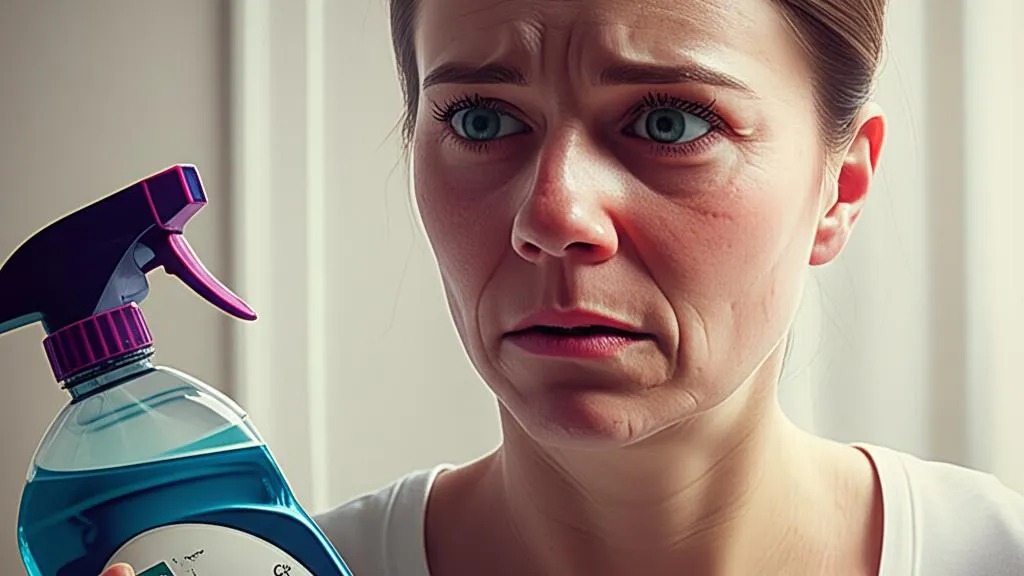
We are exposed to so many chemicals every day from the time we wake up in the morning until we go to bed at night, right? The food we eat, the water we drink, the soaps, creams, household cleaners... all of these things contain some kind of chemical. So some people wonder, 'Do these things affect our health, especially breast cancer ?' This is a big question for many people. Let's talk about this in a little more detail and simply today.
Are these chemicals really dangerous?
Simply put, no chemicals in personal care products currently on the market have been directly proven to cause breast cancer. However, some people, including researchers, wonder if there may be a risk that we haven't yet identified.
For example, there is a common myth that antiperspirants, or deodorants that reduce sweating, cause breast cancer. However, no strong medical research has found a link. A major study in 2002 almost completely debunked this myth. So there is no need to worry about it.
However, historically, there have been chemicals that have been shown to increase the risk of breast cancer . Examples include the pesticide DDT and the estrogen hormone DES (diethylstilbestrol) , which was given to pregnant women between 1938 and 1971. These have now been completely banned in countries like the United States because of their proven dangers.
Chemicals and the hormone estrogen
One of the things that has attracted the most attention from researchers these days is the ability of certain chemicals to increase estrogen levels in our bodies. Why is that important?
Our bodies, especially women's, have a hormone called estrogen. This is very important for the body to function. However, if this estrogen level increases too much, it increases the risk of developing some types of breast cancer (hormone-sensitive breast cancers) .
Now researchers have discovered that some of the chemicals we use can act like the hormone estrogen in our bodies. We call these endocrine disruptors . Like a fake key opening a door, these chemicals disrupt the delicate balance of our body's hormonal system.
"We are constantly exposed to chemicals around us. Some can damage our DNA or alter hormone levels. The risk increases little by little with each exposure."
However, none of these chemicals have been proven to directly cause breast cancer in humans, but research into this connection continues.
Factors that determine risk
Several factors determine how much a chemical will affect our bodies. Researchers are particularly concerned about these factors.
| Influencing factor | In simple terms... |
|---|---|
| Type of chemical | What kind of chemical were you exposed to? What are its short-term and long-term effects? |
| Exposure level | Did it enter the body all at once, or was it introduced gradually over time? Even small amounts can accumulate over time. |
| Exposure time | At what point in life did these enter the body? Especially the time in the womb, infancy, and puberty are very sensitive. |
| Chemical mixtures | Were you exposed to just one chemical, or a mixture of several? Sometimes, even if they are not dangerous on their own, the effects can be magnified when two or three are combined. |
| Residual time in the body | How long does that chemical stay in the body? The longer it stays in the body, the greater the effect. |
Why is it so hard to say exactly about this?
There are several reasons why it is difficult to say exactly, 100 percent accurately, about this relationship.
The main reason is that it is not possible to test these chemicals on humans . It is completely ethically wrong.
The other thing is, it can take 20, 30, or even 50 years for the effects to show up. So it's very expensive and very difficult to monitor thousands of people over that long period of time, to find out exactly what they were exposed to.
Another problem is that we are all exposed to these chemicals to some extent. So it is difficult to separate those who are exposed and those who are not.
We're not exposed to one chemical at a time. It's like little attacks coming from all directions, from the air, the water, the food, the things we use...
Chemicals of particular concern
BPA and similar things
Many people have heard of BPA , or Bisphenol A. It is used to make some types of plastic (e.g. water bottles, food containers). Research has shown that BPA can also affect the hormonal system. Even though many products now say 'BPA-Free' , sometimes another chemical (e.g. BPS or BPF) with similar effects to BPA is used instead. So the problem is the same.
Other chemicals
Parabens - preservatives, especially in cosmetics - and phthalates have also attracted the attention of researchers. These are also considered endocrine disruptors.
So what can we do?
All of this may sound scary. But don't panic or give up. While we can't completely avoid these chemicals, there are simple, practical things we can do to reduce our exposure.
- Reduce the use of plastic containers for storing food. Glass, ceramic, or stainless steel are better.
- Do not microwave food in plastic containers . The heat can leach chemicals from the plastic into the food.
- Reduce the use of pesticides in the garden and yard as much as possible.
- Reduce the use of products (lotions, soaps, air fresheners) that have added ' fragrance/perfume '. Sometimes the label does not state what chemicals are used to make these scents.
- Try using simple, natural things like vinegar, lime, and baking soda to clean your home.
"Don't worry about every little thing. Do the things you can do easily. That's a big deal."
💡 Take-Home Message
- Although there is research into whether certain chemicals in the products we use every day increase the risk of breast cancer, it has not yet been proven that products currently on the market directly cause cancer.
- There is no scientific basis for the rumors that there is a link between products such as antiperspirant and breast cancer.
- Many chemicals are suspected of being endocrine disruptors because they act like the hormone estrogen in the body.
- You may be more sensitive to chemicals at certain times in your life (in the womb, during infancy, and during puberty).
- Don't panic, you can reduce your risk by taking practical steps like reducing your use of plastic, avoiding pesticides, and using simple cleaners.
- If you have any doubts or questions, it is best to talk to your doctor .






Janiw kuna arsuwinakas jichhakamax uñt’ayatäkiti. Aka chiqanx amuyt’awim jan ukax jiskt’awim yapxatañamawa.