

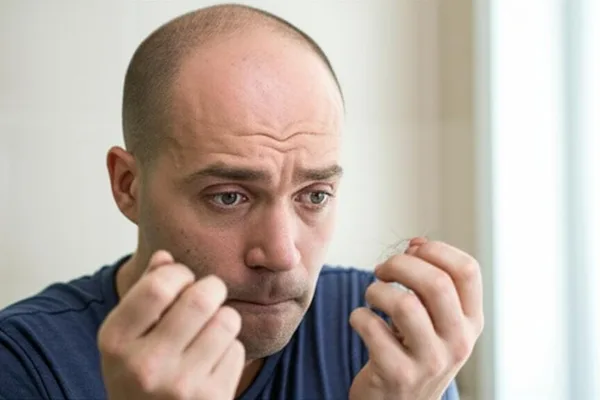
Have you ever woken up in the morning and found a lot of hair on your pillow or on your comb after taking a shower? Hair loss is a common problem that many people face. For some, even a little hair loss is a big deal. For others, even a lot of hair loss can be a big deal, even if it's balding. So what exactly is this? Let's talk about it simply, from the beginning.
First, let's see, what is this hair tree?
Simply put, hair is a type of protein that is produced by tiny follicles in our skin. We call this protein Keratin . These hairs grow almost everywhere on our bodies, except for a few places like our palms and soles. But some of them are so fine that we can't even see them.
As these hair follicles produce new cells, old cells are pushed out of the skin. The hair you see is actually a string of dead keratin cells. The average adult has between 100,000 and 150,000 hairs on their head. It's perfectly normal to lose 50 to 100 hairs a day. So there's no need to worry if you find a few hairs on your comb.
Every hair follicle has its own life cycle. This is divided into three main stages:
- Anagen phase: This is the period when the hair shaft is actively growing. This can last anywhere from two to eight years.
- Catagen Phase: This is a short, transitional phase that lasts about two to three weeks.
- Telogen phase: This is the resting phase of the hair shaft. It lasts for about two to three months. When this phase ends, the hair shaft falls out, and a new hair shaft begins to grow from the same follicle.
As you age, the rate at which this hair grows naturally slows down a bit.
Are there different types of hair loss?
Yes, hair loss can occur in many different ways. In medicine, we call this alopecia . Let's look at some of the main types.
| Hair type | Simply put... |
|---|---|
| Involutional Alopecia | This is a natural thing that happens with aging. Hair gradually thins and becomes shorter. |
| Androgenic Alopecia | This is a genetic condition. Male Pattern Baldness causes baldness on both sides of the forehead and the crown of the head. Female Pattern Baldness causes thinning of the hair all over the head, especially on the crown. |
| Alopecia Areata | It can start suddenly. The body's immune system mistakenly attacks the hair follicles. This causes bald patches to form in places. But in 90% of people, hair grows back within a few years. |
| Telogen Effluvium | After childbirth, a major illness, or extreme stress, many hair follicles suddenly go into a resting phase. This causes a lot of hair to fall out at once. But this is temporary. |
| Traction Alopecia | Hair styles that pull the hair tight (e.g., braiding, buns) can damage the hair follicles and cause permanent hair loss. |
| Scarring Alopecia | Some skin infections and conditions can cause scarring on the scalp, making it impossible for hair to grow back in those areas. |
Why is this hair falling out? What are the reasons?
Even doctors can't say for sure why some hair follicles have a shorter growth cycle than others, but there are several factors that can contribute to hair loss.
- Hormones: Hormonal imbalances, especially changes in male hormones (androgens), can cause hair loss.
- Genes: The tendency to go bald is determined by the genes inherited from the parents.
- Stress, illness, and childbirth: As we discussed earlier, these can cause temporary hair loss.
- Some medications: Cancer treatment (chemotherapy), blood thinners, and some medications for high blood pressure can cause temporary hair loss.
- Nutritional deficiencies:Not eating a balanced diet, especially when deficient in protein, iron, zinc, and certain vitamins (Vitamin A, B, C, D, E), can lead to hair loss.
- Medical conditions: Diseases such as thyroid disease, diabetes, and iron deficiency anemia can also cause hair loss.
- Harmful things to do to your hair: Frequent use of chemicals, excessive heat styling (straightening/curling), and tying your hair tightly can weaken your hair and cause it to break.
The most important thing is, if you have even the slightest suspicion about your hair loss, to see a qualified doctor to find the exact cause before trying every oil and shampoo on the market.
How do you accurately identify hair loss?
To find out what's causing your hair loss, you should first see a doctor. Here are some things you might be able to do:
- Medical history and physical examination: The doctor will ask you many questions, such as whether anyone in your family has had similar problems, what medications you take, and what your lifestyle is like.
- Scalp examination: The scalp is checked for infections, redness, and scarring. A special lens (trichoscopy) may be used to examine the condition of the hair follicles.
- Blood Tests: You may be asked to take a blood test to check things like iron levels, vitamin D, and thyroid hormones.
- Biopsy: This is not necessary in most cases. However, if there is a suspicion of scarring alopecia, a very small piece of skin can be taken from the scalp and tested.
Well, is there a treatment for this?
Yes, there are treatments in most cases! The treatment depends on the cause of your hair loss.
Medications
- There are some scalp-friendly liquids. An example is Minoxidil .
- There are pills that can be taken to treat male pattern baldness. An example is Finasteride .
- If your hair is falling out due to an immune system problem, such as alopecia areata, your doctor may recommend creams or injections containing corticosteroids.
Other treatments (Procedures)
- Hair Grafting/Transplantation: Taking hair follicles from another part of the body (often the back of the head) and replanting them in areas where there is no hair.
- Light Therapy (Low-Level Laser Therapy): Stimulating hair follicles using special light rays.
- Platelet-Rich Plasma (PRP) Therapy: Separates plasma from your own blood and injects it back into the scalp to stimulate hair growth.
- Scalp Micropigmentation: This involves using permanent tattoo-like ink to apply small dots to areas where hair is sparse, making the hair appear thicker.
Warning: Be very careful with products like "hair growth oil in 7 days" on the market. Don't be fooled by products that lack scientific evidence. Always talk to a doctor before starting any treatment.
Can't you stop hair loss?
Some types (e.g. genetic causes) are difficult to completely prevent, but there are many things we can do to minimize the damage to our hair.
- Eat a balanced diet: Eat foods that provide your body with nutrients like protein, iron, zinc, and biotin.
- Be gentle with your hair: Don't tie your hair tightly. Don't comb it too hard. Use a mild shampoo and conditioner.
- Avoid excessive heat: Reduce the use of hair straighteners and curling irons.
- Manage stress: Try to relax your mind through things like yoga and meditation.
Hair loss can be a frustrating experience. But it's not the end of the world. With the right medical advice and treatment, this condition can be largely controlled. Don't panic, and don't give up hope.
Take-Home Message
- It's normal to lose about 50-100 hairs a day. Don't worry about it.
- If your hair is falling out more than usual or if you are experiencing bald spots, see a doctor immediately.
- There are many reasons for hair loss. Genetics, hormones, nutrition, stress, and illness are among the main ones.
- If the correct cause is found, there are often effective treatments.
- Don't be fooled by the "miracle" products on the market that have no scientific basis. Don't waste your money and time.
- A balanced diet, gentle hair care, and mental well-being are very important for the health of your hair.




💬 Comments (0)
No comments have been posted yet. Add your comment here for the first time.
Add your comment