
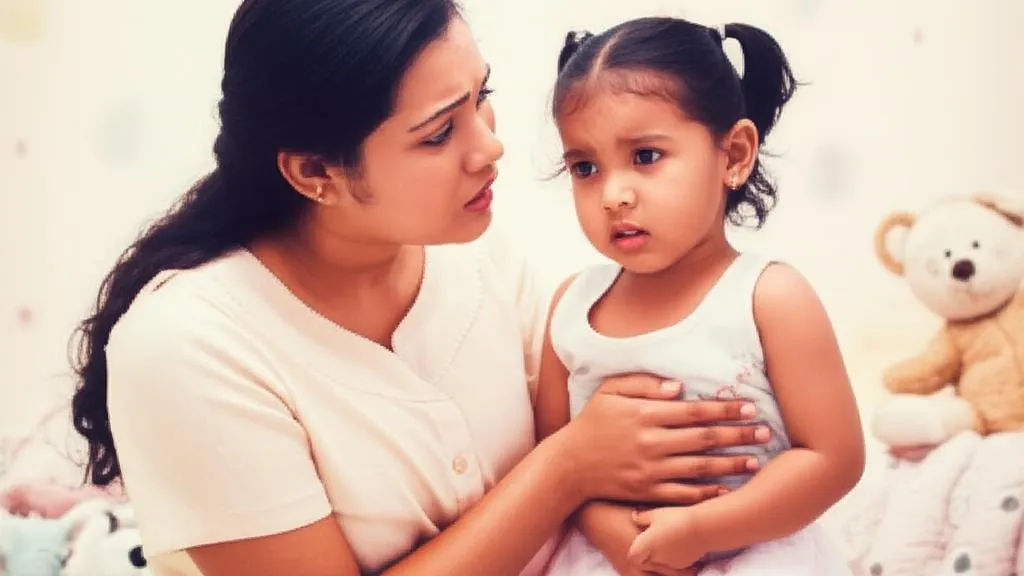
Has your child ever come out of the toilet crying and saying, "Mommy, it hurts when I go to the toilet"? Most of the time, this can be due to constipation. This is actually a very common problem among young children. So don't worry, let's talk about this in detail.
Sapa uru fibra manq’aña munata jakhthapiña. Edad, chacha warmi, k’umaräñ amtanakarjama sapa mayni iwxt’awinak katuqañamawa.
How do you know if a baby is constipated?
In addition to a child having pain when defecating, there are several other signs that can help you determine if they are constipated. Let's take a look at what they are.
| Symptom | Simply put... |
|---|---|
| Decreased frequency of bowel movements | Having fewer than three bowel movements per week. Stools that are very hard, dry, and lumpy. |
| Stomach pain and bloating | If the child constantly says "stomach hurts" or holds his stomach. |
| Blood in the stool | A few drops of blood may come out due to minor abrasions in the anus when passing hard stools. |
| Soiling of underwear | This is a very important feature. Let's talk about this a little more. |
Sometimes, you might think that a child with constipation has diarrhea. It's a little confusing, isn't it? Here's what's happening. A large, hard stool is stuck in the child's rectum. Then, a little watery stool leaks out from around the stuck stool. As a parent, you might think that this is diarrhea, but the underlying problem is actually constipation.
Why do young children get constipation?
There can be several reasons why a child may have constipation.
- Withholding stool:This is the most common reason. Even though the child needs to defecate, they try to hold it in. This could be because of pressure to become toilet trained. Or it could be because they don't want to use the toilet in a place like school. It could also be because they had pain while defecating the previous day, and they are afraid of the pain.
This is like a vicious cycle. Once it hurts, the baby is afraid to go to the toilet the next time. Because of fear, they hold in more stool. Then the stool becomes even drier, harder, and hurts even more the next time. We need to help break this cycle.
- Low-fiber diet and insufficient fluid intake: This is especially common in young children transitioning from formula to cow's milk and solid foods. As the fiber content of the diet decreases and the amount of water consumed decreases, the stools become dry and hard.
- Side effects of some medications: Constipation can also be a side effect of some medications that a child takes for other medical conditions.
What can be done for constipation? Let's look at 3 main treatments
Often, the best results are achieved when all three of these treatments are combined.
1. A diet high in fiber and plenty of fluids
This is the most important thing. Add more fresh fruits (like watermelon, bananas, mangoes), vegetables (sweet potatoes, pumpkin, carrots), high-fiber grains (brown rice, oats), whole grain bread , and legumes (chickpeas, lentils, green beans) to your child's diet. Foods that contain probiotics, like yogurt, are also very good for digestive health.
Very important: It is essential to give your child plenty of water to drink while giving them fibrous foods. Otherwise, the problem may worsen. Make sure your child drinks plenty of water throughout the day. Limit sugary drinks as much as possible.
2. Stool Softeners
In some cases, dietary changes alone may not be enough. Especially in cases of long-term constipation, your doctor may prescribe a stool softener to help cleanse your intestines and soften your stool. These are usually safe for children.
But there are two mistakes parents make here:
1. Not giving the correct dosage: Giving less than the prescribed amount of medicine instead of the exact amount prescribed by the doctor.
2. Stopping the medication too soon:Once the child has had a normal bowel movement, they stop taking the medicine thinking, "That's it." If they stop, the problem will start all over again in a few days. Some children may have to take these medicines for several weeks.
Therefore, it is extremely important to follow your doctor's instructions exactly. Do not start, stop, or change the dosage of your medication without first consulting your doctor.
3. Getting used to going to the toilet at a specific time
Encourage your child to go to the toilet first thing in the morning and after main meals. During these times, bowel movements are naturally increased, making stool more likely to pass.
Especially with a young child, it can be more effective to say, "It's time to go to the toilet now," rather than asking, "Do you want to go to the toilet?" Let them sit on the toilet for about 5-10 minutes. Don't force it, but make it a daily habit.
You will get the best results when you follow all three of these treatments together. It can be difficult to cure severe constipation by changing your diet alone. Also, if you go back to your old low-fiber diet after medication has resolved the problem, the problem may recur.
💡 Take-Home Message
- Constipation is a very common condition among children. So don't worry too much about it, it can be cured.
- Watch for symptoms such as pain during bowel movements, hard, dry stools, stomach cramps, and staining of underwear.
- Give your child plenty of fiber-rich foods (fruits, vegetables, whole grains) and plenty of water throughout the day.
- Encourage your child to go to the toilet at specific times each day (especially after meals) and make it a habit.
- If the problem persists, if there is bleeding, or if you have any doubts, be sure to see your doctor. Avoid self-medication.





Janiw kuna arsuwinakas jichhakamax uñt’ayatäkiti. Aka chiqanx amuyt’awim jan ukax jiskt’awim yapxatañamawa.