
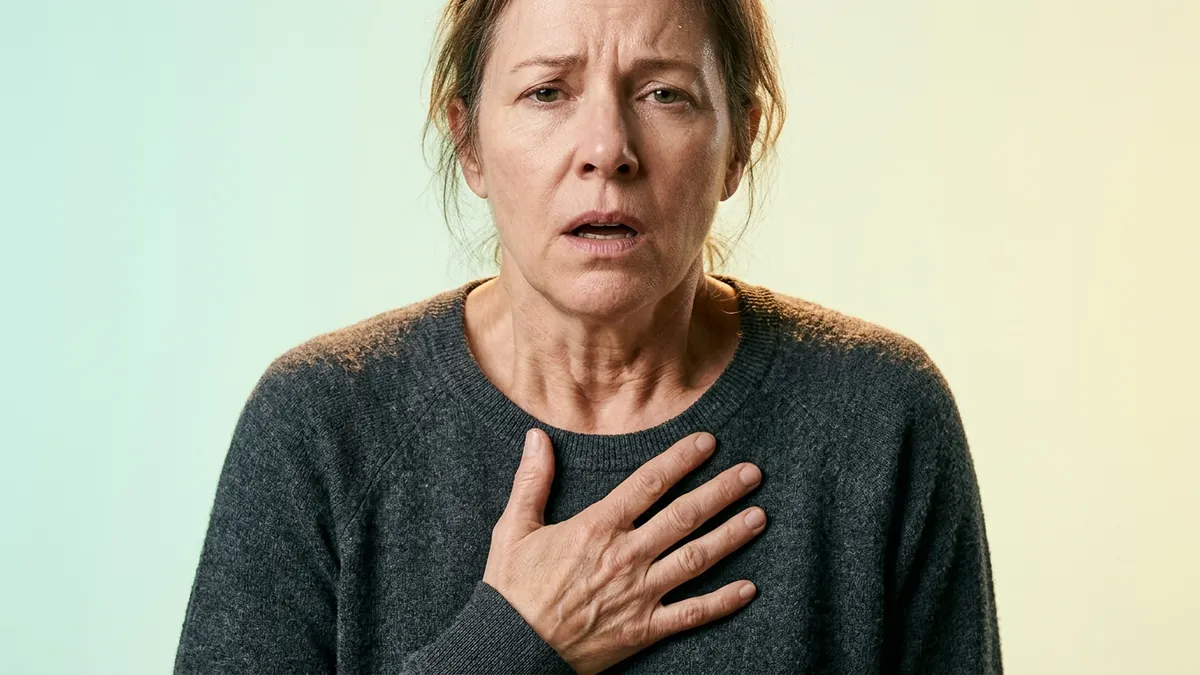
Have you ever felt like you were short of breath, your chest was tight, or you were struggling to breathe? This is what we call shortness of breath, or dyspnea, in medical terms. Some people also call it "shortness of breath" or "shortness of breath." It's normal to feel short of breath during strenuous exercise, climbing stairs, or when you have a cold. However, if this condition occurs frequently or occurs even when you are at rest, it could be a sign of a health problem.
What is Dyspnea? Let's understand it simply.
Simply put, Dyspnea is the word doctors use for difficulty breathing. It is not a disease, but a symptom. Just like a fever. A fever is not a disease, but a symptom of an infection or other disease. That is how this condition called Dyspnea is.
You may feel this in different ways:
- Feeling short of breath (air hunger).
- Feeling of tightness and constriction in the chest.
- Having to work harder than usual to breathe.
- Not being able to take a deep breath.
This can be a major symptom of lung and heart disease in particular. It can also be seen in conditions such as asthma, allergies, and anxiety.
Two more words related to shortness of breath
Your doctor may use these words, so let's learn a little about this too.
- Paroxysmal Nocturnal Dyspnea (PND): This is a somewhat unique condition. In this condition, you suddenly wake up with difficulty breathing an hour or two after going to sleep.
- Sighing Dyspnea: This is when you repeatedly take deep breaths (sighs) to relieve shortness of breath.
The two main ways that breathing difficulty occurs
This condition of Dyspnea can be divided into two main types based on the speed of onset and duration. The causes of these two can also be different. Let's look at it this way to understand it easily.
| Status | Description • Common causes |
|---|---|
| Acute Dyspnea | Description: This starts suddenly and lasts for a short period of time (from a few hours to a few days). Common causes: Allergies, stress, exercise, colds, flu. More serious causes: heart attack, anaphylaxis, pulmonary embolism. |
| Chronic Dyspnea | Description: This is a condition that lasts for several weeks or more, or that comes and goes frequently. Common causes: Asthma, Heart Failure, COPD (Chronic Obstructive Pulmonary Disease), and physical weakness due to lack of exercise. |
Why do we have difficulty breathing? What are the causes?
Think of your heart and lungs as two best friends working together. The lungs add oxygen to the blood, the heart pumps that oxygenated blood throughout the body, and the lungs also carry carbon dioxide back to the body and exhale it.
So, if there is a problem with the functioning of the heart or lungs, there may be a lack of oxygen in the blood or an increase in carbon dioxide. Then the brain receives a signal saying, "Breathing is not enough, breathe harder." That's when we feel difficulty breathing.
The main causes are lung and heart diseases. Let's look at them separately.
Causes related to the lungs and respiratory system
- Asthma
- Allergies
- COPD (common among smokers)
- Respiratory infections (e.g., bronchitis, COVID-19, pneumonia)
- Pleural effusion or inflammation (pleurisy)
- Fluid accumulation in the lungs (Pulmonary Edema) or scarring (Fibrosis)
- Lung cancer
- Pulmonary Hypertension
- Tuberculosis
- Collapsed Lung / Pneumothorax
- Pulmonary Embolism
- Choking
Heart and blood-related causes
- Anemia - This means a decrease in red blood cells in the blood.
- Heart Failure
- Heart muscle diseases (Cardiomyopathy)
- Abnormal heart rate (Arrhythmia)
- Inflammation of the heart (e.g. Endocarditis, Pericarditis)
Other reasons
- Anxiety: This is a very common cause.
- Obesity: Body mass index (BMI) greater than 30.
- Lack of exercise: When you don't exercise, your muscles become weak and you experience shortness of breath even when doing small tasks.
- Some medications: This can also be caused by some cholesterol-lowering medications (statins) and some high blood pressure medications (beta-blockers).
- Breaking something like a rib.
- Sleep Apnea: A condition in which breathing stops during sleep.
How can the doctor find the cause of this?
When you complain of shortness of breath, the doctor will first examine you. He will listen to your lungs with a stethoscope, measure your blood pressure, and measure the amount of oxygen in your blood with a small clip on your finger (a pulse oximeter).
In addition, tests like these can be done to find the exact cause:
- Chest X-ray or CT scan: To check for any problems with the lungs.
- Blood tests: Check for anemia or other infections.
- Lung Function Tests: Measure how well you breathe in and out.
- Cardiopulmonary Exercise Testing: A test that measures how your heart and lungs work while you walk on a treadmill and exercise.
When to seek immediate medical advice
Difficulty breathing can sometimes be a sign of a serious medical condition. If you have one or more of the following symptoms, go to the nearest hospital emergency department (ETU) without delay.
| Emergency symptoms to watch out for | |
|---|---|
| - Sudden, severe difficulty breathing. | |
| - Shortness of breath that does not subside even after resting for 30 minutes. | |
| - Blue color of the lips, skin, or nails (Cyanosis). | |
| - Chest pain or a feeling of tightness in the chest. | |
| - Rapid or irregular heartbeat (palpitations). | |
| - High fever. | |
| - Wheezing or high-pitched sound (stridor) when breathing. | |
| - Swelling of the ankles or feet. |
How to manage and prevent this condition?
Treatment depends on the cause of your shortness of breath. Your doctor will determine the cause and prescribe the right treatment. In general, these things can help you feel better.
- Exercise: Regular exercise strengthens your heart and lungs, so they don't have to work as hard.
- Breathing exercises: Your doctor can teach you appropriate breathing exercises and techniques to calm your mind.
- Medications: Inhalers (bronchodilators) may be prescribed for conditions like asthma and COPD.
- Oxygen Therapy: If your blood oxygen levels are very low, your doctor may prescribe external oxygen.
- Avoid smoking: This is definitely something to do.
- Maintaining a healthy weight.
- Avoid breathing in things that irritate the lungs, such as dust and smoke.
Shortness of breath is not something to ignore. If you experience this type of difficulty frequently, don't be afraid to talk to your family doctor. Sometimes, even a small change can make a big difference in your quality of life.
💡 Take-Home Message
- Dyspnea is not a disease, but a symptom of an underlying health problem.
- This can be affected by various factors, such as the lungs, heart, and mental stress.
- Although it is normal to feel tired during normal exertion, if this discomfort occurs frequently or even while resting , be concerned .
- If you have symptoms such as sudden severe difficulty breathing, chest pain, or blue lips,Go to an emergency treatment unit (ETU) immediately.
- Don't be afraid of this, talk openly with your doctor, find the cause, and seek proper treatment.



Janiw kuna arsuwinakas jichhakamax uñt’ayatäkiti. Aka chiqanx amuyt’awim jan ukax jiskt’awim yapxatañamawa.